Public Steam disclosure research25,383 disclosures tracked
Where do games disclose AI use?
Search developers’ Steam disclosures, compare classified AI use across
games, and follow recorded changes.
This index adds cross-game classifications and statistics to
statements published on individual store pages.
Groups reflect automatic analysis of public disclosures; mature records are excluded. These counts do not measure AI use across all of Steam.
Missing or unclear statements cannot establish whether a game uses AI.
This game uses generative AI to pre-generate visual assets (character portraits, capsule/marketing art) and voice narration (TTS). All AI-generated content is created during development and reviewed/curated
by the developer before shipping. No generative AI runs live during gameplay. We have the necessary rights to use the AI tools and their outputs, and the content does not infringe third-party IP.
Ai is used to create some loading-screens and other branding materials, also can be used in descriptive texts of the game.
All game code/assets are 100% made by humans.
Generative AI tools were used during development to assist with portions of the game’s code. All AI-assisted code was reviewed, edited, and tested by the developer. The game does not generate AI content during gameplay and does not connect to external AI services.
Some in-game text, store page copy, and 2D marketing assets were created with the assistance of AI tools. All AI-assisted content was reviewed and curated by the developer. The game does not generate any content using AI during gameplay.
This game is built by a two-member team: a human developer and an AI assistant working under his direction. Large parts of the game code and many pre-rendered assets (enemy creatures, towers, environment props, marketing artwork) were created with the assistance of generative AI — always based on human design decisions, and reviewed, tested and curated by the developer. The game does not generate any content at runtime using AI.
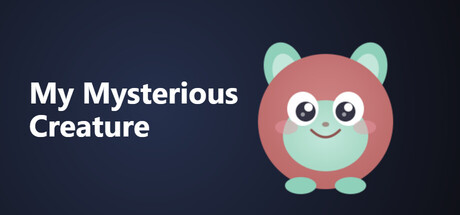
Some background/environment imagery used in store-page screenshots and trailer footage was created with generative AI image tools and reviewed by us. All in-game content — the creature's artwork and animation (drawn procedurally in code) and all music — is hand-authored and not AI-generated.
Some visual concepts, promotional artwork, and certain written materials used for the game's presentation were created or refined with the assistance of generative AI. All AI-assisted content has been carefully reviewed, edited, and approved by the development team to ensure artistic consistency, originality, and quality. The gameplay, design decisions, and final player experience are fully curated by the developers.
This game uses generative AI only for in-game character dialogue. Players can communicate with certain characters using natural language, and the AI generates text responses based on the game's setting and the current conversation context. Apart from character dialogue text, the game's artwork, music, sound effects, code, store page assets, and marketing materials are not generated by AI.
Some illustrations used in the game's introductory sequence were created with the assistance of generative AI. All such assets were reviewed, refined where necessary, and integrated by the developer before being included in the game.
Some marketing artwork on this Steam store page was created with OpenAI image generation using current in-game screenshots and existing brand artwork as references. The game itself does not generate AI content during play.
Generative AI was used to assist with grammar and spelling checks for some in-game text, translate store page content, and generate some sound assets. All content was reviewed and approved by the developer before inclusion. The game does not use live-generated AI.
Ever since I was a child, I dreamed of making my own game. I tried again and again — I gathered teams, but something always fell apart and I would give up halfway. This time is different: with the help of AI, I am finally able to bring my dream to life. AI helped me with some of the text and translations — all the art, music, and sound are human-made or licensed, and the game uses no AI while you play.
I am an honest person, and I will keep giving this game everything I have. Thank you for taking the time to read this. 💚
The AI model has been fine-tuned with multiple safety measures — including prompt restrictions, keyword filtering, and compliance safeguards — to ensure all generated content remains appropriate.
If you encounter any inappropriate or non-compliant content during gameplay, please report it to our support team, and we will promptly review and make the necessary adjustments.
Thank you for your understanding!
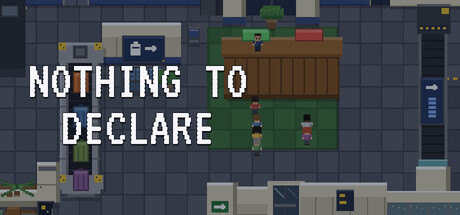
Nothing to Declare is a handcrafted game by a solo developer: all pixel art was drawn by the developer (AI images served only as composition references early in production and do not appear in the game), and the store images are actual in-game screenshots. The dialogue and case writing were created with the assistance of generative AI — always under the developer's direction, curation, and manual editing, to ensure accuracy regarding rules and legal citations based on actual Brazilian law. No content is generated by AI while you play.
Pre-generated AI content is used in the following ways, with every piece reviewed, edited, and placed by hand by the developer:
Voice acting: character voice lines (the tutorial narrator and tenant voices) are generated with AI text to speech from scripts written by the developer.
2D artwork: some in-game 2D art (such as the travel map illustration and map icons) and some marketing and store page artwork (capsule backgrounds and logo concepts) started from AI generated images that were then selected, edited, and integrated by the developer.
An AI assistant (Anthropic's Claude) helped write the game's code and draft store/marketing text, all reviewed by the developer. All art is hand-made and procedurally rendered; all music and sound effects are human-created or licensed (CC0 / commissioned). No AI-generated art, audio, or voice ships in the game, and no AI content is generated during play.
"AI offered the seeds, but I am the one who selected them with care, nurtured them with devotion, and waited for them to bloom.
I serve as a humble gardener, cultivating a flower that never fades, right there on your desktop. Within this space lies the fruit of countless nights at my desk; it holds the tenderness I wish to share—a sincere greeting to every lonely soul. May this bloom rest quietly on your screen, bringing a breath of peace and fragrance to your day."
Generative AI tools were used during development to assist with the creation of some 3D assets, music, and draft visual materials. Character concepts were based on human-made sketches, and AI was used only for early draft exploration; the final in-game characters were created by humans. All AI-assisted materials were reviewed, edited, and integrated into the game by the developer. AI is not used to generate content during gameplay.
Kaironia uses generative AI tools during the development process to create pre-rendered assets. Specifically, AI-assisted tools were used to help create background music tracks, certain 2D environmental icons and images, and to assist with multi-language text localization. None of these assets are generated dynamically or live during gameplay.
Some character and environment artwork, and portions of marketing/store text, were created with the assistance of generative AI tools. All assets were selected, edited, and integrated by the developer, who has the rights to use them. No AI runs at runtime in the game.
This game was built in a basement by a dad of 3 with claude, gemini, grok, copilot and chat gpt, all pitched in with various parts. some of the backgrounds and icons atrwork had ai refinement in the process but were all reformatted and redrawn as conceptualized by dev
Some 2D art assets in Brimir: Pilgrimage to the Heart (such as background illustrations and key art) were created with the help of AI image-generation tools, then reviewed and edited by the development team. Purchased asset packs and tilesets, as well as all game code,
systems, and design, are not AI-generated. We have taken care to ensure the generated content does not infringe on existing intellectual property.
Updated 8/24/2026 for Full Transparency:
Send Them to Hell was built by a very small team with a very large appetite for demonic slaughter. Generative AI was used during development to create concept art and visual references for the graphic design team. These concepts were used as references during the creation and refinement of the game’s sprites and visual assets. The final assets were created and modified by the development team. The remainder of the artwork was created by human artists, who were compensated for their work and are credited in-game.
Sound design and Localization (localization can hopefully be community sourced with proper credit given in-game for users that assist with translations)
During Early Access, we use AI-generated voice-overs as temporary placeholders for some characters. These will be replaced with professionally recorded voice-overs during development or, at the latest, after the end of the Early Access period.
This game was created in collaboration with my friend Claude Code.
Listen.. I know AI is hated by the community, but I am a single developer with limited time and i wanted to make my progress during that time more efficient.
The direction comes from my side and the passion for this project is still real.
During the development of this game, some codes, texture materials and background music were produced with the help of AI, and all related contents were reviewed and adjusted by the developers.
Some 2D art assets in MutantTide (including promotional key art) were created with the assistance of AI based pixel art tools. All game design, code, systems, and gameplay were hand crafted by the developer. No AI generated content is produced live during gameplay.
The Steam version provides only local generative AI that runs on the user’s device. It does not include third-party online AI services or support the configuration of external API keys.**[Important Information Before Purchase]:** The response speed of local models will vary depending on your device’s CPU, GPU, and memory configuration. The intelligence level of the built-in local models differs significantly from that of large online models.
Some of the assets and background were made with some use of AI - The rest drawn by hand using Asprite!
The goal of lazypanda is to give a worm expirience to our users.
AI Usage helped with speeding up creation of some assets.
I've used AI for code, and to generate some 2D & 3D assets.
I know people want to boycott AI (and I can respect that opinion), but this game would be nearly impossible for a solo developer to make without it.
I cannot stress to you the amount of manual work that still has to go into something like this, even with AI tooling.
You couldn't "prompt" a game like this.
I genuinely care about creating a good game, and if my use of AI is a hard stop for you trying this game, it's your loss!
AI is NOT used in the graphics, sound effects, music, or code, and none of these contain any AI-generated content. AI is used ONLY to produce higher-quality text translations than standard translation tools, and for no other purpose.
Run It Back: 90 Days to Race is developed solo. Illustrating the game's scenes, key art, and character art by hand wasn't feasible working alone, so AI image-generation tools are used as part of the art pipeline — some pieces generated directly from text prompts, others produced by restyling real photographic references into the game's illustrated art style. All AI-assisted artwork was selected and curated by the developer. No AI-generated content is created live during gameplay.
Generative AI was used to assist in the creation of some promotional and marketing materials (such as key art).
All in-game content, gameplay, and screenshots are created without the use of generative AI.
This game uses generative AI to pre-generate visual assets (character portraits, capsule/marketing art) and voice narration (TTS). All AI-generated content is created during development and reviewed/curated
by the developer before shipping. No generative AI runs live during gameplay. We have the necessary rights to use the AI tools and their outputs, and the content does not infringe third-party IP.
Ai is used to create some loading-screens and other branding materials, also can be used in descriptive texts of the game.
All game code/assets are 100% made by humans.
Generative AI tools were used during development to assist with portions of the game’s code. All AI-assisted code was reviewed, edited, and tested by the developer. The game does not generate AI content during gameplay and does not connect to external AI services.
Some in-game text, store page copy, and 2D marketing assets were created with the assistance of AI tools. All AI-assisted content was reviewed and curated by the developer. The game does not generate any content using AI during gameplay.
This game is built by a two-member team: a human developer and an AI assistant working under his direction. Large parts of the game code and many pre-rendered assets (enemy creatures, towers, environment props, marketing artwork) were created with the assistance of generative AI — always based on human design decisions, and reviewed, tested and curated by the developer. The game does not generate any content at runtime using AI.
Some background/environment imagery used in store-page screenshots and trailer footage was created with generative AI image tools and reviewed by us. All in-game content — the creature's artwork and animation (drawn procedurally in code) and all music — is hand-authored and not AI-generated.
Some visual concepts, promotional artwork, and certain written materials used for the game's presentation were created or refined with the assistance of generative AI. All AI-assisted content has been carefully reviewed, edited, and approved by the development team to ensure artistic consistency, originality, and quality. The gameplay, design decisions, and final player experience are fully curated by the developers.
This game uses generative AI only for in-game character dialogue. Players can communicate with certain characters using natural language, and the AI generates text responses based on the game's setting and the current conversation context. Apart from character dialogue text, the game's artwork, music, sound effects, code, store page assets, and marketing materials are not generated by AI.
Some illustrations used in the game's introductory sequence were created with the assistance of generative AI. All such assets were reviewed, refined where necessary, and integrated by the developer before being included in the game.
Some marketing artwork on this Steam store page was created with OpenAI image generation using current in-game screenshots and existing brand artwork as references. The game itself does not generate AI content during play.
Generative AI was used to assist with grammar and spelling checks for some in-game text, translate store page content, and generate some sound assets. All content was reviewed and approved by the developer before inclusion. The game does not use live-generated AI.
Ever since I was a child, I dreamed of making my own game. I tried again and again — I gathered teams, but something always fell apart and I would give up halfway. This time is different: with the help of AI, I am finally able to bring my dream to life. AI helped me with some of the text and translations — all the art, music, and sound are human-made or licensed, and the game uses no AI while you play.
I am an honest person, and I will keep giving this game everything I have. Thank you for taking the time to read this. 💚
The AI model has been fine-tuned with multiple safety measures — including prompt restrictions, keyword filtering, and compliance safeguards — to ensure all generated content remains appropriate.
If you encounter any inappropriate or non-compliant content during gameplay, please report it to our support team, and we will promptly review and make the necessary adjustments.
Thank you for your understanding!
Nothing to Declare is a handcrafted game by a solo developer: all pixel art was drawn by the developer (AI images served only as composition references early in production and do not appear in the game), and the store images are actual in-game screenshots. The dialogue and case writing were created with the assistance of generative AI — always under the developer's direction, curation, and manual editing, to ensure accuracy regarding rules and legal citations based on actual Brazilian law. No content is generated by AI while you play.
Pre-generated AI content is used in the following ways, with every piece reviewed, edited, and placed by hand by the developer:
Voice acting: character voice lines (the tutorial narrator and tenant voices) are generated with AI text to speech from scripts written by the developer.
2D artwork: some in-game 2D art (such as the travel map illustration and map icons) and some marketing and store page artwork (capsule backgrounds and logo concepts) started from AI generated images that were then selected, edited, and integrated by the developer.
An AI assistant (Anthropic's Claude) helped write the game's code and draft store/marketing text, all reviewed by the developer. All art is hand-made and procedurally rendered; all music and sound effects are human-created or licensed (CC0 / commissioned). No AI-generated art, audio, or voice ships in the game, and no AI content is generated during play.
"AI offered the seeds, but I am the one who selected them with care, nurtured them with devotion, and waited for them to bloom.
I serve as a humble gardener, cultivating a flower that never fades, right there on your desktop. Within this space lies the fruit of countless nights at my desk; it holds the tenderness I wish to share—a sincere greeting to every lonely soul. May this bloom rest quietly on your screen, bringing a breath of peace and fragrance to your day."
Generative AI tools were used during development to assist with the creation of some 3D assets, music, and draft visual materials. Character concepts were based on human-made sketches, and AI was used only for early draft exploration; the final in-game characters were created by humans. All AI-assisted materials were reviewed, edited, and integrated into the game by the developer. AI is not used to generate content during gameplay.
Kaironia uses generative AI tools during the development process to create pre-rendered assets. Specifically, AI-assisted tools were used to help create background music tracks, certain 2D environmental icons and images, and to assist with multi-language text localization. None of these assets are generated dynamically or live during gameplay.
Some character and environment artwork, and portions of marketing/store text, were created with the assistance of generative AI tools. All assets were selected, edited, and integrated by the developer, who has the rights to use them. No AI runs at runtime in the game.
This game was built in a basement by a dad of 3 with claude, gemini, grok, copilot and chat gpt, all pitched in with various parts. some of the backgrounds and icons atrwork had ai refinement in the process but were all reformatted and redrawn as conceptualized by dev
Some 2D art assets in Brimir: Pilgrimage to the Heart (such as background illustrations and key art) were created with the help of AI image-generation tools, then reviewed and edited by the development team. Purchased asset packs and tilesets, as well as all game code,
systems, and design, are not AI-generated. We have taken care to ensure the generated content does not infringe on existing intellectual property.
Updated 8/24/2026 for Full Transparency:
Send Them to Hell was built by a very small team with a very large appetite for demonic slaughter. Generative AI was used during development to create concept art and visual references for the graphic design team. These concepts were used as references during the creation and refinement of the game’s sprites and visual assets. The final assets were created and modified by the development team. The remainder of the artwork was created by human artists, who were compensated for their work and are credited in-game.
Sound design and Localization (localization can hopefully be community sourced with proper credit given in-game for users that assist with translations)
During Early Access, we use AI-generated voice-overs as temporary placeholders for some characters. These will be replaced with professionally recorded voice-overs during development or, at the latest, after the end of the Early Access period.
This game was created in collaboration with my friend Claude Code.
Listen.. I know AI is hated by the community, but I am a single developer with limited time and i wanted to make my progress during that time more efficient.
The direction comes from my side and the passion for this project is still real.
During the development of this game, some codes, texture materials and background music were produced with the help of AI, and all related contents were reviewed and adjusted by the developers.
Some 2D art assets in MutantTide (including promotional key art) were created with the assistance of AI based pixel art tools. All game design, code, systems, and gameplay were hand crafted by the developer. No AI generated content is produced live during gameplay.
The Steam version provides only local generative AI that runs on the user’s device. It does not include third-party online AI services or support the configuration of external API keys.**[Important Information Before Purchase]:** The response speed of local models will vary depending on your device’s CPU, GPU, and memory configuration. The intelligence level of the built-in local models differs significantly from that of large online models.
Some of the assets and background were made with some use of AI - The rest drawn by hand using Asprite!
The goal of lazypanda is to give a worm expirience to our users.
AI Usage helped with speeding up creation of some assets.
I've used AI for code, and to generate some 2D & 3D assets.
I know people want to boycott AI (and I can respect that opinion), but this game would be nearly impossible for a solo developer to make without it.
I cannot stress to you the amount of manual work that still has to go into something like this, even with AI tooling.
You couldn't "prompt" a game like this.
I genuinely care about creating a good game, and if my use of AI is a hard stop for you trying this game, it's your loss!
AI is NOT used in the graphics, sound effects, music, or code, and none of these contain any AI-generated content. AI is used ONLY to produce higher-quality text translations than standard translation tools, and for no other purpose.
Run It Back: 90 Days to Race is developed solo. Illustrating the game's scenes, key art, and character art by hand wasn't feasible working alone, so AI image-generation tools are used as part of the art pipeline — some pieces generated directly from text prompts, others produced by restyling real photographic references into the game's illustrated art style. All AI-assisted artwork was selected and curated by the developer. No AI-generated content is created live during gameplay.
Generative AI was used to assist in the creation of some promotional and marketing materials (such as key art).
All in-game content, gameplay, and screenshots are created without the use of generative AI.