Public Steam disclosure research25,376 disclosures tracked
Where do games disclose AI use?
Search developers’ Steam disclosures, compare classified AI use across
games, and follow recorded changes.
This index adds cross-game classifications and statistics to
statements published on individual store pages.
Groups reflect automatic analysis of public disclosures; mature records are excluded. These counts do not measure AI use across all of Steam.
Missing or unclear statements cannot establish whether a game uses AI.
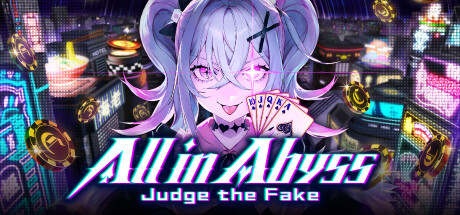
Background images in this game partially contains AI generated content that is post-processed by hand and given final touches to best suit the game's thematics. "The City" does not conform to this, and is created from the ground up by the fine hands of the creators and artists.
Traditionally, NPCs (non-player characters) do not play active roles in video games. However, with the use of AI, they become the main characters of the game. Players can communicate with NPCs verbally through a microphone, and it is the AI that responds
**Disclosure on Use of Generative AI in Development**
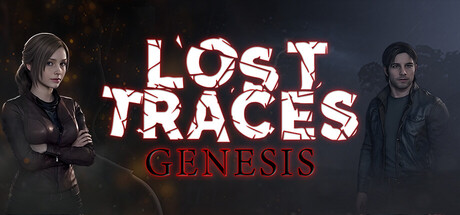
*Lost Traces: False Awakening* and *Lost Traces: Genesis* are ambitious projects developed by a **small indie team**. To efficiently achieve the large scope and detail of the game's world, we made selective use of pre-generated tools during development.
This approach was strictly limited to foundational elements which were then heavily refined by human artists and engineers:
* **Character Designs (Images):** A portion of the initial character design concepts and visual elements (used on the store page and in-game) were informed by licensed image generation tools, such as **Stable Diffusion**. Every single piece of content has since been **manually edited, digitally painted, and extensively refined** by our artists to ensure unique visual identity and high quality.
* **Voice Dialogue (Audio):** A portion of the in-game voice dialogue was generated using licensed text-to-speech or AI voice tools. This audio was subsequently run through **professional editing, mastering, and processing** to ensure vocal quality, pacing, and consistency across the game's soundscape.
Our team maintains **full creative and artistic control** over all final assets. We did not use any AI tools to generate content *live* during gameplay.
* Contents below are copied from the game, the soundtrack does not use any Generative AI technology.
User will be able to talk in freeform with the NPCs within the game world according to the environment given to them.
Some of the evidence (photos on the wall, book covers) have been created using AI tools
Due to our team having only one artist and one engineer, using AI assistance during the development process is crucial. This technology saves a significant amount of time and resources, helping us maintain momentum in our development efforts. We primarily apply AI technology during the drafting stage to expedite the design process and improve efficiency. Specifically, we only utilize AI assistance for certain game scenes and objects, with final adjustments made manually to complete the final drafts. As for character illustrations within the game, they are entirely designed and finalized by the artist from start to finish.
This game used generative AI for the following elements :
-The backgrounds in the game (generated by Lornn, Two Orcs and lehxra, available online)
-The representation of Hotel Perkkow (Used in the store and library images)
This game and associated materials uses AI generated audio and visual graphics content. All AI generated content is commercially licensed from the industries leading AI generation platforms.
Three images - out of almost 600 images, videos and other files files included in the game - were prepared using generative AI.
The Case of Andrew D. is an Alternate Reality game and player is expected to look for information and clues on the web and in social media. While most pictures used are arranged photos taken in a real life and in real places, to avoid confusion we didn't want to use photos of real people. To make sure people referred to in the game (apart from some cameos) don't exist and can't be located nor stalked, three portrait photos used in the game were produced with AI models.
The images in the game are collages and/or modified parts of images created by AI.
Each image was processed and animated manually by a human.
Parts of the images have been redrawn by humans.
Generative Artificial Intelligence (AI) Disclosure for NecroNomNomNom: Eldritch Horror Dating
From the very outset, "NecroNomNomNom: Eldritch Horror Dating" was conceived as a cosmic horror experiment in itself. Instead of passively wondering how generative AI might impact creative professions, we decided to confront that existential dread head-on. Our core design philosophy was to push the boundaries of AI's capabilities, attempting to completely replace human creative input and, in essence, make ourselves obsolete in the game development process.
Our findings, however, have been profoundly ironic and surprisingly reassuring. While generative AI played a significant role in various aspects of the game's development (including concept generation, preliminary asset creation, dialogue outlines, and certain code snippets), we discovered that achieving a cohesive, engaging, and polished experience still required substantial human oversight and manual intervention. AI, in its current form, proved to be an invaluable tool for iteration and initial ideation, but it could not replicate the nuanced artistic direction, problem-solving, and quality assurance that only human creativity and discernment can provide.
Ultimately, this experiment demonstrated that the path to creative obsolescence is far from straightforward. In a twist we didn't anticipate, the very act of attempting to replace ourselves with AI actually created new roles and opportunities for human collaborators in areas where AI fell short. This project, born from a fear of replacement, has, against all odds, generated more work for creative professionals rather than eliminating it. The human touch remains indispensable in bringing a truly unique and compelling vision to life.
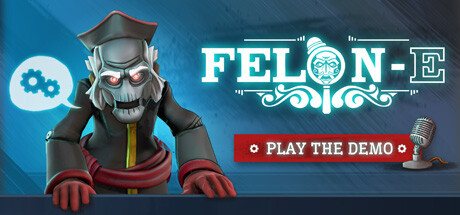
Some AI tools were used to help bring human-led ideas to life. It helped us see what some ideas could look like, and helped us refine other ideas mid process. All of the assets within the Demo were initiated by artists within the team. These refined compositions are always fed back into artists and AI for further iteration, each step demanding an artistic eye to guide the output.
Localizations to languages with an in-game marking "BETA" (French, Spanish, Italian, Swedish) have been created using generative artificial intelligence.
Due to the ambitious scope of the game, as well as our limited budget and manpower, generative AI has been integrated into our workflow to create pre-rendered "AI-assisted" assets.
Character sprites (including facial expressions) are hand-drawn and colored, but enhanced using Stable Diffusion (img2img).
Background images may be real photographs taken by hand, and/or AI-enhanced versions of real photographs (img2img).
Voices are uniquely AI-generated by Eleven Labs. Proper inflection and tone are achieved by using an AI voice-changer to "wear" each voice and record lines individually.
All of the above work is being done by the team lead, who is also responsible for the writing and programming, in order to bring his creative vision to life in a reasonable span of time.
We appreciate your understanding, and hope you enjoy the game.
Background images in this game partially contains AI generated content that is post-processed by hand and given final touches to best suit the game's thematics. "The City" does not conform to this, and is created from the ground up by the fine hands of the creators and artists.
Traditionally, NPCs (non-player characters) do not play active roles in video games. However, with the use of AI, they become the main characters of the game. Players can communicate with NPCs verbally through a microphone, and it is the AI that responds
**Disclosure on Use of Generative AI in Development**
*Lost Traces: False Awakening* and *Lost Traces: Genesis* are ambitious projects developed by a **small indie team**. To efficiently achieve the large scope and detail of the game's world, we made selective use of pre-generated tools during development.
This approach was strictly limited to foundational elements which were then heavily refined by human artists and engineers:
* **Character Designs (Images):** A portion of the initial character design concepts and visual elements (used on the store page and in-game) were informed by licensed image generation tools, such as **Stable Diffusion**. Every single piece of content has since been **manually edited, digitally painted, and extensively refined** by our artists to ensure unique visual identity and high quality.
* **Voice Dialogue (Audio):** A portion of the in-game voice dialogue was generated using licensed text-to-speech or AI voice tools. This audio was subsequently run through **professional editing, mastering, and processing** to ensure vocal quality, pacing, and consistency across the game's soundscape.
Our team maintains **full creative and artistic control** over all final assets. We did not use any AI tools to generate content *live* during gameplay.
* Contents below are copied from the game, the soundtrack does not use any Generative AI technology.
User will be able to talk in freeform with the NPCs within the game world according to the environment given to them.
Some of the evidence (photos on the wall, book covers) have been created using AI tools
Due to our team having only one artist and one engineer, using AI assistance during the development process is crucial. This technology saves a significant amount of time and resources, helping us maintain momentum in our development efforts. We primarily apply AI technology during the drafting stage to expedite the design process and improve efficiency. Specifically, we only utilize AI assistance for certain game scenes and objects, with final adjustments made manually to complete the final drafts. As for character illustrations within the game, they are entirely designed and finalized by the artist from start to finish.
This game used generative AI for the following elements :
-The backgrounds in the game (generated by Lornn, Two Orcs and lehxra, available online)
-The representation of Hotel Perkkow (Used in the store and library images)
This game and associated materials uses AI generated audio and visual graphics content. All AI generated content is commercially licensed from the industries leading AI generation platforms.
Three images - out of almost 600 images, videos and other files files included in the game - were prepared using generative AI.
The Case of Andrew D. is an Alternate Reality game and player is expected to look for information and clues on the web and in social media. While most pictures used are arranged photos taken in a real life and in real places, to avoid confusion we didn't want to use photos of real people. To make sure people referred to in the game (apart from some cameos) don't exist and can't be located nor stalked, three portrait photos used in the game were produced with AI models.
The images in the game are collages and/or modified parts of images created by AI.
Each image was processed and animated manually by a human.
Parts of the images have been redrawn by humans.
Generative Artificial Intelligence (AI) Disclosure for NecroNomNomNom: Eldritch Horror Dating
From the very outset, "NecroNomNomNom: Eldritch Horror Dating" was conceived as a cosmic horror experiment in itself. Instead of passively wondering how generative AI might impact creative professions, we decided to confront that existential dread head-on. Our core design philosophy was to push the boundaries of AI's capabilities, attempting to completely replace human creative input and, in essence, make ourselves obsolete in the game development process.
Our findings, however, have been profoundly ironic and surprisingly reassuring. While generative AI played a significant role in various aspects of the game's development (including concept generation, preliminary asset creation, dialogue outlines, and certain code snippets), we discovered that achieving a cohesive, engaging, and polished experience still required substantial human oversight and manual intervention. AI, in its current form, proved to be an invaluable tool for iteration and initial ideation, but it could not replicate the nuanced artistic direction, problem-solving, and quality assurance that only human creativity and discernment can provide.
Ultimately, this experiment demonstrated that the path to creative obsolescence is far from straightforward. In a twist we didn't anticipate, the very act of attempting to replace ourselves with AI actually created new roles and opportunities for human collaborators in areas where AI fell short. This project, born from a fear of replacement, has, against all odds, generated more work for creative professionals rather than eliminating it. The human touch remains indispensable in bringing a truly unique and compelling vision to life.
Some AI tools were used to help bring human-led ideas to life. It helped us see what some ideas could look like, and helped us refine other ideas mid process. All of the assets within the Demo were initiated by artists within the team. These refined compositions are always fed back into artists and AI for further iteration, each step demanding an artistic eye to guide the output.
Localizations to languages with an in-game marking "BETA" (French, Spanish, Italian, Swedish) have been created using generative artificial intelligence.
Due to the ambitious scope of the game, as well as our limited budget and manpower, generative AI has been integrated into our workflow to create pre-rendered "AI-assisted" assets.
Character sprites (including facial expressions) are hand-drawn and colored, but enhanced using Stable Diffusion (img2img).
Background images may be real photographs taken by hand, and/or AI-enhanced versions of real photographs (img2img).
Voices are uniquely AI-generated by Eleven Labs. Proper inflection and tone are achieved by using an AI voice-changer to "wear" each voice and record lines individually.
All of the above work is being done by the team lead, who is also responsible for the writing and programming, in order to bring his creative vision to life in a reasonable span of time.
We appreciate your understanding, and hope you enjoy the game.