Public Steam disclosure research25,383 disclosures tracked
Where do games disclose AI use?
Search developers’ Steam disclosures, compare classified AI use across
games, and follow recorded changes.
This index adds cross-game classifications and statistics to
statements published on individual store pages.
Groups reflect automatic analysis of public disclosures; mature records are excluded. These counts do not measure AI use across all of Steam.
Missing or unclear statements cannot establish whether a game uses AI.
As a solo developer working with a limited budget, I used generative AI tools to help bring my vision to life and add more variety to the game. Specifically, AI generated 10-20 graphical assets and assisted in creating about half of the game's music tracks. The vast majority of the game (over 95%) - including all core design, programming, and mechanics was created entirely by hand.
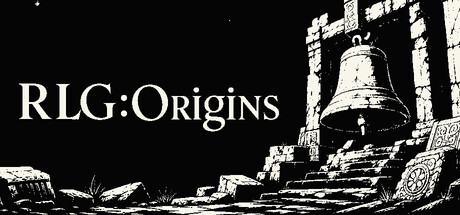
RLG:Origins uses a locally operated generative AI model during play to interpret free-form player input and generate GM narration and character dialogue. AI-generated text does not establish game facts or decide outcomes. A separate deterministic rules system validates actions and controls game-state changes. Generation takes place on the player's device, and player input is not sent to an external AI service.
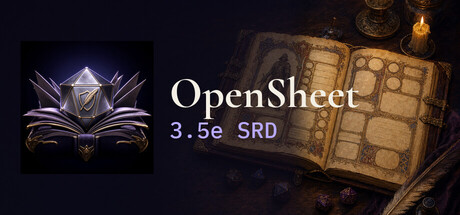
OpenSheet uses generative AI for optional artwork only. This is disabled by default.
Pre-rendered: the decorative art that ships with the app — character portraits, race and class backgrounds, creature illustrations, interface icons and stat-panel frames — was produced with OpenAI's image models, as were the application icon and this store page's artwork. All of it is decoration, every family of it can be switched off in Settings, and a new installation shows none of it by default.
No rules content is AI-generated. Every rule, statistic, feat, spell, item, monster and table comes from the published 3.5 Edition SRD source material and the PCGen data set. The app is built so the book always wins.
AI tools are used to assist with the localization of in-game and store page text into other languages. All translations are reviewed by the development team and improved with community feedback.
Some marketing artwork (store capsules and promotional images) was created with AI assistance, based on the game's own assets, characters and art style. All in-game content, gameplay, art assets and audio design are created by the development team.
Some 2D art was made with generative AI as a starting point, cards are renders of our real 3D models with painted backgrounds. No in-game AI, no AI voices, no real people's likenesses. Art may be replaced during Early Access.
The game's music was generated using an AI tool (Suno), then selected and mixed by me. Everything else — 3D models, textures, animations, sound effects, text and code is handmade. My goal is to replace it with original compositions from a human artist as soon as sales allow.
This software does NOT use Generative AI to generate images, artwork, audio, or text. All visual elements, templates, and store assets are 100% original, hand-crafted art and photography created directly by the developer.
Machine Learning and AI technologies are strictly limited to technical functionality and development:
- Background Removal Tool: A local, non-generative Machine Learning feature accessed by users to instantly remove image backgrounds and create striking visual compositions.
- Software Development: AI-assisted coding tools (vibe-coding / LLM assistance) were used during the programming process.
No AI-generated content is included in the software or produced during runtime.
The game's design, rules, simulation, scenarios, and text are all authored by people. Some event background illustrations and background music were produced with generative tools run in-house by the development team, and every asset was then accepted or rejected by a human. The game does not generate any content while it runs.
The game contains a few voice lines that where generated using a text-to-speech service. I assume this service used some sort of gen-AI. For some translations an AI was used for proofreading.
Generative AI tools were used to assist in the creation of marketing artwork and store page assets. All game content is procedurally generated through Thalyn's proprietary algorithms
Yeah, I used some AI music. Big woop wanna fight about it? All other in-game assets are made by hoomans much more talented than myself.
Images on the store page are also currently AI generated placeholders. These will be replaced during Early Access with art by people.
Some of the art and audio assets in this game were created with the assistance of generative AI tools. Specifically, certain 3D models, UI icons, and background music tracks were generated using AI and then reviewed, edited, and integrated by the developer. No AI-generated content is created live during gameplay.
AI was used only during early development for temporary placeholder assets. These materials are not intended to be included in the final shipped game.
The game does not use live-generated AI content during gameplay.
Portions of this game's artwork were created with generative AI tools under human direction, curation, and editing — including aircraft counter sprites, scene illustrations, character portraits, achievement icons, and some store/marketing images. The store trailer's narration is AI-generated voiceover. Some code was developed with AI assistance and human review. The game does not generate any content with AI while running.
Some BGM are AI-generated. Additionally, some textures were AI-generated based on human designs and fully refined by hand. AI tools were also used for translation and general development assistance.
[Pre-Generated AI Content] Generative AI (Anthropic Claude) was used during development to write game code, to create the BGM (note data transcribed from a public-domain piece and procedurally generated music), and to compose store artwork from in-game assets. No content is generated by AI at runtime.
I used Grok CLI for coding and all sprite generation. I use AI to debug.
There are AI generated videos in the tutorial sections.
AI was used to implement sound and music as well as menu assets and backgrounds.
No AI LLM is in the game. There is no real time AI asset generation or LLM streaming.
Within the game, we only used AI to assist with translations into different languages and to create the names and designs of the bottle brands.
We use AI solely as a supportive tool. We do not let AI handle the entire process for any task.
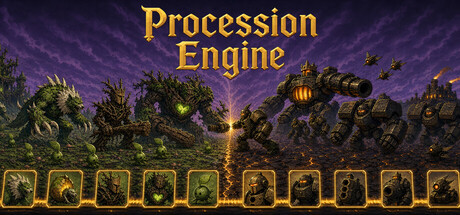
Procession Engine is a hand-designed game that uses AI tools to speed up development. Every card, faction, and system was designed, balanced, and playtested by its developer. Generative AI tools were used under human direction as part of the production pipeline: 2D artwork (card illustrations and icons) and 3D model bases were generated to the developer's specifications and then reviewed, curated, and integrated by hand. Sound effects were produced with AI audio tools and individually selected and mixed. Portions of the game code were written with AI assistance and reviewed by a human. No AI content is generated at runtime.
Cindervale Idle was developed with the help of generative AI tools.
The game's artwork - the vector icons used for items, skills and interface elements - and much of its written content, including item and monster descriptions, tooltips and flavor text, were produced with AI assistance, then reviewed, edited and assembled by myself.
No AI runs while you play.
As an indie dev, I leveraged AI to create this game. Some voices are AI-generated. Concept art was generated for inspiration and then built from scratch.
Some character portrait sprite sheets and brand/division imagery shipped with Bankr are produced with generative AI tools during development, then reviewed and edited by the team before inclusion. All game text, simulation code, balance-sheet math, ratio logic, and gameplay systems are human-authored. No content is AI-generated at runtime — every asset is pre-rendered and pinned in the build.
AI was used for some translations and visual assets. The game does not generate AI content during gameplay, and AI was not used to write the game's code.
Some in-game text and code were written with AI assistance during development. All content was reviewed, edited and approved by the developer before shipping. The game does not generate any content using AI at runtime and does not connect to any AI service.
This game uses AI-generated tools as part of its development, including AI-assisted voice lines and background music. All AI-generated content was reviewed and curated by the developer.
This game's store page description and some marketing/visual assets were created with the assistance of generative AI tools. AI is not used to generate gameplay content, puzzles, or code during play - Sudoku puzzles are generated using standard, deterministic algorithms, not AI.
Eclipsia uses generative AI as part of the development process to assist in creating certain visual assets. All AI-assisted content is reviewed, edited, and integrated by the development team. The game does not use generative AI to generate gameplay, game logic, or player-created content in real time.
Generative AI tools were used during development to create or assist with some visual assets, audio, and 3D assets used in the game and its promotional materials. No AI-generated content is created during gameplay, and the game does not connect to external AI services.
Many of the game's visual assets were initially created with the assistance of generative AI as part of the concepting and asset production process. All AI-generated content was reviewed, curated, and refined by the developer to ensure it matched the game's artistic style and quality standards. Gameplay systems, design, balance, writing, and overall creative direction were developed by the developer.
Generative AI tools were used during development to generate some 3D model assets, textures, and sounds. All AI-generated content was pre-rendered and reviewed before being included in the game build. No live generative AI is used during gameplay.
Some of Last Gambit's content was created with the help of generative AI tools. Specifically, part of the artwork for the pieces and skins was generated with AI and then reviewed and refined by us. We also used AI to assist with some cross-platform code porting.
All of this content is generated during development. The game does not use generative AI during matches and does not create content in real time.
Generative AI tools were used during development to assist with portions of the game’s code and to create or refine some pre-rendered 2D artwork, including character sprites and portraits, item icons, and environment assets. All AI-assisted content was reviewed, edited, and integrated by the developer. The game does not generate AI content or code during gameplay and does not connect to an external AI service during gameplay.
Generative AI tools were used in parts of this game's development, always under human creative direction.
Art: The game's visual design is led by a classically trained 2D artist acting as art director. The UI style, overall color palette, character art, and environment style are all conceived and directed by a human, starting from hand-drawn sketches and detailed art direction. Generative AI is used only as an execution tool carrying out that direction—the distinctive style and texture of the game come from human artistic judgment, and every asset is directed, selected, and refined by the artist.
Music: The main melodies are composed by us by ear. Generative AI is then directed—with specific guidance on mood, instrumentation, and arrangement—to help realize the finished tracks.
Code: The game's code was generated using AI coding tools.
All content is reviewed and integrated by the developers before inclusion. The game contains no content generated live by AI during gameplay.
As a solo developer working with a limited budget, I used generative AI tools to help bring my vision to life and add more variety to the game. Specifically, AI generated 10-20 graphical assets and assisted in creating about half of the game's music tracks. The vast majority of the game (over 95%) - including all core design, programming, and mechanics was created entirely by hand.
RLG:Origins uses a locally operated generative AI model during play to interpret free-form player input and generate GM narration and character dialogue. AI-generated text does not establish game facts or decide outcomes. A separate deterministic rules system validates actions and controls game-state changes. Generation takes place on the player's device, and player input is not sent to an external AI service.
OpenSheet uses generative AI for optional artwork only. This is disabled by default.
Pre-rendered: the decorative art that ships with the app — character portraits, race and class backgrounds, creature illustrations, interface icons and stat-panel frames — was produced with OpenAI's image models, as were the application icon and this store page's artwork. All of it is decoration, every family of it can be switched off in Settings, and a new installation shows none of it by default.
No rules content is AI-generated. Every rule, statistic, feat, spell, item, monster and table comes from the published 3.5 Edition SRD source material and the PCGen data set. The app is built so the book always wins.
AI tools are used to assist with the localization of in-game and store page text into other languages. All translations are reviewed by the development team and improved with community feedback.
Some marketing artwork (store capsules and promotional images) was created with AI assistance, based on the game's own assets, characters and art style. All in-game content, gameplay, art assets and audio design are created by the development team.
Some 2D art was made with generative AI as a starting point, cards are renders of our real 3D models with painted backgrounds. No in-game AI, no AI voices, no real people's likenesses. Art may be replaced during Early Access.
The game's music was generated using an AI tool (Suno), then selected and mixed by me. Everything else — 3D models, textures, animations, sound effects, text and code is handmade. My goal is to replace it with original compositions from a human artist as soon as sales allow.
This software does NOT use Generative AI to generate images, artwork, audio, or text. All visual elements, templates, and store assets are 100% original, hand-crafted art and photography created directly by the developer.
Machine Learning and AI technologies are strictly limited to technical functionality and development:
- Background Removal Tool: A local, non-generative Machine Learning feature accessed by users to instantly remove image backgrounds and create striking visual compositions.
- Software Development: AI-assisted coding tools (vibe-coding / LLM assistance) were used during the programming process.
No AI-generated content is included in the software or produced during runtime.
The game's design, rules, simulation, scenarios, and text are all authored by people. Some event background illustrations and background music were produced with generative tools run in-house by the development team, and every asset was then accepted or rejected by a human. The game does not generate any content while it runs.
The game contains a few voice lines that where generated using a text-to-speech service. I assume this service used some sort of gen-AI. For some translations an AI was used for proofreading.
Generative AI tools were used to assist in the creation of marketing artwork and store page assets. All game content is procedurally generated through Thalyn's proprietary algorithms
Yeah, I used some AI music. Big woop wanna fight about it? All other in-game assets are made by hoomans much more talented than myself.
Images on the store page are also currently AI generated placeholders. These will be replaced during Early Access with art by people.
Some of the art and audio assets in this game were created with the assistance of generative AI tools. Specifically, certain 3D models, UI icons, and background music tracks were generated using AI and then reviewed, edited, and integrated by the developer. No AI-generated content is created live during gameplay.
AI was used only during early development for temporary placeholder assets. These materials are not intended to be included in the final shipped game.
The game does not use live-generated AI content during gameplay.
Portions of this game's artwork were created with generative AI tools under human direction, curation, and editing — including aircraft counter sprites, scene illustrations, character portraits, achievement icons, and some store/marketing images. The store trailer's narration is AI-generated voiceover. Some code was developed with AI assistance and human review. The game does not generate any content with AI while running.
Some BGM are AI-generated. Additionally, some textures were AI-generated based on human designs and fully refined by hand. AI tools were also used for translation and general development assistance.
[Pre-Generated AI Content] Generative AI (Anthropic Claude) was used during development to write game code, to create the BGM (note data transcribed from a public-domain piece and procedurally generated music), and to compose store artwork from in-game assets. No content is generated by AI at runtime.
I used Grok CLI for coding and all sprite generation. I use AI to debug.
There are AI generated videos in the tutorial sections.
AI was used to implement sound and music as well as menu assets and backgrounds.
No AI LLM is in the game. There is no real time AI asset generation or LLM streaming.
Within the game, we only used AI to assist with translations into different languages and to create the names and designs of the bottle brands.
We use AI solely as a supportive tool. We do not let AI handle the entire process for any task.
Procession Engine is a hand-designed game that uses AI tools to speed up development. Every card, faction, and system was designed, balanced, and playtested by its developer. Generative AI tools were used under human direction as part of the production pipeline: 2D artwork (card illustrations and icons) and 3D model bases were generated to the developer's specifications and then reviewed, curated, and integrated by hand. Sound effects were produced with AI audio tools and individually selected and mixed. Portions of the game code were written with AI assistance and reviewed by a human. No AI content is generated at runtime.
Cindervale Idle was developed with the help of generative AI tools.
The game's artwork - the vector icons used for items, skills and interface elements - and much of its written content, including item and monster descriptions, tooltips and flavor text, were produced with AI assistance, then reviewed, edited and assembled by myself.
No AI runs while you play.
As an indie dev, I leveraged AI to create this game. Some voices are AI-generated. Concept art was generated for inspiration and then built from scratch.
Some character portrait sprite sheets and brand/division imagery shipped with Bankr are produced with generative AI tools during development, then reviewed and edited by the team before inclusion. All game text, simulation code, balance-sheet math, ratio logic, and gameplay systems are human-authored. No content is AI-generated at runtime — every asset is pre-rendered and pinned in the build.
AI was used for some translations and visual assets. The game does not generate AI content during gameplay, and AI was not used to write the game's code.
Some in-game text and code were written with AI assistance during development. All content was reviewed, edited and approved by the developer before shipping. The game does not generate any content using AI at runtime and does not connect to any AI service.
This game uses AI-generated tools as part of its development, including AI-assisted voice lines and background music. All AI-generated content was reviewed and curated by the developer.
This game's store page description and some marketing/visual assets were created with the assistance of generative AI tools. AI is not used to generate gameplay content, puzzles, or code during play - Sudoku puzzles are generated using standard, deterministic algorithms, not AI.
Eclipsia uses generative AI as part of the development process to assist in creating certain visual assets. All AI-assisted content is reviewed, edited, and integrated by the development team. The game does not use generative AI to generate gameplay, game logic, or player-created content in real time.
Generative AI tools were used during development to create or assist with some visual assets, audio, and 3D assets used in the game and its promotional materials. No AI-generated content is created during gameplay, and the game does not connect to external AI services.
Many of the game's visual assets were initially created with the assistance of generative AI as part of the concepting and asset production process. All AI-generated content was reviewed, curated, and refined by the developer to ensure it matched the game's artistic style and quality standards. Gameplay systems, design, balance, writing, and overall creative direction were developed by the developer.
Generative AI tools were used during development to generate some 3D model assets, textures, and sounds. All AI-generated content was pre-rendered and reviewed before being included in the game build. No live generative AI is used during gameplay.
Some of Last Gambit's content was created with the help of generative AI tools. Specifically, part of the artwork for the pieces and skins was generated with AI and then reviewed and refined by us. We also used AI to assist with some cross-platform code porting.
All of this content is generated during development. The game does not use generative AI during matches and does not create content in real time.
Generative AI tools were used during development to assist with portions of the game’s code and to create or refine some pre-rendered 2D artwork, including character sprites and portraits, item icons, and environment assets. All AI-assisted content was reviewed, edited, and integrated by the developer. The game does not generate AI content or code during gameplay and does not connect to an external AI service during gameplay.
Generative AI tools were used in parts of this game's development, always under human creative direction.
Art: The game's visual design is led by a classically trained 2D artist acting as art director. The UI style, overall color palette, character art, and environment style are all conceived and directed by a human, starting from hand-drawn sketches and detailed art direction. Generative AI is used only as an execution tool carrying out that direction—the distinctive style and texture of the game come from human artistic judgment, and every asset is directed, selected, and refined by the artist.
Music: The main melodies are composed by us by ear. Generative AI is then directed—with specific guidance on mood, instrumentation, and arrangement—to help realize the finished tracks.
Code: The game's code was generated using AI coding tools.
All content is reviewed and integrated by the developers before inclusion. The game contains no content generated live by AI during gameplay.