Public Steam disclosure research25,383 disclosures tracked
Where do games disclose AI use?
Search developers’ Steam disclosures, compare classified AI use across
games, and follow recorded changes.
This index adds cross-game classifications and statistics to
statements published on individual store pages.
Groups reflect automatic analysis of public disclosures; mature records are excluded. These counts do not measure AI use across all of Steam.
Missing or unclear statements cannot establish whether a game uses AI.
This game uses generative AI tools during development for selected visual, audio, and programming-related tasks.
【AI-assisted content and development】
• Visual assets: Some in-game visuals, including ship sprites, scenario artwork, terrain textures, UI illustrations, and other decorative assets, were created with generative AI image tools, then selected, edited, modified, and integrated by the developer.
• Audio assets: Some background and combat music tracks were created with AI music generation tools, then edited, mastered, and loudness-normalized for in-game use.
• Programming assistance: AI coding tools are used to assist with code generation, implementation, debugging, and development. Game systems, mechanics, simulation rules, balance, and overall technical design are directed and determined by the developer.
【Runtime and game content】
• No generative AI operates during gameplay or at runtime. All required assets and game logic are included with the game and run locally.
• Scenario design, gameplay rules, ship statistics, historical information, and overall game design are researched, designed, reviewed, and integrated by the developer.
All AI-assisted assets and generated code are reviewed, tested, and integrated by the developer before being included in the released game.
During development, generative AI tools were used as supplementary assistance for document writing, draft store page text, UI text, localization drafts, and the planning of some concept visual materials.
All final content included in the release build, store page, and marketing materials is reviewed, selected, and edited by the developer before use.
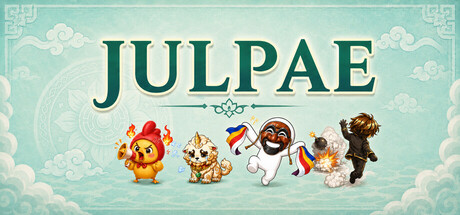
JULPAE does not use real-time generative AI during gameplay, does not generate player-facing content with AI at runtime, and does not connect players to any external generative AI service.
Portions of in-game art assets were initially generated with generative AI, followed by extensive manual hand-drawn revision, restructuring and detailed painting by the developer. Game text and localization drafts were AI-assisted then fully proofread and revised manually. All background music and sound effects are licensed free commercial assets downloaded from authorized resource websites; no generative AI was used for audio production. Source code was written with coding assistant tools.
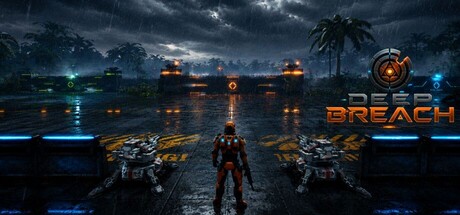
Deep Breach Demo contains some pre-generated visual assets created with assistance from generative AI tools during development. These include certain static 2D visual elements such as UI icons, item and turret imagery, and promotional/store artwork. No AI-generated content is created live during gameplay.
Artificial Intelligence was used as a supportive tool during the early stages of development, primarily for idea generation, documentation structuring, and general content review.
AI was also used to create certain placeholder images during the conceptual phase. These assets are temporary and will be replaced, as they are not intended to be part of the final version of the game.
All final game content, including design, gameplay systems, mechanics, artwork, and programming, has been manually created, implemented, and validated by the developer, along with licensed assets from the Unity Asset Store and contributions from freelancers (all properly credited).
Generative AI was used as a supplementary tool for certain visual and audio assets. Every AI-assisted asset underwent substantial manual editing, refinement, quality control, and integration by the development team.
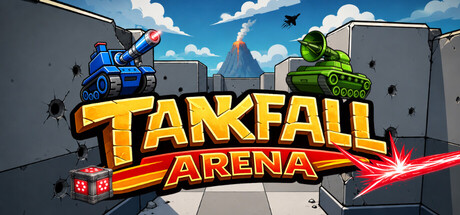
TankFall Arena contains certain pre-generated assets created with the assistance of generative AI tools during development. These assets may include promotional artwork, visual elements, audio content, and music. All AI-assisted content has been reviewed, curated, modified, and integrated by the developer as part of the game's overall design and presentation.
TankFall Arena does not generate AI content during gameplay and does not connect to external AI services while the game is running.
AI is used to help translate the game's text into the supported languages. All translations are reviewed before release. No AI-generated art, audio, or music.
Scourge of the Necromancer makes significant use of generative AI in its production. We want to be fully upfront about it.
Visual assets (2D images + video) — all AI-generated, then human-curated and human-edited. Every shipped image and video in the game and on the Steam store page was produced with AI tools, then reviewed, edited, and selected by hand by the developer. This covers: Steam store capsules and library art, the store-page background, all in-game achievement icons, hero portraits, the Necromancer concept art, decorative UI elements, all real-time cinematics (the defeat sequence and all victory variants), and the marketing trailer's atmospheric segments. Image models used: Google Imagen 4, Google Veo 3.1 (video), Nano Banana Pro / Gemini 3 Pro Image (Google), Black Forest Labs FLUX.2, Recraft V4 Pro, Ideogram V3, and Bria RMBG-2.0 (background removal). Final assets received human editing — compositing, color correction, retouching, frame extraction, masking, and rejection of unusable outputs.
3D models — AI-generated base meshes, then human-edited in Blender. The in-game hero character models (Knight, Cleric, Ranger, Wizard, Warrior, Alchemist) started as outputs from Tripo AI's generative 3D model service (FBX + texture PNGs), but each model was then opened in Blender by the developer for hand editing — mesh cleanup, geometry adjustments, and texture fixes — before being exported for use in the game. Each finished model was imported into Unity with hand-tuned scale, rotation, material configuration, and import-setting curation. Unsatisfactory generations were discarded and re-prompted; the Blender editing step is substantial enough that the shipped models are not pure AI output.
Music — AI-generated, then human-curated and post-processed. All music tracks in the game (menu, gameplay layers, boss phases, victory, defeat) were produced with Google Gemini's music generation, then human-selected, trimmed, looped, and mixed by the developer.
Necromancer voice — AI-generated, then human-edited. The Necromancer's spoken syllables were synthesized with ElevenLabs Text-to-Speech (Eleven Multilingual v2 model), then pitch-shifted, EQ'd, and processed with reverb in Audacity by the developer to produce the final in-game delivery. No other character has spoken voice lines in the shipped game.
Sound effects — all AI-generated. Every SFX in the game (ability sounds, ambient layers, UI sounds, footsteps, kill/spawn cues, tile state cues, boss audio) was produced with ElevenLabs Sound Effects, then human-selected, trimmed, processed, and mixed by the developer. The Necromancer voice lines use ElevenLabs Text-to-Speech (covered separately above).
Runtime behavior. The game does NOT use live-generated AI content at runtime. Every shipped asset is a fixed, pre-rendered file. Player-facing text, dialogue, narrative, lore, and game design were written by the developer without AI generation.
Code. Code development used Claude (Anthropic) as an AI coding assistant. This is behind-the-scenes efficiency tooling not consumed by players, but we mention it here for full transparency.
We believe that no person should be replaced by AI. All Primals — their models, animation, rigging, textures, SFX, and VFX — have been handcrafted by skilled artists.
Our developers may choose to use generative AI as part of an iterative, exploratory development process, but how and when is left to individual team members, and the final product always reflects the creativity and expression of our own development team.
As a small team, we have licensed some icons and 2D assets from external creators, and it is possible that some of these creators have used generative AI.
This game contains AI-generated content. Visual assets, sound effects, music, code, and various creative elements were created with the assistance of AI tools. The overall game concept, direction, gameplay ideas, and project design were created and directed by the developer.
Some of the art assets, music materials, and code-assisted compilation in this game utilize generative artificial intelligence (AI) technology. All such content has been manually reviewed and optimized
As a solo developer working on a passion project with very limited resources, I utilized generative AI as a workflow tool to help sketch out the initial base meshes and textures for the miniatures and terrain elements. However, every single asset was then manually refined, over painted, and fully optimized by me to ensure a consistent, high-quality art style and solid performance.
We continue to draw all game art by hand.
Some of our sounds have been generated using a tool called ElevenLabs. We use a wide range of co-development tools to help optimise and test the code in our minigames. We have used tools like OpenAI to help with localisation of our content to other languages.
Generative AI has been used during development to create certain concept art, promotional materials, visual mockups, and marketing assets. These assets are used for early-stage presentation and community engagement.
Gameplay systems, game design, programming, and final in-game content are developed and curated by the development team. No live-generated AI content is currently generated for players during gameplay.
This project's entire graphic asset collection (all sprites) and all code is entirely generated by AI. It has been assembled and tweaked by the creator, but otherwise is 95% AI generated. This is purposeful and was intended to test some limits of Claude and GPT5.
Deep In The Mine was developed by a single person. Artificial intelligence was used to save time and correct certain shortcomings, particularly in audio creation and mesh generation.
Many of the game images have been made with AI though they have been heavily edited afterwards. It has also assisted with some of the code. This game would not be possible without it as I'm a small indie dev.
Given I am a solo developer, Generative AI tools were utilized as development assistants to optimize workflows.
Also, some of the backgrounds are based on images created with AI, as well as a few items. They were only used as a basis to start from and have been heavily edited manually afterwards to make them fit with the rest of the game's pixel art artstyle.
Some of the 2D user interface (UI) elements and 3D models in the game were generated using AI tools. These assets have been carefully reviewed, edited, and integrated by the developer to fit the game's art style and ensure they comply with copyright standards.
Generative AI tools were used as part of the development and drafting workflow. Hex Tower Boogie does not generate content during gameplay, does not connect to external AI services, and all shipped/store content is reviewed and curated by the developer.
Some code assistance tools and limited generative AI techniques were used during development. Some card artwork has been refined with the assistance of AI-based editing tools.
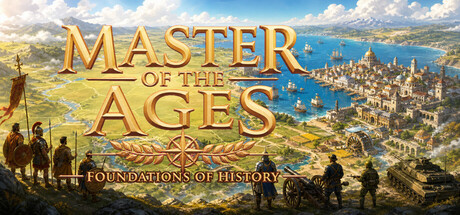
Master of the Ages is a grand strategy game engineered by a solo developer with 15+ years of senior software engineering and programming competition experience. To achieve grand-strategy scale as a single creator, a generative AI workflow was utilized to co-design the code architecture and write the codebase under the developer's supervision, backed by a rigorous framework of over 2,500 automated tests to catch edge-case bugs and prevent regressions during development. Generative AI was also used to produce all player-facing graphics (including all unit, building, and technology assets) and generate the historical text layers.
Crown Caps Soccer uses generative artificial intelligence tools for part of its content. Specifically, we use AI to generate and translate interface text and descriptions, as well as to assist in creating certain in-game content. All AI-generated content is reviewed by our team before publication.
Some promotional artwork, store capsule images, and marketing visuals were created with the assistance of generative AI tools and then reviewed, selected, and edited by the developer. The game itself does not generate new AI content during gameplay.
Some marketing artwork on this store page (capsule images, library hero, page background) was generated with AI image tools and then composited with vector-rendered typography. No AI-generated content ships inside the game itself. All player names, team names, draft classes, and simulation outcomes are produced by procedural algorithms with a seeded random number generator, not by AI models.
This game uses generative AI tools during development for selected visual, audio, and programming-related tasks.
【AI-assisted content and development】
• Visual assets: Some in-game visuals, including ship sprites, scenario artwork, terrain textures, UI illustrations, and other decorative assets, were created with generative AI image tools, then selected, edited, modified, and integrated by the developer.
• Audio assets: Some background and combat music tracks were created with AI music generation tools, then edited, mastered, and loudness-normalized for in-game use.
• Programming assistance: AI coding tools are used to assist with code generation, implementation, debugging, and development. Game systems, mechanics, simulation rules, balance, and overall technical design are directed and determined by the developer.
【Runtime and game content】
• No generative AI operates during gameplay or at runtime. All required assets and game logic are included with the game and run locally.
• Scenario design, gameplay rules, ship statistics, historical information, and overall game design are researched, designed, reviewed, and integrated by the developer.
All AI-assisted assets and generated code are reviewed, tested, and integrated by the developer before being included in the released game.
During development, generative AI tools were used as supplementary assistance for document writing, draft store page text, UI text, localization drafts, and the planning of some concept visual materials.
All final content included in the release build, store page, and marketing materials is reviewed, selected, and edited by the developer before use.
JULPAE does not use real-time generative AI during gameplay, does not generate player-facing content with AI at runtime, and does not connect players to any external generative AI service.
Portions of in-game art assets were initially generated with generative AI, followed by extensive manual hand-drawn revision, restructuring and detailed painting by the developer. Game text and localization drafts were AI-assisted then fully proofread and revised manually. All background music and sound effects are licensed free commercial assets downloaded from authorized resource websites; no generative AI was used for audio production. Source code was written with coding assistant tools.
Deep Breach Demo contains some pre-generated visual assets created with assistance from generative AI tools during development. These include certain static 2D visual elements such as UI icons, item and turret imagery, and promotional/store artwork. No AI-generated content is created live during gameplay.
Artificial Intelligence was used as a supportive tool during the early stages of development, primarily for idea generation, documentation structuring, and general content review.
AI was also used to create certain placeholder images during the conceptual phase. These assets are temporary and will be replaced, as they are not intended to be part of the final version of the game.
All final game content, including design, gameplay systems, mechanics, artwork, and programming, has been manually created, implemented, and validated by the developer, along with licensed assets from the Unity Asset Store and contributions from freelancers (all properly credited).
Generative AI was used as a supplementary tool for certain visual and audio assets. Every AI-assisted asset underwent substantial manual editing, refinement, quality control, and integration by the development team.
TankFall Arena contains certain pre-generated assets created with the assistance of generative AI tools during development. These assets may include promotional artwork, visual elements, audio content, and music. All AI-assisted content has been reviewed, curated, modified, and integrated by the developer as part of the game's overall design and presentation.
TankFall Arena does not generate AI content during gameplay and does not connect to external AI services while the game is running.
AI is used to help translate the game's text into the supported languages. All translations are reviewed before release. No AI-generated art, audio, or music.
Scourge of the Necromancer makes significant use of generative AI in its production. We want to be fully upfront about it.
Visual assets (2D images + video) — all AI-generated, then human-curated and human-edited. Every shipped image and video in the game and on the Steam store page was produced with AI tools, then reviewed, edited, and selected by hand by the developer. This covers: Steam store capsules and library art, the store-page background, all in-game achievement icons, hero portraits, the Necromancer concept art, decorative UI elements, all real-time cinematics (the defeat sequence and all victory variants), and the marketing trailer's atmospheric segments. Image models used: Google Imagen 4, Google Veo 3.1 (video), Nano Banana Pro / Gemini 3 Pro Image (Google), Black Forest Labs FLUX.2, Recraft V4 Pro, Ideogram V3, and Bria RMBG-2.0 (background removal). Final assets received human editing — compositing, color correction, retouching, frame extraction, masking, and rejection of unusable outputs.
3D models — AI-generated base meshes, then human-edited in Blender. The in-game hero character models (Knight, Cleric, Ranger, Wizard, Warrior, Alchemist) started as outputs from Tripo AI's generative 3D model service (FBX + texture PNGs), but each model was then opened in Blender by the developer for hand editing — mesh cleanup, geometry adjustments, and texture fixes — before being exported for use in the game. Each finished model was imported into Unity with hand-tuned scale, rotation, material configuration, and import-setting curation. Unsatisfactory generations were discarded and re-prompted; the Blender editing step is substantial enough that the shipped models are not pure AI output.
Music — AI-generated, then human-curated and post-processed. All music tracks in the game (menu, gameplay layers, boss phases, victory, defeat) were produced with Google Gemini's music generation, then human-selected, trimmed, looped, and mixed by the developer.
Necromancer voice — AI-generated, then human-edited. The Necromancer's spoken syllables were synthesized with ElevenLabs Text-to-Speech (Eleven Multilingual v2 model), then pitch-shifted, EQ'd, and processed with reverb in Audacity by the developer to produce the final in-game delivery. No other character has spoken voice lines in the shipped game.
Sound effects — all AI-generated. Every SFX in the game (ability sounds, ambient layers, UI sounds, footsteps, kill/spawn cues, tile state cues, boss audio) was produced with ElevenLabs Sound Effects, then human-selected, trimmed, processed, and mixed by the developer. The Necromancer voice lines use ElevenLabs Text-to-Speech (covered separately above).
Runtime behavior. The game does NOT use live-generated AI content at runtime. Every shipped asset is a fixed, pre-rendered file. Player-facing text, dialogue, narrative, lore, and game design were written by the developer without AI generation.
Code. Code development used Claude (Anthropic) as an AI coding assistant. This is behind-the-scenes efficiency tooling not consumed by players, but we mention it here for full transparency.
We believe that no person should be replaced by AI. All Primals — their models, animation, rigging, textures, SFX, and VFX — have been handcrafted by skilled artists.
Our developers may choose to use generative AI as part of an iterative, exploratory development process, but how and when is left to individual team members, and the final product always reflects the creativity and expression of our own development team.
As a small team, we have licensed some icons and 2D assets from external creators, and it is possible that some of these creators have used generative AI.
This game contains AI-generated content. Visual assets, sound effects, music, code, and various creative elements were created with the assistance of AI tools. The overall game concept, direction, gameplay ideas, and project design were created and directed by the developer.
Some of the art assets, music materials, and code-assisted compilation in this game utilize generative artificial intelligence (AI) technology. All such content has been manually reviewed and optimized
As a solo developer working on a passion project with very limited resources, I utilized generative AI as a workflow tool to help sketch out the initial base meshes and textures for the miniatures and terrain elements. However, every single asset was then manually refined, over painted, and fully optimized by me to ensure a consistent, high-quality art style and solid performance.
We continue to draw all game art by hand.
Some of our sounds have been generated using a tool called ElevenLabs. We use a wide range of co-development tools to help optimise and test the code in our minigames. We have used tools like OpenAI to help with localisation of our content to other languages.
Generative AI has been used during development to create certain concept art, promotional materials, visual mockups, and marketing assets. These assets are used for early-stage presentation and community engagement.
Gameplay systems, game design, programming, and final in-game content are developed and curated by the development team. No live-generated AI content is currently generated for players during gameplay.
This project's entire graphic asset collection (all sprites) and all code is entirely generated by AI. It has been assembled and tweaked by the creator, but otherwise is 95% AI generated. This is purposeful and was intended to test some limits of Claude and GPT5.
Deep In The Mine was developed by a single person. Artificial intelligence was used to save time and correct certain shortcomings, particularly in audio creation and mesh generation.
Many of the game images have been made with AI though they have been heavily edited afterwards. It has also assisted with some of the code. This game would not be possible without it as I'm a small indie dev.
Given I am a solo developer, Generative AI tools were utilized as development assistants to optimize workflows.
Also, some of the backgrounds are based on images created with AI, as well as a few items. They were only used as a basis to start from and have been heavily edited manually afterwards to make them fit with the rest of the game's pixel art artstyle.
Some of the 2D user interface (UI) elements and 3D models in the game were generated using AI tools. These assets have been carefully reviewed, edited, and integrated by the developer to fit the game's art style and ensure they comply with copyright standards.
Generative AI tools were used as part of the development and drafting workflow. Hex Tower Boogie does not generate content during gameplay, does not connect to external AI services, and all shipped/store content is reviewed and curated by the developer.
Some code assistance tools and limited generative AI techniques were used during development. Some card artwork has been refined with the assistance of AI-based editing tools.
Master of the Ages is a grand strategy game engineered by a solo developer with 15+ years of senior software engineering and programming competition experience. To achieve grand-strategy scale as a single creator, a generative AI workflow was utilized to co-design the code architecture and write the codebase under the developer's supervision, backed by a rigorous framework of over 2,500 automated tests to catch edge-case bugs and prevent regressions during development. Generative AI was also used to produce all player-facing graphics (including all unit, building, and technology assets) and generate the historical text layers.
Crown Caps Soccer uses generative artificial intelligence tools for part of its content. Specifically, we use AI to generate and translate interface text and descriptions, as well as to assist in creating certain in-game content. All AI-generated content is reviewed by our team before publication.
Some promotional artwork, store capsule images, and marketing visuals were created with the assistance of generative AI tools and then reviewed, selected, and edited by the developer. The game itself does not generate new AI content during gameplay.
Some marketing artwork on this store page (capsule images, library hero, page background) was generated with AI image tools and then composited with vector-rendered typography. No AI-generated content ships inside the game itself. All player names, team names, draft classes, and simulation outcomes are produced by procedural algorithms with a seeded random number generator, not by AI models.