Public Steam disclosure research25,383 disclosures tracked
Where do games disclose AI use?
Search developers’ Steam disclosures, compare classified AI use across
games, and follow recorded changes.
This index adds cross-game classifications and statistics to
statements published on individual store pages.
Groups reflect automatic analysis of public disclosures; mature records are excluded. These counts do not measure AI use across all of Steam.
Missing or unclear statements cannot establish whether a game uses AI.
Many of the game images have been made with AI though they have been heavily edited afterwards. It has also assisted with some of the code. This game would not be possible without it as I'm a small indie dev.
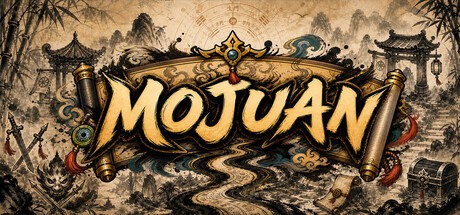
Generative AI was used to create the original images for the relics, the talismans, and zodiacs. We also used generative AI when writing the game's code.
I created this game in my coding class for school which prioritizes AI coding and development. I have coded a significant portion of this game using artificial tools.
This game includes pre-generated content made with the assistance of generative AI tools, including some visual assets, audio/sound effects, text, localization, and other production materials. AI tools were also used during development to support programming and production workflows. All AI-assisted content included in the game has been manually reviewed and refined by the development team. The game does not generate AI content during gameplay.
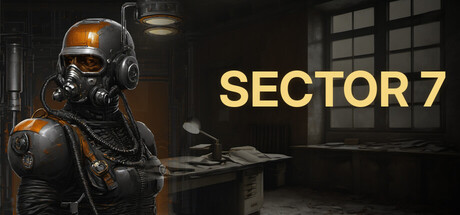
Some of Sector 7's artwork — including its store and marketing images — and its narrative text were created with AI assistance and then reviewed and edited by the developer. Localization into additional languages used AI translation with human review.
This game used generative AI tools during development to assist with the creation and iteration of some visual assets, text and code. All AI-assisted content was reviewed, edited and manually implemented by the developer. The game does not generate AI content during gameplay.
Entire story, dialogues, codes are hand-crafted by human developers. Most of in-game UI and arts were refined by our human art designer, while AI-based tools supported the initial bases for character illustrations, card illustrations, and visual novel backgrounds.
This title makes assistive use of generative AI tools in the following areas. All AI-generated outputs are manually reviewed, edited, and curated by the development team before being incorporated as final assets, and we have taken care to ensure that they do not infringe on the rights of third parties. No real-time AI generation occurs during gameplay.[Pre-Rendered Content — AI-Assisted Areas]- Production support for a portion of the in-game visual assets- Production support for a portion of the in-game music (BGM) and sound effects- Translation support for store page localization across supported languages (with human proofreading)[Live Generation]The game does not invoke generative AI in real time at any point during gameplay.
Some code assistance tools and limited generative AI techniques were used during development. Some card artwork has been refined with the assistance of AI-based editing tools.
Game design, code, mechanics, gameplay systems, sprites, and writing are entirely human-made. All AI-generated assets were reviewed, edited, composed, and integrated manually by the developer. No AI content is generated at runtime — every asset is pre-authored and curated.
Generative AI was used in the creation of:
Marketing and store page artwork (capsules, banners, hero, logo)
In-game background art, sprites directions
Music tracks
This game contains pre-generated content created with the assistance of generative AI tools during development.
AI was used mainly for card illustrations, UI design drafts, some text creation assistance, and programming assistance.
The game does not generate new images, audio, text, or other content using AI during gameplay.
During the development of Super Monsterdoom, generative AI tools were used to support text creation, visual exploration, and mechanical iteration. As a solo developer, these tools were key to accelerating and expanding the process, but every final asset, text, and design decision went through extensive human editing, refinement, and hands-on work.
We begin by defining detailed character backgrounds, which are then transformed into base concept art using generative AI. Subsequently, we perform local editing, detailed repainting, and textural refinement on these images to ensure every asset meets our specific design requirements.
AI tools were used to assist in creating some store page descriptions and promotional graphics. The game itself does not use AI-generated content during gameplay.
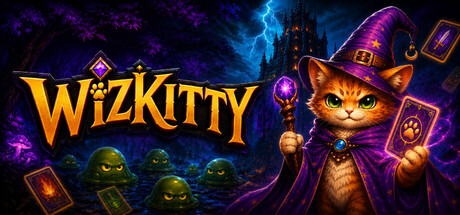
WizKitty uses generative AI-assisted artwork for some visual assets. These assets were creatively directed, curated, edited, and integrated by the developer to fit the game’s visual style. WizKitty does not use live generative AI during gameplay.
I'm a solo developer using Generative AI as a supportive tool to realize my gameplay vision. The game has been crafted with human intent and is still firmly anchored in manual craftsmanship. Generative AI has helped with coding, some art assets, and the recording of voiceover narration.
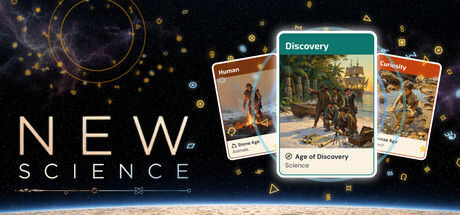
New Science uses generative AI as a core part of its discovery system. When a player attempts a combination, an AI model may be used to determine whether the two selected objects can logically produce a new result. Generative AI is also used to create an illustration for newly discovered objects. Known discoveries are stored and reused, so the same established combination does not need to be generated again for every player. This system allows New Science to support open-ended experimentation beyond a small, completely predefined recipe list. Players may therefore encounter newly generated combinations and images that have not previously been seen by the development team.
We used ai to assist us on music and art because we are poor and not capable of this yet. We will strive to remove or reduce ai to a minimum once we are financially capable.
AI tools were used during development only for pre-generated content, including concept/reference artwork, store assets, music/audio drafts, and localization or translation assistance.
The game does not generate AI content at runtime. Players do not interact with any live AI system, and no text, images, audio, or gameplay content is dynamically generated by AI while the game is running.
All AI-assisted content is reviewed, edited, and integrated by the developer before release.
AI tools were used to assist in creating some store page descriptions and promotional graphics. The game itself does not use AI-generated content during gameplay.
Generative AI tools were used during development to assist with portions of the game’s code and to create some visual assets. All AI-generated content has been reviewed and modified by the development team to ensure quality and consistency with the game’s design.
Where possible, we prioritize the use of original, human-created assets. We take care to ensure that all content included in the game complies with applicable intellectual property and content guidelines.
Visual AI assets were used to fasten the development process, with caution and help of art direction to keep the sketch art style consistent and avoid being another AI slop game.
The art and music assets in this game were created with the assistance of generative AI technology.
As a registered architect in my day job, I am used to using tools like CAD to aid my designs. In game development, AI plays the exact same role—it is a tool, but the soul of the design comes from the human creator. I do not allow any rough, unpolished assets into my game. Therefore, all AI-generated content has gone through my strict "manual inspection": rigorous prompt tuning, meticulous manual overpainting, and audio trimming. I carefully polish every visual and auditory "brick" to build the perfect cultivation world, pouring my true craftsmanship entirely into the core "Eight Trigrams Array" deck-building experience.
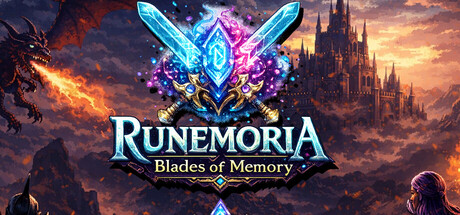
Some visual assets used in Runemoria – Blades of Memory were created with the assistance of generative AI tools and have been modified, curated, and integrated as part of the game’s development process. AI-generated content is limited to pre-rendered visual assets and does not generate gameplay content during play.
As a poor indie developer, on one hand, I’m grateful that AI has lowered my costs and improved my efficiency. On the other hand, I’m very aware of its limitations, so I use it only within a very limited scope. Specifically, it is mainly used to assist with programming and art design. The generated content is never directly put into the game—it always undergoes manual review and refinement.
Some artwork assets including achievement icons and store capsule art were created with the assistance of AI image generation tools (PixelLab). All AI-generated content was reviewed and curated by the developer.
Generative AI was used only during production for early concept exploration and the creation of some promotional asset drafts. The game does not use generative AI during gameplay. All core in-game assets were manually reviewed, edited, and reworked by human artists.
I'm a solo developer. Without AI tools, this game would not exist — the art, music, and copy would have been unaffordable to commission and impossible for me to produce alone. AI let me focus on what I actually built by hand: the game design, the mechanics, the 181 tomes, the scoring engine, the balance, the words.
What's AI-generated:
• Visual art (backgrounds, character portraits, tome/scroll/blessing illustrations, store page art) — generated with AI image tools, curated and selected by me
• Music — generated with AI audio tools, curated and selected by me
• Some flavor text and descriptive copy — drafted with AI assistance, edited by me
What's not AI:
• The game itself — every system, mechanic, balance number, character design, and core decision is mine
• The dictionary, the tile distributions, the scoring math, the run structure, the boss fights — hand-built
• The code — written by me with the help of AI assistants the same way any modern developer uses them
No AI runs at runtime. Nothing is generated for you on the fly during play. Everything you see was reviewed before it shipped.
This game uses generative artificial intelligence (AI) to create some of its visual art assets. Certain in-game images and illustrations were partially generated with the assistance of AI-based painting tools.
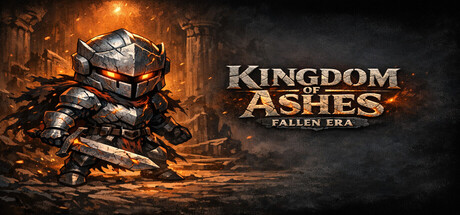
Kingdom of Ashes uses generative AI for select visual assets:
• Character portraits, enemy sprites, card illustrations, and background art were generated using Microsoft Copilot and then curated, composited, and refined by the developer for use in the game.
All gameplay code, mechanics, narrative text, and game design were created by the developer. No AI content is generated live during gameplay, and the game does not connect to any third-party AI service at runtime — all AI-generated visuals were finalized during development and ship as static assets.
Based on the developer's original creative direction, AI tools were used to generate the game's store page capsule images, soundtrack, and the non-English in-game text translations. AI coding assistance supported programming during development.
Visual assets in the game, including static and animated artwork, were created using generative AI tools. Generative AI was also used during the creation of the game's music.
Generative AI was used to create artwork for the game, including visual assets seen by players and/or promotional materials. All AI-generated artwork was reviewed, selected, and edited by the developer before inclusion. The game does not generate AI content live during gameplay.
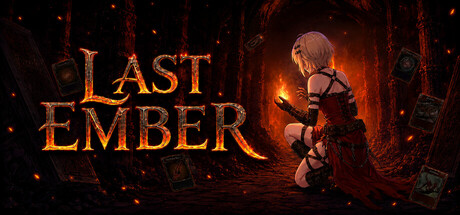
We're a small indie team, and we used generative AI to help make some of the art in Last Ember — card illustrations, backgrounds, character portraits, and a few short animations. We also used it on a handful of sound effects. Everything you see and hear in the game was picked, edited, and signed off by us. The game itself doesn't run any AI while you play — what ships is what you get.
This game utilizes generative AI tools to assist in the creation of pre-rendered 2D visual assets, including character illustrations and in-game icons.
Many of the game images have been made with AI though they have been heavily edited afterwards. It has also assisted with some of the code. This game would not be possible without it as I'm a small indie dev.
Generative AI was used to create the original images for the relics, the talismans, and zodiacs. We also used generative AI when writing the game's code.
I created this game in my coding class for school which prioritizes AI coding and development. I have coded a significant portion of this game using artificial tools.
This game includes pre-generated content made with the assistance of generative AI tools, including some visual assets, audio/sound effects, text, localization, and other production materials. AI tools were also used during development to support programming and production workflows. All AI-assisted content included in the game has been manually reviewed and refined by the development team. The game does not generate AI content during gameplay.
Some of Sector 7's artwork — including its store and marketing images — and its narrative text were created with AI assistance and then reviewed and edited by the developer. Localization into additional languages used AI translation with human review.
This game used generative AI tools during development to assist with the creation and iteration of some visual assets, text and code. All AI-assisted content was reviewed, edited and manually implemented by the developer. The game does not generate AI content during gameplay.
Entire story, dialogues, codes are hand-crafted by human developers. Most of in-game UI and arts were refined by our human art designer, while AI-based tools supported the initial bases for character illustrations, card illustrations, and visual novel backgrounds.
This title makes assistive use of generative AI tools in the following areas. All AI-generated outputs are manually reviewed, edited, and curated by the development team before being incorporated as final assets, and we have taken care to ensure that they do not infringe on the rights of third parties. No real-time AI generation occurs during gameplay.[Pre-Rendered Content — AI-Assisted Areas]- Production support for a portion of the in-game visual assets- Production support for a portion of the in-game music (BGM) and sound effects- Translation support for store page localization across supported languages (with human proofreading)[Live Generation]The game does not invoke generative AI in real time at any point during gameplay.
Some code assistance tools and limited generative AI techniques were used during development. Some card artwork has been refined with the assistance of AI-based editing tools.
Game design, code, mechanics, gameplay systems, sprites, and writing are entirely human-made. All AI-generated assets were reviewed, edited, composed, and integrated manually by the developer. No AI content is generated at runtime — every asset is pre-authored and curated.
Generative AI was used in the creation of:
Marketing and store page artwork (capsules, banners, hero, logo)
In-game background art, sprites directions
Music tracks
This game contains pre-generated content created with the assistance of generative AI tools during development.
AI was used mainly for card illustrations, UI design drafts, some text creation assistance, and programming assistance.
The game does not generate new images, audio, text, or other content using AI during gameplay.
During the development of Super Monsterdoom, generative AI tools were used to support text creation, visual exploration, and mechanical iteration. As a solo developer, these tools were key to accelerating and expanding the process, but every final asset, text, and design decision went through extensive human editing, refinement, and hands-on work.
We begin by defining detailed character backgrounds, which are then transformed into base concept art using generative AI. Subsequently, we perform local editing, detailed repainting, and textural refinement on these images to ensure every asset meets our specific design requirements.
AI tools were used to assist in creating some store page descriptions and promotional graphics. The game itself does not use AI-generated content during gameplay.
WizKitty uses generative AI-assisted artwork for some visual assets. These assets were creatively directed, curated, edited, and integrated by the developer to fit the game’s visual style. WizKitty does not use live generative AI during gameplay.
I'm a solo developer using Generative AI as a supportive tool to realize my gameplay vision. The game has been crafted with human intent and is still firmly anchored in manual craftsmanship. Generative AI has helped with coding, some art assets, and the recording of voiceover narration.
New Science uses generative AI as a core part of its discovery system. When a player attempts a combination, an AI model may be used to determine whether the two selected objects can logically produce a new result. Generative AI is also used to create an illustration for newly discovered objects. Known discoveries are stored and reused, so the same established combination does not need to be generated again for every player. This system allows New Science to support open-ended experimentation beyond a small, completely predefined recipe list. Players may therefore encounter newly generated combinations and images that have not previously been seen by the development team.
We used ai to assist us on music and art because we are poor and not capable of this yet. We will strive to remove or reduce ai to a minimum once we are financially capable.
AI tools were used during development only for pre-generated content, including concept/reference artwork, store assets, music/audio drafts, and localization or translation assistance.
The game does not generate AI content at runtime. Players do not interact with any live AI system, and no text, images, audio, or gameplay content is dynamically generated by AI while the game is running.
All AI-assisted content is reviewed, edited, and integrated by the developer before release.
AI tools were used to assist in creating some store page descriptions and promotional graphics. The game itself does not use AI-generated content during gameplay.
Generative AI tools were used during development to assist with portions of the game’s code and to create some visual assets. All AI-generated content has been reviewed and modified by the development team to ensure quality and consistency with the game’s design.
Where possible, we prioritize the use of original, human-created assets. We take care to ensure that all content included in the game complies with applicable intellectual property and content guidelines.
Visual AI assets were used to fasten the development process, with caution and help of art direction to keep the sketch art style consistent and avoid being another AI slop game.
The art and music assets in this game were created with the assistance of generative AI technology.
As a registered architect in my day job, I am used to using tools like CAD to aid my designs. In game development, AI plays the exact same role—it is a tool, but the soul of the design comes from the human creator. I do not allow any rough, unpolished assets into my game. Therefore, all AI-generated content has gone through my strict "manual inspection": rigorous prompt tuning, meticulous manual overpainting, and audio trimming. I carefully polish every visual and auditory "brick" to build the perfect cultivation world, pouring my true craftsmanship entirely into the core "Eight Trigrams Array" deck-building experience.
Some visual assets used in Runemoria – Blades of Memory were created with the assistance of generative AI tools and have been modified, curated, and integrated as part of the game’s development process. AI-generated content is limited to pre-rendered visual assets and does not generate gameplay content during play.
As a poor indie developer, on one hand, I’m grateful that AI has lowered my costs and improved my efficiency. On the other hand, I’m very aware of its limitations, so I use it only within a very limited scope. Specifically, it is mainly used to assist with programming and art design. The generated content is never directly put into the game—it always undergoes manual review and refinement.
Some artwork assets including achievement icons and store capsule art were created with the assistance of AI image generation tools (PixelLab). All AI-generated content was reviewed and curated by the developer.
Generative AI was used only during production for early concept exploration and the creation of some promotional asset drafts. The game does not use generative AI during gameplay. All core in-game assets were manually reviewed, edited, and reworked by human artists.
I'm a solo developer. Without AI tools, this game would not exist — the art, music, and copy would have been unaffordable to commission and impossible for me to produce alone. AI let me focus on what I actually built by hand: the game design, the mechanics, the 181 tomes, the scoring engine, the balance, the words.
What's AI-generated:
• Visual art (backgrounds, character portraits, tome/scroll/blessing illustrations, store page art) — generated with AI image tools, curated and selected by me
• Music — generated with AI audio tools, curated and selected by me
• Some flavor text and descriptive copy — drafted with AI assistance, edited by me
What's not AI:
• The game itself — every system, mechanic, balance number, character design, and core decision is mine
• The dictionary, the tile distributions, the scoring math, the run structure, the boss fights — hand-built
• The code — written by me with the help of AI assistants the same way any modern developer uses them
No AI runs at runtime. Nothing is generated for you on the fly during play. Everything you see was reviewed before it shipped.
This game uses generative artificial intelligence (AI) to create some of its visual art assets. Certain in-game images and illustrations were partially generated with the assistance of AI-based painting tools.
Kingdom of Ashes uses generative AI for select visual assets:
• Character portraits, enemy sprites, card illustrations, and background art were generated using Microsoft Copilot and then curated, composited, and refined by the developer for use in the game.
All gameplay code, mechanics, narrative text, and game design were created by the developer. No AI content is generated live during gameplay, and the game does not connect to any third-party AI service at runtime — all AI-generated visuals were finalized during development and ship as static assets.
Based on the developer's original creative direction, AI tools were used to generate the game's store page capsule images, soundtrack, and the non-English in-game text translations. AI coding assistance supported programming during development.
Visual assets in the game, including static and animated artwork, were created using generative AI tools. Generative AI was also used during the creation of the game's music.
Generative AI was used to create artwork for the game, including visual assets seen by players and/or promotional materials. All AI-generated artwork was reviewed, selected, and edited by the developer before inclusion. The game does not generate AI content live during gameplay.
We're a small indie team, and we used generative AI to help make some of the art in Last Ember — card illustrations, backgrounds, character portraits, and a few short animations. We also used it on a handful of sound effects. Everything you see and hear in the game was picked, edited, and signed off by us. The game itself doesn't run any AI while you play — what ships is what you get.
This game utilizes generative AI tools to assist in the creation of pre-rendered 2D visual assets, including character illustrations and in-game icons.