Public Steam disclosure research25,383 disclosures tracked
Where do games disclose AI use?
Search developers’ Steam disclosures, compare classified AI use across
games, and follow recorded changes.
This index adds cross-game classifications and statistics to
statements published on individual store pages.
Groups reflect automatic analysis of public disclosures; mature records are excluded. These counts do not measure AI use across all of Steam.
Missing or unclear statements cannot establish whether a game uses AI.
Some visual concepts, promotional artwork, and certain written materials used for the game's presentation were created or refined with the assistance of generative AI. All AI-assisted content has been carefully reviewed, edited, and approved by the development team to ensure artistic consistency, originality, and quality. The gameplay, design decisions, and final player experience are fully curated by the developers.
This game uses generative AI only for in-game character dialogue. Players can communicate with certain characters using natural language, and the AI generates text responses based on the game's setting and the current conversation context. Apart from character dialogue text, the game's artwork, music, sound effects, code, store page assets, and marketing materials are not generated by AI.
Crooked Derby includes some pre-generated visual assets created with generative AI. All AI-assisted content was iterated on, reviewed, and approved by the developer before being included in the game.
None of the game's artwork, audio, or imagery is AI-generated. Portraits, interface, and all store and marketing art are hand-authored vector and procedural work, and that is a hard rule of the project. We do use AI assistance during development for writing and code, including drafting store text and the scripts that lay out our marketing art, all of it reviewed and edited by hand. No image-generation models are used anywhere, in the game or in its marketing.
Dialogue and narration are generated at runtime by a small language model running entirely on the player's machine. Nothing is sent to any server. The model has no authority over the game: a deterministic simulation decides every outcome, fact, and number, and the model only phrases scenes from state the engine hands it. Its output is structurally constrained and validated against the simulation before it appears, and invalid output is rejected. Prompts and validation keep generated text within the game's fiction and its PG-13 register. Player-typed orders go only to the local model and never leave the machine.
This game is built by a Master of the Fine Arts in Digital and New Media with a specialization in procedural content. Generative AI tools were used during development to create and iterate on pre-rendered visual assets, including dream artwork, backgrounds, capsule art, and marketing imagery. All AI-assisted content is selected, edited, and integrated by the development team. The game does not generate AI content during gameplay and does not connect to third-party AI services during play.
The game's 2D artwork (character portraits, scenes, backgrounds) and music were created with generative AI tools, then curated and edited by the developer. Parts of the game's code and narrative text were written with AI assistance, under human direction, review and rewriting. All AI-assisted content is pre-generated during development: nothing is generated by AI while you play.
Im a solo indie dev, so I used IA tools for better usage of production time. I used code tools to make it easier to implement mechanics. I used Art IA tools to make starting points from where I can work on top. I used Sound IA tools to make music for this game.
Of course all these is because im a solo dev. Im planning to contract a team in the future if Im able to.
The art, audio, and writing in Refund Speedrun are created by hand. Generative AI was used only for the voice-over narration in our promotional teaser trailer (ElevenLabs). The game does not generate any content using AI at runtime.
AI-assisted. Developer-directed. Generative AI was used as a production tool during development: Claude assisted with prototyping and implementation, while Google Lyria was used to create the game's original 15-track soundtrack. The music and all other AI-assisted material were selected, edited, integrated, and play-tested by the developer to serve Boiler & Blood's dieselpunk folk-occult world.
This game uses generative artificial intelligence in the following ways: pixel character artwork and background images. AI-generated content was reviewed and edited by the developer before being included in the game or store page.
Some promotional images and marketing content for Maze Mischief were created with the assistance of generative artificial intelligence tools and subsequently reviewed and adjusted by the developer.
Train Trek uses generative AI in two ways.
During development we used AI tools to help make some assets: the user-interface art (HUD and menu icons, menu artwork, frames, button plates, mouse cursors), the instrumental soundtrack, and some sound effects. All of it was chosen, edited and finished by hand before it shipped. The 3D models are built procedurally by our own scripts, and the design, world generation and balancing are authored by hand. Parts of the source code were written with an AI coding assistant, reviewed and tested by the developer.
While you play, the game speaks using a text-to-speech model that ships inside the game and runs entirely on your own computer. It voices tutorial guidance, hints and menu narration instead of pre-recorded audio. It needs no internet connection, sends nothing anywhere, and never records or listens to you. It only reads lines we wrote and shipped with the game - it does not invent dialogue.
As this is a solo-developed project, I have utilized generative AI assistants for the writing, debugging, and structuring of the game's programming code.
Additionally, AI has been used in a very minor and complementary capacity for some secondary environmental visual elements. The vast majority of the core artistic assets, art direction, game design, 3D modeling, and overall experience have been entirely hand-crafted and assembled.
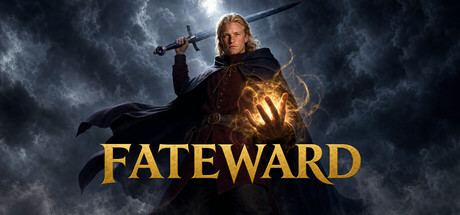
Fateward's visuals, UI, music, sound, character voices, and Steam store assets are created using generative AI and curated by hand, from a game written and directed by the developer.
For complete transparency with our players, here is our stance on how this game is built:
1. Human Craftsmanship First
Human creativity and hands-on talent are always our highest priority. Where development is handled by skilled creators and artists, the work is crafted traditionally. AI is never used to replace active human contribution.
2. Bridging the Resource Gap
Where specialized resources, budgets, or personnel are missing, we use AI tools to bridge the gaps and keep development moving forward. As an independent project, we do not have the luxury of waiting on corporate budgets; we use every tool available to ensure the game actually gets finished and delivered to you.
3. Moving Forward, Never Backward
Our development philosophy is built on momentum. We will never delay updates, halt progress, or backtrack to remove or replace AI-assisted elements just to appease online discourse. If the game secures funding or high sales down the line, those resources will be used exclusively to hire real people to build new features, content, and expansions. We only move forward.
The Bottom Line
We refuse to let a lack of corporate backing stop us from making a great game. We choose to embrace the tools of the future to deliver a unique RTS experience today. If you value raw independent drive, transparency, and a studio focused entirely on delivering great gameplay "by any means necessary," thank you for your support.
During development we used generative AI tools to create some content that ships in the game:
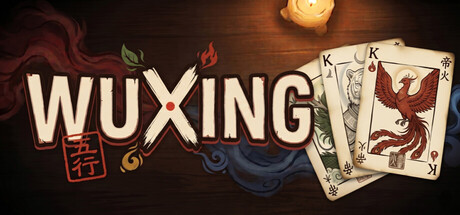
- Visual art: Some 2D art (card illustrations, store/capsule art, boss and deity illustrations, UI seals, and marketing images) was generated with an image model, then hand-edited, composited, and curated by us.
- Music: The looping background music tracks were generated with an AI music tool, then edited and mastered (trimmed and crossfade-looped) by us before inclusion.
- Text / localization: Some in-game text and its translations (Traditional Chinese, Simplified Chinese, English) were produced with AI assistance and then reviewed and edited by us.
All AI-generated content was reviewed by a human before shipping.
We have confirmed our right to use these tools' output commercially, and have taken steps to ensure the content does not infringe third-party IP.
Generative artificial intelligence has been used to generate store page thumbnails based on the developers artwork. All in game artwork has been drawn by hand by the developer.
This game uses AI-generated content in two areas: background music tracks were created using Mureka AI, and some pixel art assets were generated using PixelLab. All AI-generated content was reviewed, curated, and integrated by the developer.
The game includes pre-generated visual and audio assets created with the assistance of generative AI tools. These include character artwork, environmental backgrounds, music, and singing vocals. All lyrics were written entirely by the developer without the use of generative AI, while the music and vocals were created through a collaborative process involving human creative direction and generative AI tools. All AI-assisted outputs were reviewed, selected, edited, and integrated by the developer. The game does not generate content during gameplay and does not send player input to any AI service.
Generative artificial intelligence has been used to create store page thumbnails based on the developer's scene work.
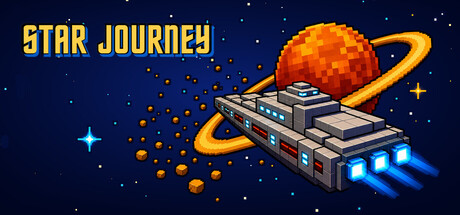
Generative artificial intelligence has been used by the developer to improve the performance of the developers code to achieve incredible in game performance with respect to voxel mesh rendering and voxel lighting calculations. Thanks to the contributions of gen ai Star Journey performs beautifully even on laptops that have no dedicated GPU.
This game uses generative AI to create its 2D artwork, including character and avatar portraits, monster and pet illustrations, item and equipment icons, location banners, and store/marketing assets.
All AI-generated art was created during development, then hand-reviewed, curated, and edited by the developer before being included in the game.
No AI content is generated live at runtime — everything players see ships as fixed, pre-made assets. The game's design, writing, code, and balancing are human-made.
Some of the visual art in this game including card, Relic, and background artwork was created with the help of generative AI tools during development.
All AI generated content was reviewed, curated, and edited by the developer to fit the game's style and quality standards.
Generative AI tools were used during development to create and refine some pre-generated visual assets, including character illustrations, office environments, decorative objects, and promotional artwork. All generated materials were manually selected, edited, integrated, and reviewed by the developer. The game does not generate any AI content while running.
Generative AI was used during the development process to create a portion of the textures used in the game environments. These assets were subsequently reviewed and refined by our development team to ensure quality and originality.
Generative AI was used during development for certain text descriptions and for a limited number of illustrative assets. These visuals were subsequently reworked by the game’s artist for consistency with the game’s final style. No generative AI is used during gameplay.
AI Used to Generate SOME Game Aspects such as backend simulations and Graphical Textures. ALL AI Usage is Pre-Rendered and approved by Development team before being built into the game.
Generative AI tools were used during development to assist with creating some concept art, graphical assets, and text for the game and its Steam store page. All generated content was reviewed, edited, and integrated by the developer. No generative AI is used during gameplay.
This game uses generative artificial intelligence (Midjourney) as a supporting tool in the production of some of its artwork and illustrations. All AI-generated content is selected, edited, and art-directed by the development team, which defines composition, style, and visual coherence before it is integrated into the game.
AI tools assisted with programming and with translating the game's interface text into languages other than English. All translations and text were reviewed by the developer; the game's design, visuals, and audio are not AI-generated.
Some visual concepts, promotional artwork, and certain written materials used for the game's presentation were created or refined with the assistance of generative AI. All AI-assisted content has been carefully reviewed, edited, and approved by the development team to ensure artistic consistency, originality, and quality. The gameplay, design decisions, and final player experience are fully curated by the developers.
This game uses generative AI only for in-game character dialogue. Players can communicate with certain characters using natural language, and the AI generates text responses based on the game's setting and the current conversation context. Apart from character dialogue text, the game's artwork, music, sound effects, code, store page assets, and marketing materials are not generated by AI.
Crooked Derby includes some pre-generated visual assets created with generative AI. All AI-assisted content was iterated on, reviewed, and approved by the developer before being included in the game.
None of the game's artwork, audio, or imagery is AI-generated. Portraits, interface, and all store and marketing art are hand-authored vector and procedural work, and that is a hard rule of the project. We do use AI assistance during development for writing and code, including drafting store text and the scripts that lay out our marketing art, all of it reviewed and edited by hand. No image-generation models are used anywhere, in the game or in its marketing.
Dialogue and narration are generated at runtime by a small language model running entirely on the player's machine. Nothing is sent to any server. The model has no authority over the game: a deterministic simulation decides every outcome, fact, and number, and the model only phrases scenes from state the engine hands it. Its output is structurally constrained and validated against the simulation before it appears, and invalid output is rejected. Prompts and validation keep generated text within the game's fiction and its PG-13 register. Player-typed orders go only to the local model and never leave the machine.
This game is built by a Master of the Fine Arts in Digital and New Media with a specialization in procedural content. Generative AI tools were used during development to create and iterate on pre-rendered visual assets, including dream artwork, backgrounds, capsule art, and marketing imagery. All AI-assisted content is selected, edited, and integrated by the development team. The game does not generate AI content during gameplay and does not connect to third-party AI services during play.
The game's 2D artwork (character portraits, scenes, backgrounds) and music were created with generative AI tools, then curated and edited by the developer. Parts of the game's code and narrative text were written with AI assistance, under human direction, review and rewriting. All AI-assisted content is pre-generated during development: nothing is generated by AI while you play.
Im a solo indie dev, so I used IA tools for better usage of production time. I used code tools to make it easier to implement mechanics. I used Art IA tools to make starting points from where I can work on top. I used Sound IA tools to make music for this game.
Of course all these is because im a solo dev. Im planning to contract a team in the future if Im able to.
The art, audio, and writing in Refund Speedrun are created by hand. Generative AI was used only for the voice-over narration in our promotional teaser trailer (ElevenLabs). The game does not generate any content using AI at runtime.
AI-assisted. Developer-directed. Generative AI was used as a production tool during development: Claude assisted with prototyping and implementation, while Google Lyria was used to create the game's original 15-track soundtrack. The music and all other AI-assisted material were selected, edited, integrated, and play-tested by the developer to serve Boiler & Blood's dieselpunk folk-occult world.
This game uses generative artificial intelligence in the following ways: pixel character artwork and background images. AI-generated content was reviewed and edited by the developer before being included in the game or store page.
Some promotional images and marketing content for Maze Mischief were created with the assistance of generative artificial intelligence tools and subsequently reviewed and adjusted by the developer.
Train Trek uses generative AI in two ways.
During development we used AI tools to help make some assets: the user-interface art (HUD and menu icons, menu artwork, frames, button plates, mouse cursors), the instrumental soundtrack, and some sound effects. All of it was chosen, edited and finished by hand before it shipped. The 3D models are built procedurally by our own scripts, and the design, world generation and balancing are authored by hand. Parts of the source code were written with an AI coding assistant, reviewed and tested by the developer.
While you play, the game speaks using a text-to-speech model that ships inside the game and runs entirely on your own computer. It voices tutorial guidance, hints and menu narration instead of pre-recorded audio. It needs no internet connection, sends nothing anywhere, and never records or listens to you. It only reads lines we wrote and shipped with the game - it does not invent dialogue.
As this is a solo-developed project, I have utilized generative AI assistants for the writing, debugging, and structuring of the game's programming code.
Additionally, AI has been used in a very minor and complementary capacity for some secondary environmental visual elements. The vast majority of the core artistic assets, art direction, game design, 3D modeling, and overall experience have been entirely hand-crafted and assembled.
Fateward's visuals, UI, music, sound, character voices, and Steam store assets are created using generative AI and curated by hand, from a game written and directed by the developer.
For complete transparency with our players, here is our stance on how this game is built:
1. Human Craftsmanship First
Human creativity and hands-on talent are always our highest priority. Where development is handled by skilled creators and artists, the work is crafted traditionally. AI is never used to replace active human contribution.
2. Bridging the Resource Gap
Where specialized resources, budgets, or personnel are missing, we use AI tools to bridge the gaps and keep development moving forward. As an independent project, we do not have the luxury of waiting on corporate budgets; we use every tool available to ensure the game actually gets finished and delivered to you.
3. Moving Forward, Never Backward
Our development philosophy is built on momentum. We will never delay updates, halt progress, or backtrack to remove or replace AI-assisted elements just to appease online discourse. If the game secures funding or high sales down the line, those resources will be used exclusively to hire real people to build new features, content, and expansions. We only move forward.
The Bottom Line
We refuse to let a lack of corporate backing stop us from making a great game. We choose to embrace the tools of the future to deliver a unique RTS experience today. If you value raw independent drive, transparency, and a studio focused entirely on delivering great gameplay "by any means necessary," thank you for your support.
During development we used generative AI tools to create some content that ships in the game:
- Visual art: Some 2D art (card illustrations, store/capsule art, boss and deity illustrations, UI seals, and marketing images) was generated with an image model, then hand-edited, composited, and curated by us.
- Music: The looping background music tracks were generated with an AI music tool, then edited and mastered (trimmed and crossfade-looped) by us before inclusion.
- Text / localization: Some in-game text and its translations (Traditional Chinese, Simplified Chinese, English) were produced with AI assistance and then reviewed and edited by us.
All AI-generated content was reviewed by a human before shipping.
We have confirmed our right to use these tools' output commercially, and have taken steps to ensure the content does not infringe third-party IP.
Generative artificial intelligence has been used to generate store page thumbnails based on the developers artwork. All in game artwork has been drawn by hand by the developer.
This game uses AI-generated content in two areas: background music tracks were created using Mureka AI, and some pixel art assets were generated using PixelLab. All AI-generated content was reviewed, curated, and integrated by the developer.
The game includes pre-generated visual and audio assets created with the assistance of generative AI tools. These include character artwork, environmental backgrounds, music, and singing vocals. All lyrics were written entirely by the developer without the use of generative AI, while the music and vocals were created through a collaborative process involving human creative direction and generative AI tools. All AI-assisted outputs were reviewed, selected, edited, and integrated by the developer. The game does not generate content during gameplay and does not send player input to any AI service.
Generative artificial intelligence has been used to create store page thumbnails based on the developer's scene work.
Generative artificial intelligence has been used by the developer to improve the performance of the developers code to achieve incredible in game performance with respect to voxel mesh rendering and voxel lighting calculations. Thanks to the contributions of gen ai Star Journey performs beautifully even on laptops that have no dedicated GPU.
This game uses generative AI to create its 2D artwork, including character and avatar portraits, monster and pet illustrations, item and equipment icons, location banners, and store/marketing assets.
All AI-generated art was created during development, then hand-reviewed, curated, and edited by the developer before being included in the game.
No AI content is generated live at runtime — everything players see ships as fixed, pre-made assets. The game's design, writing, code, and balancing are human-made.
Some of the visual art in this game including card, Relic, and background artwork was created with the help of generative AI tools during development.
All AI generated content was reviewed, curated, and edited by the developer to fit the game's style and quality standards.
Generative AI tools were used during development to create and refine some pre-generated visual assets, including character illustrations, office environments, decorative objects, and promotional artwork. All generated materials were manually selected, edited, integrated, and reviewed by the developer. The game does not generate any AI content while running.
Generative AI was used during the development process to create a portion of the textures used in the game environments. These assets were subsequently reviewed and refined by our development team to ensure quality and originality.
Generative AI was used during development for certain text descriptions and for a limited number of illustrative assets. These visuals were subsequently reworked by the game’s artist for consistency with the game’s final style. No generative AI is used during gameplay.
AI Used to Generate SOME Game Aspects such as backend simulations and Graphical Textures. ALL AI Usage is Pre-Rendered and approved by Development team before being built into the game.
Generative AI tools were used during development to assist with creating some concept art, graphical assets, and text for the game and its Steam store page. All generated content was reviewed, edited, and integrated by the developer. No generative AI is used during gameplay.
This game uses generative artificial intelligence (Midjourney) as a supporting tool in the production of some of its artwork and illustrations. All AI-generated content is selected, edited, and art-directed by the development team, which defines composition, style, and visual coherence before it is integrated into the game.
AI tools assisted with programming and with translating the game's interface text into languages other than English. All translations and text were reviewed by the developer; the game's design, visuals, and audio are not AI-generated.