Public Steam disclosure research25,497 disclosures tracked
Where do games disclose AI use?
Search developers’ Steam disclosures, compare classified AI use across
games, and follow recorded changes.
This index adds cross-game classifications and statistics to
statements published on individual store pages.
Groups reflect automatic analysis of public disclosures; mature records are excluded. These counts do not measure AI use across all of Steam.
Missing or unclear statements cannot establish whether a game uses AI.
Some visible in-game assets, including but not limited to cutscenes, characters, environments, and UI elements, were created or visually enhanced with the help of AI, including generation based on white model references.
Some store page assets were also created or visually enhanced with the help of AI, including generation based on white model references.
Some music and sound effects were generated with the help of AI.
Some localized language content was translated with the help of AI.
All visual assets (sprites, terrain, UI, capsule art) were AI-generated and then manually edited in GIMP. Game design, direction, and integration were done entirely by the solo developer.
Game artwork (sprites for items, enemies, characters, and UI elements) was generated using Stable Diffusion
(DreamShaper model) running locally. Sound effects and music were generated using Meta AudioCraft (AudioGen/MusicGen)
running locally. Non-English translations were generated using local LLMs (Ollama) and manually reviewed. No external AI
services are used during gameplay. All AI-generated content was produced offline during development.
This project incorporates the use of artificial intelligence tools to assist in development. AI was used to help generate portions of the C# codebase, streamlining implementation and problem-solving, as well as to create some textures used within the game. All AI-generated content was reviewed, adapted, and integrated to fit the overall design and functionality of the project
The steam shop page features some language translations that were generated with the help of DeepL.
The game itself does not use any AI generated translations or any other AI generated assets or code.
Certain visual and audio assets were created with the assistance of generative AI tools during development and were manually edited and refined by the developer. All gameplay content is handcrafted, and no generative AI is used during gameplay.
During the early prototyping phase, I use AI tools to visualize initial concepts and create temporary placeholders. All of these have been completely replaced in the final game with hand-crafted art created by myself and talented freelancers.
This app includes pre-generated content created or assisted using generative AI.
This includes the game logo, title screen, certain story-related images used during key moments of the game, a majority of item-related visuals (such as weapons, armors, accessories, and quest items), and approximately 60% of character portraits used in dialogue.
All such content was selected, reviewed, and in many cases manually edited and integrated by the developer before being included in the game or on the store page.
Additionally, most of the game's plugins were developed with the assistance of AI tools. No AI is used at runtime or during gameplay.
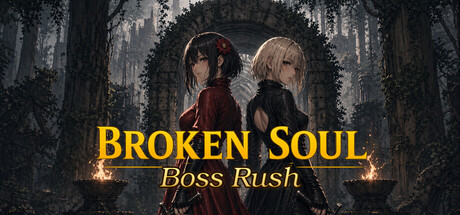
BROKEN SOUL : Boss Rush is a solo-developed game, and generative AI tools were used during development to assist with the creation of some visual assets and promotional materials. However, the game’s ideas, combat design, and system logic were all personally conceived and implemented, and every piece of content that appears in the final game was also directly selected, edited, and reviewed before completion. This is not a game that was made easily, but rather one that was brought to completion by making full use of every available tool and resource. If the game receives greater support in the future, there are plans to further expand and improve various elements, including the art assets, to an even higher level of quality. The game does not include any functionality that generates content with generative AI in real time during gameplay.
AI is used to generate in-game characters, including their visual traits, background concepts, and gameplay attributes. When players create a character, the Gen-AI system produces unique variations based on predefined rules and developer-designed parameters.
The AI functions solely as a content generation tool to enhance gameplay variety. It does not collect, store, or learn from personal player data.
This game has used Generative AI during the development process. It was used minimally during coding, mostly for auto complete, <1% of the code is a result of the output from AI. More extensively is AIs use in the artwork, in order to speed up the process sketches were created by artist, details were filled in by AI, then artists corrected the output.
Generative AI was not used for in-game art, gameplay assets, systems, or core game content.
AI translation tools were used only for some additional text added later during development. Most localization was handled by a professional translation vendor.
The only AI-generated visual assets currently used are the Steam header capsule and library logo illustrations, which were manually retouched. They are not used inside the actual game, and I plan to replace them after release if the game earns enough revenue.
Generative AI tools were used exclusively for the creation of marketing materials and store capsules. No generative AI was used to create the in-game assets, which consist of a mix of custom work and hand-crafted assets from third-party creators.
I was working on this game for more than 2 years without ai.
I started to use ai 1-2 months ago for:
Due to a lack of capital for professional sounds i bought sound packages and for
some few sounds i used AI software. Depending on the game's success, I will invest in replacing sounds and self-created elements with professional assistance.
AI was used mainly for bug fixing in the code and for translating the game text into different languages.
ome inventory icons, the in-game orientation map, and a few images used for signs and notes were created with AI assistance. The world itself, level design, gameplay systems, buildings, ruins, enemy placement, and environments are manually built, edited, and refined. Every mesh is placed by hand, and the world layout does not use procedural generation.
The card artwork in the current version of the game was created using generative AI tools and then manually edited and refined by the developer. AI was not used for gameplay code or core story content. These artworks are intended as temporary assets and are planned to be replaced with commissioned artwork in the future.
Most of the content is developed using traditional development practices.
However, AI tools were used to support the creation of certain 3D in-game assets and audio assets.
Some of the images and in game models and sounds are created using AI to speed up the development process and allow focus on core gameplay elements.
All elements are reviewed by devs.
No AI is running or applied during gameplay.
The game uses AI-generated assets such as pre-rendered textures and background images to enhance the visual atmosphere. These elements were created with AI tools but are not generated dynamically during gameplay.
In order to better reflect the identity of our game and obtain easier outputs, we use artificial intelligence to produce content such as capsule images, small logos, and simple text found on our game's store page.
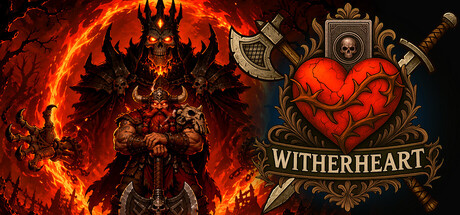
Some assets in Witherheart, including visuals and audio, were created with the assistance of generative AI tools. All content has been curated and integrated by the development team.
During the development and live service of the game, AI-based tools may be utilized to support in game visual content creation, marketing materials, live chat translation features, and partial in-game dialogue and script localization.
In all such cases and regardless of the workflow, the final product is a reflection of our own development team's creativity and artistic expression.
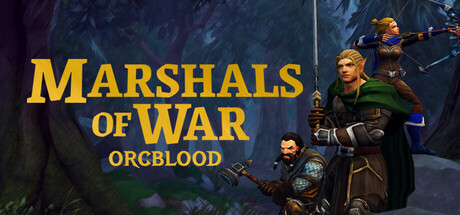
Marshals of War is the result of years of work by a solo developer, supported by freelance artists and collaborators. Generative AI has been used to explore ideas and directions, influencing some assets in the game and its marketing. Handcrafted work remains the primary process behind the game’s development.
We use AI technologies in a limited capacity during development. AI-assisted tools are used for localization (translation into multiple languages) and for generating some visual assets, such as preview images. The core game content, gameplay design, and the majority of assets are created without the use of AI.
Some visible in-game assets, including but not limited to cutscenes, characters, environments, and UI elements, were created or visually enhanced with the help of AI, including generation based on white model references.
Some store page assets were also created or visually enhanced with the help of AI, including generation based on white model references.
Some music and sound effects were generated with the help of AI.
Some localized language content was translated with the help of AI.
All visual assets (sprites, terrain, UI, capsule art) were AI-generated and then manually edited in GIMP. Game design, direction, and integration were done entirely by the solo developer.
Game artwork (sprites for items, enemies, characters, and UI elements) was generated using Stable Diffusion
(DreamShaper model) running locally. Sound effects and music were generated using Meta AudioCraft (AudioGen/MusicGen)
running locally. Non-English translations were generated using local LLMs (Ollama) and manually reviewed. No external AI
services are used during gameplay. All AI-generated content was produced offline during development.
This project incorporates the use of artificial intelligence tools to assist in development. AI was used to help generate portions of the C# codebase, streamlining implementation and problem-solving, as well as to create some textures used within the game. All AI-generated content was reviewed, adapted, and integrated to fit the overall design and functionality of the project
The steam shop page features some language translations that were generated with the help of DeepL.
The game itself does not use any AI generated translations or any other AI generated assets or code.
Certain visual and audio assets were created with the assistance of generative AI tools during development and were manually edited and refined by the developer. All gameplay content is handcrafted, and no generative AI is used during gameplay.
During the early prototyping phase, I use AI tools to visualize initial concepts and create temporary placeholders. All of these have been completely replaced in the final game with hand-crafted art created by myself and talented freelancers.
This app includes pre-generated content created or assisted using generative AI.
This includes the game logo, title screen, certain story-related images used during key moments of the game, a majority of item-related visuals (such as weapons, armors, accessories, and quest items), and approximately 60% of character portraits used in dialogue.
All such content was selected, reviewed, and in many cases manually edited and integrated by the developer before being included in the game or on the store page.
Additionally, most of the game's plugins were developed with the assistance of AI tools. No AI is used at runtime or during gameplay.
BROKEN SOUL : Boss Rush is a solo-developed game, and generative AI tools were used during development to assist with the creation of some visual assets and promotional materials. However, the game’s ideas, combat design, and system logic were all personally conceived and implemented, and every piece of content that appears in the final game was also directly selected, edited, and reviewed before completion. This is not a game that was made easily, but rather one that was brought to completion by making full use of every available tool and resource. If the game receives greater support in the future, there are plans to further expand and improve various elements, including the art assets, to an even higher level of quality. The game does not include any functionality that generates content with generative AI in real time during gameplay.
AI is used to generate in-game characters, including their visual traits, background concepts, and gameplay attributes. When players create a character, the Gen-AI system produces unique variations based on predefined rules and developer-designed parameters.
The AI functions solely as a content generation tool to enhance gameplay variety. It does not collect, store, or learn from personal player data.
This game has used Generative AI during the development process. It was used minimally during coding, mostly for auto complete, <1% of the code is a result of the output from AI. More extensively is AIs use in the artwork, in order to speed up the process sketches were created by artist, details were filled in by AI, then artists corrected the output.
Generative AI was not used for in-game art, gameplay assets, systems, or core game content.
AI translation tools were used only for some additional text added later during development. Most localization was handled by a professional translation vendor.
The only AI-generated visual assets currently used are the Steam header capsule and library logo illustrations, which were manually retouched. They are not used inside the actual game, and I plan to replace them after release if the game earns enough revenue.
Generative AI tools were used exclusively for the creation of marketing materials and store capsules. No generative AI was used to create the in-game assets, which consist of a mix of custom work and hand-crafted assets from third-party creators.
I was working on this game for more than 2 years without ai.
I started to use ai 1-2 months ago for:
Due to a lack of capital for professional sounds i bought sound packages and for
some few sounds i used AI software. Depending on the game's success, I will invest in replacing sounds and self-created elements with professional assistance.
AI was used mainly for bug fixing in the code and for translating the game text into different languages.
ome inventory icons, the in-game orientation map, and a few images used for signs and notes were created with AI assistance. The world itself, level design, gameplay systems, buildings, ruins, enemy placement, and environments are manually built, edited, and refined. Every mesh is placed by hand, and the world layout does not use procedural generation.
The card artwork in the current version of the game was created using generative AI tools and then manually edited and refined by the developer. AI was not used for gameplay code or core story content. These artworks are intended as temporary assets and are planned to be replaced with commissioned artwork in the future.
Most of the content is developed using traditional development practices.
However, AI tools were used to support the creation of certain 3D in-game assets and audio assets.
Some of the images and in game models and sounds are created using AI to speed up the development process and allow focus on core gameplay elements.
All elements are reviewed by devs.
No AI is running or applied during gameplay.
The game uses AI-generated assets such as pre-rendered textures and background images to enhance the visual atmosphere. These elements were created with AI tools but are not generated dynamically during gameplay.
In order to better reflect the identity of our game and obtain easier outputs, we use artificial intelligence to produce content such as capsule images, small logos, and simple text found on our game's store page.
Some assets in Witherheart, including visuals and audio, were created with the assistance of generative AI tools. All content has been curated and integrated by the development team.
During the development and live service of the game, AI-based tools may be utilized to support in game visual content creation, marketing materials, live chat translation features, and partial in-game dialogue and script localization.
In all such cases and regardless of the workflow, the final product is a reflection of our own development team's creativity and artistic expression.
Marshals of War is the result of years of work by a solo developer, supported by freelance artists and collaborators. Generative AI has been used to explore ideas and directions, influencing some assets in the game and its marketing. Handcrafted work remains the primary process behind the game’s development.
We use AI technologies in a limited capacity during development. AI-assisted tools are used for localization (translation into multiple languages) and for generating some visual assets, such as preview images. The core game content, gameplay design, and the majority of assets are created without the use of AI.