Public Steam disclosure research25,394 disclosures tracked
Where do games disclose AI use?
Search developers’ Steam disclosures, compare classified AI use across
games, and follow recorded changes.
This index adds cross-game classifications and statistics to
statements published on individual store pages.
Groups reflect automatic analysis of public disclosures; mature records are excluded. These counts do not measure AI use across all of Steam.
Missing or unclear statements cannot establish whether a game uses AI.
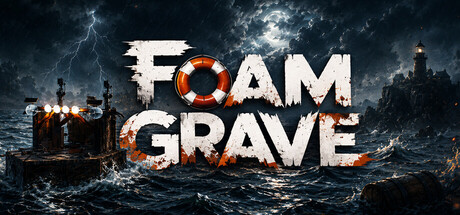
FOAMGRAVE includes some AI-assisted content, including certain visual assets (such as menu/loading screen artwork) and music/audio created using generative AI tools. All gameplay systems, programming, world design, and final integration were created and implemented by the developer.
Regarding the AI disclosure, we would like to clarify the specific scope of AI usage in our game:
1. Asset Generation (Pre-generated AI Content):
We have utilized generative AI tools exclusively for creating static assets. Specifically, AI was used to generate in-game icons, background images, and the store page assets (capsule images/banners). No real-time AI generation occurs during gameplay.
2. In-Game CPU Behavior (Non-AI):
The NPC/CPU behavior and logic within the game are strictly controlled by standard programming using conditional statements (if-then statements) and random number generation (RNG). No AI or machine learning models are used for the gameplay mechanics or enemy logic.
During the development of Hell Cleaners, AI tools were used to create early concepts and references to help explore the visual direction of the game. All final art assets that ship in the game were created, painted, or reworked by hand by our art team. No AI-generated audio, voice, or narrative text is used in the shipped product. We believe games should be made by humans!
Some visual assets, promotional images, and store page materials may include AI-assisted generated elements that were further edited and refined by the development team. AI is not used to generate gameplay, player interactions, or real-time in-game content.
There's a local Large Language Model that integrates with the game's systems and is used primarily for but not limited to dialogue generation.
Several other uses are planned, including localization.
AI has been used for coding and in a limited capacity for creating placeholder assets that will be replaced at a later date.
Some visual assets, store assets, localization drafts, and marketing materials for SEO OR DIE were created or enhanced with the assistance of generative AI tools.
All AI-assisted content was reviewed, edited, and integrated by the developer to match the game's final art direction, narrative tone, and quality standards.
The game does not use real-time AI generation during gameplay.
Partially. Galactic Tenebris Company believes in being transparent with the people who play our games. Here is an honest account of where AI tools contributed to this production:
— Some icons and UI elements, including weapon icons
— Organizing and structuring the scenario, narrative documents, and dialogue across the game's four regions
— Translation from Mr. M.'s private family dialect into English.
All 3D models were handcrafted by the developer. No textures were AI-generated. The music and sound effects were composed and not generated by AI tools.
Our position as a company is simple — we use AI only where we have no other means or resources available. Where human craft was possible, human craft was used.
Every creative decision — the story, the world, the characters, the quests, the writing — was made by the developer. The scenario and dialogues were authored by the developer and organised with AI assistance. The foundation of this game is firsthand experience. That part was not written by any tool.
— Mr. M., Owner of Galactic Tenebris Company
This game was developed with assistance from generative AI tools. AI was used as a development aid for coding support, gameplay design iteration, text drafting, translations, store descriptions and creative concepting.
All AI-assisted content was reviewed, edited, selected, integrated and tested by the developer. The game does not use generative AI to create new images, audio, text or gameplay content in real time during normal gameplay.
The developers describe how their game uses AI Generated Content like this:
We used generative AI to help create the level layouts and parts of the game code. Everything was then tweaked, edited, and put together by us.
All gameplay and design decisions are fully human-made.
This game uses generative AI tools during development to assist with certain assets such as artwork, text, and design elements. All AI-assisted content has been reviewed, edited, and curated by the developer to ensure quality and appropriateness.
The game does not use AI to generate content during gameplay, and no external AI services are accessed while playing.
Logo and store header is AI generated, as I am utterly, completely broke. This will be replaced if magically I earn enough money at some point to actually hire someone (which I strongly doubt due to the niche market of this project).
Some visual and audio assets in this game were created with the assistance of generative AI tools and then reviewed, edited, and integrated by the development team.
All game design decisions, including gameplay systems, boss mechanics, quests, NPC dialogue, progression, and balancing, were created by the human developers.
AI is not used during gameplay.
Generative AI tools were used in a limited capacity to assist with marketing materials and early concept visuals during development. All AI-assisted content was reviewed and approved by the development team. The final shipped game contains no generative AI content.
All gameplay artwork is handmade. The title background image is AI generated; I don't have enough skill nor a desire to commission a single flavor image.
Generative AI was used in a limited and supportive way during development. AI tools were utilized to help draft and refine parts of the store page description, and to assist in editing or enhancing some visual assets for presentation and marketing purposes.
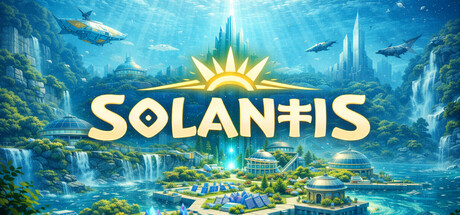
AI was employed to create 2D environmental artwork, various UI components, and initial drafts of in-game dialogues. All AI-assisted content has been extensively reviewed, edited, and refined by the developer to ensure a cohesive solarpunk experience and a consistent narrative voice.
We use generative AI technologies during the development of some game assets. This mainly includes support with localization, visual reference material, selected graphic elements, and occasional audio or sound-effect related content. AI-assisted elements represent a limited part of the overall production, with final selection, editing, and implementation handled by the development team.
Generative AI was used during the development process to assist with code training and performance optimization. This application was strictly internal and for development efficiency, and did not directly generate any final game assets (art, sound, or text) that are shipped to players. All player-facing content in the game is originally created by our team.
Generative AI was used as a supplemental tool during development to streamline workflows and refining technical documentation. All player-facing content has been manually reviewed and polished.
This game uses generative AI to create and support fictional in-game content, including graphic assets, marketing materials, text, creator names, portraits, and related world-building elements. AI-generated content is used only for fictional game purposes and does not represent real people, companies, or events.
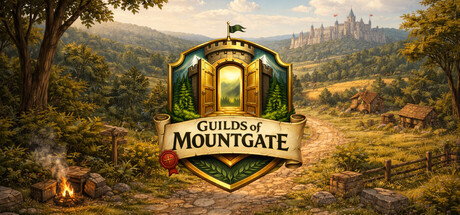
Guilds of Mountgate currently uses AI-generated visual assets during Early Access, primarily for environmental backgrounds and UI-related imagery.
All assets are individually selected and refined to ensure visual consistency within the game world.
This approach allows development to focus on the core systems that define the game — including progression, economy and world simulation.
As development continues, many of these assets — especially location backgrounds — are planned to be replaced with handcrafted, pre-rendered 3D scenes created in Blender for the full release (v1.0).
As a solo developer, I used AI tools as a foundation to expand the game's scope, manually refining and finalizing every asset to ensure the final result is a high-quality, handcrafted experience.
EQUILIBRIUM uses generative AI to power its core gameplay mechanic: the Policy Terminal.
LIVE-GENERATED CONTENT
When a player types a directive or law in natural language (e.g., "Abolish the luxury car tax"), the AI Engine analyzes the request in real time and generates a structured governmental dossier, including:
- Legislative feasibility analysis
- Budget impact and financial coverage
- Macroeconomic effects (GDP, debt, inflation)
- Social and political consensus projections
- Parliamentary vote simulation
Model used: Anthropic Claude, accessed via API.
Guardrails: AI output is constrained to a fixed set of structured fields defined by the developer. All numeric effects are clamped within bounds enforced by the simulation engine, so no AI output can produce values outside the game's defined ranges. The model operates only on the simulation state provided to it and cannot invent game data: commands that cannot be mapped to a valid government action are refused, and the player is offered bounded policy alternatives instead. No image, audio, or user-data generation is involved, and no player data is used to train any model.
Because responses are generated at runtime, outputs vary between playthroughs: the same directive may produce different wording and different outcomes.
PRE-GENERATED CONTENT
The game's background music track was generated using AI tools during development and ships with the game.
Some promo art elements (promo character) and logo for the game were created using AI tools. Also parts of trailer and in-game soundtrack was created using AI-based tools.
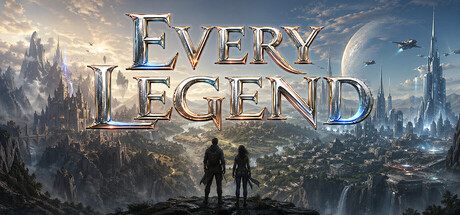
Every Legend uses AI to generate dynamic role-playing content during gameplay. This includes story text, characters, quests, dialogue, scene descriptions, images, speech, and music.
The game can use bundled local AI models on your computer, and it can also use optional third-party cloud AI providers if you configure API keys in the settings. When cloud providers are used, your prompts and relevant game context may be sent to those external services to generate content.
AI-generated content may vary between playthroughs and can occasionally be inaccurate, unexpected, or inconsistent.
This game uses generative AI tools in a limited capacity:
🎨 Marketing & Concept Materials: Some marketing materials, store page assets, and early concept visuals were created or refined using generative AI tools during development.
All AI-assisted content was reviewed, edited, and approved by the development team before publication.
Some marketing assets for this game (capsule art) were created with the assistance of AI image generation tools. All gameplay content is procedurally generated by the NAGAS simulation engine — a custom-built system using deterministic algorithms, not generative AI.
Some graphical assets, musical assets, localization, and portions of code were partially created with the assistance of generative AI programs and large language models (LLMs).
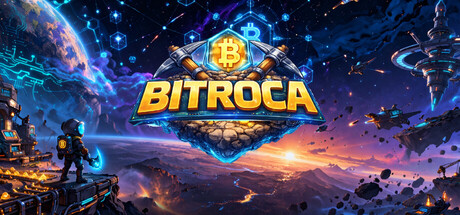
Some of Bitroca's visual assets, UI elements, and audio were created with the help of generative AI tools, then
reviewed and finalized by a human developer before shipping. All content is pre-rendered and baked into the build no AI content is generated during gameplay.
FOAMGRAVE includes some AI-assisted content, including certain visual assets (such as menu/loading screen artwork) and music/audio created using generative AI tools. All gameplay systems, programming, world design, and final integration were created and implemented by the developer.
Regarding the AI disclosure, we would like to clarify the specific scope of AI usage in our game:
1. Asset Generation (Pre-generated AI Content):
We have utilized generative AI tools exclusively for creating static assets. Specifically, AI was used to generate in-game icons, background images, and the store page assets (capsule images/banners). No real-time AI generation occurs during gameplay.
2. In-Game CPU Behavior (Non-AI):
The NPC/CPU behavior and logic within the game are strictly controlled by standard programming using conditional statements (if-then statements) and random number generation (RNG). No AI or machine learning models are used for the gameplay mechanics or enemy logic.
During the development of Hell Cleaners, AI tools were used to create early concepts and references to help explore the visual direction of the game. All final art assets that ship in the game were created, painted, or reworked by hand by our art team. No AI-generated audio, voice, or narrative text is used in the shipped product. We believe games should be made by humans!
Some visual assets, promotional images, and store page materials may include AI-assisted generated elements that were further edited and refined by the development team. AI is not used to generate gameplay, player interactions, or real-time in-game content.
There's a local Large Language Model that integrates with the game's systems and is used primarily for but not limited to dialogue generation.
Several other uses are planned, including localization.
AI has been used for coding and in a limited capacity for creating placeholder assets that will be replaced at a later date.
Some visual assets, store assets, localization drafts, and marketing materials for SEO OR DIE were created or enhanced with the assistance of generative AI tools.
All AI-assisted content was reviewed, edited, and integrated by the developer to match the game's final art direction, narrative tone, and quality standards.
The game does not use real-time AI generation during gameplay.
Partially. Galactic Tenebris Company believes in being transparent with the people who play our games. Here is an honest account of where AI tools contributed to this production:
— Some icons and UI elements, including weapon icons
— Organizing and structuring the scenario, narrative documents, and dialogue across the game's four regions
— Translation from Mr. M.'s private family dialect into English.
All 3D models were handcrafted by the developer. No textures were AI-generated. The music and sound effects were composed and not generated by AI tools.
Our position as a company is simple — we use AI only where we have no other means or resources available. Where human craft was possible, human craft was used.
Every creative decision — the story, the world, the characters, the quests, the writing — was made by the developer. The scenario and dialogues were authored by the developer and organised with AI assistance. The foundation of this game is firsthand experience. That part was not written by any tool.
— Mr. M., Owner of Galactic Tenebris Company
This game was developed with assistance from generative AI tools. AI was used as a development aid for coding support, gameplay design iteration, text drafting, translations, store descriptions and creative concepting.
All AI-assisted content was reviewed, edited, selected, integrated and tested by the developer. The game does not use generative AI to create new images, audio, text or gameplay content in real time during normal gameplay.
The developers describe how their game uses AI Generated Content like this:
We used generative AI to help create the level layouts and parts of the game code. Everything was then tweaked, edited, and put together by us.
All gameplay and design decisions are fully human-made.
This game uses generative AI tools during development to assist with certain assets such as artwork, text, and design elements. All AI-assisted content has been reviewed, edited, and curated by the developer to ensure quality and appropriateness.
The game does not use AI to generate content during gameplay, and no external AI services are accessed while playing.
Logo and store header is AI generated, as I am utterly, completely broke. This will be replaced if magically I earn enough money at some point to actually hire someone (which I strongly doubt due to the niche market of this project).
Some visual and audio assets in this game were created with the assistance of generative AI tools and then reviewed, edited, and integrated by the development team.
All game design decisions, including gameplay systems, boss mechanics, quests, NPC dialogue, progression, and balancing, were created by the human developers.
AI is not used during gameplay.
Generative AI tools were used in a limited capacity to assist with marketing materials and early concept visuals during development. All AI-assisted content was reviewed and approved by the development team. The final shipped game contains no generative AI content.
All gameplay artwork is handmade. The title background image is AI generated; I don't have enough skill nor a desire to commission a single flavor image.
Generative AI was used in a limited and supportive way during development. AI tools were utilized to help draft and refine parts of the store page description, and to assist in editing or enhancing some visual assets for presentation and marketing purposes.
AI was employed to create 2D environmental artwork, various UI components, and initial drafts of in-game dialogues. All AI-assisted content has been extensively reviewed, edited, and refined by the developer to ensure a cohesive solarpunk experience and a consistent narrative voice.
We use generative AI technologies during the development of some game assets. This mainly includes support with localization, visual reference material, selected graphic elements, and occasional audio or sound-effect related content. AI-assisted elements represent a limited part of the overall production, with final selection, editing, and implementation handled by the development team.
Generative AI was used during the development process to assist with code training and performance optimization. This application was strictly internal and for development efficiency, and did not directly generate any final game assets (art, sound, or text) that are shipped to players. All player-facing content in the game is originally created by our team.
Generative AI was used as a supplemental tool during development to streamline workflows and refining technical documentation. All player-facing content has been manually reviewed and polished.
This game uses generative AI to create and support fictional in-game content, including graphic assets, marketing materials, text, creator names, portraits, and related world-building elements. AI-generated content is used only for fictional game purposes and does not represent real people, companies, or events.
Guilds of Mountgate currently uses AI-generated visual assets during Early Access, primarily for environmental backgrounds and UI-related imagery.
All assets are individually selected and refined to ensure visual consistency within the game world.
This approach allows development to focus on the core systems that define the game — including progression, economy and world simulation.
As development continues, many of these assets — especially location backgrounds — are planned to be replaced with handcrafted, pre-rendered 3D scenes created in Blender for the full release (v1.0).
As a solo developer, I used AI tools as a foundation to expand the game's scope, manually refining and finalizing every asset to ensure the final result is a high-quality, handcrafted experience.
EQUILIBRIUM uses generative AI to power its core gameplay mechanic: the Policy Terminal.
LIVE-GENERATED CONTENT
When a player types a directive or law in natural language (e.g., "Abolish the luxury car tax"), the AI Engine analyzes the request in real time and generates a structured governmental dossier, including:
- Legislative feasibility analysis
- Budget impact and financial coverage
- Macroeconomic effects (GDP, debt, inflation)
- Social and political consensus projections
- Parliamentary vote simulation
Model used: Anthropic Claude, accessed via API.
Guardrails: AI output is constrained to a fixed set of structured fields defined by the developer. All numeric effects are clamped within bounds enforced by the simulation engine, so no AI output can produce values outside the game's defined ranges. The model operates only on the simulation state provided to it and cannot invent game data: commands that cannot be mapped to a valid government action are refused, and the player is offered bounded policy alternatives instead. No image, audio, or user-data generation is involved, and no player data is used to train any model.
Because responses are generated at runtime, outputs vary between playthroughs: the same directive may produce different wording and different outcomes.
PRE-GENERATED CONTENT
The game's background music track was generated using AI tools during development and ships with the game.
Some promo art elements (promo character) and logo for the game were created using AI tools. Also parts of trailer and in-game soundtrack was created using AI-based tools.
Every Legend uses AI to generate dynamic role-playing content during gameplay. This includes story text, characters, quests, dialogue, scene descriptions, images, speech, and music.
The game can use bundled local AI models on your computer, and it can also use optional third-party cloud AI providers if you configure API keys in the settings. When cloud providers are used, your prompts and relevant game context may be sent to those external services to generate content.
AI-generated content may vary between playthroughs and can occasionally be inaccurate, unexpected, or inconsistent.
This game uses generative AI tools in a limited capacity:
🎨 Marketing & Concept Materials: Some marketing materials, store page assets, and early concept visuals were created or refined using generative AI tools during development.
All AI-assisted content was reviewed, edited, and approved by the development team before publication.
Some marketing assets for this game (capsule art) were created with the assistance of AI image generation tools. All gameplay content is procedurally generated by the NAGAS simulation engine — a custom-built system using deterministic algorithms, not generative AI.
Some graphical assets, musical assets, localization, and portions of code were partially created with the assistance of generative AI programs and large language models (LLMs).
Some of Bitroca's visual assets, UI elements, and audio were created with the help of generative AI tools, then
reviewed and finalized by a human developer before shipping. All content is pre-rendered and baked into the build no AI content is generated during gameplay.