Public Steam disclosure research25,380 disclosures tracked
Where do games disclose AI use?
Search developers’ Steam disclosures, compare classified AI use across
games, and follow recorded changes.
This index adds cross-game classifications and statistics to
statements published on individual store pages.
Groups reflect automatic analysis of public disclosures; mature records are excluded. These counts do not measure AI use across all of Steam.
Missing or unclear statements cannot establish whether a game uses AI.
The music in Ammerow: Lands Beyond was created with Claude Compose, a bespoke composition system built for this project. Rather than a generative music model, it works like a tireless studio composer: an AI assistant (Anthropic's Claude) writes and runs code that composes each piece note by note — melody, harmony, counterpoint and orchestration derived from music theory — and performs it through real, licensed virtual instruments in a professional DAW (Ableton Live). It then "listens back" by analysing the rendered audio to refine the balance. No generative audio/music model was used, no AI was trained on other artists' recordings, and no track was produced from a prompt. Every note is placed deliberately, and every piece is directed, reviewed and approved by a human. The result is authored, not generated.
The sound effects are an original, human-directed procedural synthesis library. Claude Code assisted in writing custom Python DSP software and individual cue recipes; every waveform was deterministically rendered from mathematical models and recorded seeds. No recordings, performers, samples, stock audio, sample libraries or generative-audio service were used.
Ammerow is designed primarily as a coloured ASCII game. Selected creature, item and shopkeeper illustrations began as AI-generated source images and are converted through a deterministic ASCII-art pipeline. The optional tile mode is a work-in-progress secondary presentation. Its small atlases were programmatically drawn in a custom SDL application using natural-language Codex direction. No generative-image model, inherited tileset, traced artwork or third-party graphical asset was used.
Some narrative, gameplay data and other player-facing material were also developed with AI assistance under human direction and review.
Some Steam marketing backgrounds were created using OpenAI image-generation tools and then selected, reviewed and combined with deterministic Ammerow branding by the developer.
No AI runs while the game is being played.
Generative AI was used during development for visual assets, music, and small portions of text, as well as the store artwork. These are pre-generated assets included with the game. No content is generated by AI during play, and the game does not connect to an AI service.
EVER BELOW was created with the assistance of generative AI across parts of its content creation and development process, including visual assets and marketing materials. All AI-assisted content was manually reviewed, selected, edited where necessary, and all final creative and development decisions were made by the developer.
Some store-page and marketing artwork for AVALANCHE was created or edited using generative AI. The game does not generate content during gameplay and does not connect to external AI services.
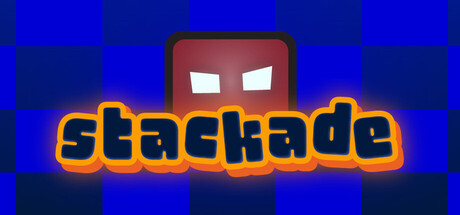
Most of Stackade's code was written with generative AI coding tools, working to the developer's direction. Everything you see on the board is drawn by that code; the game contains no AI-generated images. The ten translations besides English were produced with AI. Parts of this store page, its marketing images and its trailer were also made with AI assistance. The sound effects and music are recordings made by people and are credited in the game. Nothing is generated by AI while you play, and the game never connects to an AI service.
Some pre-rendered visual assets and music were created with generative AI tools, then curated, edited, and integrated by the developer. No AI content is generated during gameplay, and the game does not connect to external AI services.
Some of the assets in this game were created using generative AI tools. Generated assets were reviewed by the developer and edited where necessary before use. The game itself does not use AI to generate content or code while it is running, and it does not connect to any external AI service.
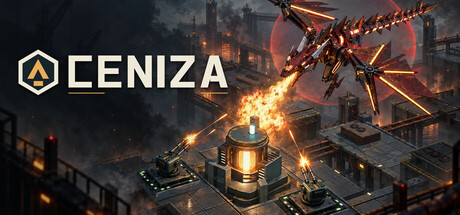
CENIZA is created using AI tools under human creative direction. Pre-generated content includes environmental textures, interface artwork, game text and translations, promotional art, and assets produced through AI-assisted modeling, coding and audio workflows. The base game does not generate content with generative AI while you play and does not connect to an AI service. Mod authors may optionally use external AI tools; manual editing and conventional tools are equally welcome.
I use AI as a "better search engine" for code snippets and design research, and to create examples I can mark up to show artists what I am looking for. Paid artists create the monsters, backgrounds and UI icons, and everything else is hand-created or downloaded from asset packs or is available from free art sites. The artists also use AI in their workflows.
Some of the text in this game was created with the help of generative AI tools.
- In-game text: Korean dialogue, stage narration and help text were drafted with an AI assistant, then rewritten and reviewed by the developer.
- Localization: the English text was produced with AI assistance and reviewed by the developer.
All artwork and UI icons are hand-authored by the developer, the sound effects are synthesized procedurally in code, and the background music is a licensed stock track. No AI runs during gameplay — all content is fixed at build time.
- Store page: the store description text was drafted with AI assistance and edited by the developer.
Generative AI was used during development to assist with some visual assets, text, and audio. No generative AI is used to generate content during gameplay.
Spritesheets, translations, most of the music, and a handful of images are currently AI-generated. I hope to replace them all with human-made by the 1.0 release.
This game uses some pre-generated content created with generative AI tools. It does not use generative AI to generate content in real time in response to player actions.
Artwork
Generative AI tools were used to create some in-game graphics, as well as images for the Steam store page and promotional and marketing materials. Generated assets are reviewed by the developer and edited or adjusted when necessary. Some assets are used without additional editing.
Translation
AI tools are used to assist with translation and localization for some languages other than Japanese. Translations are reviewed and corrected by the developer.
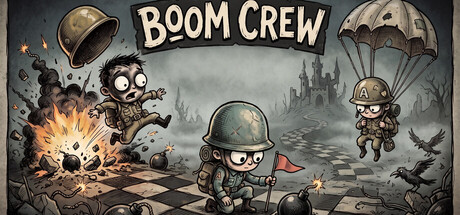
Some of the artwork in Boom Crew was created with the help of generative AI image tools. This covers character and object sprites, ground and paper textures, the game logo, and the capsule art on this store page. Every generated image was directed from hand-drawn mockups, then cut out, corrected and assembled by hand before it shipped. Code, level generation, on-screen text and audio contain no generative AI content, and nothing is generated live while you play.
Generative AI tools were used to create and edit selected pre-rendered visual assets, animations, and marketing materials. The game does not use live-generated AI content during gameplay.
Generative AI tools were used to assist in the creation or editing of certain visual assets, promotional materials, cinematic elements, draft copy, and audio elements.
All final outputs were reviewed and selected by the development team, and were revised where necessary before being incorporated into the game and related materials.
Generative AI is not used during gameplay, and the game does not connect to any generative AI services.
Generative AI tools were used during development to create some pre-generated visual artwork used in marketing/store assets and some pre-generated background music used in the game. The game does not use generative AI to create content during gameplay.
Pre-generated AI tools were used during development to assist with portions of source code and localization, and to create the store capsule/key artwork. All outputs were reviewed, edited, and curated by the developers. The game's playable visuals are rendered procedurally by the shipped code. The product contains no live-generative AI, does not accept AI prompts from players, and does not send player data to an AI service.
In this game, AI was used a little bit to help create some sprites and textures. Everything was edited by the developer before being added to the game.
Some of the artwork for this game was created with generative AI image tools and then edited by hand: the store page capsule images, the application icon, the studio logo, and the lobby board art.
The store text was written in Korean and translated into the other six supported languages with the help of AI.
The gameplay visuals are rendered in Unity, and all 2,478 stages are hand-authored data whose solutions are verified by a solver. No generative AI runs while you are playing.
Generative AI was used to create some of the artwork shown on the Steam store page and related marketing assets. No generative AI is used during gameplay.
Some of this game's art and music assets were created with the help of generative AI tools during development.
Art: Character portraits, unit and enemy sprites, environment tiles, map decorations, and item icons were produced with the assistance of AI image-generation tools (including Retro Diffusion, PixelLab, and FLUX), then curated, edited, assembled, and integrated by the developer.
Music: Background music was generated with a licensed AI music-generation tool and edited by the developer.
All AI-assisted content is pre-generated and fixed in the shipped game — no content is generated live during gameplay. Every asset was reviewed and approved by the developer to ensure it is original to this game, does not infringe third-party intellectual property, and is appropriate for the game's audience.
Some of this game's assets were created with the assistance of generative AI tools and were then reviewed, edited, and integrated by the developer. This includes: base meshes of some 3D character models, some 2D artwork such as card illustrations and icons, voice lines and sound effects created with AI voice/audio generation, and parts of the localized text. All such content was pre-generated during development — the game does not generate any content with AI at runtime.
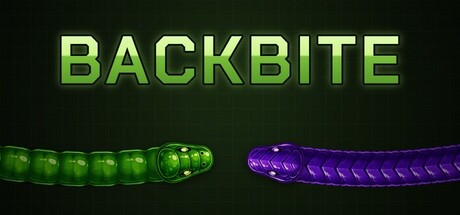
BACKBITE's in-game visual art — the snakes, power-up icons and other graphics —
was created with generative AI image tools and then prepared as sprites for the
game. In-game text was translated into the supported languages with AI
assistance. All music and sound effects come from licensed, human-made audio
libraries.
Generative AI tools were used during development to assist with the creation and iteration of some some pre-generated visual, written and promotional assets. All AI-assisted content is reviewed, edited and curated by the developer. No generative AI is used during gameplay.
Generative AI tools were used during development to assist with the creation of game content. All generated products are carefully reviewed, edited, and assembled by the development team.
Lateral Crawl will launch in Early Access. The Early Access build will contain some AI-generated and developer-edited sound effects, which are planned to be replaced before the 1.0 release.
- Audio: background music is generated with AI music tools.
- Translation: in-game and store text is translated using AI.
- Code: the game's code, including the code that draws every visual at runtime,
was written with the help of an AI coding assistant.
AI is used as a translation aid for localizing in-game text and Steam store page text into the supported languages. All original Japanese text is written by the developer.
Generative AI tools were used during the development of Cargo Industry as programming assistance tools. They were used to assist with code generation, code modification, debugging, and exploring programming solutions. AI-generated code is included in the game's released codebase.
A lot of the artwork here was created with AI and only detailed and fixed by human hands. The voice acting, music, and soundtrack as well. The code and writing are all human-made.
Generative AI was used to assist in the creation of some promotional artwork and to help with the writing and localization of certain text. All such content was reviewed and, where necessary, edited before use. No AI-generated content is created in real time during gameplay.
Some 2D art assets (character portraits and a portion of the character sprites) and some in-game text (dialogue lines) were produced with the assistance of generative AI tools. All AI-generated output was manually edited, retouched and adjusted by the developer before being included in the game.
No content is generated at runtime; everything ships with the build as pre-generated assets.
The music in Ammerow: Lands Beyond was created with Claude Compose, a bespoke composition system built for this project. Rather than a generative music model, it works like a tireless studio composer: an AI assistant (Anthropic's Claude) writes and runs code that composes each piece note by note — melody, harmony, counterpoint and orchestration derived from music theory — and performs it through real, licensed virtual instruments in a professional DAW (Ableton Live). It then "listens back" by analysing the rendered audio to refine the balance. No generative audio/music model was used, no AI was trained on other artists' recordings, and no track was produced from a prompt. Every note is placed deliberately, and every piece is directed, reviewed and approved by a human. The result is authored, not generated.
The sound effects are an original, human-directed procedural synthesis library. Claude Code assisted in writing custom Python DSP software and individual cue recipes; every waveform was deterministically rendered from mathematical models and recorded seeds. No recordings, performers, samples, stock audio, sample libraries or generative-audio service were used.
Ammerow is designed primarily as a coloured ASCII game. Selected creature, item and shopkeeper illustrations began as AI-generated source images and are converted through a deterministic ASCII-art pipeline. The optional tile mode is a work-in-progress secondary presentation. Its small atlases were programmatically drawn in a custom SDL application using natural-language Codex direction. No generative-image model, inherited tileset, traced artwork or third-party graphical asset was used.
Some narrative, gameplay data and other player-facing material were also developed with AI assistance under human direction and review.
Some Steam marketing backgrounds were created using OpenAI image-generation tools and then selected, reviewed and combined with deterministic Ammerow branding by the developer.
No AI runs while the game is being played.
Generative AI was used during development for visual assets, music, and small portions of text, as well as the store artwork. These are pre-generated assets included with the game. No content is generated by AI during play, and the game does not connect to an AI service.
EVER BELOW was created with the assistance of generative AI across parts of its content creation and development process, including visual assets and marketing materials. All AI-assisted content was manually reviewed, selected, edited where necessary, and all final creative and development decisions were made by the developer.
Some store-page and marketing artwork for AVALANCHE was created or edited using generative AI. The game does not generate content during gameplay and does not connect to external AI services.
Most of Stackade's code was written with generative AI coding tools, working to the developer's direction. Everything you see on the board is drawn by that code; the game contains no AI-generated images. The ten translations besides English were produced with AI. Parts of this store page, its marketing images and its trailer were also made with AI assistance. The sound effects and music are recordings made by people and are credited in the game. Nothing is generated by AI while you play, and the game never connects to an AI service.
Some pre-rendered visual assets and music were created with generative AI tools, then curated, edited, and integrated by the developer. No AI content is generated during gameplay, and the game does not connect to external AI services.
Some of the assets in this game were created using generative AI tools. Generated assets were reviewed by the developer and edited where necessary before use. The game itself does not use AI to generate content or code while it is running, and it does not connect to any external AI service.
CENIZA is created using AI tools under human creative direction. Pre-generated content includes environmental textures, interface artwork, game text and translations, promotional art, and assets produced through AI-assisted modeling, coding and audio workflows. The base game does not generate content with generative AI while you play and does not connect to an AI service. Mod authors may optionally use external AI tools; manual editing and conventional tools are equally welcome.
I use AI as a "better search engine" for code snippets and design research, and to create examples I can mark up to show artists what I am looking for. Paid artists create the monsters, backgrounds and UI icons, and everything else is hand-created or downloaded from asset packs or is available from free art sites. The artists also use AI in their workflows.
Some of the text in this game was created with the help of generative AI tools.
- In-game text: Korean dialogue, stage narration and help text were drafted with an AI assistant, then rewritten and reviewed by the developer.
- Localization: the English text was produced with AI assistance and reviewed by the developer.
All artwork and UI icons are hand-authored by the developer, the sound effects are synthesized procedurally in code, and the background music is a licensed stock track. No AI runs during gameplay — all content is fixed at build time.
- Store page: the store description text was drafted with AI assistance and edited by the developer.
Generative AI was used during development to assist with some visual assets, text, and audio. No generative AI is used to generate content during gameplay.
Spritesheets, translations, most of the music, and a handful of images are currently AI-generated. I hope to replace them all with human-made by the 1.0 release.
This game uses some pre-generated content created with generative AI tools. It does not use generative AI to generate content in real time in response to player actions.
Artwork
Generative AI tools were used to create some in-game graphics, as well as images for the Steam store page and promotional and marketing materials. Generated assets are reviewed by the developer and edited or adjusted when necessary. Some assets are used without additional editing.
Translation
AI tools are used to assist with translation and localization for some languages other than Japanese. Translations are reviewed and corrected by the developer.
Some of the artwork in Boom Crew was created with the help of generative AI image tools. This covers character and object sprites, ground and paper textures, the game logo, and the capsule art on this store page. Every generated image was directed from hand-drawn mockups, then cut out, corrected and assembled by hand before it shipped. Code, level generation, on-screen text and audio contain no generative AI content, and nothing is generated live while you play.
Generative AI tools were used to create and edit selected pre-rendered visual assets, animations, and marketing materials. The game does not use live-generated AI content during gameplay.
Generative AI tools were used to assist in the creation or editing of certain visual assets, promotional materials, cinematic elements, draft copy, and audio elements.
All final outputs were reviewed and selected by the development team, and were revised where necessary before being incorporated into the game and related materials.
Generative AI is not used during gameplay, and the game does not connect to any generative AI services.
Generative AI tools were used during development to create some pre-generated visual artwork used in marketing/store assets and some pre-generated background music used in the game. The game does not use generative AI to create content during gameplay.
Pre-generated AI tools were used during development to assist with portions of source code and localization, and to create the store capsule/key artwork. All outputs were reviewed, edited, and curated by the developers. The game's playable visuals are rendered procedurally by the shipped code. The product contains no live-generative AI, does not accept AI prompts from players, and does not send player data to an AI service.
In this game, AI was used a little bit to help create some sprites and textures. Everything was edited by the developer before being added to the game.
Some of the artwork for this game was created with generative AI image tools and then edited by hand: the store page capsule images, the application icon, the studio logo, and the lobby board art.
The store text was written in Korean and translated into the other six supported languages with the help of AI.
The gameplay visuals are rendered in Unity, and all 2,478 stages are hand-authored data whose solutions are verified by a solver. No generative AI runs while you are playing.
Generative AI was used to create some of the artwork shown on the Steam store page and related marketing assets. No generative AI is used during gameplay.
Some of this game's art and music assets were created with the help of generative AI tools during development.
Art: Character portraits, unit and enemy sprites, environment tiles, map decorations, and item icons were produced with the assistance of AI image-generation tools (including Retro Diffusion, PixelLab, and FLUX), then curated, edited, assembled, and integrated by the developer.
Music: Background music was generated with a licensed AI music-generation tool and edited by the developer.
All AI-assisted content is pre-generated and fixed in the shipped game — no content is generated live during gameplay. Every asset was reviewed and approved by the developer to ensure it is original to this game, does not infringe third-party intellectual property, and is appropriate for the game's audience.
Some of this game's assets were created with the assistance of generative AI tools and were then reviewed, edited, and integrated by the developer. This includes: base meshes of some 3D character models, some 2D artwork such as card illustrations and icons, voice lines and sound effects created with AI voice/audio generation, and parts of the localized text. All such content was pre-generated during development — the game does not generate any content with AI at runtime.
BACKBITE's in-game visual art — the snakes, power-up icons and other graphics —
was created with generative AI image tools and then prepared as sprites for the
game. In-game text was translated into the supported languages with AI
assistance. All music and sound effects come from licensed, human-made audio
libraries.
Generative AI tools were used during development to assist with the creation and iteration of some some pre-generated visual, written and promotional assets. All AI-assisted content is reviewed, edited and curated by the developer. No generative AI is used during gameplay.
Generative AI tools were used during development to assist with the creation of game content. All generated products are carefully reviewed, edited, and assembled by the development team.
Lateral Crawl will launch in Early Access. The Early Access build will contain some AI-generated and developer-edited sound effects, which are planned to be replaced before the 1.0 release.
- Audio: background music is generated with AI music tools.
- Translation: in-game and store text is translated using AI.
- Code: the game's code, including the code that draws every visual at runtime,
was written with the help of an AI coding assistant.
AI is used as a translation aid for localizing in-game text and Steam store page text into the supported languages. All original Japanese text is written by the developer.
Generative AI tools were used during the development of Cargo Industry as programming assistance tools. They were used to assist with code generation, code modification, debugging, and exploring programming solutions. AI-generated code is included in the game's released codebase.
A lot of the artwork here was created with AI and only detailed and fixed by human hands. The voice acting, music, and soundtrack as well. The code and writing are all human-made.
Generative AI was used to assist in the creation of some promotional artwork and to help with the writing and localization of certain text. All such content was reviewed and, where necessary, edited before use. No AI-generated content is created in real time during gameplay.
Some 2D art assets (character portraits and a portion of the character sprites) and some in-game text (dialogue lines) were produced with the assistance of generative AI tools. All AI-generated output was manually edited, retouched and adjusted by the developer before being included in the game.
No content is generated at runtime; everything ships with the build as pre-generated assets.