


Disclosure
AI assisted with artwork and text creation, with no live AI generation during gameplay.
- Creator
- Blackfoil Games
- Reviews
- -
- Added
- Nov 5, 2026
Public Steam disclosure research 27,951 disclosures tracked
Search developers’ Steam disclosures, compare classified AI use across games, and follow recorded changes. This index adds cross-game classifications and statistics to statements published on individual store pages.
Code help, debugging and other development work.
Capsule art, trailers and promotional material.
Pre-made art, audio, writing and other game assets.
Interactive or runtime AI features disclosed by the developer.
Groups reflect automatic analysis of public disclosures; mature records are excluded. These counts do not measure AI use across all of Steam. Missing or unclear statements cannot establish whether a game uses AI.
AI assisted with artwork and text creation, with no live AI generation during gameplay.
Saltwake is a solo project. The story, characters, level design and game systems are the developer's own. The art, audio and text were made with the help of AI tools to speed up the work. Nothing is generated while you play.
**AI has been used for:** - In-game images and illustrations - English text translation (the developer is a native French speaker) - Graphics Enhancement - Some plugin development **AI has not been used for:** - Story and scenario - Mapping - Music - Gameplay Mechanics I'm a solo developer who has spent ten years working on the Infasia project (2016-2026). I only started using AI to improve the game when it was already nearly finished. Since Infasia is completely free to play, with no in-game purchases, my only goal has ever been to share its story with others.
AI is used exclusively for translations into additional languages. No other part of the game uses AI-generated content. As a small, self-funded indie team, we currently use AI-assisted translations for additional languages. Our English and Slovak versions are fully human-translated. These AI-assisted translations are a temporary solution, and we aim to gradually replace them with human-translated and reviewed versions as our resources allow. We believe everyone deserves the opportunity to enjoy our game, and we truly appreciate your understanding and support.
Generative AI is used to assist with the initial English translation of the game's text. All AI-generated translations are reviewed, edited, and finalized by the development team to ensure accuracy and quality before being included in the game.
Generative AI tools were used during development as part of the production pipeline for visual assets and localization. AI-assisted visual material undergoes manual curation, editing, compositing, and final integration in image-editing software by the development team. AI-assisted localization goes through a multi-stage workflow that includes terminology and consistency checks, human proofreading, and final verification.
Galactic Tenebris Company believes in being transparent with the people who play our games. Here is an honest account of where AI tools contributed to this production: — Some icons and UI elements, texturres — Organizing and structuring text and documents. — Translation All 3D models were handcrafted by the developer. The music and sound effects were composed and not generated by AI tools. Our position as a company is simple — we use AI only where we have no other means or resources available. Where human craft was possible, human craft was used. Every creative decision — the story, the world, the characters, the quests, the writing — was made by the developer. The scenario and dialogues were authored by the developer and organised with AI assistance. The foundation of this game is firsthand experience. That part was not written by any tool. — Mr. M., Owner of Galactic Tenebris Company
The story and its world are the author's own; all music is composed by humans. We write an original version in French or English, then use AI to translate and create a scene draft from it, then edit it by hand. Scenes remain a work in progress until the end of Early Access. We are perfectionists, so our editing takes time.
Some of the art creatives, animations, and video content in this game were created with the assistance of generative AI tools. All AI-generated content has been manually reviewed, edited, and post-processed to ensure it aligns with the game's worldbuilding and content specifications.
Generative AI tools were used during development to create pre-generated artwork, music and sound effects, and to assist with written content and localization. The game does not generate AI content during gameplay.
In making this game, AI contributed in these areas: visual image generation; script and dialogue rewriting; implementation of game features; testing; and additional guidance on design and technical topics. Human creators were involved throughout and reviewed all such work—none of it was left solely to AI.
Tea & Fae is adapted from my own original novels. AI assistance was used in making the game, with everything refined, adjusted and finalized by me; translations were drafted with AI and checked by hand. Nothing is generated by AI while you play.
Generative AI graphics were used for the initial game art drafts, and Vibe Coding was employed to enhance work efficiency. We will significantly overhaul and improve the graphic quality in time for the official release.
some generic textures were created by AI
AI tools were used during game development mainly to assist in 3D asset creation and coding. Please see the production disclosure in the description for an extended discussion about the tools used to produce this game.
Ayalga is designed and directed by one person working with an AI assistant (Claude, by Anthropic). The game's pixel art, music and translations were produced with it, under its creator's direction, playtesting and revision. The arrangement of «Santa Bárbara bendita» in the credits is the creator's own. The store art was generated with Magnific from the game's own sprites. No AI generates content while you play.
Generative AI tools were used to create source artwork for scene backgrounds, character portraits and ending illustrations; the artwork was processed into the two-color pixel style before inclusion in the game. The background music for each act was also generated with an AI music tool. All of this content was made before release. The in-game model conversations are pre-written text; no content is generated during gameplay and the game does not connect to an external AI service.
Again, Liliya is made by a small studio working with an AI assistant. The AI helped write the tools and scripts that build our 3D models, textures, and sound effects and some 2D art and helped draft some of our text. Every design choice is ours, and everything is directed, checked, and finished by us. No downloaded or stock art is used, and nothing is generated by AI while you play.
AI was used to assist with the design and refinement of certain in-game scenes.
[Localization] The in-game text in English, Simplified Chinese, Spanish, and Brazilian Portuguese, the Steam achievement names and descriptions, and the store page text are based on drafts translated and written with a generative AI tool (Anthropic's Claude). The game also notes that languages other than Japanese include machine translation.[Images] The store page images, achievement icons, app icon, and the card artwork in the game were rendered by drawing programs that were written with the help of generative AI (they are not outputs of an image-generation model).[Audio] Sound effects and music are synthesized in-game by a program (Web Audio). Generative AI was used to help write that program.[Live-generated] No generative AI creates content while the game is running.
We confirm that AI-generated images are used in the game during Early Access. All quest dialogue is written by hand, the game world is manually assembled in Unreal Engine 5, and the game’s code is written by our developers. Some parts of the world may also contain ready-made assets.
Dual Breach is designed and developed by a solo developer. Some of the content in the game was created with the help of AI tools during development, while more in-depth and detailed content was made entirely by the developer, or paid artists outside of the development team. Any portion of the game's development that brought challenge to the developer's skillset, was tackled with commissioned work with professionals. • Some 3D assets such as rigs and props were synthesised from code with AI assistance rather than modelled by hand by the developer for efficiency purposes. • Some sound effects were synthesised from code with AI assistance rather than recorded by the developer for efficiency purposes. The player character was modelled by a commissioned human artist, and many sounds come from third-party sound libraries. No AI is used while you play: all content was created and reviewed before release, and the game does not generate content or connect to any AI service.
Chronicle of Gods is made by one person with the help of AI coding assistants. AI is used as a programming tool: writing, refactoring and testing source code to my specification. The game's English text (the interface, the tooltips and the sentence templates the chronicle is built from) was also written with these assistants, to my direction. No image, music or voice model was used. Everything visible, from the globe and the maps to the heraldry, the icons and the interface, is drawn by code, and that code was written with the same assistants to my direction. The lettering is set in open-licence typefaces by human type designers. The sound effects are my own recordings, plus one public-domain (CC0) recording; there is no music yet. The histories each world produces are assembled by procedural systems I designed, not by a language model. The shipped game contains no live-generated AI content: nothing calls out to an AI model while you play, and the game does not require a network connection to generate anything.
AI has been used to assist in writing game code, and or identifying code related issues. some content may be generated with AI tools.
This game uses AI-generated images for card artwork. For more details, please refer to the in-game credits.
The game texts are polished with AI assistance. Artwork and background music are generated by AI. The core story framework, character relationships and plot design are originally created by the developer. No runtime AI content will be produced during gameplay.
Some character illustrations and graphics, character voices and some sound effects were made with AI generation tools, and AI helped edit the in-game text and the English translation. The story, game design and direction are by the developer, who reviewed and edited all AI-assisted content. The game does not generate any AI content while you play.
AI tools assist with localization, and limited texture cleanup using original photographs taken by the developer. The game’s, story, characters, visual direction, and gameplay are authored and developed by the developer. All AI-assisted work is reviewed and edited by the developer before inclusion in the game.
This game uses generative large models to assist in creating some texts and assets during development. All AI-generated content is manually reviewed, revised and verified before being included in the game. No new content will be generated by AI in real time during gameplay.
Generative AI helped us create parts of this game, including some visuals, audio and music. Everything it produced was reviewed and refined by our team, and the creative and design decisions are always ours. We never used player data to train any model.
Made by one person. Written, directed and built by me, with generative AI used as a supplementary tool for some of the game's assets, all of it reviewed and refined by hand.
Using AI for collecting informations about work and organise it... helps in developing scripts, also some images/huds are started from generating procedure.
Made by a solo developer. Visual assets and audio are AI-generated and hand-edited; AI assisted with code. The physics and design are not generated. Nothing is generated by AI while you play.
Generative AI was used during development for the following: - Video footage in the movies - Narration voice and sound - Assets and textures for some in-game items, such as talismans, scrolls and notes (AI image generation) The game does not generate any content with AI during play.
ASPIS is an independently developed game created by a solo developer. AI tools were used in the creation of select music tracks, voice-over lines, and visual assets. The game's world, environments, gameplay mechanics, scene direction, and overall visual identity were designed and crafted by the developer.
Pre-generated content only; nothing is generated live while playing. - Localization: the translations into Simplified Chinese, Japanese, Korean, Spanish, Brazilian Portuguese, German, French and Russian were produced with AI and checked automatically for completeness. - Writing: parts of the in-game text (item descriptions, quests, dialogue, story text) and the store page text were drafted with AI assistance and edited by the developer. - Art: the 3D models, icons and store images are procedural low-poly models built in code and captured from the game itself.
Some of the in-game images are AI-generated, but have been rigorously optimized by our development team.
Docked Realms was made by a small team with generative AI tools as part of the production pipeline. Every AI-assisted asset was directed, selected, edited and approved by people. - Trailer. The Act I trailer is cut from short clips made with AI video generation models, built from our own character art. Its music was generated with Suno. Shot selection, editing, pacing and sound placement were done by the team. - Art. Hero and creature designs, portraits, and many of the icons and backgrounds were created with AI image generation models under art direction, then revised and selected by hand against the game's existing designs. - Sprite animation. In-game character animations were derived from AI-generated video (image-to-video from our character art). Frames were chosen, cut, cleaned and assembled into sprite sheets by the team. - Music and sound. The Act I music loops were generated with ACE-Step 1.5, a locally run model whose license allows commercial use, and some sound effects contain layers made with MOSS-SoundEffect v2.0 (Apache-2.0). These were combined with CC0 sound libraries and our own synthesis, then edited and mixed by the team. The menu music was made by hand, without AI. - Writing. Approximately half of the in-game text, including parts of the story, was first drafted with an AI language model and then edited by the team.
Generative AI was used to translate the game into Spanish, Japanese, German, French, and Chinese. AI was NOT used to generate any visual or audio assets.
AI tools assisted with text, translations and some procedural graphics. This includes store page text. No AI content is generated during gameplay.
Some of this game's assets — 3D models, textures and art, sound effects and voice, and cinematic video sequences — were created with the assistance of generative AI. All of it is pre-generated: every piece was curated, edited and integrated by hand before shipping. All design, code, writing and gameplay are the developer's own work. Nothing is generated while you play, and the game never connects to any AI service.
During the development of EVILGARD, only a small number of AI-generated images are currently used as temporary placeholders. These will be fully replaced with non-AI-generated artwork as development progresses. By the time of the final release, EVILGARD will no longer contain any AI-generated content. All creative elements, including the story, characters, quests, dialogue, gameplay systems, and overall creative direction, are developed by the developer personally. AI is not used to generate voice performances, clone voices, or train voice models.
Generative AI was used to assist with selected textures, text, voice, and music. All such assets were reviewed and edited by the team before release. The game does not generate AI content during gameplay.
Generative AI assisted with some code, artwork, writing, and audio.
AI was used to assist with localizing some language versions. The resulting translations were proofread and checked through back-translation by humans.
Some images (portraits, quest illustrations, ships, planets, backgrounds), the sound effects and music, and parts of the game text (quest scripts, descriptions and translations) were created with the help of generative AI tools, then selected, edited and integrated into the game by the developer. No generative AI runs during gameplay.
KUR is developed by a single person with over 18 years of experience in software development, using generative AI as a supporting tool, primarily for artwork, translations, and research. The project marks the return of a developer who spent five years of his teenage years creating online games and contributing to open-source communities. Without the financial resources to hire an art team, AI became a way to make that return possible. AI-generated artwork is carefully selected, reviewed, corrected, and adapted. Translations also use AI, with the English and Spanish versions reviewed. No content is generated by AI during gameplay. KUR's mechanics, systems, and game design are the result of countless hours of personal development and dedication. The goal is to create a game with its own identity and, once financially possible, reinvest the game's revenue into hiring human artists to progressively replace AI-generated artwork with human-created art.
AI-assisted completion,but with heart,hope you can find happiness here:)
This game uses AI-generated voice acting. The narration in the game's introduction was produced with ElevenLabs, a text-to-speech tool. The script itself was written by hand. All other content — level design, art, animation, code, and game systems — was created without generative AI.
Some illustrations and plugins in the game were made using AI
| Title⇅ | Disclosure | Creator⇅ | Src | Reviews⇅ | Added↓ |
|---|---|---|---|---|---|
 Before the Pyre In-game content arttext | AI assisted with artwork and text creation, with no live AI generation during gameplay. | Blackfoil Games | - | Nov 5, 2026 | |
 Saltwake In-game content artaudiotext | Saltwake is a solo project. The story, characters, level design and game systems are the developer's own. The art, audio and text were made with the help of AI tools to speed up the work. Nothing is generated while you play. | Petersen Projects | - | Nov 5, 2026 | |
 Infasia : Tears of Void In-game content arttext | **AI has been used for:**
- In-game images and illustrations
- English text translation (the developer is a native French speaker)
- Graphics Enhancement
- Some plugin development
**AI has not been used for:**
- Story and scenario
- Mapping
- Music
- Gameplay Mechanics
I'm a solo developer who has spent ten years working on the Infasia project (2016-2026).
I only started using AI to improve the game when it was already nearly finished.
Since Infasia is completely free to play, with no in-game purchases, my only goal has ever been to share its story with others. | Jarex | - | Nov 5, 2026 | |
 After Hours: Lost and Found In-game content text | AI is used exclusively for translations into additional languages. No other part of the game uses AI-generated content.
As a small, self-funded indie team, we currently use AI-assisted translations for additional languages. Our English and Slovak versions are fully human-translated.
These AI-assisted translations are a temporary solution, and we aim to gradually replace them with human-translated and reviewed versions as our resources allow.
We believe everyone deserves the opportunity to enjoy our game, and we truly appreciate your understanding and support. | NoxLabGames | - | Nov 5, 2026 | |
 Cloudwalker In-game content text | Generative AI is used to assist with the initial English translation of the game's text. All AI-generated translations are reviewed, edited, and finalized by the development team to ensure accuracy and quality before being included in the game. | Old Retina Museum | - | Nov 5, 2026 | |
 Severed Souls — Chapter I In-game content arttext | Generative AI tools were used during development as part of the production pipeline for visual assets and localization.
AI-assisted visual material undergoes manual curation, editing, compositing, and final integration in image-editing software by the development team. AI-assisted localization goes through a multi-stage workflow that includes terminology and consistency checks, human proofreading, and final verification. | Lakos and Friends | - | Nov 4, 2026 | |
 Jack Bonecroft 1 In-game content arttext | Galactic Tenebris Company believes in being transparent with the people who play our games. Here is an honest account of where AI tools contributed to this production:
— Some icons and UI elements, texturres
— Organizing and structuring text and documents.
— Translation
All 3D models were handcrafted by the developer. The music and sound effects were composed and not generated by AI tools.
Our position as a company is simple — we use AI only where we have no other means or resources available. Where human craft was possible, human craft was used.
Every creative decision — the story, the world, the characters, the quests, the writing — was made by the developer. The scenario and dialogues were authored by the developer and organised with AI assistance. The foundation of this game is firsthand experience. That part was not written by any tool.
— Mr. M., Owner of Galactic Tenebris Company | Galactic Tenebris Company | - | Nov 3, 2026 | |
 Dead Week In-game content text | The story and its world are the author's own; all music is composed by humans. We write an original version in French or English, then use AI to translate and create a scene draft from it, then edit it by hand.
Scenes remain a work in progress until the end of Early Access.
We are perfectionists, so our editing takes time. | Elindos Phar | - | Nov 2, 2026 | |
 红楼梦:林黛玉与北静王 In-game content artaudio | Some of the art creatives, animations, and video content in this game were created with the assistance of generative AI tools. All AI-generated content has been manually reviewed, edited, and post-processed to ensure it aligns with the game's worldbuilding and content specifications. | LinearGame Pte. Ltd. | - | Oct 31, 2026 | |
 Matecalipsis: El Último Mate In-game content artaudiotext | Generative AI tools were used during development to create pre-generated artwork, music and sound effects, and to assist with written content and localization. The game does not generate AI content during gameplay. | Facundo Mastandrea | - | Oct 31, 2026 | |
 The Compliant In-game content arttextcode | In making this game, AI contributed in these areas: visual image generation; script and dialogue rewriting; implementation of game features; testing; and additional guidance on design and technical topics. Human creators were involved throughout and reviewed all such work—none of it was left solely to AI. | fishenal studio | - | Oct 30, 2026 | |
 Tea & Fae In-game content text | Tea & Fae is adapted from my own original novels.
AI assistance was used in making the game, with everything refined, adjusted and finalized by me; translations were drafted with AI and checked by hand.
Nothing is generated by AI while you play. | Shatenchin Studio | - | Oct 30, 2026 | |
 Wolves Of Ash Dev only artcode | Generative AI graphics were used for the initial game art drafts, and Vibe Coding was employed to enhance work efficiency. We will significantly overhaul and improve the graphic quality in time for the official release. | TEAM OLDBOY_Levi | - | Oct 30, 2026 | |
 The Wheelerman In-game content art | some generic textures were created by AI | SuloSounds | - | Oct 30, 2026 | |
 Creeper Bear Dev only artcode | AI tools were used during game development mainly to assist in 3D asset creation and coding. Please see the production disclosure in the description for an extended discussion about the tools used to produce this game. | Snowy Plover Games | - | Oct 30, 2026 | |
 Ayalga In-game content artaudiotext | Ayalga is designed and directed by one person working with an AI assistant (Claude, by Anthropic). The game's pixel art, music and translations were produced with it, under its creator's direction, playtesting and revision. The arrangement of «Santa Bárbara bendita» in the credits is the creator's own. The store art was generated with Magnific from the game's own sprites. No AI generates content while you play. | Trenti Games | - | Oct 27, 2026 | |
 SCALING LAW In-game content artaudio | Generative AI tools were used to create source artwork for scene backgrounds, character portraits and ending illustrations; the artwork was processed into the two-color pixel style before inclusion in the game. The background music for each act was also generated with an AI music tool. All of this content was made before release. The in-game model conversations are pre-written text; no content is generated during gameplay and the game does not connect to an external AI service. | Peter | - | Oct 25, 2026 | |
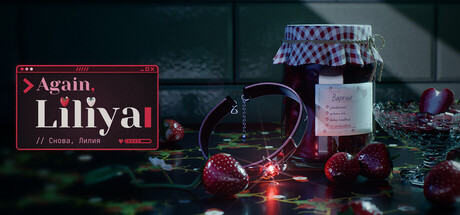 Misery Relay In-game content arttextcode | Again, Liliya is made by a small studio working with an AI assistant. The AI helped write the tools and scripts that build our 3D models, textures, and sound effects and some 2D art and helped draft some of our text. Every design choice is ours, and everything is directed, checked, and finished by us. No downloaded or stock art is used, and nothing is generated by AI while you play. | ZittoStudio | - | Oct 25, 2026 | |
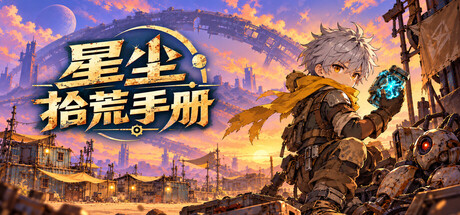 星尘拾荒手册 In-game content art | AI was used to assist with the design and refinement of certain in-game scenes. | Pocket Forge | - | Oct 24, 2026 | |
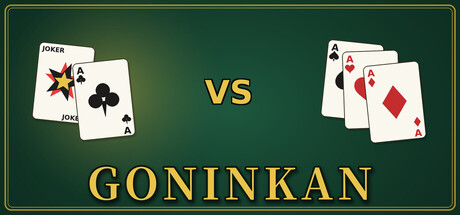 ゴニンカン-津軽トランプゲーム- In-game content textartcode | [Localization] The in-game text in English, Simplified Chinese, Spanish, and Brazilian Portuguese, the Steam achievement names and descriptions, and the store page text are based on drafts translated and written with a generative AI tool (Anthropic's Claude). The game also notes that languages other than Japanese include machine translation.[Images] The store page images, achievement icons, app icon, and the card artwork in the game were rendered by drawing programs that were written with the help of generative AI (they are not outputs of an image-generation model).[Audio] Sound effects and music are synthesized in-game by a program (Web Audio). Generative AI was used to help write that program.[Live-generated] No generative AI creates content while the game is running. | ABch | - | Oct 24, 2026 | |
 Fly Cowboy Online In-game content art | We confirm that AI-generated images are used in the game during Early Access. All quest dialogue is written by hand, the game world is manually assembled in Unreal Engine 5, and the game’s code is written by our developers. Some parts of the world may also contain ready-made assets. | ORIAT INTERACTIVE FZCO | 30 | Oct 23, 2026 | |
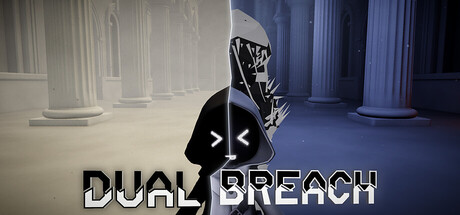 Dual Breach In-game content artaudio | Dual Breach is designed and developed by a solo developer. Some of the content in the game was created with the help of AI tools during development, while more in-depth and detailed content was made entirely by the developer, or paid artists outside of the development team.
Any portion of the game's development that brought challenge to the developer's skillset, was tackled with commissioned work with professionals.
• Some 3D assets such as rigs and props were synthesised from code with AI assistance rather than modelled by hand by the developer for efficiency purposes.
• Some sound effects were synthesised from code with AI assistance rather than recorded by the developer for efficiency purposes.
The player character was modelled by a commissioned human artist, and many sounds come from third-party sound libraries. No AI is used while you play: all content was created and reviewed before release, and the game does not generate content or connect to any AI service. | Fearia | - | Oct 22, 2026 | |
 Chronicle of Gods In-game content textcode | Chronicle of Gods is made by one person with the help of AI coding assistants. AI is used as a programming tool: writing, refactoring and testing source code to my specification. The game's English text (the interface, the tooltips and the sentence templates the chronicle is built from) was also written with these assistants, to my direction. No image, music or voice model was used. Everything visible, from the globe and the maps to the heraldry, the icons and the interface, is drawn by code, and that code was written with the same assistants to my direction. The lettering is set in open-licence typefaces by human type designers. The sound effects are my own recordings, plus one public-domain (CC0) recording; there is no music yet. The histories each world produces are assembled by procedural systems I designed, not by a language model. The shipped game contains no live-generated AI content: nothing calls out to an AI model while you play, and the game does not require a network connection to generate anything. | Tobias Steiner | - | Oct 22, 2026 | |
 GuildBound Dev only code | AI has been used to assist in writing game code, and or identifying code related issues.
some content may be generated with AI tools. | GuildBound Games | - | Oct 22, 2026 | |
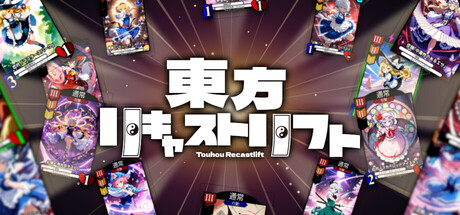 Touhou Recast Lift In-game content art | This game uses AI-generated images for card artwork. For more details, please refer to the in-game credits. | masaminedo | - | Oct 22, 2026 | |
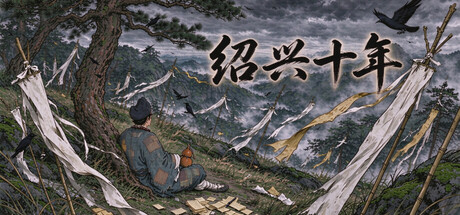 绍兴十年 In-game content textartaudio | The game texts are polished with AI assistance. Artwork and background music are generated by AI. The core story framework, character relationships and plot design are originally created by the developer. No runtime AI content will be produced during gameplay. | 蓝莓杀手 | - | Oct 22, 2026 | |
 Night Study: Korean Ghost Stories In-game content artaudiotext | Some character illustrations and graphics, character voices and some sound effects were made with AI generation tools, and AI helped edit the in-game text and the English translation. The story, game design and direction are by the developer, who reviewed and edited all AI-assisted content. The game does not generate any AI content while you play. | K-magpie | - | Oct 20, 2026 | |
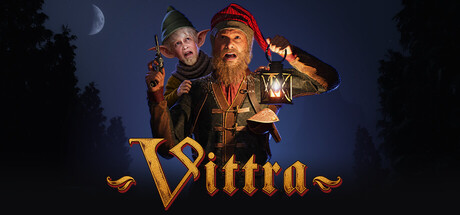 Vittra In-game content textart | AI tools assist with localization, and limited texture cleanup using original photographs taken by the developer. The game’s, story, characters, visual direction, and gameplay are authored and developed by the developer. All AI-assisted work is reviewed and edited by the developer before inclusion in the game. | In Full Stride | - | Oct 20, 2026 | |
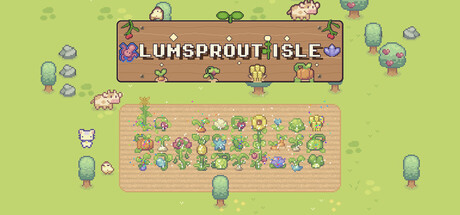 光芽岛 In-game content textart | This game uses generative large models to assist in creating some texts and assets during development. All AI-generated content is manually reviewed, revised and verified before being included in the game. No new content will be generated by AI in real time during gameplay. | syzzzz | - | Oct 20, 2026 | |
 天堂残响 In-game content artaudio | Generative AI helped us create parts of this game, including some visuals, audio and music. Everything it produced was reviewed and refined by our team, and the creative and design decisions are always ours. We never used player data to train any model. | NOX Labs | - | Oct 20, 2026 | |
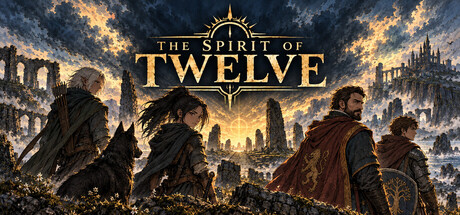 The Spirit of Twelve In-game content art | Made by one person. Written, directed and built by me, with generative AI used as a supplementary tool for some of the game's assets, all of it reviewed and refined by hand. | STANDER Games | - | Oct 19, 2026 | |
 The Sea Is Broken In-game content artcode | Using AI for collecting informations about work and organise it... helps in developing scripts, also some images/huds are started from generating procedure. | EleganckieGames | - | Oct 19, 2026 | |
 Event Horizon Research In-game content artaudiocode | Made by a solo developer. Visual assets and audio are AI-generated and hand-edited; AI assisted with code. The physics and design are not generated. Nothing is generated by AI while you play. | TinC | - | Oct 19, 2026 | |
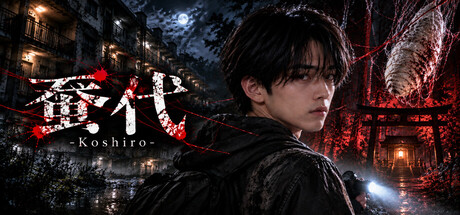 蚕代-Koshiro- In-game content artaudio | Generative AI was used during development for the following:
- Video footage in the movies
- Narration voice and sound
- Assets and textures for some in-game items, such as talismans, scrolls and notes (AI image generation)
The game does not generate any content with AI during play. | MoguArts | - | Oct 19, 2026 | |
 ASPIS In-game content audioart | ASPIS is an independently developed game created by a solo developer. AI tools were used in the creation of select music tracks, voice-over lines, and visual assets. The game's world, environments, gameplay mechanics, scene direction, and overall visual identity were designed and crafted by the developer. | Dream Wire Games | 330 | Oct 19, 2026 | |
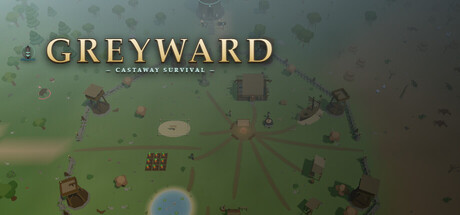 Greyward: Castaway Survival In-game content arttext | Pre-generated content only; nothing is generated live while playing.
- Localization: the translations into Simplified Chinese, Japanese, Korean, Spanish, Brazilian Portuguese, German, French and Russian were produced with AI and checked automatically for completeness.
- Writing: parts of the in-game text (item descriptions, quests, dialogue, story text) and the store page text were drafted with AI assistance and edited by the developer.
- Art: the 3D models, icons and store images are procedural low-poly models built in code and captured from the game itself. | TTGO | - | Oct 19, 2026 | |
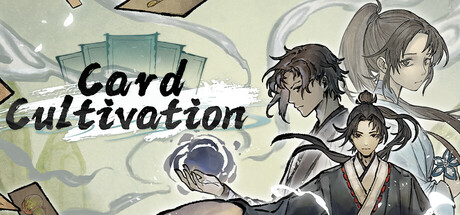 Card Cultivation In-game content art | Some of the in-game images are AI-generated, but have been rigorously optimized by our development team. | DarkIndex | 716 | Oct 19, 2026 | |
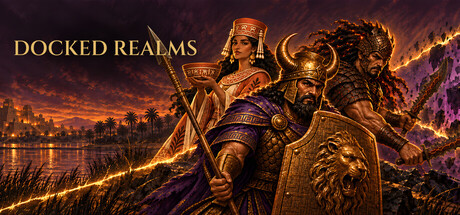 Docked Realms In-game content artaudiotext | Docked Realms was made by a small team with generative AI tools as part of the production pipeline. Every AI-assisted asset was directed, selected, edited and approved by people.
- Trailer. The Act I trailer is cut from short clips made with AI video generation models, built from our own character art. Its music was generated with Suno. Shot selection, editing, pacing and sound placement were done by the team.
- Art. Hero and creature designs, portraits, and many of the icons and backgrounds were created with AI image generation models under art direction, then revised and selected by hand against the game's existing designs.
- Sprite animation. In-game character animations were derived from AI-generated video (image-to-video from our character art). Frames were chosen, cut, cleaned and assembled into sprite sheets by the team.
- Music and sound. The Act I music loops were generated with ACE-Step 1.5, a locally run model whose license allows commercial use, and some sound effects contain layers made with MOSS-SoundEffect v2.0 (Apache-2.0). These were combined with CC0 sound libraries and our own synthesis, then edited and mixed by the team. The menu music was made by hand, without AI.
- Writing. Approximately half of the in-game text, including parts of the story, was first drafted with an AI language model and then edited by the team. | CA Studio | - | Oct 18, 2026 | |
 RADIOSOL In-game content text | Generative AI was used to translate the game into Spanish, Japanese, German, French, and Chinese.
AI was NOT used to generate any visual or audio assets. | TripletConcept | 419 | Oct 18, 2026 | |
 Ruleocard In-game content textart | AI tools assisted with text, translations and some procedural graphics. This includes store page text. No AI content is generated during gameplay. | ZheBedGames | - | Oct 18, 2026 | |
 Babel Destiny In-game content artaudiotext | Some of this game's assets — 3D models, textures and art, sound effects and voice, and cinematic video sequences — were created with the assistance of generative AI. All of it is pre-generated: every piece was curated, edited and integrated by hand before shipping. All design, code, writing and gameplay are the developer's own work. Nothing is generated while you play, and the game never connects to any AI service. | Del Portal Technologies | - | Oct 18, 2026 | |
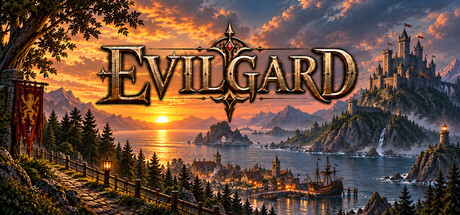 EVILGARD art | During the development of EVILGARD, only a small number of AI-generated images are currently used as temporary placeholders. These will be fully replaced with non-AI-generated artwork as development progresses. By the time of the final release, EVILGARD will no longer contain any AI-generated content.
All creative elements, including the story, characters, quests, dialogue, gameplay systems, and overall creative direction, are developed by the developer personally. AI is not used to generate voice performances, clone voices, or train voice models. | EVILGARD Interactive | - | Oct 18, 2026 | |
 STEEL WING: WEAVEBREAKER In-game content arttextaudio | Generative AI was used to assist with selected textures, text, voice, and music. All such assets were reviewed and edited by the team before release. The game does not generate AI content during gameplay. | Vplus CO.,LTD | - | Oct 18, 2026 | |
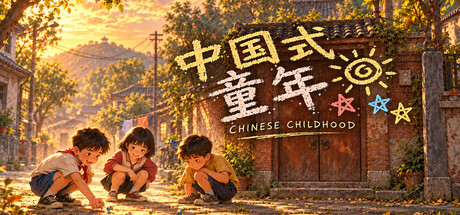 Chinese Childhood In-game content arttextaudiocode | Generative AI assisted with some code, artwork, writing, and audio. | LICHAO | - | Oct 17, 2026 | |
 pond thing In-game content text | AI was used to assist with localizing some language versions. The resulting translations were proofread and checked through back-translation by humans. | bbone | - | Oct 17, 2026 | |
 Rimfarers In-game content artaudiotext | Some images (portraits, quest illustrations, ships, planets, backgrounds), the sound effects and music, and parts of the game text (quest scripts, descriptions and translations) were created with the help of generative AI tools, then selected, edited and integrated into the game by the developer. No generative AI runs during gameplay. | Khinkali Games | - | Oct 16, 2026 | |
 Kur - Endless Descent In-game content arttext | KUR is developed by a single person with over 18 years of experience in software development, using generative AI as a supporting tool, primarily for artwork, translations, and research.
The project marks the return of a developer who spent five years of his teenage years creating online games and contributing to open-source communities. Without the financial resources to hire an art team, AI became a way to make that return possible.
AI-generated artwork is carefully selected, reviewed, corrected, and adapted. Translations also use AI, with the English and Spanish versions reviewed. No content is generated by AI during gameplay.
KUR's mechanics, systems, and game design are the result of countless hours of personal development and dedication. The goal is to create a game with its own identity and, once financially possible, reinvest the game's revenue into hiring human artists to progressively replace AI-generated artwork with human-created art. | Muraena Games | 46 | Oct 16, 2026 | |
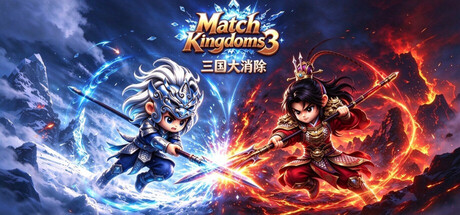 Match 3 Kingdoms Unclear | AI-assisted completion,but with heart,hope you can find happiness here:) | NASA_eleven | - | Oct 16, 2026 | |
 The Broken Oath In-game content audio | This game uses AI-generated voice acting. The narration in the game's introduction was produced with ElevenLabs, a text-to-speech tool. The script itself was written by hand.
All other content — level design, art, animation, code, and game systems — was created without generative AI. | Kerem Karal | - | Oct 16, 2026 | |
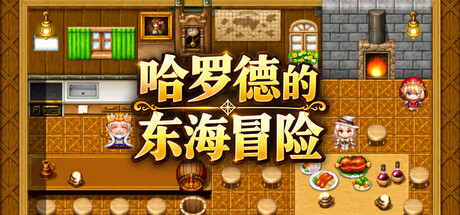 哈罗德的东海冒险 In-game content art | Some illustrations and plugins in the game were made using AI | 神精 | - | Oct 16, 2026 |


