Public Steam disclosure research25,376 disclosures tracked
Where do games disclose AI use?
Search developers’ Steam disclosures, compare classified AI use across
games, and follow recorded changes.
This index adds cross-game classifications and statistics to
statements published on individual store pages.
Groups reflect automatic analysis of public disclosures; mature records are excluded. These counts do not measure AI use across all of Steam.
Missing or unclear statements cannot establish whether a game uses AI.
A Quick Note on AI Tools:
To give our loading screens a cinematic, atmospheric feel, we took screenshots of our actual game environments and used AI tools solely to enhance the lighting, details, and decals for those transition images. For our Achievement Icons, we used AI-generated imagery only for the background fillers, while the main icon artwork was manually created.
Rest assured, 100% of the actual playable game, including all 3D models, world textures, animations, and code was fully handcrafted by our team.
The demo version contains temporary AI (generated music and promotional artwork only). These assets will be replaced with original content in the final version of the game.
Some of the background music in this game was created with the assistance of generative AI.
All AI-generated music is sourced from Pixabay in accordance with its Content License.
AI was used as a support tool across various aspects of development, particularly to assist with visuals and animations. The goal is not to replace human work, but to allow creative efforts to be focused where they matter most, ensuring the highest possible quality for the final game.
This game uses AI assistance in the following areas:
- Localization: Some translations were assisted by AI tools.
- Some promotional or UI images were partially generated or refined using AI tools.
All gameplay content, art direction, and core assets are created by human developers.
How does this game use generative AI?
-Musical Content: The soundtrack was generated using AI tools (Suno), then curated and produced to match the game's atmosphere and biomes.
-Visual Content and Assets: AI tools were used as a base for some illustrations and visual elements. All of these assets have been manually reviewed, edited, and refined by the developer to ensure final quality and consistency with the project's art style.
Some of the art assets in this game were created with the assistance of generative AI. All assets have undergone manual selection and post-production adjustments to ensure consistency with the overall game style.
This game uses generative artificial intelligence to assist in writing portions of its code during development. All AI-generated content has been manually reviewed, modified, and tested by the development team to ensure the game's stability, security, and content compliance. No real-time AI content is generated during gameplay.
Generative AI was sporadically used to create initial references and placeholder assets, which have been or will be replaced with hand-crafted content during production.
This game utilizes generative AI for part of its localized text and certain background environment assets. These tools were used to enhance development efficiency, and all final outputs have been curated and edited by our team.
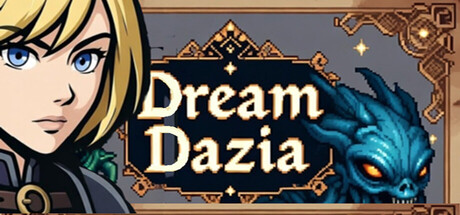
Grok AI was used in order to make some of the pictures in the library, game store page, and some intro./outro. picture in the game representing Dream Dazia.
"Developed in Godot with a focus on precision and hand-crafted systems. To maintain absolute control over the game’s quality and vision, generative AI was used for less than 10% of development, limited strictly to early-stage conceptual ideation for visual assets. Every final in-game asset has been manually hand-drawn, and 100% of the game’s code—including the massive 3,000+ line player controller—is hand-written. This ensures the tight, responsive gameplay essential for a high-stakes Metoridvania."
As a solo developer I did lean on a bit of AI for assisting me with the Title Screen and Steam Capsule Artwork though I did a lot of paint over in Photoshop. A few of the SFX are AI generated.
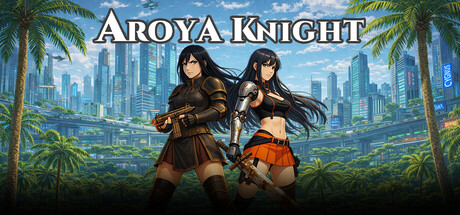
Aroya Knight is developed in Godot with a focus on precision and hand-crafted systems. While generative AI assisted in the early conceptual stages of asset creation, every asset has been manually crafted to ensure a cohesive aesthetic. Most importantly, all code is hand-written—including the 3,000+ line player controller—to guarantee the tight, responsive gameplay essential for a high-stakes Metroidvania.
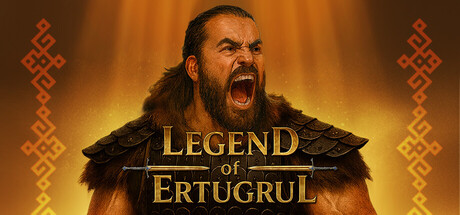
Legend of Ertuğrul is a story-driven action game featuring fixed content created by the development team.
During development, AI tools were used only for idea generation, text drafting, and the initial design stage of certain character visuals.
These visuals were then edited, repainted, or composited by the development team to create the final versions.
The game does not include any real-time AI content generation or user-created content features.
All texts, sounds, models, and code in the game were originally created by the developers or obtained from licensed sources.
We use generative AI across all disciplines of game development with heavy amounts of human editing. That involves audio and visual art. We use it as a productivity tool so we can achieve a higher level of quality, faster, than we would have been able to.
Some of the voices in the game were generated using ElevenLabs voice changer, solely to produce pre-recorded audio. Some 3D models were created with Tencent tools as development support. ComfyUI-based workflows were also used to generate certain pre-rendered images and visual materials. None of these systems generate content during gameplay, and no AI tools affect the game dynamically at runtime.
Generating background images for the store page's cover, header, and banner
Trailer and in-game BGM generation
Creating the English version of the title logo
Translation into other languages
Some visual assets in this game were initially generated using AI tools and then manually edited and refined by artists. No AI systems influence gameplay or player data.
A Quick Note on AI Tools:
To give our loading screens a cinematic, atmospheric feel, we took screenshots of our actual game environments and used AI tools solely to enhance the lighting, details, and decals for those transition images. For our Achievement Icons, we used AI-generated imagery only for the background fillers, while the main icon artwork was manually created.
Rest assured, 100% of the actual playable game, including all 3D models, world textures, animations, and code was fully handcrafted by our team.
The demo version contains temporary AI (generated music and promotional artwork only). These assets will be replaced with original content in the final version of the game.
Some of the background music in this game was created with the assistance of generative AI.
All AI-generated music is sourced from Pixabay in accordance with its Content License.
AI was used as a support tool across various aspects of development, particularly to assist with visuals and animations. The goal is not to replace human work, but to allow creative efforts to be focused where they matter most, ensuring the highest possible quality for the final game.
This game uses AI assistance in the following areas:
- Localization: Some translations were assisted by AI tools.
- Some promotional or UI images were partially generated or refined using AI tools.
All gameplay content, art direction, and core assets are created by human developers.
How does this game use generative AI?
-Musical Content: The soundtrack was generated using AI tools (Suno), then curated and produced to match the game's atmosphere and biomes.
-Visual Content and Assets: AI tools were used as a base for some illustrations and visual elements. All of these assets have been manually reviewed, edited, and refined by the developer to ensure final quality and consistency with the project's art style.
Some of the art assets in this game were created with the assistance of generative AI. All assets have undergone manual selection and post-production adjustments to ensure consistency with the overall game style.
This game uses generative artificial intelligence to assist in writing portions of its code during development. All AI-generated content has been manually reviewed, modified, and tested by the development team to ensure the game's stability, security, and content compliance. No real-time AI content is generated during gameplay.
Generative AI was sporadically used to create initial references and placeholder assets, which have been or will be replaced with hand-crafted content during production.
This game utilizes generative AI for part of its localized text and certain background environment assets. These tools were used to enhance development efficiency, and all final outputs have been curated and edited by our team.
Grok AI was used in order to make some of the pictures in the library, game store page, and some intro./outro. picture in the game representing Dream Dazia.
"Developed in Godot with a focus on precision and hand-crafted systems. To maintain absolute control over the game’s quality and vision, generative AI was used for less than 10% of development, limited strictly to early-stage conceptual ideation for visual assets. Every final in-game asset has been manually hand-drawn, and 100% of the game’s code—including the massive 3,000+ line player controller—is hand-written. This ensures the tight, responsive gameplay essential for a high-stakes Metoridvania."
As a solo developer I did lean on a bit of AI for assisting me with the Title Screen and Steam Capsule Artwork though I did a lot of paint over in Photoshop. A few of the SFX are AI generated.
Aroya Knight is developed in Godot with a focus on precision and hand-crafted systems. While generative AI assisted in the early conceptual stages of asset creation, every asset has been manually crafted to ensure a cohesive aesthetic. Most importantly, all code is hand-written—including the 3,000+ line player controller—to guarantee the tight, responsive gameplay essential for a high-stakes Metroidvania.
Legend of Ertuğrul is a story-driven action game featuring fixed content created by the development team.
During development, AI tools were used only for idea generation, text drafting, and the initial design stage of certain character visuals.
These visuals were then edited, repainted, or composited by the development team to create the final versions.
The game does not include any real-time AI content generation or user-created content features.
All texts, sounds, models, and code in the game were originally created by the developers or obtained from licensed sources.
We use generative AI across all disciplines of game development with heavy amounts of human editing. That involves audio and visual art. We use it as a productivity tool so we can achieve a higher level of quality, faster, than we would have been able to.
Some of the voices in the game were generated using ElevenLabs voice changer, solely to produce pre-recorded audio. Some 3D models were created with Tencent tools as development support. ComfyUI-based workflows were also used to generate certain pre-rendered images and visual materials. None of these systems generate content during gameplay, and no AI tools affect the game dynamically at runtime.
Generating background images for the store page's cover, header, and banner
Trailer and in-game BGM generation
Creating the English version of the title logo
Translation into other languages
Some visual assets in this game were initially generated using AI tools and then manually edited and refined by artists. No AI systems influence gameplay or player data.