Public Steam disclosure research25,376 disclosures tracked
Where do games disclose AI use?
Search developers’ Steam disclosures, compare classified AI use across
games, and follow recorded changes.
This index adds cross-game classifications and statistics to
statements published on individual store pages.
Groups reflect automatic analysis of public disclosures; mature records are excluded. These counts do not measure AI use across all of Steam.
Missing or unclear statements cannot establish whether a game uses AI.
Some UI elements and 2D visual assets were created with the assistance of generative AI tools and then manually edited and refined in Photoshop. All AI-assisted content has been reviewed by the developer to ensure it does not infringe on third-party intellectual property.
Generative AI tools assisted with parts of the development, iteration, and production process. The foundation of The Helios Accord—including its original concept, core ideas, world, systems, and narrative—was conceived, designed, and originally written by me. I direct, review, revise, and take responsibility for all AI-assisted material included in the game and its store presentation
Pre-generated generative AI tools were used during development to assist in creating and editing some 2D visual assets, including backgrounds, character images, scene variations, and promotional artwork. AI tools were also used to assist with drafting, editing, and localization of some text. All final content was selected, reviewed, and edited by the developer before inclusion. No generative AI is used during gameplay, and players cannot generate content in the game.
AI support was used solely for coding support during the game's development process. There is no AI system actively running during gameplay, generating real-time content, or connecting to an external AI service. Beyond the game's coding, the graphics, story, music, and other creative content were entirely created by human effort.
The background were generated using Midjourney, painted over and edited by the Lornn (https://lornn.itch.io/)
Backgrounds will be replaced with original artwork.
It was found that some character art pieces in the game used AI references after artists received explicit instruction and legal binding not to use AI.
This will be rectified in the future. I am committed to providing a game without AI usage.
Generative AI was used as a production tool to help create selected visual and audio assets and to assist with refining some written content. The game’s concept, narrative direction, scenes, mechanics, and final presentation were defined, directed, reviewed, and edited by the developer. No content is generated by AI during gameplay.
Some graphical assets (capsule images, etc.) and music tracks
were created using AI generation tools.
No AI generates content in real time during gameplay.
All AI-generated materials were reviewed and selected by a human.
This game uses generative artificial intelligence (Midjourney) as a supporting tool in the production of some of its artwork and illustrations. All AI-generated content is selected, edited, and art-directed by the development team, which defines composition, style, and visual coherence before it is integrated into the game.
This game was developed with the assistance of AI-generated tools. Some visual assets (character illustrations, UI elements, and sprite concepts) were created or refined using AI image generation tools. Portions of the codebase were also developed with AI coding assistance. All AI-generated content was reviewed, curated, and integrated manually by the developer.
In this game, questions and answers (yes/no) are sent to Amazon Bedrock to generate in-game text. Personal information like your name is not sent. Progress data is saved on your device.
This application uses AI tools in parts of its development process, including creating the in-character dialogue text and some artwork (such as character part images), as well as tuning behavioral algorithms. All AI-generated assets are produced and reviewed in advance and built into the product; no generative AI runs during gameplay.
Some visual assets in the game may have been generated or assisted by AI tools. This includes certain textures, logos, shop signs, and some localized translations. All AI-generated or AI-assisted content has been reviewed and integrated into the game by the developer.
Some sound effects and a small number of textures in this game were created with the assistance of AI tools and refined by hand. Subtitle translations across our nine supported languages were generated using AI from the original English voice acting. Voice acting was performed by real people, with AI tools used only for noise reduction and audio mastering. All AI-generated content was curated and finalized by human creators before being included in the game.
We begin by defining detailed character backgrounds, which are then transformed into base concept art using generative AI. Subsequently, we perform local editing, detailed repainting, and textural refinement on these images to ensure every asset meets our specific design requirements.
Delphi uses Midjourney for illustrated artwork (cards, events, key art, capsule art) and Kling for image-to-video trailer animation, all curated and edited by the developer. UI artwork is hand-made by a credited human artist.
No AI is used in design, writing, narrative or gameplay, and no AI runs at runtime — all in-game content is human-written static data.
This game includes the use of generative AI tools in the creation of certain visual and audio elements. All content has been curated and integrated by the developer to ensure a cohesive artistic experience.
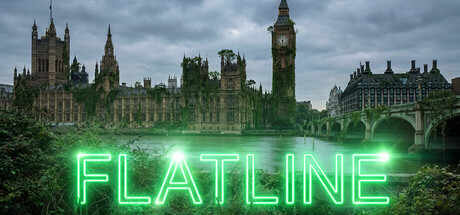
FLATLINE utilizes advanced generative AI technologies to enhance both the visual and interactive experience:
Visual Assets (Pre-generated): To achieve the unique aesthetic of "clean decay" and the massive brutalist landscapes of London 2036, we employed AI-rendering tools (Nanobanana and Veo). All images and video sequences were pre-generated and underwent meticulous manual post-processing to align with the project’s artistic vision.
Interactivity (Live-generated): The episode’s climax features a live dialogue with the system "Anomaly." This character’s responses are generated in real-time using the GPT-4 model, allowing each player to find their own unique arguments in the final confrontation with the network.
We use AI as a force-multiplier for a solo creator, enabling the realization of a world that would otherwise be impossible to build at this scale using traditional methods
The life events for every historical figure highlighted in the game were generated by giving AI access to their Wikipedia profiles and asking it to summarize the text content. The art and the code are entirely human.
Generative AI was used strictly during the pre-production and marketing phases to create corporate key art, capsule images, and promotional banners for the Steam store page. No AI-generated assets, code, or data are included within the game build itself.
The developer utilized AI tools to assist in the development process. AI was used to help generate concept art, some minor 2D environmental textures/UI elements, and to assist with structuring the game's programming framework. All AI-assisted content has been reviewed, heavily modified, and manually integrated by the developer to match the game's specific artistic vision and mechanics.
AI tools were used to assist with text editing, translation, illustrations, and marketing materials.
Game concept, writing, music direction, and narrative structure were created by a human.
Some visual assets, including environmental art and vegetation, were created with the assistance of AI image generation tools and manually refined for use in the game.
All Store images built with a baseline of Genertive AI and heavly modified before upload
Some Code mainly underlying Features are Made With Generative AI
AI was used to proofread and correct texts.
No game assets were generated by AI.
All assets were either produced:
In-house
Commissioned from freelancers
From 3rd party asset providers
AI tools were used during development to help generate select visual assets and concepts. These assets were reviewed, refined, and integrated into the game by the developer to ensure consistency with the overall style and experience.
Textures for billboards are made with AI to showoff the "AI car company" The AI art is easily noticable and intentional
Text to Speech software is used for the AI cars commands. this can be toggled off ingame
LLM is used in the steampage description, THOUGH it has not written a single word of the description, it was just used to find proper words and sentences to make it look like it was written by the AI bot of the car.
Some UI elements and 2D visual assets were created with the assistance of generative AI tools and then manually edited and refined in Photoshop. All AI-assisted content has been reviewed by the developer to ensure it does not infringe on third-party intellectual property.
Generative AI tools assisted with parts of the development, iteration, and production process. The foundation of The Helios Accord—including its original concept, core ideas, world, systems, and narrative—was conceived, designed, and originally written by me. I direct, review, revise, and take responsibility for all AI-assisted material included in the game and its store presentation
Pre-generated generative AI tools were used during development to assist in creating and editing some 2D visual assets, including backgrounds, character images, scene variations, and promotional artwork. AI tools were also used to assist with drafting, editing, and localization of some text. All final content was selected, reviewed, and edited by the developer before inclusion. No generative AI is used during gameplay, and players cannot generate content in the game.
AI support was used solely for coding support during the game's development process. There is no AI system actively running during gameplay, generating real-time content, or connecting to an external AI service. Beyond the game's coding, the graphics, story, music, and other creative content were entirely created by human effort.
The background were generated using Midjourney, painted over and edited by the Lornn (https://lornn.itch.io/)
Backgrounds will be replaced with original artwork.
It was found that some character art pieces in the game used AI references after artists received explicit instruction and legal binding not to use AI.
This will be rectified in the future. I am committed to providing a game without AI usage.
Generative AI was used as a production tool to help create selected visual and audio assets and to assist with refining some written content. The game’s concept, narrative direction, scenes, mechanics, and final presentation were defined, directed, reviewed, and edited by the developer. No content is generated by AI during gameplay.
Some graphical assets (capsule images, etc.) and music tracks
were created using AI generation tools.
No AI generates content in real time during gameplay.
All AI-generated materials were reviewed and selected by a human.
This game uses generative artificial intelligence (Midjourney) as a supporting tool in the production of some of its artwork and illustrations. All AI-generated content is selected, edited, and art-directed by the development team, which defines composition, style, and visual coherence before it is integrated into the game.
This game was developed with the assistance of AI-generated tools. Some visual assets (character illustrations, UI elements, and sprite concepts) were created or refined using AI image generation tools. Portions of the codebase were also developed with AI coding assistance. All AI-generated content was reviewed, curated, and integrated manually by the developer.
In this game, questions and answers (yes/no) are sent to Amazon Bedrock to generate in-game text. Personal information like your name is not sent. Progress data is saved on your device.
This application uses AI tools in parts of its development process, including creating the in-character dialogue text and some artwork (such as character part images), as well as tuning behavioral algorithms. All AI-generated assets are produced and reviewed in advance and built into the product; no generative AI runs during gameplay.
Some visual assets in the game may have been generated or assisted by AI tools. This includes certain textures, logos, shop signs, and some localized translations. All AI-generated or AI-assisted content has been reviewed and integrated into the game by the developer.
Some sound effects and a small number of textures in this game were created with the assistance of AI tools and refined by hand. Subtitle translations across our nine supported languages were generated using AI from the original English voice acting. Voice acting was performed by real people, with AI tools used only for noise reduction and audio mastering. All AI-generated content was curated and finalized by human creators before being included in the game.
We begin by defining detailed character backgrounds, which are then transformed into base concept art using generative AI. Subsequently, we perform local editing, detailed repainting, and textural refinement on these images to ensure every asset meets our specific design requirements.
Delphi uses Midjourney for illustrated artwork (cards, events, key art, capsule art) and Kling for image-to-video trailer animation, all curated and edited by the developer. UI artwork is hand-made by a credited human artist.
No AI is used in design, writing, narrative or gameplay, and no AI runs at runtime — all in-game content is human-written static data.
This game includes the use of generative AI tools in the creation of certain visual and audio elements. All content has been curated and integrated by the developer to ensure a cohesive artistic experience.
FLATLINE utilizes advanced generative AI technologies to enhance both the visual and interactive experience:
Visual Assets (Pre-generated): To achieve the unique aesthetic of "clean decay" and the massive brutalist landscapes of London 2036, we employed AI-rendering tools (Nanobanana and Veo). All images and video sequences were pre-generated and underwent meticulous manual post-processing to align with the project’s artistic vision.
Interactivity (Live-generated): The episode’s climax features a live dialogue with the system "Anomaly." This character’s responses are generated in real-time using the GPT-4 model, allowing each player to find their own unique arguments in the final confrontation with the network.
We use AI as a force-multiplier for a solo creator, enabling the realization of a world that would otherwise be impossible to build at this scale using traditional methods
The life events for every historical figure highlighted in the game were generated by giving AI access to their Wikipedia profiles and asking it to summarize the text content. The art and the code are entirely human.
Generative AI was used strictly during the pre-production and marketing phases to create corporate key art, capsule images, and promotional banners for the Steam store page. No AI-generated assets, code, or data are included within the game build itself.
The developer utilized AI tools to assist in the development process. AI was used to help generate concept art, some minor 2D environmental textures/UI elements, and to assist with structuring the game's programming framework. All AI-assisted content has been reviewed, heavily modified, and manually integrated by the developer to match the game's specific artistic vision and mechanics.
AI tools were used to assist with text editing, translation, illustrations, and marketing materials.
Game concept, writing, music direction, and narrative structure were created by a human.
Some visual assets, including environmental art and vegetation, were created with the assistance of AI image generation tools and manually refined for use in the game.
All Store images built with a baseline of Genertive AI and heavly modified before upload
Some Code mainly underlying Features are Made With Generative AI
AI was used to proofread and correct texts.
No game assets were generated by AI.
All assets were either produced:
In-house
Commissioned from freelancers
From 3rd party asset providers
AI tools were used during development to help generate select visual assets and concepts. These assets were reviewed, refined, and integrated into the game by the developer to ensure consistency with the overall style and experience.
Textures for billboards are made with AI to showoff the "AI car company" The AI art is easily noticable and intentional
Text to Speech software is used for the AI cars commands. this can be toggled off ingame
LLM is used in the steampage description, THOUGH it has not written a single word of the description, it was just used to find proper words and sentences to make it look like it was written by the AI bot of the car.