Public Steam disclosure research25,394 disclosures tracked
Where do games disclose AI use?
Search developers’ Steam disclosures, compare classified AI use across
games, and follow recorded changes.
This index adds cross-game classifications and statistics to
statements published on individual store pages.
Groups reflect automatic analysis of public disclosures; mature records are excluded. These counts do not measure AI use across all of Steam.
Missing or unclear statements cannot establish whether a game uses AI.
This game used generative AI as an assistive tool for translation and localization, and for producing some sound effects and music. All final text and audio were reviewed, edited, and approved by humans before inclusion.
Campfire Battles is our attempt to bring an idea to life as a two-person team. AI tools helped us work quickly, particularly on the coding side, but every piece was reviewed and refined by hand.
This game uses generative AI tools to assist with voiceover production and localization. All AI-assisted content is reviewed and integrated by the development team.
Im a solo indie dev, so I used IA tools for better usage of production time. I used code tools to make it easier to implement mechanics. I used Art IA tools to make starting points from where I can work on top. I used Sound IA tools to make music for this game.
Of course all these is because im a solo dev. Im planning to contract a team in the future if Im able to.
AI-assisted. Developer-directed. Generative AI was used as a production tool during development: Claude assisted with prototyping and implementation, while Google Lyria was used to create the game's original 15-track soundtrack. The music and all other AI-assisted material were selected, edited, integrated, and play-tested by the developer to serve Boiler & Blood's dieselpunk folk-occult world.
Paste this for the "how" description:
All AI-generated content in Scrumbag is pre-generated — baked into the build and curated by the developer, not generated live during play. This includes the game's artwork (character and enemy art, UI, icons, and store/marketing images) and its music (AI-generated arrangements and remixes based on songs by Andy Rehfeldt). AI tools were also used to assist development. All shipped content is reviewed and selected by the developer before release.
Generative AI was used to enhance marketing assets such as steam capsule & early sketch concept before offloaded & polished by Humans.
All gameplay, art, and final content remain crafted by Human.
During development we used generative AI tools to create some content that ships in the game:
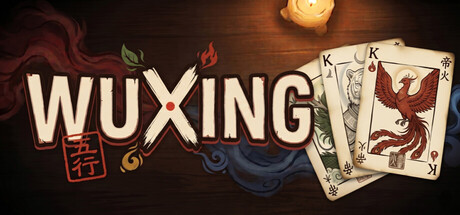
- Visual art: Some 2D art (card illustrations, store/capsule art, boss and deity illustrations, UI seals, and marketing images) was generated with an image model, then hand-edited, composited, and curated by us.
- Music: The looping background music tracks were generated with an AI music tool, then edited and mastered (trimmed and crossfade-looped) by us before inclusion.
- Text / localization: Some in-game text and its translations (Traditional Chinese, Simplified Chinese, English) were produced with AI assistance and then reviewed and edited by us.
All AI-generated content was reviewed by a human before shipping.
We have confirmed our right to use these tools' output commercially, and have taken steps to ensure the content does not infringe third-party IP.
Generative artificial intelligence has been used to generate store page thumbnails based on the developers artwork. All in game artwork has been drawn by hand by the developer.
Generative AI was used to enhance and improve some cutscene visuals. Apart from these specific visual assets, no other parts of the game were created using generative AI.
All gameplay systems, game design, programming, writing, balancing, and the majority of visual content were created manually by the developer.
Generative artificial intelligence has been used to create store page thumbnails based on the developer's scene work.
Generative artificial intelligence has been used by the developer to vastly improve the performance of the developers code with respect to loading times. The developer struggled for months to figure out how to reduce a 30 second+ loading time and thanks to the contributions of gen AI that has been brought down to 5 seconds.
Generative AI was used for creating Store page assets and in game items. Generated content was then manually edited to remove any anomalies and match look and feel of overall game's theme.
Some 2D art assets in this game were created with the assistance of generative AI tools. All assets were reviewed and edited by the developer before inclusion.
Parts of the in-game text localization were produced with the assistance of AI translation tools, then reviewed by the developer.
Some art assets in this game were created during development with generative AI tools (ChatGPT, Google Gemini, and Leonardo.ai), then manually selected and adjusted by the developer before release.
Music and sound effects are sourced from CC0 assets on OpenGameArt.org and were not AI-generated.
Some character and environment artwork, and portions of marketing/store text, were created with the assistance of generative AI tools. All assets were selected, edited, and integrated by the developer, who has the rights to use them. No AI runs at runtime in the game.
Some art assets in this game were created or assisted by generative AI tools during development, including selected icons, textures, and promotional images. All such assets were pre-generated, manually reviewed, edited, and integrated into the game. The game does not generate AI content during runtime and does not connect to or use any external AI services.
The game's design, game systems, balance, and English narrative are human-developed. AI tools were used during development as a coding assistant, with any recommended code changes specified, reviewed, and tested by the developer. The Japanese localization was produced with AI assistance and hand-edited for nuances, idioms, and accuracy. AI tools were also used for grammar and spell checking. No content is AI-generated at runtime.
The game uses Generative AI for the following in a Static manner nothing is dynamically generated I have used some of it for: Some Card Art, Some Event Art and finally Localization - Please try the free demo before purchase if you require a language other than English to see if its workable. Thank you!
I know many players have reservations about AI-generated content, so I want to be upfront about exactly how it was used in this game.
I'm an ordinary gamer who has played games for almost twenty years and always dreamed of making one of my own. But I can't write code, and I've never been trained in art or music. This game exists because generative AI filled those gaps for me: parts of the code were written with the help of AI coding tools; some character, environment, and UI art was created with image-generation models, then hand-picked and adjusted by me; some animation, music, and sound effects were also made with AI tools.
Everything that makes it an actual game, though — the design, the balancing, the game feel, and every "is this fun?" decision — was done by me, across hundreds of playtests. The game contains no live-generated AI content.
For me, AI wasn't an assembly line making a game in my place. It's what let an ordinary player finally build the game he'd been dreaming about. I hope some of that comes through when you play — and I'd genuinely welcome your feedback.
Some of the visual art in this game including card, Relic, and background artwork was created with the help of generative AI tools during development.
All AI generated content was reviewed, curated, and edited by the developer to fit the game's style and quality standards.
Some 2D art assets in this game (such as certain face-card portraits and mascots) were created with the assistance of AI image-generation tools and then hand-edited and composited. All game design, code, writing, and music are human-authored, and all store screenshots are captured from real gameplay. No AI-generated content is produced live during gameplay.
AI tools were used to assist in drafting some written text (in-game lore entries and store page descriptions); all such text was reviewed and edited by the developer. All artwork, animation, music, and sound effects are human-created licensed assets. The game does not use AI to generate any content at runtime.
Updated 8/24/2026 for Full Transparency:
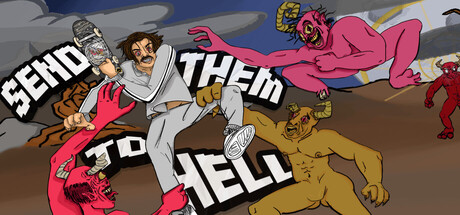
Send Them to Hell was built by a very small team with a very large appetite for demonic slaughter. Generative AI was used during development to create concept art and visual references for the graphic design team. These concepts were used as references during the creation and refinement of the game’s sprites and visual assets. The final assets were created and modified by the development team. The remainder of the artwork was created by human artists, who were compensated for their work and are credited in-game.
Some of Tapis's visual assets were created with the help of generative AI tools. These elements are produced ahead of time, then art-directed, selected and reworked by the studio to fit the game's world. No AI generates any content while you play: the gameplay, rules, balancing and all systems are entirely designed and hand-validated.
AI Generated Content Disclosure:
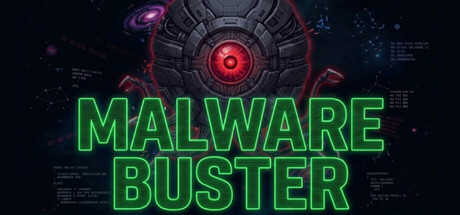
"MalwareBurster" utilizes generative AI tools during its development process to assist with content creation. The specific details are as follows:
Visual Art: A portion of the character concepts, visual textures, and icons utilized AI tools to generate "raw asset templates." However, every single asset has been heavily refined, repainted, and polished manually by a human artist to ensure high quality and alignment with the game's retro-grid art style.
Music and Audio: Some background music (BGM) tracks were generated with the assistance of Suno.ai, which have been blended and edited alongside other appropriately licensed, royalty-free, and fair-use audio assets.
Note: This game does not feature any "Live-generated" AI content. All assets are fully pre-rendered prior to release, and no AI generation occurs in real-time while the game is running.
We used generative AI tools during development to create pre-generated background map textures and illustrations for the game stages. No live generative AI is used during gameplay, and all pre-generated assets are fully vetted to ensure they do not violate any copyright or third-party intellectual property rights.
Generative AI was used during development as an assistance tool for code development, review, debugging, and refinement. Final implementation and testing were performed by the developer. The game does not use generative AI to create content at runtime. Visual assets are either original works or appropriately licensed third-party assets that were manually edited and adapted for the game.
This game uses generative AI as part of its art and localization pipeline. Specifically:
- Character portrait artwork: The hunters' painted bust portraits (shown on the character-select screen, and reused in store page capsule art and the trailer) were generated using a local Stable Diffusion XL model with a custom LoRA, then composited by hand into final scenes.
- Localization: UI text translations for French, German, Spanish (Spain), Spanish (Latin America), Portuguese (Brazil), Italian, Polish, and Turkish were produced with AI assistance and reviewed before shipping.
All AI-assisted content was reviewed by the development team before inclusion. No content is generated live or in response to player input during gameplay — all AI-assisted assets are fixed at build time.
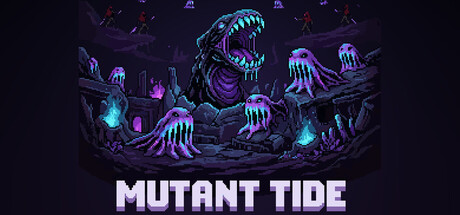
Some 2D art assets in MutantTide (including promotional key art) were created with the assistance of AI based pixel art tools. All game design, code, systems, and gameplay were hand crafted by the developer. No AI generated content is produced live during gameplay.
Card face art, in-game icons, and some store artwork were generated with locally-run image-generation models (Qwen-Image), then curated and composited by the developer. No AI content is generated at runtime.
This game used generative AI as an assistive tool for translation and localization, and for producing some sound effects and music. All final text and audio were reviewed, edited, and approved by humans before inclusion.
Campfire Battles is our attempt to bring an idea to life as a two-person team. AI tools helped us work quickly, particularly on the coding side, but every piece was reviewed and refined by hand.
This game uses generative AI tools to assist with voiceover production and localization. All AI-assisted content is reviewed and integrated by the development team.
Im a solo indie dev, so I used IA tools for better usage of production time. I used code tools to make it easier to implement mechanics. I used Art IA tools to make starting points from where I can work on top. I used Sound IA tools to make music for this game.
Of course all these is because im a solo dev. Im planning to contract a team in the future if Im able to.
AI-assisted. Developer-directed. Generative AI was used as a production tool during development: Claude assisted with prototyping and implementation, while Google Lyria was used to create the game's original 15-track soundtrack. The music and all other AI-assisted material were selected, edited, integrated, and play-tested by the developer to serve Boiler & Blood's dieselpunk folk-occult world.
Paste this for the "how" description:
All AI-generated content in Scrumbag is pre-generated — baked into the build and curated by the developer, not generated live during play. This includes the game's artwork (character and enemy art, UI, icons, and store/marketing images) and its music (AI-generated arrangements and remixes based on songs by Andy Rehfeldt). AI tools were also used to assist development. All shipped content is reviewed and selected by the developer before release.
Generative AI was used to enhance marketing assets such as steam capsule & early sketch concept before offloaded & polished by Humans.
All gameplay, art, and final content remain crafted by Human.
During development we used generative AI tools to create some content that ships in the game:
- Visual art: Some 2D art (card illustrations, store/capsule art, boss and deity illustrations, UI seals, and marketing images) was generated with an image model, then hand-edited, composited, and curated by us.
- Music: The looping background music tracks were generated with an AI music tool, then edited and mastered (trimmed and crossfade-looped) by us before inclusion.
- Text / localization: Some in-game text and its translations (Traditional Chinese, Simplified Chinese, English) were produced with AI assistance and then reviewed and edited by us.
All AI-generated content was reviewed by a human before shipping.
We have confirmed our right to use these tools' output commercially, and have taken steps to ensure the content does not infringe third-party IP.
Generative artificial intelligence has been used to generate store page thumbnails based on the developers artwork. All in game artwork has been drawn by hand by the developer.
Generative AI was used to enhance and improve some cutscene visuals. Apart from these specific visual assets, no other parts of the game were created using generative AI.
All gameplay systems, game design, programming, writing, balancing, and the majority of visual content were created manually by the developer.
Generative artificial intelligence has been used to create store page thumbnails based on the developer's scene work.
Generative artificial intelligence has been used by the developer to vastly improve the performance of the developers code with respect to loading times. The developer struggled for months to figure out how to reduce a 30 second+ loading time and thanks to the contributions of gen AI that has been brought down to 5 seconds.
Generative AI was used for creating Store page assets and in game items. Generated content was then manually edited to remove any anomalies and match look and feel of overall game's theme.
Some 2D art assets in this game were created with the assistance of generative AI tools. All assets were reviewed and edited by the developer before inclusion.
Parts of the in-game text localization were produced with the assistance of AI translation tools, then reviewed by the developer.
Some art assets in this game were created during development with generative AI tools (ChatGPT, Google Gemini, and Leonardo.ai), then manually selected and adjusted by the developer before release.
Music and sound effects are sourced from CC0 assets on OpenGameArt.org and were not AI-generated.
Some character and environment artwork, and portions of marketing/store text, were created with the assistance of generative AI tools. All assets were selected, edited, and integrated by the developer, who has the rights to use them. No AI runs at runtime in the game.
Some art assets in this game were created or assisted by generative AI tools during development, including selected icons, textures, and promotional images. All such assets were pre-generated, manually reviewed, edited, and integrated into the game. The game does not generate AI content during runtime and does not connect to or use any external AI services.
The game's design, game systems, balance, and English narrative are human-developed. AI tools were used during development as a coding assistant, with any recommended code changes specified, reviewed, and tested by the developer. The Japanese localization was produced with AI assistance and hand-edited for nuances, idioms, and accuracy. AI tools were also used for grammar and spell checking. No content is AI-generated at runtime.
The game uses Generative AI for the following in a Static manner nothing is dynamically generated I have used some of it for: Some Card Art, Some Event Art and finally Localization - Please try the free demo before purchase if you require a language other than English to see if its workable. Thank you!
I know many players have reservations about AI-generated content, so I want to be upfront about exactly how it was used in this game.
I'm an ordinary gamer who has played games for almost twenty years and always dreamed of making one of my own. But I can't write code, and I've never been trained in art or music. This game exists because generative AI filled those gaps for me: parts of the code were written with the help of AI coding tools; some character, environment, and UI art was created with image-generation models, then hand-picked and adjusted by me; some animation, music, and sound effects were also made with AI tools.
Everything that makes it an actual game, though — the design, the balancing, the game feel, and every "is this fun?" decision — was done by me, across hundreds of playtests. The game contains no live-generated AI content.
For me, AI wasn't an assembly line making a game in my place. It's what let an ordinary player finally build the game he'd been dreaming about. I hope some of that comes through when you play — and I'd genuinely welcome your feedback.
Some of the visual art in this game including card, Relic, and background artwork was created with the help of generative AI tools during development.
All AI generated content was reviewed, curated, and edited by the developer to fit the game's style and quality standards.
Some 2D art assets in this game (such as certain face-card portraits and mascots) were created with the assistance of AI image-generation tools and then hand-edited and composited. All game design, code, writing, and music are human-authored, and all store screenshots are captured from real gameplay. No AI-generated content is produced live during gameplay.
AI tools were used to assist in drafting some written text (in-game lore entries and store page descriptions); all such text was reviewed and edited by the developer. All artwork, animation, music, and sound effects are human-created licensed assets. The game does not use AI to generate any content at runtime.
Updated 8/24/2026 for Full Transparency:
Send Them to Hell was built by a very small team with a very large appetite for demonic slaughter. Generative AI was used during development to create concept art and visual references for the graphic design team. These concepts were used as references during the creation and refinement of the game’s sprites and visual assets. The final assets were created and modified by the development team. The remainder of the artwork was created by human artists, who were compensated for their work and are credited in-game.
Some of Tapis's visual assets were created with the help of generative AI tools. These elements are produced ahead of time, then art-directed, selected and reworked by the studio to fit the game's world. No AI generates any content while you play: the gameplay, rules, balancing and all systems are entirely designed and hand-validated.
AI Generated Content Disclosure:
"MalwareBurster" utilizes generative AI tools during its development process to assist with content creation. The specific details are as follows:
Visual Art: A portion of the character concepts, visual textures, and icons utilized AI tools to generate "raw asset templates." However, every single asset has been heavily refined, repainted, and polished manually by a human artist to ensure high quality and alignment with the game's retro-grid art style.
Music and Audio: Some background music (BGM) tracks were generated with the assistance of Suno.ai, which have been blended and edited alongside other appropriately licensed, royalty-free, and fair-use audio assets.
Note: This game does not feature any "Live-generated" AI content. All assets are fully pre-rendered prior to release, and no AI generation occurs in real-time while the game is running.
We used generative AI tools during development to create pre-generated background map textures and illustrations for the game stages. No live generative AI is used during gameplay, and all pre-generated assets are fully vetted to ensure they do not violate any copyright or third-party intellectual property rights.
Generative AI was used during development as an assistance tool for code development, review, debugging, and refinement. Final implementation and testing were performed by the developer. The game does not use generative AI to create content at runtime. Visual assets are either original works or appropriately licensed third-party assets that were manually edited and adapted for the game.
This game uses generative AI as part of its art and localization pipeline. Specifically:
- Character portrait artwork: The hunters' painted bust portraits (shown on the character-select screen, and reused in store page capsule art and the trailer) were generated using a local Stable Diffusion XL model with a custom LoRA, then composited by hand into final scenes.
- Localization: UI text translations for French, German, Spanish (Spain), Spanish (Latin America), Portuguese (Brazil), Italian, Polish, and Turkish were produced with AI assistance and reviewed before shipping.
All AI-assisted content was reviewed by the development team before inclusion. No content is generated live or in response to player input during gameplay — all AI-assisted assets are fixed at build time.
Some 2D art assets in MutantTide (including promotional key art) were created with the assistance of AI based pixel art tools. All game design, code, systems, and gameplay were hand crafted by the developer. No AI generated content is produced live during gameplay.
Card face art, in-game icons, and some store artwork were generated with locally-run image-generation models (Qwen-Image), then curated and composited by the developer. No AI content is generated at runtime.