Public Steam disclosure research25,394 disclosures tracked
Where do games disclose AI use?
Search developers’ Steam disclosures, compare classified AI use across
games, and follow recorded changes.
This index adds cross-game classifications and statistics to
statements published on individual store pages.
Groups reflect automatic analysis of public disclosures; mature records are excluded. These counts do not measure AI use across all of Steam.
Missing or unclear statements cannot establish whether a game uses AI.
We utilized generative AI tools to assist in creating certain visual assets, UI elements, and background music (BGM) during the development process.
Additionally, AI was used to optimize coding efficiency and assist with text localization to improve the quality of the English translation.
All AI-assisted contents and scripts have been thoroughly reviewed, verified, and refined manually by the developer to ensure quality.
Generative AI tools were used to create some images and cutscene artwork. All AI-generated content was reviewed, edited, and integrated by the development team.
Dance Floor VR uses some pre-generated AI-assisted content for selected visual assets and music/audio elements. All such content was reviewed and integrated by the developer. The game does not generate AI content during gameplay and does not connect to external AI services.
This work incorporates the use of generative artificial intelligence (AI) in the following areas:
Parts of the artwork, parts of the sound, and localization.
Generative AI tools were used to assist with development, including code support, store text drafting, and some visual/marketing assets. Final content was reviewed and edited by the developer.
Generative AI tools were used during development to generate background audio tracks, select visual assets, and promotional store page art. All assets were reviewed prior to release. No content is generated in real-time during gameplay.
Terra Concordia was created by the solo developer at NCB Company with extensive use of generative artificial intelligence tools throughout the development process.
Content created with AI assistance during development:
• The 142 game cards (buildings, technologies, wonders, events, objectives): names, descriptions, costs, effects, and art were conceived and adjusted with AI assistance, under review and final decision by the human developer.
• SVG vector art (cards, board, civilizations, store capsule arts, achievement icons, page banners): programmatically generated by scripts written with AI assistance.
• Game mechanics and rules: brainstorming, balancing, and iteration done with AI assistance, always validated manually across hundreds of internal playtests.
• The 6 solo-mode scenarios: themes, victory conditions, and difficulty designed with AI assistance, adjusted through playtesting.
• Website, store descriptions, manuals, and Civilopedia: drafted with AI assistance, reviewed by the developer.
• English and Spanish translations: pre-translated with AI, manually reviewed and polished.
• Solo-mode opponent (Automa) logic: the script was written with AI assistance, but it is a fixed deterministic algorithm with no machine learning components.
No content is generated by AI in real time during play. There are no images, texts, cards, or behaviors dynamically generated by AI while you play. The "Automa" (solo-mode AI opponent) is a script already embedded in the game code, executing pre-defined rules — without any alteration, generation, or learning during the match.
All AI-assisted content was reviewed, tested, and approved by the human developer before release.
All 2D visual artwork used in the game was created or edited with the assistance of generative AI tools, then manually reviewed, selected, adjusted, and implemented by the developer.
This includes in-game sprites, visual assets, Steam store artwork, and promotional material.
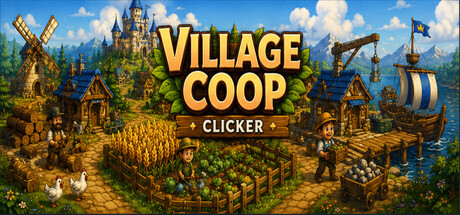
Village Coop Clicker is a small hobby project created with extensive use of AI-assisted tools for programming, artwork, audio, localization, and store assets.
The game design, balancing, progression systems, and overall creative direction were created and curated manually by the developer.
AI tools were used to assist with some code development and selected Steam store page text. The core game design, gameplay, and creative direction are created by the development team. No live generative AI content is created during gameplay.
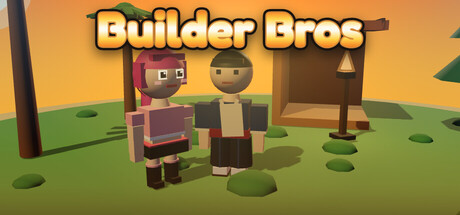
The developers used generative AI tools in the creation of this game. Portions of the game's content — including visual art and 3D assets, audio, in-game narrative and text, and translations into the supported languages — were produced with the assistance of generative AI and then reviewed, edited, and curated by the developer. All AI-assisted content is generated ahead of time and is fixed in the shipped game. Builder Bros does not generate any content using AI during gameplay, and does not connect to any external AI service.
Generative AI tools were used to create the game's promotional logo, steam achievement icons, and background music prior to development (Pre-generated content).
Generative AI tools were used only to assist with the creation and editing of some Steam store page content, including store page text and promotional visual assets. The game itself does not use generative AI during gameplay. No AI-generated content is produced live while the player is playing, and the game does not connect to any external third-party AI service.
AI tools were used strictly to assist with optimizing some C# scripts and brainstorming mechanics. All final 2D and 3D in-game assets, animations, and core gameplay features were manually created and implemented by the developer.
I'm a solo developer and a 3D and graphic design teacher by day. Every visual asset in this game (from the pixel art creatures to the 3D environments) is crafted by me. Music and sound effects come from licensed human creators.
AI tools helped me during development with coding, debugging, and organizing ideas, but never to create visual or audio content.
The English and Spanish localizations are written by me. For all other languages, I used AI-assisted translation, because there's nothing better than playing a game in your own language, and I wanted Luminons to reach as many people as possible. Professional translators are outside the budget for a solo project, but if this game finds its audience, revisiting every localization with human translators (and adding more languages) is absolutely on the list.
Some of the artwork shown in our store screenshots, trailer, and on the app's in-game screen is placeholder media created with an AI image-generation tool (Google's Gemini image model). This includes the example movie posters, album covers, TV-series key art, and the cinematic "now playing" stills.
These images depict entirely fictional films, albums, and shows. They exist only as copyright-safe demo content so we can show the app's interface without displaying real, copyrighted media that the user does not own the rights to publish. They do not represent any real title.
Reel Room is a media player for the user's own library (Jellyfin server, local files, and network shares). The app performs no AI generation at runtime — all media a player sees in normal use is their own content. This is pre-generated content only; there is no live/runtime-generated AI.
Yes, some environment elements and decorative assets in the game were created with the assistance of generative AI. All AI-generated content has been manually edited and polished to ensure it fits the game's overall art style and to guarantee the absence of any prohibited content.
The game does not feature any live or procedurally generated AI content. The entire player experience consists of fixed, hand-crafted assets with AI assistance and static, local code.
All visual assets, character art, backgrounds, music, sound effects, dialogue implementation, and programming assistance for this game were created with the help of generative AI tools. The original concept, story, characters, direction, and overall game design were created by the developer. AI was used as a creative production tool during development, while all final content selection, editing, and integration were directed by the developer.
This game contains AI-generated content. Visual assets, sound effects, music, code, and various creative elements were created with the assistance of AI tools. The overall game concept, direction, gameplay ideas, and project design were created and directed by the developer.
We used AI to generate initial music tracks, concept art, and temporary translations into some languages.
All materials were then thoroughly edited, reworked, and finalized by humans.
Nothing went straight from the generator into the game.
AI was used to generate trailer music and couple of upgrades icons, but game is still in early development phase and i'm working on replacing those with real art.
Generative AI is used across this game's development — including store-page marketing artwork, in-game art (cards, UI elements), and source code. All AI-generated content is human-directed, reviewed, and edited by the developer. No AI runs at game time; everything ships as static, pre-rendered assets.
Generative AI was used to assist in the creation of promotional artwork, marketing images, and store page assets. No AI-generated content is produced during gameplay, and no gameplay features rely on generative AI.
Static art assets (store-page capsules, in-game card art, in-game icons) and audio placeholders are generated via Replicate (Google Nano Banana Pro for image, Lyria-2 / AudioGen for audio) using human-authored prompts. Outputs are reviewed by the developer before shipping. No live AI generation occurs during gameplay; all assets are baked at build time.
I would like to pay for human assets, but I am moving fast. In the same way that AI turned 12 months of dev time into 2, it also affected how I skinned the MVP. This is best for communicating intention, and I can polish it with human art if there is traction.
We continue to draw all game art by hand.
Some of our sounds have been generated using a tool called ElevenLabs. We use a wide range of co-development tools to help optimise and test the code in our minigames. We have used tools like OpenAI to help with localisation of our content to other languages.
LLM coding tools were used to assist programming and for localizing text into non-English languages. No AI tools were used in the art process, audio, game design, or balancing. No version prior to 0.9 contained LLM output.
We utilized generative AI tools to assist in creating certain visual assets, UI elements, and background music (BGM) during the development process.
Additionally, AI was used to optimize coding efficiency and assist with text localization to improve the quality of the English translation.
All AI-assisted contents and scripts have been thoroughly reviewed, verified, and refined manually by the developer to ensure quality.
Generative AI tools were used to create some images and cutscene artwork. All AI-generated content was reviewed, edited, and integrated by the development team.
Dance Floor VR uses some pre-generated AI-assisted content for selected visual assets and music/audio elements. All such content was reviewed and integrated by the developer. The game does not generate AI content during gameplay and does not connect to external AI services.
This work incorporates the use of generative artificial intelligence (AI) in the following areas:
Parts of the artwork, parts of the sound, and localization.
Generative AI tools were used to assist with development, including code support, store text drafting, and some visual/marketing assets. Final content was reviewed and edited by the developer.
Generative AI tools were used during development to generate background audio tracks, select visual assets, and promotional store page art. All assets were reviewed prior to release. No content is generated in real-time during gameplay.
Terra Concordia was created by the solo developer at NCB Company with extensive use of generative artificial intelligence tools throughout the development process.
Content created with AI assistance during development:
• The 142 game cards (buildings, technologies, wonders, events, objectives): names, descriptions, costs, effects, and art were conceived and adjusted with AI assistance, under review and final decision by the human developer.
• SVG vector art (cards, board, civilizations, store capsule arts, achievement icons, page banners): programmatically generated by scripts written with AI assistance.
• Game mechanics and rules: brainstorming, balancing, and iteration done with AI assistance, always validated manually across hundreds of internal playtests.
• The 6 solo-mode scenarios: themes, victory conditions, and difficulty designed with AI assistance, adjusted through playtesting.
• Website, store descriptions, manuals, and Civilopedia: drafted with AI assistance, reviewed by the developer.
• English and Spanish translations: pre-translated with AI, manually reviewed and polished.
• Solo-mode opponent (Automa) logic: the script was written with AI assistance, but it is a fixed deterministic algorithm with no machine learning components.
No content is generated by AI in real time during play. There are no images, texts, cards, or behaviors dynamically generated by AI while you play. The "Automa" (solo-mode AI opponent) is a script already embedded in the game code, executing pre-defined rules — without any alteration, generation, or learning during the match.
All AI-assisted content was reviewed, tested, and approved by the human developer before release.
All 2D visual artwork used in the game was created or edited with the assistance of generative AI tools, then manually reviewed, selected, adjusted, and implemented by the developer.
This includes in-game sprites, visual assets, Steam store artwork, and promotional material.
Village Coop Clicker is a small hobby project created with extensive use of AI-assisted tools for programming, artwork, audio, localization, and store assets.
The game design, balancing, progression systems, and overall creative direction were created and curated manually by the developer.
AI tools were used to assist with some code development and selected Steam store page text. The core game design, gameplay, and creative direction are created by the development team. No live generative AI content is created during gameplay.
The developers used generative AI tools in the creation of this game. Portions of the game's content — including visual art and 3D assets, audio, in-game narrative and text, and translations into the supported languages — were produced with the assistance of generative AI and then reviewed, edited, and curated by the developer. All AI-assisted content is generated ahead of time and is fixed in the shipped game. Builder Bros does not generate any content using AI during gameplay, and does not connect to any external AI service.
Generative AI tools were used to create the game's promotional logo, steam achievement icons, and background music prior to development (Pre-generated content).
Generative AI tools were used only to assist with the creation and editing of some Steam store page content, including store page text and promotional visual assets. The game itself does not use generative AI during gameplay. No AI-generated content is produced live while the player is playing, and the game does not connect to any external third-party AI service.
AI tools were used strictly to assist with optimizing some C# scripts and brainstorming mechanics. All final 2D and 3D in-game assets, animations, and core gameplay features were manually created and implemented by the developer.
I'm a solo developer and a 3D and graphic design teacher by day. Every visual asset in this game (from the pixel art creatures to the 3D environments) is crafted by me. Music and sound effects come from licensed human creators.
AI tools helped me during development with coding, debugging, and organizing ideas, but never to create visual or audio content.
The English and Spanish localizations are written by me. For all other languages, I used AI-assisted translation, because there's nothing better than playing a game in your own language, and I wanted Luminons to reach as many people as possible. Professional translators are outside the budget for a solo project, but if this game finds its audience, revisiting every localization with human translators (and adding more languages) is absolutely on the list.
Some of the artwork shown in our store screenshots, trailer, and on the app's in-game screen is placeholder media created with an AI image-generation tool (Google's Gemini image model). This includes the example movie posters, album covers, TV-series key art, and the cinematic "now playing" stills.
These images depict entirely fictional films, albums, and shows. They exist only as copyright-safe demo content so we can show the app's interface without displaying real, copyrighted media that the user does not own the rights to publish. They do not represent any real title.
Reel Room is a media player for the user's own library (Jellyfin server, local files, and network shares). The app performs no AI generation at runtime — all media a player sees in normal use is their own content. This is pre-generated content only; there is no live/runtime-generated AI.
Yes, some environment elements and decorative assets in the game were created with the assistance of generative AI. All AI-generated content has been manually edited and polished to ensure it fits the game's overall art style and to guarantee the absence of any prohibited content.
The game does not feature any live or procedurally generated AI content. The entire player experience consists of fixed, hand-crafted assets with AI assistance and static, local code.
All visual assets, character art, backgrounds, music, sound effects, dialogue implementation, and programming assistance for this game were created with the help of generative AI tools. The original concept, story, characters, direction, and overall game design were created by the developer. AI was used as a creative production tool during development, while all final content selection, editing, and integration were directed by the developer.
This game contains AI-generated content. Visual assets, sound effects, music, code, and various creative elements were created with the assistance of AI tools. The overall game concept, direction, gameplay ideas, and project design were created and directed by the developer.
We used AI to generate initial music tracks, concept art, and temporary translations into some languages.
All materials were then thoroughly edited, reworked, and finalized by humans.
Nothing went straight from the generator into the game.
AI was used to generate trailer music and couple of upgrades icons, but game is still in early development phase and i'm working on replacing those with real art.
Generative AI is used across this game's development — including store-page marketing artwork, in-game art (cards, UI elements), and source code. All AI-generated content is human-directed, reviewed, and edited by the developer. No AI runs at game time; everything ships as static, pre-rendered assets.
Generative AI was used to assist in the creation of promotional artwork, marketing images, and store page assets. No AI-generated content is produced during gameplay, and no gameplay features rely on generative AI.
Static art assets (store-page capsules, in-game card art, in-game icons) and audio placeholders are generated via Replicate (Google Nano Banana Pro for image, Lyria-2 / AudioGen for audio) using human-authored prompts. Outputs are reviewed by the developer before shipping. No live AI generation occurs during gameplay; all assets are baked at build time.
I would like to pay for human assets, but I am moving fast. In the same way that AI turned 12 months of dev time into 2, it also affected how I skinned the MVP. This is best for communicating intention, and I can polish it with human art if there is traction.
We continue to draw all game art by hand.
Some of our sounds have been generated using a tool called ElevenLabs. We use a wide range of co-development tools to help optimise and test the code in our minigames. We have used tools like OpenAI to help with localisation of our content to other languages.
LLM coding tools were used to assist programming and for localizing text into non-English languages. No AI tools were used in the art process, audio, game design, or balancing. No version prior to 0.9 contained LLM output.