Public Steam disclosure research25,394 disclosures tracked
Where do games disclose AI use?
Search developers’ Steam disclosures, compare classified AI use across
games, and follow recorded changes.
This index adds cross-game classifications and statistics to
statements published on individual store pages.
Groups reflect automatic analysis of public disclosures; mature records are excluded. These counts do not measure AI use across all of Steam.
Missing or unclear statements cannot establish whether a game uses AI.
Graphic assets such as sprites and decorations are created with AI tools, then refined by hand in software like Photoshop. Videos follow the same process. Music and sound effects contain no AI-generated content.
AI tools were used during development for the following assets:
Steam Store capsule images and marketing art
Game localization and text translations
Select 2D visual assets and graphics in the game
Some pre-generated 2D artwork, character portraits, branding, and marketing assets were created using generative AI tools and subsequently selected, edited, and integrated by the developer. The game does not use live-generated AI content during gameplay.
Some of this game's art assets (character, enemy, boss, and environment artwork) and
its music were produced with the assistance of generative AI tools. All AI-assisted
material was curated, edited, composited, and integrated into the game by hand by the
developer. No AI-generated content is created live during gameplay.
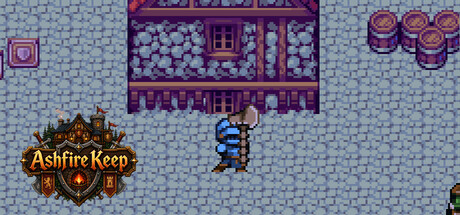
Some pre-generated visual and narrative elements included in Ashfire Keep were created or assisted using generative AI tools under the developer's creative direction. This includes the Ashfire Keep logo, selected HUD mockups and edited derivatives used in the final interface, and narrative text that was reviewed, corrected, and approved by the developer. The game does not generate AI content at runtime, does not connect to generative AI services during gameplay, and does not send player data to AI services. All other visual and audio assets are commercially licensed third-party assets.
Some visual assets and UI elements were created with the assistance of AI tools during development.
When you are trapped inside a machine, you must use the machine's tools.
We are sorry. It was the only way to reach you.
Generative AI was used during development as a supporting tool to create secondary assets and assist with text revision. All AI-generated content was manually reviewed, edited, and integrated into the game engine to ensure the project's visual and gameplay consistency.
Generative AI technology is used in a supplementary capacity during the creation of some user interface assets.
Any such assets are replaced through our production pipeline by our art and development teams, ensuring they meet our quality standards and creative direction.
Generative AI tools assisted with portions of development, including some player-facing UI, tutorial and campaign text, and implementation code.
All output was reviewed and edited by the developer. The game does not generate AI content while running.
Maps and terrain are generated using deterministic procedural algorithms and public-domain geographic data. Audio uses licensed recordings and conventional synthesis/editing, not generative AI.
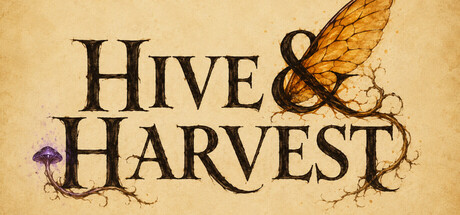
Most of the art for Hive & Harvest has been initially generated by AI models, which has then been manually edited to achieve the desired tessellation look.
Coding of the game involved AI models for the purpose of quality control.
Portions of the game's written content (interface text, in-game help, Russian/English localization) and store page texts were created with the assistance of AI tools, directed, reviewed and edited by the developer. All graphics are hand-coded procedural visuals and all audio is procedurally synthesized in code — no AI-generated images or audio are included.
This game is being developed solo. As an independent developer working with limited resources and budget, AI tools have been used in the production of some visual and musical assets:
Some character concept art, store page marketing materials, and background/atmospheric visuals were created using AI visual generation tools, then edited and integrated by the developer to fit the game's art direction.
Some visuals are included as placeholders and will be changed during development.
Some background music tracks were created using AI music generation tools.
The game's codebase, gameplay mechanics, character design, dialogue writing, and overall creative direction were all created manually by the developer alone. AI tools were used as a tool where access to a professional art/sound team was not possible as a solo developer; final decisions, edits, and the overall creative direction of the game were shaped by the developer.
Generative AI was used as a supporting tool for localization in some languages. All AI-assisted translations were reviewed and edited by the development team. No AI-generated content is created in real time during gameplay.
Generative AI was used during the early development phase to create placeholders, concept art base layers, and certain visual assets/sprites. As a solo developer working alongside a demanding full-time job, this technology served as a vital tool to help bring the project's vision to life within limited hours. All AI-generated art has been manually edited, stylized, and integrated by the developer to fit the game's pixel art aesthetic.
Note on Future Development: The developer is fully committed to replacing 100% of the AI-generated visual content with handcrafted, original artwork by the time of the full 1.0 release.
The developer used generative AI tools during the development process to assist in coding, generate and retouch art assets, write game text, and create background music, voiceovers, and sound effects. All AI-generated assets have been reviewed, edited, and curated by the developer.
The hero image, small capsule, main capsule, vertical capsule, library capsule, library hero image, library logo and library home page art were created with AI assistance.
The in-game warning UI and spray decals are AI-generated.
Besides this, all gameplay videos and screenshots you see in the store are captured from actual gameplay footage, with no retouching or AI generation applied.
This game contains some pre-generated AI-assisted artwork and music. All AI-assisted content has been reviewed, curated, and integrated by the developer. AI coding tools were also used during development.
Aquasushi Cat was created in collaboration between a human developer and AI tools.
• Music and songs were generated locally using AI (ComfyUI).
• Parts of the game's code — including the code that procedurally draws the hand-styled vector graphics — were written with the help of an AI assistant (Claude).
• The in-game localization (English and Japanese) and store text were produced with AI assistance.
• A small number of sound effects were AI-generated; most sounds were recorded by the developer.
All content was directed, reviewed and finalized by a human developer. No AI content is generated live during gameplay.
Currently I am developing this game as a solo self-funded "indie dev" and games need a lot of assets to be fun. I currently have used free (Creative Commons Zero) assets for audio, and generative AI for some placeholders in the game. I am currently in the process of finding both audio and visual artists to replace the AI generated assets, it takes time and resources, but ultimately I want all the assets to be hand authored by humans.
This game uses generative AI tools during development to help create some character voice lines and cutscene video sequences. AI is not used to generate live, novel content during gameplay - all AI-assisted content is pre-produced and reviewed by the development team before shipping.
AI tools were used during development to assist in the creation of some pre-generated content included in the game. All such content was reviewed, curated, and edited by the developer before inclusion. Some 2D sprites, icons, and key art were created with the assistance of generative AI tools. Music and sound effects were also created with the assistance of AI audio tools. Localization for languages other than English was produced with AI assistance and reviewed by the developer. The game does not use generative AI at runtime and does not generate any live AI content during gameplay.
Generative AI tools were used during development to assist in creating and refining some 2D pixel-art assets, animations, and localization text. All AI-assisted content was reviewed, edited, and integrated by the developer.
This game was developed with the assistance of generative AI tools.
Generative AI tools assisted with the creation of skill icons, terrain textures, some in-game 3D assets and visual effects, and translated localization text. All final assets and translations included in the game were selected, edited, and reviewed by the developer before integration.
The game does not use any AI features that generate images, text, audio, or other content in real time in response to player input.
Some of Gunmetal Orbit's art and audio assets - including concept art used to build 3D models, UI icons, sound effects, and the store page key art - were created during development with the help of generative AI tools, then curated, edited, and integrated by the developers. All gameplay code and game design are human-made, and the game does not generate any AI content while you play.
Generative tools were used during development to assist with certain aspects of the games rendering systems; all such content was curated, reviewed, and integrated by the development team.
Some icons and pictures in the game or store page are generated using AI. During gameplay AI does not render anything. AI items are pre-rendered and hard-coded into the game.
Prismals is a hand-crafted project built by a dedicated one-man band. To bring this project to life, AI tools were utilized strictly as a collaborative assistant, refining original coding, polishing hand-drawn artwork and mastering the soundtrack. Every core idea, story beat and artistic vision is entirely human-made.
Generative AI was used to assist in the creation of certain artwork, background music, sound effects, and translations. All AI-assisted content was reviewed, edited, and integrated by the developer. No content is generated by AI during gameplay.
This game uses AI-generated music (Suno) and AI-generated voice acting (ElevenLabs). All AI-generated content has been reviewed and curated by the developer before inclusion in the game.
Generative AI tools were used solely for programming assistance, code review, debugging, and technical problem-solving during development. They were not used to generate visual or audio assets. No content or code is generated by AI during gameplay, and the game does not connect to external AI services. All AI-assisted code was reviewed, tested, and integrated by the developer.
Pip Sellfish is made by one person. I used generative AI tools during development to help create some of the game's assets, such as artwork and music, every asset was hand-picked and integrated by me. No AI is used at runtime: nothing is generated while you play.
Generative AI is used to post-process capsule and marketing artwork on this game's Steam page; the underlying compositions and creative direction are the developer's own.
Some item names and interface translations into languages other than English were created
with AI assistance, then carefully reviewed and edited by the developer. Parts of the 2D
artwork were created with image generation tools, then carefully curated, edited, and
composited by hand. Audio was created by people and comes from CC0-licensed sources with
attribution. No AI content is generated during gameplay. The game does not generate AI
content at runtime, and no player data is ever sent to any AI service.
Graphic assets such as sprites and decorations are created with AI tools, then refined by hand in software like Photoshop. Videos follow the same process. Music and sound effects contain no AI-generated content.
AI tools were used during development for the following assets:
Steam Store capsule images and marketing art
Game localization and text translations
Select 2D visual assets and graphics in the game
Some pre-generated 2D artwork, character portraits, branding, and marketing assets were created using generative AI tools and subsequently selected, edited, and integrated by the developer. The game does not use live-generated AI content during gameplay.
Some of this game's art assets (character, enemy, boss, and environment artwork) and
its music were produced with the assistance of generative AI tools. All AI-assisted
material was curated, edited, composited, and integrated into the game by hand by the
developer. No AI-generated content is created live during gameplay.
Some pre-generated visual and narrative elements included in Ashfire Keep were created or assisted using generative AI tools under the developer's creative direction. This includes the Ashfire Keep logo, selected HUD mockups and edited derivatives used in the final interface, and narrative text that was reviewed, corrected, and approved by the developer. The game does not generate AI content at runtime, does not connect to generative AI services during gameplay, and does not send player data to AI services. All other visual and audio assets are commercially licensed third-party assets.
Some visual assets and UI elements were created with the assistance of AI tools during development.
When you are trapped inside a machine, you must use the machine's tools.
We are sorry. It was the only way to reach you.
Generative AI was used during development as a supporting tool to create secondary assets and assist with text revision. All AI-generated content was manually reviewed, edited, and integrated into the game engine to ensure the project's visual and gameplay consistency.
Generative AI technology is used in a supplementary capacity during the creation of some user interface assets.
Any such assets are replaced through our production pipeline by our art and development teams, ensuring they meet our quality standards and creative direction.
Generative AI tools assisted with portions of development, including some player-facing UI, tutorial and campaign text, and implementation code.
All output was reviewed and edited by the developer. The game does not generate AI content while running.
Maps and terrain are generated using deterministic procedural algorithms and public-domain geographic data. Audio uses licensed recordings and conventional synthesis/editing, not generative AI.
Most of the art for Hive & Harvest has been initially generated by AI models, which has then been manually edited to achieve the desired tessellation look.
Coding of the game involved AI models for the purpose of quality control.
Portions of the game's written content (interface text, in-game help, Russian/English localization) and store page texts were created with the assistance of AI tools, directed, reviewed and edited by the developer. All graphics are hand-coded procedural visuals and all audio is procedurally synthesized in code — no AI-generated images or audio are included.
This game is being developed solo. As an independent developer working with limited resources and budget, AI tools have been used in the production of some visual and musical assets:
Some character concept art, store page marketing materials, and background/atmospheric visuals were created using AI visual generation tools, then edited and integrated by the developer to fit the game's art direction.
Some visuals are included as placeholders and will be changed during development.
Some background music tracks were created using AI music generation tools.
The game's codebase, gameplay mechanics, character design, dialogue writing, and overall creative direction were all created manually by the developer alone. AI tools were used as a tool where access to a professional art/sound team was not possible as a solo developer; final decisions, edits, and the overall creative direction of the game were shaped by the developer.
Generative AI was used as a supporting tool for localization in some languages. All AI-assisted translations were reviewed and edited by the development team. No AI-generated content is created in real time during gameplay.
Generative AI was used during the early development phase to create placeholders, concept art base layers, and certain visual assets/sprites. As a solo developer working alongside a demanding full-time job, this technology served as a vital tool to help bring the project's vision to life within limited hours. All AI-generated art has been manually edited, stylized, and integrated by the developer to fit the game's pixel art aesthetic.
Note on Future Development: The developer is fully committed to replacing 100% of the AI-generated visual content with handcrafted, original artwork by the time of the full 1.0 release.
The developer used generative AI tools during the development process to assist in coding, generate and retouch art assets, write game text, and create background music, voiceovers, and sound effects. All AI-generated assets have been reviewed, edited, and curated by the developer.
The hero image, small capsule, main capsule, vertical capsule, library capsule, library hero image, library logo and library home page art were created with AI assistance.
The in-game warning UI and spray decals are AI-generated.
Besides this, all gameplay videos and screenshots you see in the store are captured from actual gameplay footage, with no retouching or AI generation applied.
This game contains some pre-generated AI-assisted artwork and music. All AI-assisted content has been reviewed, curated, and integrated by the developer. AI coding tools were also used during development.
Aquasushi Cat was created in collaboration between a human developer and AI tools.
• Music and songs were generated locally using AI (ComfyUI).
• Parts of the game's code — including the code that procedurally draws the hand-styled vector graphics — were written with the help of an AI assistant (Claude).
• The in-game localization (English and Japanese) and store text were produced with AI assistance.
• A small number of sound effects were AI-generated; most sounds were recorded by the developer.
All content was directed, reviewed and finalized by a human developer. No AI content is generated live during gameplay.
Currently I am developing this game as a solo self-funded "indie dev" and games need a lot of assets to be fun. I currently have used free (Creative Commons Zero) assets for audio, and generative AI for some placeholders in the game. I am currently in the process of finding both audio and visual artists to replace the AI generated assets, it takes time and resources, but ultimately I want all the assets to be hand authored by humans.
This game uses generative AI tools during development to help create some character voice lines and cutscene video sequences. AI is not used to generate live, novel content during gameplay - all AI-assisted content is pre-produced and reviewed by the development team before shipping.
AI tools were used during development to assist in the creation of some pre-generated content included in the game. All such content was reviewed, curated, and edited by the developer before inclusion. Some 2D sprites, icons, and key art were created with the assistance of generative AI tools. Music and sound effects were also created with the assistance of AI audio tools. Localization for languages other than English was produced with AI assistance and reviewed by the developer. The game does not use generative AI at runtime and does not generate any live AI content during gameplay.
Generative AI tools were used during development to assist in creating and refining some 2D pixel-art assets, animations, and localization text. All AI-assisted content was reviewed, edited, and integrated by the developer.
This game was developed with the assistance of generative AI tools.
Generative AI tools assisted with the creation of skill icons, terrain textures, some in-game 3D assets and visual effects, and translated localization text. All final assets and translations included in the game were selected, edited, and reviewed by the developer before integration.
The game does not use any AI features that generate images, text, audio, or other content in real time in response to player input.
Some of Gunmetal Orbit's art and audio assets - including concept art used to build 3D models, UI icons, sound effects, and the store page key art - were created during development with the help of generative AI tools, then curated, edited, and integrated by the developers. All gameplay code and game design are human-made, and the game does not generate any AI content while you play.
Generative tools were used during development to assist with certain aspects of the games rendering systems; all such content was curated, reviewed, and integrated by the development team.
Some icons and pictures in the game or store page are generated using AI. During gameplay AI does not render anything. AI items are pre-rendered and hard-coded into the game.
Prismals is a hand-crafted project built by a dedicated one-man band. To bring this project to life, AI tools were utilized strictly as a collaborative assistant, refining original coding, polishing hand-drawn artwork and mastering the soundtrack. Every core idea, story beat and artistic vision is entirely human-made.
Generative AI was used to assist in the creation of certain artwork, background music, sound effects, and translations. All AI-assisted content was reviewed, edited, and integrated by the developer. No content is generated by AI during gameplay.
This game uses AI-generated music (Suno) and AI-generated voice acting (ElevenLabs). All AI-generated content has been reviewed and curated by the developer before inclusion in the game.
Generative AI tools were used solely for programming assistance, code review, debugging, and technical problem-solving during development. They were not used to generate visual or audio assets. No content or code is generated by AI during gameplay, and the game does not connect to external AI services. All AI-assisted code was reviewed, tested, and integrated by the developer.
Pip Sellfish is made by one person. I used generative AI tools during development to help create some of the game's assets, such as artwork and music, every asset was hand-picked and integrated by me. No AI is used at runtime: nothing is generated while you play.
Generative AI is used to post-process capsule and marketing artwork on this game's Steam page; the underlying compositions and creative direction are the developer's own.
Some item names and interface translations into languages other than English were created
with AI assistance, then carefully reviewed and edited by the developer. Parts of the 2D
artwork were created with image generation tools, then carefully curated, edited, and
composited by hand. Audio was created by people and comes from CC0-licensed sources with
attribution. No AI content is generated during gameplay. The game does not generate AI
content at runtime, and no player data is ever sent to any AI service.