Public Steam disclosure research26,451 disclosures tracked
Where do games disclose AI use?
Search developers’ Steam disclosures, compare classified AI use across
games, and follow recorded changes.
This index adds cross-game classifications and statistics to
statements published on individual store pages.
Groups reflect automatic analysis of public disclosures; mature records are excluded. These counts do not measure AI use across all of Steam.
Missing or unclear statements cannot establish whether a game uses AI.
Pre-generated content:
Some graphics were created using an AI image generator: the main menu background, the tree sprites on the map, and a tank illustration.
The in-game texts (German and English, including the in-game manual) were created with the assistance of an AI coding assistant under the developer’s direction.
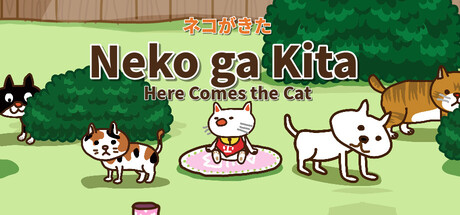
Some artwork in the game (garden decorations and toys, and a few small interface icons) was created with the help of AI tools. Some in-game text (tutorial hints, menu and settings labels, and parts of the English and Traditional Chinese translations) and the achievement names were written with the help of AI tools. The store page images were composed with the help of AI tools from the original game's hand-drawn artwork. The animals and the garden are hand-drawn artwork from the original 2012 game.
Each round, players write a short story based on a set of randomly assigned keywords and submit it. An on-device AI (a generative language model that runs locally, built into the game) also writes its own short story using the same keywords and mixes it in with the players' submissions. The core objective is for participants to guess which of the revealed stories was written by the AI. The AI-generated content is short text (a story and a title) created fresh each round, and it runs entirely on the player's own machine rather than an external server.
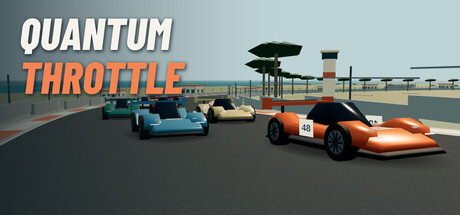
Quantum Throttle was designed and directed by a solo developer, with generative AI tools used during development. The game's art and in-game music were created with AI tools, and AI assistants helped write and debug parts of the code and text. The trailer's music and sound effects were also AI-generated. All AI-generated content was reviewed, edited and tested by the developer. The game does not generate any content with AI while you play.
Generative AI tools were utilized to assist in creating certain promotional marketing capsules, store banners, and interface graphics. Program made by AI, engineered and directly supervised by the creator.
The built-in autonomous driving systems, behavioral cloning, AI Racer neural network controllers, and computer vision object detection are robotics and edge machine learning algorithms.
Some sound effects were generated with an AI tool (ElevenLabs) and then edited by hand. Parts of the code, text and artwork were created with AI assistance and reviewed and revised. Live-generated: the optional AI spymaster comes up with its clues during play using a language model. It only outputs a single word and a number. The server checks every word against the game rules and discards anything else. Players cannot send it any text of their own.
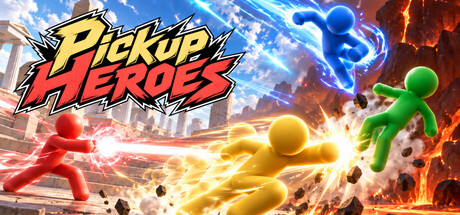
Generative AI tools were used during development to create pre-made content that ships with the game and appears on this store page: illustrated 2D artwork (menu scenes, character poses, crowd and texture images, logo) was generated with OpenAI image generation; music and sound effects were generated with ElevenLabs; 3D character models and some animations were generated with Tripo. All of it was selected, edited and assembled by the developers. The game does not generate any content with AI while you play and does not connect to any AI service.
We use OpenAI Codex to assist with programming and AI-powered tools for tasks such as image upscaling. Pentatile is developed by a one-person studio on a limited budget, and these tools help support development.
Generative AI has been used during development to create selected 3D assets and visual textures, music and sung vocals, and prerecorded character dialogue, and to assist with narrative drafting. The store artwork and some promotional narration are also AI-assisted. These assets are prepared before play; the game does not generate AI content during gameplay.
The radio operator's voice lines were created with AI text-to-speech, based on a script written by our team, and then edited and processed by our sound designer. AI tools were also used to help translate the dialogue and the store page text.
During the development of Bullet Paint, generative artificial intelligence was used to create six background images.
These images were subsequently modified and adapted to fit the game's pixel art style.
Bullet Paint does not use real-time generative artificial intelligence during gameplay or connect to external AI services.
Store Page, Some of the UI graphics and 3D assets in this game were created with the assistance of generative AI tools. All AI-generated content was reviewed and modified by the development team before being included in the game.
Generative AI was used as a supplementary tool during part of the development process. It was used for some audio and image assets, which were manually edited and refined.
Wisteria connects to external AI services using an API key supplied by the user. During use, the selected provider’s models generate conversation responses, model-written thought records, summaries, and long-term memory text based on the user’s input and conversation context. Wisteria prepares the request context and response format, then manages the generated content as local conversation and memory records.
All English interface text was translated using AI tools. AI tools also assisted with store descriptions and localization. The product’s architecture, memory pipelines, and art direction were designed by the developer, with AI coding tools used as development assistance.
Wisteria does not include an AI model or an API usage allowance. API usage is billed separately by the user’s selected provider.
Vestige uses generative artificial intelligence as part of its development process. Some visual elements, including certain marketing assets and in-game visuals, may have been created or assisted using generative AI tools. These assets are then selected, adjusted, and manually integrated into the game.
The game does not use generative AI in real time during gameplay.
Generative AI was used to create all the artwork and imagery, as well as the original story. The story has since been painstakingly reworked and revised, from beginning to end, no fewer than five complete times over a period of 18 months to ensure a polished, captivating experience.
We use AI tools during development. All AI-generated content is selected, edited and integrated by us before it ships, and the game ships no content generated while you play.
- Voice audio: The spoken Korean (female, male and slow voices) is synthesized with text-to-speech models (Chatterbox Multilingual, cloned from openly licensed CC BY 4.0 reference recordings; a few lines with ElevenLabs). There are no human voice actors.
- Art: Most 2D art (character parts, outfits, buildings, interiors, props, items, creature companions, backgrounds and webtoon panels) was created with AI image generators (OpenAI image models, FLUX.2) and then curated and edited. Some figures, props, signs and subtitles are drawn in code.
- Music and sound: Background music, film music and sound effects were generated with ElevenLabs.
- Text: Korean learning content, dialogue and quests, and the translations of the game into English, German, Spanish, Brazilian Portuguese and French were written with the help of AI language models and checked with automated tests and AI-assisted language review. The grammar follows the NIKL International Standard Curriculum for Korean (2017).
- Cutscenes are animated in code; their backgrounds are AI-generated images. No AI video is used in the game.
- Marketing and store page: Store-page art (capsules, key art, banners) was generated with AI image tools (OpenAI gpt-image-2) from our own character and creature designs and reviewed by us. Trailers combine real in-game footage, code-generated films, AI-generated background paintings and AI-generated music (ElevenLabs). Screenshots show real gameplay only.
None. The game does not generate any text, images, audio or video with AI while you play. For optional pronunciation exercises, your recording is sent to Microsoft Azure Speech, which analyzes your pronunciation and returns a score; it does not create content.
We used AI tools as a coding assistant during development, to help write, debug and test the game's code. All art direction, story and music were created by people. The game does not use AI to generate anything while you play.
The hand illustrations, the store artwork and other art were created with AI image tools during development, then selected and animated by our team. Guest dialogue and store text were drafted with AI writing tools and edited by our team. The game does not generate images or text while you play.
The store page text and parts of the in-game writing were drafted with the help of generative AI, then reviewed and edited by the developer. The game does not generate any AI content while you play.
Generative AI tools were used to assist in creating some character, mecha, enemy and background artwork, icons, animations and pre-rendered cinematics, including some voices, music and sound effects within those videos. AI tools were also used to assist with store illustrations and some in-game text and localization. This content is generated during development, then selected and edited for inclusion as pre-made assets. The game does not include AI features that generate content live during gameplay.
Generative AI tools were used during development to create pre-generated character voices and assist with written content and promotional artwork. Character dialogue is stored as recorded audio with authored captions. The game does not require a live generative AI service to play.
When you talk to the islanders, their replies are written live by a generative AI language model (DeepSeek, through our own server), and their voices are made on your PC by a text-to-speech model. The islanders are told to stay in character and never to write anything sexual, and a player who says they are under 18 gets no romance. Some of the game's written text (dialogue and this store page) was drafted with AI help and edited by hand. The art, music and sound effects are not AI-generated.
Parts of the game's written text were translated with the help of an AI writing assistant, then edited and approved by the developer. Some textures were created with generative AI and then reviewed and edited by the developer. We did not use generative AI to create the game's 3D models, music or sound effects.
The game environment and world are entirely hand-crafted.
Generative AI was used exclusively for specific pre-generated 2D image assets, such as framed paintings within the scene and certain jump-scare textures. No other player-facing content uses AI generation.
Generative AI was used during development to create static art assets (collectible character portraits, the game icon, and weapon icons), audio assets (background music tracks and sound effects), and to assist with programming (AI-assisted code generation, human-reviewed and tested). All AI-generated content was reviewed, curated, and edited by the developer before inclusion. The game does not use generative AI at runtime.
AI assistance was used during development to help write and optimize parts of the game's static source code. Additionally, AI tools were utilized to generate the background music tracks for the game. All AI assisted content was created prior to launch, is fully static, and the game does not feature any live generation or real time AI elements during gameplay.
The character art, character poses, battle backgrounds, item and interface icons, the 3D models used in the opening cutscene, the music and the sound effects were created with generative AI tools that we ran on our own computers. We wrote the prompts and designs, then reviewed, selected, corrected and edited every asset by hand: flawed results (extra hands, extra heads, wrong colours) were regenerated or fixed before anything went into the game. The fonts are human-made open-licence fonts, and the game design, characters, abilities and all written text are our own.
Generative AI was used as part of the creation process for some pre-generated 2D ship artwork. All such assets were reviewed and integrated by the developer. The game does not generate AI content during gameplay or connect to external AI services.
Arauto is designed by a solo developer and made with generative AI tools. The art half was created with AI image generation half hand made free external art and then edited for the game. The code, the texts and the translations into the game's seven languages were also written with AI assistance, following the developer's design. Nothing is generated by AI while you play: the bots follow fixed rules.
this is a particle simulation game so it is largely code and code optimization based, and i used AI heavily to write and optimize code. Game levels and scenarios are developed and iterated on with AI.
Generative AI tools were used during development to create some of the game's background artwork and to assist with limited programming, technical problem-solving. The AI-generated backgrounds were reviewed, selected, and edited by the developer before being included in the game. The game does not use generative AI during gameplay and does not generate content dynamically for players.
All character voice lines in this game were synthesized using text-to-speech (TTS) and voice-cloning technology rather than recorded by human performers. Some background artwork and store marketing images were created with AI image-generation tools, then manually selected and retouched. All writing, code, game design, and ending structure are the developer's own work. This game does not generate AI content at runtime.