Public Steam disclosure research27,951 disclosures tracked
Where do games disclose AI use?
Search developers’ Steam disclosures, compare classified AI use across
games, and follow recorded changes.
This index adds cross-game classifications and statistics to
statements published on individual store pages.
Groups reflect automatic analysis of public disclosures; mature records are excluded. These counts do not measure AI use across all of Steam.
Missing or unclear statements cannot establish whether a game uses AI.
About 10% of this game’s art assets were created with AI-assisted design, including some combat scenes and talent icons. All AI-generated content was reviewed, adjusted, and polished by artists. The remaining art assets were hand-crafted.
The in-game music and portions of the marketing materials (such as promotional images and text) were generated or assisted using AI. All AI-generated content was reviewed and curated by the developer.
Some 2D user interface images in PACTUM (such as icons and UI elements) were created with the assistance of generative AI tools. All AI-generated images were reviewed and curated by the developer.
Generative AI tools assisted with some pre-generated player-facing text, localization, visual designs, and store and marketing content. All resulting material was reviewed and edited before inclusion. Random Mix does not use generative AI at runtime or connect to an AI service. Its music is generated locally through conventional procedural algorithms based on music-theory rules; no machine-learning model is involved.
Ebru Artist Simulator uses generative AI-assisted artwork for a small number of textures and UI icons. AI is not used in any other aspect of the game, and we are currently working to replace these AI-assisted visuals before the full release.
MoChat's free-form chat replies and some everyday messages are generated during play by AI. By default, a local language model runs on the player's PC, and chat content is not sent to external servers for AI generation.
Optionally, Windows players can connect their own API key from OpenAI, Anthropic (Claude), Google (Gemini) or xAI (Grok) in Settings instead. Only while this option is on, the player's chat messages, recent chat history, saved chat memories and the character's profile are sent directly from the player's PC to the selected provider to generate replies, under that provider's terms (for example, Google may use chats sent through Gemini's free tier to improve its products), and usage is billed to the player's own account. The key is encrypted by Windows and stored only on the player's PC. It is never sent to WhyDuck Studio. Players can delete the key or switch back to the local model at any time.
Characters are designed to follow developer-written personalities and content safety rules intended for all-ages conversations, whichever model is used. AI generates chat text only. Generative AI was also used to create some visual assets. These assets are not generated live during play.
This game contains content created with the help of generative AI tools. Specifically: some illustrations, including artwork used in the Steam capsule images, and some secondary environment props were produced with AI assistance and then edited and finalized by our team. AI tools were also used during pre-production for idea generation and concept art, and as a coding assistant during development. All core art, characters, level design, and writing are created by humans. The game does not contain live-generated AI content.
All in-game video footage (including characters, scenes, cutscenes,music) is generated using AI tools.
Dialogue writing, choice design, stat system, UI design, programming are hand-crafted by the development team.
This game uses generative AI to translate certain text, including in-game UI text and the data collection consent form. No generative AI was used for artwork or sound.
Generative AI was used near the end of the development process to make the colored fur on the wolves seen in the cinematic video and also used side by side with the developer to create a simple but clean UI (user interface).
Development of Wandering Bard used generative AI tools to assist with some pre-generated character portraits, environment and store artwork, narrative and dialogue text, fixed character voice recordings, and instrumental music. All of this content was generated before release, then reviewed, selected, edited and integrated by the developer. The game does not generate content during play and does not connect to external AI services during play.
The background art, character art, and music in this game were created with the assistance of generative AI tools. The story and narrative text were written by humans.
This game was made with substantial use of generative AI tools. All of it happens
during development — nothing is generated live during gameplay.
- Artwork: backgrounds and object art were generated with Google Gemini; enemy
sprites and battle effects with Retro Diffusion.
- Music: background music was generated with Suno.
- Writing and code: the scenario, dialogue and game code were written by the
developer working together with Claude (Anthropic).
Every asset and line of text that ships in the game was selected, edited and
approved by the developer.
Part of the game's art illustrations and promotional materials are assisted by generative AI. All AI-generated assets have been manually reviewed, edited and verified for compliance, with no infringing or illegal content.
This game uses generative AI during development to create some visual art assets, such as plants, scenery, animals, and UI. It does not generate text or other content in real time while you play.
As a small indie studio, we set out to bring as many of our ideas to life as possible and deliver a deep gaming experience. To turn these ambitions into reality, we utilized AI as an assistant tool. Neural networks helped us write code, create some of the art, and voice the characters. However, the entire creative concept, the design of the interactive diary, the shadow theater sequence, and the overall atmosphere of the project are completely the result of our human imagination and direction.
The images shown on the monster reveal screen after an egg is cracked, and the artwork used on the daily report screen, were created with generative AI.
Root Cause is utilizes AI assets in the game. This content, when utilized, is generated during development, then curated, edited, and committed to the project before release. Nothing is generated while the game is running.
Items that may be generated:
Illustrated art.
UI/Interfaces
Icon Sets
Sounds and Music
Dialogue, case briefings, case content, and interface copy
The Offering is made by one person working with AI, and I'd rather you know exactly how before you decide to buy it.
AI did most of the making. It wrote the bulk of the code, built the creatures in Blender reconstructed into 3D from AI-generated concept art, painted much of the interface and card art, generated the music, and machine-translated the game into its 28 other languages. Sound effects come from free sound libraries.
I did the deciding. Every system, card and number was designed and argued over by me, then thrown out and rebuilt when it didn't feel right, which happened a lot. The balance comes from my own playthroughs plus a pile of simulation runs, and I decide what stays.
Nothing is generated while you play. The game runs no AI model, needs no account or subscription, and never talks to an AI service.
If AI-made content is a dealbreaker for you, this game isn't for you, and that's a fair call to make.
The narrative and interface text in this game - dialogue, tutorial guidance, in-game descriptions, and localization into all supported languages (Russian, English, French, Italian, German, Spanish, Dutch, Polish, Portuguese) - was generated with the assistance of generative AI (a large language model), based on the developer's original game concept, design, and creative direction. No other content in this game - music, sound, or gameplay - is AI-generated.
Cosmo Corgis is designed and directed by one person. During development, AI tools were used as a production assistant — helping write and test the game's code and assisting with portions of the 3D asset work, always under the developer's direction. The music and sound effects were generated with AI tools. Every design decision, and the game's look and feel, are the developer's own. Nothing is generated by AI while you play: everything in the game ships fixed and tested.
Pregenerated AI audio tools were used during development to generate character voice lines and background music tracks. All visual art, graphics, puzzle task and animations were created by hand without generative AI.
AI tools were used during development in two areas. Code: an AI coding assistant helped write and refactor GDScript source; all output was reviewed and edited by the developer before being committed. UI design: interface layouts were prototyped as HTML mockups with AI assistance, then redrawn and implemented by hand as Godot scenes — no AI-produced file ships in the build.
All art and music in the game were created by people. Sound effects are generated procedurally by a hand-written synthesis script (numpy waveform synthesis, no models or samples involved). Fonts are open-licensed, human-designed typefaces.
2D item and character sprites in this game were created using generative AI image tools and then manually reviewed, edited, curated, and integrated by the developer. In-game item names and their translations were also produced with AI assistance and manually checked. All AI-generated content was created during development (pre-generated); the game does not generate any content live while playing.
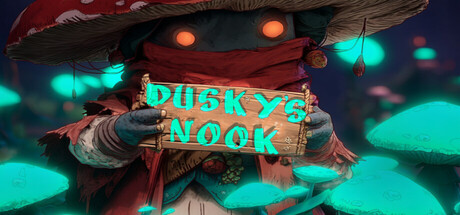
Generative AI tools were used during development to create base 3D assets and some store images. The menu artwork, along with all design, direction, scene construction, lighting, and writing, is my own. Dusky's Nook does not generate any content while you play and never connects to external AI services.
The developer used AI assistance while drafting marketing copy for this game. All copy was directed, revised, and finalized by the developer. All in-game art, audio, and design are human-made.
A 2D pixel art tool was used for concepting and shaping some assets. The final art was hand created using the AI versions as reference. This was used primarily for the desktop icons. The rest of the game's art, including all fish sprites and item icons, was made without AI.
Some plant artwork and store assets were created with AI-assisted tools and then manually reviewed, edited, and integrated into the game. DeskBloom does not generate AI images, text, audio, or other content during gameplay.
Some background music inside the game was created with generative AI tools. Generative AI was also used as a development assistant for some debugging, and code building. The game does not use live AI generation during playing.
Generative AI tools were used to assist in creating a limited number of 2D images included in the game and certain store-page graphical assets. All AI-assisted images were subsequently manually edited, corrected, and finalized by the developer. Other assets were created by the developer or obtained from appropriately licensed or free-to-use sources. The game does not use generative AI in real time.
This game uses AI tools (Anthropic's Claude) for localization. The game's UI text, building prompts, and store descriptions were translated from Japanese into 9 other languages with AI assistance, and all translations were reviewed by the developer. No AI-generated content is created at runtime (no live-generated AI). All other assets (art, music, sound effects) are hand-made or licensed (CC0).
Artificial intelligence was utilized in the programming phase of development. All other game content, including art, audio, and design, was created entirely by human effort.