Public Steam disclosure research25,394 disclosures tracked
Where do games disclose AI use?
Search developers’ Steam disclosures, compare classified AI use across
games, and follow recorded changes.
This index adds cross-game classifications and statistics to
statements published on individual store pages.
Groups reflect automatic analysis of public disclosures; mature records are excluded. These counts do not measure AI use across all of Steam.
Missing or unclear statements cannot establish whether a game uses AI.
This game uses generative artificial intelligence as part of the development process. AI tools were used to assist with creating certain visual assets and design elements. All AI-generated content has been reviewed, edited, and integrated by the developer to ensure quality and consistency.
No AI is used during gameplay, and the player experience is entirely handcrafted.
Some placeholder assets have been AI generated. We are actively working with human artists to replace all of the AI art in the game with human made art.
This game utilizes generative AI technology to assist in the batch processing and optimization of certain art assets, including but not limited to: style unification of character sprites, detail enhancement of background elements, and rapid generation of some UI icons. All AI-generated content has been manually reviewed, adjusted, and integrated by the developers to ensure consistency with the game's overall art direction. The core gameplay design, system architecture, balance tuning, and all other critical elements were completed independently by the developers.
Some promotional art assets, such as posters and icons, were created with the assistance of generative AI. These materials are used only for marketing and store presentation purposes.
Finesse uses generative AI tools for select pre-generated content created during development:
- Meshy — 3D model generation for some character and environment assets
- ElevenLabs — voice line generation for in-game audio
- Suno — music track generation for soundtrack and ambient audio
- Anthropic Claude — assistance with in-game text content (descriptions, narrative copy)
All AI-generated content is pre-rendered during development and shipped as static assets. No generative AI runs at runtime; nothing is generated live or unique per player. All AI outputs are reviewed, edited, and curated by the developer before being included in the final game.
This game uses generative AI tools during development for selected visual, audio, and programming-related tasks.
【AI-assisted content and development】
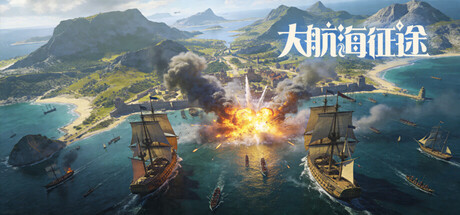
• Visual assets: Some in-game visuals, including ship sprites, scenario artwork, terrain textures, UI illustrations, and other decorative assets, were created with generative AI image tools, then selected, edited, modified, and integrated by the developer.
• Audio assets: Some background and combat music tracks were created with AI music generation tools, then edited, mastered, and loudness-normalized for in-game use.
• Programming assistance: AI coding tools are used to assist with code generation, implementation, debugging, and development. Game systems, mechanics, simulation rules, balance, and overall technical design are directed and determined by the developer.
【Runtime and game content】
• No generative AI operates during gameplay or at runtime. All required assets and game logic are included with the game and run locally.
• Scenario design, gameplay rules, ship statistics, historical information, and overall game design are researched, designed, reviewed, and integrated by the developer.
All AI-assisted assets and generated code are reviewed, tested, and integrated by the developer before being included in the released game.
During development, generative AI tools were used as supplementary assistance for document writing, draft store page text, UI text, localization drafts, and the planning of some concept visual materials.
All final content included in the release build, store page, and marketing materials is reviewed, selected, and edited by the developer before use.
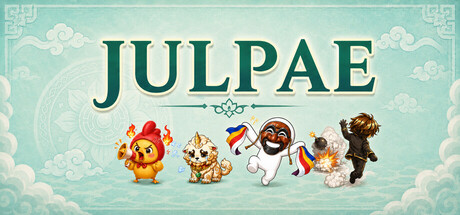
JULPAE does not use real-time generative AI during gameplay, does not generate player-facing content with AI at runtime, and does not connect players to any external generative AI service.
Portions of in-game art assets were initially generated with generative AI, followed by extensive manual hand-drawn revision, restructuring and detailed painting by the developer. Game text and localization drafts were AI-assisted then fully proofread and revised manually. All background music and sound effects are licensed free commercial assets downloaded from authorized resource websites; no generative AI was used for audio production. Source code was written with coding assistant tools.
This game made extensive use of generative AI during development.
Most of the images in the game were created with the assistance of generative AI. Generative AI was also used for concept work, visual drafts, UI text, translation drafts, and promotional materials.
All AI-assisted content was reviewed and edited by the developer before being included in the game.
Generative AI is not used during gameplay to create real-time content or player-specific responses.
This disclosure message was also written with the assistance of generative AI.
Terra Concordia was created by the solo developer at NCB Company with extensive use of generative artificial intelligence tools throughout the development process.
Content created with AI assistance during development:
• The 142 game cards (buildings, technologies, wonders, events, objectives): names, descriptions, costs, effects, and art were conceived and adjusted with AI assistance, under review and final decision by the human developer.
• SVG vector art (cards, board, civilizations, store capsule arts, achievement icons, page banners): programmatically generated by scripts written with AI assistance.
• Game mechanics and rules: brainstorming, balancing, and iteration done with AI assistance, always validated manually across hundreds of internal playtests.
• The 6 solo-mode scenarios: themes, victory conditions, and difficulty designed with AI assistance, adjusted through playtesting.
• Website, store descriptions, manuals, and Civilopedia: drafted with AI assistance, reviewed by the developer.
• English and Spanish translations: pre-translated with AI, manually reviewed and polished.
• Solo-mode opponent (Automa) logic: the script was written with AI assistance, but it is a fixed deterministic algorithm with no machine learning components.
No content is generated by AI in real time during play. There are no images, texts, cards, or behaviors dynamically generated by AI while you play. The "Automa" (solo-mode AI opponent) is a script already embedded in the game code, executing pre-defined rules — without any alteration, generation, or learning during the match.
All AI-assisted content was reviewed, tested, and approved by the human developer before release.
Pre-generated 2D visual assets were created using AI tools. This includes the skill icons used in the game's UI, as well as the promotional capsule and cover artwork for the Steam store page.
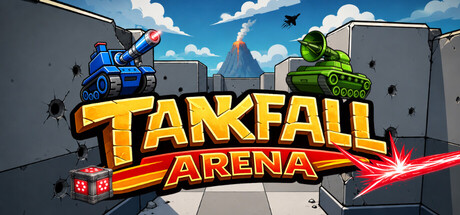
TankFall Arena contains certain pre-generated assets created with the assistance of generative AI tools during development. These assets may include promotional artwork, visual elements, audio content, and music. All AI-assisted content has been reviewed, curated, modified, and integrated by the developer as part of the game's overall design and presentation.
TankFall Arena does not generate AI content during gameplay and does not connect to external AI services while the game is running.
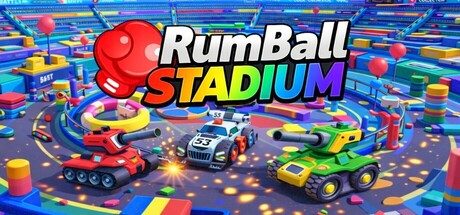
Some assets in RumBall Stadium were created with the assistance of generative AI tools, specifically the main game thumbnail and a selection of icons and background images used in the game's menus. All gameplay content, including vehicles, arenas, and game systems, was developed by the development team.
Generative AI tools were used to assist in the creation of certain illustrations, backgrounds, music, and translations. All final content has been reviewed by the developer.
Small quantity of images/textures are ai-generated.
Small quantity of sound waves are ai-generated.
Some parts of code are ai-genereted and ai-assissted always tested by a human.
Generative AI was used to assist in the creation of promotional visual assets, including the game's logo and certain store page artwork. No gameplay content, code, story, dialogue, quests, characters, or game mechanics are generated by AI. All gameplay screenshots represent actual in-game content.
Generative AI is used across this game's development — including store-page marketing artwork, in-game art (cards, UI elements), and source code. All AI-generated content is human-directed, reviewed, and edited by the developer. No AI runs at game time; everything ships as static, pre-rendered assets.
We have updated our AI disclosure in order to provide better transparency and clarity around the use of this support tool for Crazy Taxi: World Tour:
At SEGA Corporation, we utilize generative AI as an optional support tool for developers, with the aim of enabling developers to focus more on creative tasks and deliver better experiences to our players.
In Crazy Taxi: World Tour, generative AI was used as part of the ideation process for background objects. However, no AI-generated content will be included in the final game.
This game does not use generative AI to create any shipped game assets, including artwork, audio, or other player-facing content. We prioritize human-created assets and content throughout the development process.
We may use AI-powered tools internally to assist with development workflows, research, testing, debugging, automation, marketing, and other backend tasks. These tools are used to support development efficiency and do not generate content that is presented directly to players as part of the game experience.
Static art assets (store-page capsules, in-game card art, in-game icons) and audio placeholders are generated via Replicate (Google Nano Banana Pro for image, Lyria-2 / AudioGen for audio) using human-authored prompts. Outputs are reviewed by the developer before shipping. No live AI generation occurs during gameplay; all assets are baked at build time.
I would like to pay for human assets, but I am moving fast. In the same way that AI turned 12 months of dev time into 2, it also affected how I skinned the MVP. This is best for communicating intention, and I can polish it with human art if there is traction.
We continue to draw all game art by hand.
Some of our sounds have been generated using a tool called ElevenLabs. We use a wide range of co-development tools to help optimise and test the code in our minigames. We have used tools like OpenAI to help with localisation of our content to other languages.
LLM coding tools were used to assist programming and for localizing text into non-English languages. No AI tools were used in the art process, audio, game design, or balancing. No version prior to 0.9 contained LLM output.
Dynasty and RTG Modes - Storyline content in hub screen, Design Implementation and tuning
Commentary scripting support
Trophy Room Support
Creating more realistic play calls made by CPU teams
This game uses generative AI to assist with code completion and localization translation. The game's library cover art, promotional images are hand-drawn and then enhanced with AI.
Character, monster, and object sprites, as well as the app icon, were created using AI image generation tools and subsequently hand-edited and refined by the developer. Some in-game text was written with AI assistance.
Deep In The Mine was developed by a single person. Artificial intelligence was used to save time and correct certain shortcomings, particularly in audio creation and mesh generation.
Some assets in this work are AI-generated:
Store page: Store promotional images, library promotional images, library homepage image.
Game itself: Some 3D models, background music, sound effects.
This game uses generative artificial intelligence as part of the development process. AI tools were used to assist with creating certain visual assets and design elements. All AI-generated content has been reviewed, edited, and integrated by the developer to ensure quality and consistency.
No AI is used during gameplay, and the player experience is entirely handcrafted.
Some placeholder assets have been AI generated. We are actively working with human artists to replace all of the AI art in the game with human made art.
This game utilizes generative AI technology to assist in the batch processing and optimization of certain art assets, including but not limited to: style unification of character sprites, detail enhancement of background elements, and rapid generation of some UI icons. All AI-generated content has been manually reviewed, adjusted, and integrated by the developers to ensure consistency with the game's overall art direction. The core gameplay design, system architecture, balance tuning, and all other critical elements were completed independently by the developers.
Some promotional art assets, such as posters and icons, were created with the assistance of generative AI. These materials are used only for marketing and store presentation purposes.
Finesse uses generative AI tools for select pre-generated content created during development:
- Meshy — 3D model generation for some character and environment assets
- ElevenLabs — voice line generation for in-game audio
- Suno — music track generation for soundtrack and ambient audio
- Anthropic Claude — assistance with in-game text content (descriptions, narrative copy)
All AI-generated content is pre-rendered during development and shipped as static assets. No generative AI runs at runtime; nothing is generated live or unique per player. All AI outputs are reviewed, edited, and curated by the developer before being included in the final game.
This game uses generative AI tools during development for selected visual, audio, and programming-related tasks.
【AI-assisted content and development】
• Visual assets: Some in-game visuals, including ship sprites, scenario artwork, terrain textures, UI illustrations, and other decorative assets, were created with generative AI image tools, then selected, edited, modified, and integrated by the developer.
• Audio assets: Some background and combat music tracks were created with AI music generation tools, then edited, mastered, and loudness-normalized for in-game use.
• Programming assistance: AI coding tools are used to assist with code generation, implementation, debugging, and development. Game systems, mechanics, simulation rules, balance, and overall technical design are directed and determined by the developer.
【Runtime and game content】
• No generative AI operates during gameplay or at runtime. All required assets and game logic are included with the game and run locally.
• Scenario design, gameplay rules, ship statistics, historical information, and overall game design are researched, designed, reviewed, and integrated by the developer.
All AI-assisted assets and generated code are reviewed, tested, and integrated by the developer before being included in the released game.
During development, generative AI tools were used as supplementary assistance for document writing, draft store page text, UI text, localization drafts, and the planning of some concept visual materials.
All final content included in the release build, store page, and marketing materials is reviewed, selected, and edited by the developer before use.
JULPAE does not use real-time generative AI during gameplay, does not generate player-facing content with AI at runtime, and does not connect players to any external generative AI service.
Portions of in-game art assets were initially generated with generative AI, followed by extensive manual hand-drawn revision, restructuring and detailed painting by the developer. Game text and localization drafts were AI-assisted then fully proofread and revised manually. All background music and sound effects are licensed free commercial assets downloaded from authorized resource websites; no generative AI was used for audio production. Source code was written with coding assistant tools.
This game made extensive use of generative AI during development.
Most of the images in the game were created with the assistance of generative AI. Generative AI was also used for concept work, visual drafts, UI text, translation drafts, and promotional materials.
All AI-assisted content was reviewed and edited by the developer before being included in the game.
Generative AI is not used during gameplay to create real-time content or player-specific responses.
This disclosure message was also written with the assistance of generative AI.
Terra Concordia was created by the solo developer at NCB Company with extensive use of generative artificial intelligence tools throughout the development process.
Content created with AI assistance during development:
• The 142 game cards (buildings, technologies, wonders, events, objectives): names, descriptions, costs, effects, and art were conceived and adjusted with AI assistance, under review and final decision by the human developer.
• SVG vector art (cards, board, civilizations, store capsule arts, achievement icons, page banners): programmatically generated by scripts written with AI assistance.
• Game mechanics and rules: brainstorming, balancing, and iteration done with AI assistance, always validated manually across hundreds of internal playtests.
• The 6 solo-mode scenarios: themes, victory conditions, and difficulty designed with AI assistance, adjusted through playtesting.
• Website, store descriptions, manuals, and Civilopedia: drafted with AI assistance, reviewed by the developer.
• English and Spanish translations: pre-translated with AI, manually reviewed and polished.
• Solo-mode opponent (Automa) logic: the script was written with AI assistance, but it is a fixed deterministic algorithm with no machine learning components.
No content is generated by AI in real time during play. There are no images, texts, cards, or behaviors dynamically generated by AI while you play. The "Automa" (solo-mode AI opponent) is a script already embedded in the game code, executing pre-defined rules — without any alteration, generation, or learning during the match.
All AI-assisted content was reviewed, tested, and approved by the human developer before release.
Pre-generated 2D visual assets were created using AI tools. This includes the skill icons used in the game's UI, as well as the promotional capsule and cover artwork for the Steam store page.
TankFall Arena contains certain pre-generated assets created with the assistance of generative AI tools during development. These assets may include promotional artwork, visual elements, audio content, and music. All AI-assisted content has been reviewed, curated, modified, and integrated by the developer as part of the game's overall design and presentation.
TankFall Arena does not generate AI content during gameplay and does not connect to external AI services while the game is running.
Some assets in RumBall Stadium were created with the assistance of generative AI tools, specifically the main game thumbnail and a selection of icons and background images used in the game's menus. All gameplay content, including vehicles, arenas, and game systems, was developed by the development team.
Generative AI tools were used to assist in the creation of certain illustrations, backgrounds, music, and translations. All final content has been reviewed by the developer.
Small quantity of images/textures are ai-generated.
Small quantity of sound waves are ai-generated.
Some parts of code are ai-genereted and ai-assissted always tested by a human.
Generative AI was used to assist in the creation of promotional visual assets, including the game's logo and certain store page artwork. No gameplay content, code, story, dialogue, quests, characters, or game mechanics are generated by AI. All gameplay screenshots represent actual in-game content.
Generative AI is used across this game's development — including store-page marketing artwork, in-game art (cards, UI elements), and source code. All AI-generated content is human-directed, reviewed, and edited by the developer. No AI runs at game time; everything ships as static, pre-rendered assets.
We have updated our AI disclosure in order to provide better transparency and clarity around the use of this support tool for Crazy Taxi: World Tour:
At SEGA Corporation, we utilize generative AI as an optional support tool for developers, with the aim of enabling developers to focus more on creative tasks and deliver better experiences to our players.
In Crazy Taxi: World Tour, generative AI was used as part of the ideation process for background objects. However, no AI-generated content will be included in the final game.
This game does not use generative AI to create any shipped game assets, including artwork, audio, or other player-facing content. We prioritize human-created assets and content throughout the development process.
We may use AI-powered tools internally to assist with development workflows, research, testing, debugging, automation, marketing, and other backend tasks. These tools are used to support development efficiency and do not generate content that is presented directly to players as part of the game experience.
Static art assets (store-page capsules, in-game card art, in-game icons) and audio placeholders are generated via Replicate (Google Nano Banana Pro for image, Lyria-2 / AudioGen for audio) using human-authored prompts. Outputs are reviewed by the developer before shipping. No live AI generation occurs during gameplay; all assets are baked at build time.
I would like to pay for human assets, but I am moving fast. In the same way that AI turned 12 months of dev time into 2, it also affected how I skinned the MVP. This is best for communicating intention, and I can polish it with human art if there is traction.
We continue to draw all game art by hand.
Some of our sounds have been generated using a tool called ElevenLabs. We use a wide range of co-development tools to help optimise and test the code in our minigames. We have used tools like OpenAI to help with localisation of our content to other languages.
LLM coding tools were used to assist programming and for localizing text into non-English languages. No AI tools were used in the art process, audio, game design, or balancing. No version prior to 0.9 contained LLM output.
Dynasty and RTG Modes - Storyline content in hub screen, Design Implementation and tuning
Commentary scripting support
Trophy Room Support
Creating more realistic play calls made by CPU teams
This game uses generative AI to assist with code completion and localization translation. The game's library cover art, promotional images are hand-drawn and then enhanced with AI.
Character, monster, and object sprites, as well as the app icon, were created using AI image generation tools and subsequently hand-edited and refined by the developer. Some in-game text was written with AI assistance.
Deep In The Mine was developed by a single person. Artificial intelligence was used to save time and correct certain shortcomings, particularly in audio creation and mesh generation.
Some assets in this work are AI-generated:
Store page: Store promotional images, library promotional images, library homepage image.
Game itself: Some 3D models, background music, sound effects.