Public Steam disclosure research25,497 disclosures tracked
Where do games disclose AI use?
Search developers’ Steam disclosures, compare classified AI use across
games, and follow recorded changes.
This index adds cross-game classifications and statistics to
statements published on individual store pages.
Groups reflect automatic analysis of public disclosures; mature records are excluded. These counts do not measure AI use across all of Steam.
Missing or unclear statements cannot establish whether a game uses AI.
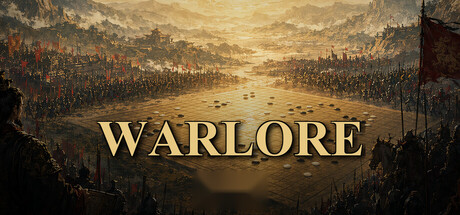
During development, this game uses the following generative AI tools. All generated assets are reviewed, selected, and adjusted by the developer before being incorporated into the game.
Music (BGM): Composed using Suno
Battle animations: Generated using Seedance 2.0
Image assets (characters, backgrounds, etc.): Generated using GPT Image 2.0
Audio/Voice assets: Irodori-TTS (AI text-to-speech service)
All of these are pre-generated content created during development. No AI-generated content is produced at runtime (live) during gameplay.
All content generated by the above tools is licensed for commercial use in accordance with each service's terms of use, and does not infringe upon any third-party copyrights or other intellectual property rights.
Entire story, dialogues, codes are hand-crafted by human developers. Most of in-game UI and arts were refined by our human art designer, while AI-based tools supported the initial bases for character illustrations, card illustrations, and visual novel backgrounds.
This game uses pre-generated AI-assisted assets in some development and marketing materials, including draft visuals, voice work, localization support, and production references. Final content is reviewed and curated by the developer. The game does not generate AI content during gameplay.
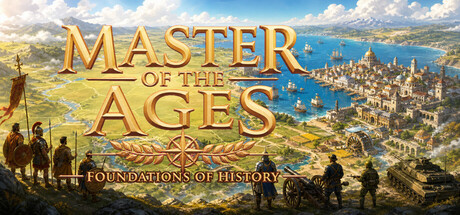
Master of the Ages is a grand strategy game engineered by a solo developer with 15+ years of senior software engineering and programming competition experience. To achieve grand-strategy scale as a single creator, a generative AI workflow was utilized to co-design the code architecture and write the codebase under the developer's supervision, backed by a rigorous framework of over 2,500 automated tests to catch edge-case bugs and prevent regressions during development. Generative AI was also used to produce all player-facing graphics (including all unit, building, and technology assets) and generate the historical text layers.
This game makes use of generative AI as a creative assistant during development. All AI-assisted output is reviewed, edited, and approved by the developer before being included in the final game. No content is generated live during gameplay.
Source code: Drafted with AI coding tools, then reviewed, tested, and integrated by the developer.
Visual assets: All main character designs and key visuals are based on the developer's hand-drawn illustrations. Some assets combine the developer's artwork with AI-assisted generation or refinement.
Scenario text: Story, dialogue, and worldbuilding are written by the developer, with AI used for drafting support, rewriting, and consistency checks.
Music: A portion of the in-game music is produced with AI assistance; the developer selects, edits, and finalizes all tracks used in the game.
Localization: The English translation is produced with AI assistance and reviewed by the developer.
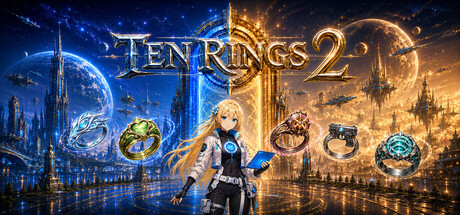
Ten Rings 2 uses generative AI during development to assist with some 2D visual asset production, concept iteration, and writing drafts. Final in-game content is selected, edited, integrated, and reviewed by the developer. Generative AI is not used to create live or personalized content during gameplay.
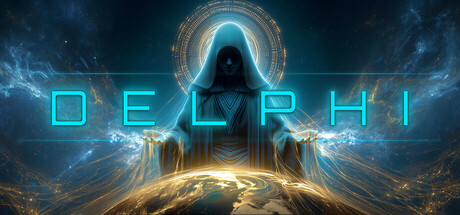
Delphi uses Midjourney for illustrated artwork (cards, events, key art, capsule art) and Kling for image-to-video trailer animation, all curated and edited by the developer. UI artwork is hand-made by a credited human artist.
No AI is used in design, writing, narrative or gameplay, and no AI runs at runtime — all in-game content is human-written static data.
There are AI voices in certain parts of the game: TikTok-style narration voice in the Tiktok parody intro, retro robotic text-to-speech voices for a character, etc...
The game itself is made entirely by human hands. All in-game art, music, sound design, and writing are created or directed by human authors without generative AI. All gameplay footage shown on this store page is real, captured from the actual game.
Generative AI is used for some marketing materials — including promotional images, social media assets, and capsule art — to support a small independent studio's marketing within budget constraints. These AI-generated images are intended to represent the game's existing hand-made art style.
No AI-generated content is shipped inside the game itself. If Echo Pandemic recovers its development costs, capsule images and marketing material will be replaced with commissioned human work.
I'm a solo developer using Generative AI as a supportive tool to realize my gameplay vision. The game has been crafted with human intent and is still firmly anchored in manual craftsmanship. Generative AI has helped with coding, some art assets, and the recording of voiceover narration.
Visuals:
This game features cinematic visuals crafted through 3D modeling and digital composition, with Photoshop's Generative Fill used selectively for background enhancements and asset integration.
Music:
The soundtrack includes cover versions of the original theme composed by Yasunori Shiono, arranged using Suno with the composer's permission.
1. The game code was pre-generated by AI in an IDE tool and then manually reviewed.
2. Some sound effects and music were generated as MIDI files from a large language model and then manually modified in music editing software.
3. Art assets were initially generated by online AI. All generated images were manually selected and modified to ensure they conformed to the overall art style of the game.
Due to the small scale of the project, many visual assets in the current demo were created using AI-assisted image generation tools, with additional manual editing and selection by the developer.
Some assets may be replaced or redrawn in future versions during development.
Character design,character writing, story structure, dialogue, game design, and overall direction were totally created by the developer.
This is a small independent narrative project focused primarily on storytelling and atmosphere.Thank you for playing, reading, and supporting the project.
This game uses generative AI to create live in-game dialogue, AI character responses, personality details, and evaluation feedback during gameplay. The generated content is text-based and is produced dynamically through an external AI API.
[AI-Generated Content Disclosure]This game uses AI-assisted tools during development for content generation and optimization. All AI-generated content has been reviewed, revised, and finalized by the human development team. Specific usage is disclosed below:[Text]· Portions of script drafts and dialogue have been refined with AI assistance, with all final versions rewritten and proofread by human writers.· Multi-language localization (English, Japanese, Russian, French, Spanish) was produced via AI translation followed by human proofreading and correction.[Art]· Some character portraits, CG illustrations, and background concepts were initially drafted with AI assistance, then redrawn, retouched, colored, and finalized by human artists.· Certain UI elements and icons were AI-assisted and subsequently adjusted by hand.[Audio]· Some background music (BGM) tracks were generated with AI assistance, then curated and post-processed by humans.· All character voice acting is performed by real human voice actors. No AI voice synthesis is used.
Grok Imagine was used during development to generate environment backgrounds, level assets, and character concept art. All assets have been curated and integrated manually into the 2D engine.
Suno AI was used to compose the atmospheric music tracks and soundtracks for the different realms of the game.
This game uses generative AI to generate NPC dialogue, thoughts, and decisions in real time. The AI model can run locally via the built-in llama.cpp engine,. In local mode, AI content is generated on your device. We have implemented content filtering and anomaly detection, but AI-generated content may occasionally produce unpredictable results.
AI tools were used during development only for pre-generated content, including concept/reference artwork, store assets, music/audio drafts, and localization or translation assistance.
The game does not generate AI content at runtime. Players do not interact with any live AI system, and no text, images, audio, or gameplay content is dynamically generated by AI while the game is running.
All AI-assisted content is reviewed, edited, and integrated by the developer before release.
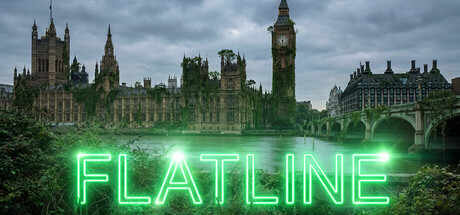
FLATLINE utilizes advanced generative AI technologies to enhance both the visual and interactive experience:
Visual Assets (Pre-generated): To achieve the unique aesthetic of "clean decay" and the massive brutalist landscapes of London 2036, we employed AI-rendering tools (Nanobanana and Veo). All images and video sequences were pre-generated and underwent meticulous manual post-processing to align with the project’s artistic vision.
Interactivity (Live-generated): The episode’s climax features a live dialogue with the system "Anomaly." This character’s responses are generated in real-time using the GPT-4 model, allowing each player to find their own unique arguments in the final confrontation with the network.
We use AI as a force-multiplier for a solo creator, enabling the realization of a world that would otherwise be impossible to build at this scale using traditional methods
AI tools were used to assist with code generation. All visual art is hand-drawn by the developer. All AI-assisted content has been manually reviewed and refined.
This game does not generate any AI content in real-time. Pre-generated AI images were used during the development process to create some of the design assets both inside the game and on the store page (including the capsule art)
During development, this game uses the following generative AI tools. All generated assets are reviewed, selected, and adjusted by the developer before being incorporated into the game.
Music (BGM): Composed using Suno
Battle animations: Generated using Seedance 2.0
Image assets (characters, backgrounds, etc.): Generated using GPT Image 2.0
Audio/Voice assets: Irodori-TTS (AI text-to-speech service)
All of these are pre-generated content created during development. No AI-generated content is produced at runtime (live) during gameplay.
All content generated by the above tools is licensed for commercial use in accordance with each service's terms of use, and does not infringe upon any third-party copyrights or other intellectual property rights.
Entire story, dialogues, codes are hand-crafted by human developers. Most of in-game UI and arts were refined by our human art designer, while AI-based tools supported the initial bases for character illustrations, card illustrations, and visual novel backgrounds.
This game uses pre-generated AI-assisted assets in some development and marketing materials, including draft visuals, voice work, localization support, and production references. Final content is reviewed and curated by the developer. The game does not generate AI content during gameplay.
Master of the Ages is a grand strategy game engineered by a solo developer with 15+ years of senior software engineering and programming competition experience. To achieve grand-strategy scale as a single creator, a generative AI workflow was utilized to co-design the code architecture and write the codebase under the developer's supervision, backed by a rigorous framework of over 2,500 automated tests to catch edge-case bugs and prevent regressions during development. Generative AI was also used to produce all player-facing graphics (including all unit, building, and technology assets) and generate the historical text layers.
This game makes use of generative AI as a creative assistant during development. All AI-assisted output is reviewed, edited, and approved by the developer before being included in the final game. No content is generated live during gameplay.
Source code: Drafted with AI coding tools, then reviewed, tested, and integrated by the developer.
Visual assets: All main character designs and key visuals are based on the developer's hand-drawn illustrations. Some assets combine the developer's artwork with AI-assisted generation or refinement.
Scenario text: Story, dialogue, and worldbuilding are written by the developer, with AI used for drafting support, rewriting, and consistency checks.
Music: A portion of the in-game music is produced with AI assistance; the developer selects, edits, and finalizes all tracks used in the game.
Localization: The English translation is produced with AI assistance and reviewed by the developer.
Ten Rings 2 uses generative AI during development to assist with some 2D visual asset production, concept iteration, and writing drafts. Final in-game content is selected, edited, integrated, and reviewed by the developer. Generative AI is not used to create live or personalized content during gameplay.
Delphi uses Midjourney for illustrated artwork (cards, events, key art, capsule art) and Kling for image-to-video trailer animation, all curated and edited by the developer. UI artwork is hand-made by a credited human artist.
No AI is used in design, writing, narrative or gameplay, and no AI runs at runtime — all in-game content is human-written static data.
There are AI voices in certain parts of the game: TikTok-style narration voice in the Tiktok parody intro, retro robotic text-to-speech voices for a character, etc...
The game itself is made entirely by human hands. All in-game art, music, sound design, and writing are created or directed by human authors without generative AI. All gameplay footage shown on this store page is real, captured from the actual game.
Generative AI is used for some marketing materials — including promotional images, social media assets, and capsule art — to support a small independent studio's marketing within budget constraints. These AI-generated images are intended to represent the game's existing hand-made art style.
No AI-generated content is shipped inside the game itself. If Echo Pandemic recovers its development costs, capsule images and marketing material will be replaced with commissioned human work.
I'm a solo developer using Generative AI as a supportive tool to realize my gameplay vision. The game has been crafted with human intent and is still firmly anchored in manual craftsmanship. Generative AI has helped with coding, some art assets, and the recording of voiceover narration.
Visuals:
This game features cinematic visuals crafted through 3D modeling and digital composition, with Photoshop's Generative Fill used selectively for background enhancements and asset integration.
Music:
The soundtrack includes cover versions of the original theme composed by Yasunori Shiono, arranged using Suno with the composer's permission.
1. The game code was pre-generated by AI in an IDE tool and then manually reviewed.
2. Some sound effects and music were generated as MIDI files from a large language model and then manually modified in music editing software.
3. Art assets were initially generated by online AI. All generated images were manually selected and modified to ensure they conformed to the overall art style of the game.
Due to the small scale of the project, many visual assets in the current demo were created using AI-assisted image generation tools, with additional manual editing and selection by the developer.
Some assets may be replaced or redrawn in future versions during development.
Character design,character writing, story structure, dialogue, game design, and overall direction were totally created by the developer.
This is a small independent narrative project focused primarily on storytelling and atmosphere.Thank you for playing, reading, and supporting the project.
This game uses generative AI to create live in-game dialogue, AI character responses, personality details, and evaluation feedback during gameplay. The generated content is text-based and is produced dynamically through an external AI API.
[AI-Generated Content Disclosure]This game uses AI-assisted tools during development for content generation and optimization. All AI-generated content has been reviewed, revised, and finalized by the human development team. Specific usage is disclosed below:[Text]· Portions of script drafts and dialogue have been refined with AI assistance, with all final versions rewritten and proofread by human writers.· Multi-language localization (English, Japanese, Russian, French, Spanish) was produced via AI translation followed by human proofreading and correction.[Art]· Some character portraits, CG illustrations, and background concepts were initially drafted with AI assistance, then redrawn, retouched, colored, and finalized by human artists.· Certain UI elements and icons were AI-assisted and subsequently adjusted by hand.[Audio]· Some background music (BGM) tracks were generated with AI assistance, then curated and post-processed by humans.· All character voice acting is performed by real human voice actors. No AI voice synthesis is used.
Grok Imagine was used during development to generate environment backgrounds, level assets, and character concept art. All assets have been curated and integrated manually into the 2D engine.
Suno AI was used to compose the atmospheric music tracks and soundtracks for the different realms of the game.
This game uses generative AI to generate NPC dialogue, thoughts, and decisions in real time. The AI model can run locally via the built-in llama.cpp engine,. In local mode, AI content is generated on your device. We have implemented content filtering and anomaly detection, but AI-generated content may occasionally produce unpredictable results.
AI tools were used during development only for pre-generated content, including concept/reference artwork, store assets, music/audio drafts, and localization or translation assistance.
The game does not generate AI content at runtime. Players do not interact with any live AI system, and no text, images, audio, or gameplay content is dynamically generated by AI while the game is running.
All AI-assisted content is reviewed, edited, and integrated by the developer before release.
FLATLINE utilizes advanced generative AI technologies to enhance both the visual and interactive experience:
Visual Assets (Pre-generated): To achieve the unique aesthetic of "clean decay" and the massive brutalist landscapes of London 2036, we employed AI-rendering tools (Nanobanana and Veo). All images and video sequences were pre-generated and underwent meticulous manual post-processing to align with the project’s artistic vision.
Interactivity (Live-generated): The episode’s climax features a live dialogue with the system "Anomaly." This character’s responses are generated in real-time using the GPT-4 model, allowing each player to find their own unique arguments in the final confrontation with the network.
We use AI as a force-multiplier for a solo creator, enabling the realization of a world that would otherwise be impossible to build at this scale using traditional methods
AI tools were used to assist with code generation. All visual art is hand-drawn by the developer. All AI-assisted content has been manually reviewed and refined.
This game does not generate any AI content in real-time. Pre-generated AI images were used during the development process to create some of the design assets both inside the game and on the store page (including the capsule art)