Public Steam disclosure research25,497 disclosures tracked
Where do games disclose AI use?
Search developers’ Steam disclosures, compare classified AI use across
games, and follow recorded changes.
This index adds cross-game classifications and statistics to
statements published on individual store pages.
Groups reflect automatic analysis of public disclosures; mature records are excluded. These counts do not measure AI use across all of Steam.
Missing or unclear statements cannot establish whether a game uses AI.
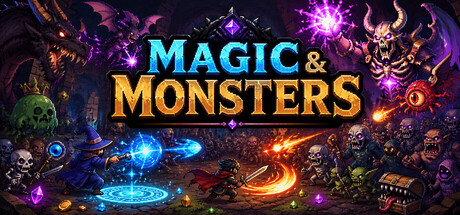
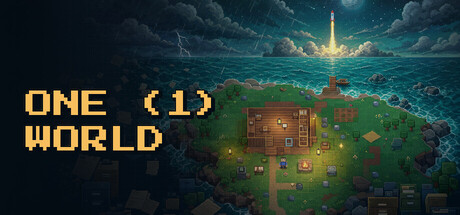
Some of this game's artwork — including key art, the main-menu background, and store/marketing images — was created with the help of generative AI (Midjourney) and then curated and edited by the developer.
Everything else, including gameplay, code, sound, and the in-game pixel art, is human-made or from licensed asset packs. No AI-generated content is produced live while you play.
Some in-game text translations were produced with AI assistance and reviewed for accuracy.
Our Policy on AI & Procedural Generation
Valenfeld is built by one person, on a shoestring budget, with an Elder Scrolls–sized ambition. Here is exactly how, and why, AI fits into that.
Why we use it
Valenfeld is a solo indie project chasing a scope that normally takes a studio of dozens: a massive, hand-lorekept world you can wander for years without hitting an edge. That scope is not achievable by one person typing every tree, every ruin, and every line of dialogue by hand on a shoestring budget and an ambitious timeline. So we lean on AI-enabled workflows and, more importantly, cutting-edge procedural algorithms to scale content production and world scale to match the ambition — not to replace it.
What always stays human
Every piece of content in the game — every place, character, creature, item, quest, and line of lore — is built and overseen by a human creator and judge, grounded in our own ideas, our own lore, and our own systems design. AI does not decide what Valenfeld is. It never originates the world's canon, its themes, or its design intent on its own; it accelerates producing what we've already decided the world should be, and everything it touches is reviewed before it ships.
Not AI slop — procedural generation is the point
We're not interested in dumping raw model output into the game and calling it done. Our actual goal is an experimental, large-scale world built on cutting-edge procedural algorithms — terrain, dungeons, towns, ecosystems, even history — designed to be massively replayable for years, not a one-and-done AI slideshow. AI-assisted tooling is one part of the production pipeline that gets us there faster on a small budget; the procedural systems and the authored lore they run on are the actual craft, and that's where our attention to detail goes.
Our bet
We believe that if we focus relentlessly on delivering the best game possible — with a genuinely obsessive eye for detail on everything we ship — we can produce something great on a low budget and a small team of one. That is the bar we hold ourselves to, not "shipped fast" or "shipped cheap."
As we grow
This is how we build today, as a solo project with an ambitious scope and timeline. If and when Valenfeld earns a bigger budget for this game or for future releases, we intend to keep building just as ambitiously — with a team of art, lore, and gameplay experts working alongside these same tools, not replaced by them. Thinking about the best possible game comes first; everything else, including how we scale to build it, follows from that.
— Metatransformer Studios
This game utilizes AI-assisted generation for certain art assets and the core code framework. Every element has undergone thorough manual review, fine-tuning, and integration by our developers, guaranteeing that the final output aligns with the game's intended aesthetic and quality standards.No live‑generated AI content appears during gameplay
Portions of this game's art and audio were created using generative AI tools during development: card and character artwork, backgrounds and icons (including store page artwork), music, sound effects, and voice audio were AI-generated under human direction, then curated and edited by the developers. Game design, rules, code, card text and names, and all narrative writing are human-authored. Nothing is generated by AI while you play.
Some of concept art and in-game promotional materials on the game's Steam store page were created using generative artificial intelligence tools. The game's coding and script were entirely written by developer.
Game art assets are generated using AI tools to create initial concept art, which is then manually adjusted and modified by artists. The final works combine AI-generated foundational designs with human artistic revisions.
Some dynamic art assets are assisted in their creation by AI tools.
The background were generated using Midjourney, painted over and edited by the Lornn (https://lornn.itch.io/)
Backgrounds will be replaced with original artwork.
A small amount of the art is generated or seeded using AI, but much of it is altered, changed or had custom things done with it. All music, sound, writing and code was made by a human.
This game uses generative AI to pre-generate visual assets (character portraits, capsule/marketing art) and voice narration (TTS). All AI-generated content is created during development and reviewed/curated
by the developer before shipping. No generative AI runs live during gameplay. We have the necessary rights to use the AI tools and their outputs, and the content does not infringe third-party IP.
Some in-game visual assets were created or refined using generative AI during development. These assets are pre-generated and included with the game. The game does not generate AI content while running.
Some art assets (sprites, icons, illustrations) and audio (sound effects, music, voices) were created using generative AI tools. All AI-generated content is pre-rendered and hand-integrated into the game — nothing is generated live during play. Each asset is reviewed and curated before inclusion, and we hold commercial-use rights for the tools involved.
This game uses generative AI tools to create some of its artwork: promotional art such as the key visual and store capsule images, and some in-game image assets such as character portraits and map textures. All of it was reviewed, curated, and adjusted by the developer before use. Every screenshot shown on the store page is captured from actual gameplay and is not AI-generated. The shipped game does not use any AI to generate images, text, or audio at runtime.
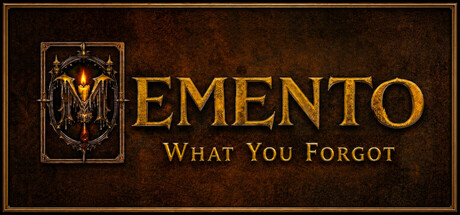
The development of Memento made use of generative AI tools across several stages of production. Cutscenes are created using AI-based video generation tools. Graphic elements such as environments, characters, and card illustrations were created or refined with the help of generative AI tools. Parts of the soundtrack and text were also produced with AI assistance. All content was manually selected, edited, and integrated by the developer.
Generative AI was used during the development of this game. Specifically, AI tools were utilized to assist in the creation and optimization of [some art assets / text localization / narrative polish]. All AI-generated content has been thoroughly reviewed and manually refined by the development team to ensure quality.
Some pre-generated artwork and sound assets used in the game and its marketing materials were created or edited with the assistance of generative AI tools. All such content was manually selected, reviewed, and edited as needed by the developer. The game does not generate AI content during gameplay.
Some visual concepts, promotional artwork, and certain written materials used for the game's presentation were created or refined with the assistance of generative AI. All AI-assisted content has been carefully reviewed, edited, and approved by the development team to ensure artistic consistency, originality, and quality. The gameplay, design decisions, and final player experience are fully curated by the developers.
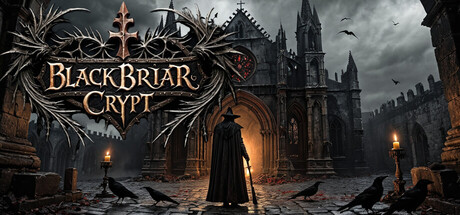
Visual assets in Blackbriar Crypt were created with generative AI tools (Stable Diffusion via ComfyUI), including in-game 2D art such as item icons, character portraits, enemy sprites, and UI backgrounds, as well as store and library marketing images. Each asset was selected, edited, and approved by the developer before release.
Some marketing artwork on this Steam store page was created with OpenAI image generation using current in-game screenshots and existing brand artwork as references. The game itself does not generate AI content during play.
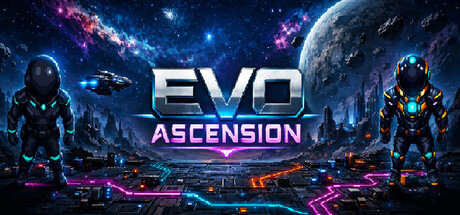
Evo Ascension includes limited AI‑generated content. Some audio and select graphical elements were created using AI tools, with most visuals further refined and hand‑edited in Aseprite. All gameplay systems, pixel art characters, animations, and core design remain handcrafted by the developer.
All in-game illustrations (character portraits, NPC and monster art, location and item images, key art) were pre-generated during development using generative AI tools and manually curated by the developer. The game does not create AI-generated content at runtime.
We used AI‑based tools to create some character images and background assets.
All content has been independently edited and refined to ensure it is presented as an original work.
The game logo was created with the assistance of generative AI and edited by the developer. AI was also used to assist with localization translations for other languages, which were reviewed and edited by the developer. No live-generated AI content is used during gameplay.
During the development process, I use AI tools to assist with content creation. Specifically, I use them to generate base assets such as textures, visuals, and sound assets, which are then edited and refined by hand before shipping. No content is generated at runtime. In all such cases, the final product reflects my personal creativity, vision, and expression as a solo developer.
Generative AI was used to assist with grammar and spelling checks for some in-game text, translate store page content, and generate some sound assets. All content was reviewed and approved by the developer before inclusion. The game does not use live-generated AI.
Ever since I was a child, I dreamed of making my own game. I tried again and again — I gathered teams, but something always fell apart and I would give up halfway. This time is different: with the help of AI, I am finally able to bring my dream to life. AI helped me with some of the text and translations — all the art, music, and sound are human-made or licensed, and the game uses no AI while you play.
I am an honest person, and I will keep giving this game everything I have. Thank you for taking the time to read this. 💚
The core game mechanics, game design, and overall creative direction are 100% my original vision. No AI tools were used for conceptualizing ideas or narrative structure. The programming code was generated utilizing the Rosebud AI platform, and the 2D visual assets were initially created with generative art tools. Code, artwork, and music were reviewed, manually edited, and arranged by me to bring my specific creative vision to life.
AI generated art and other assets were referenced and partly used during development, but every effort is taken to make the game original. At UWS, we make every effort to support our art/design team and use AI very rarely to meet our production needs
Some of this game's artwork — including key art, the main-menu background, and store/marketing images — was created with the help of generative AI (Midjourney) and then curated and edited by the developer.
Everything else, including gameplay, code, sound, and the in-game pixel art, is human-made or from licensed asset packs. No AI-generated content is produced live while you play.
Some in-game text translations were produced with AI assistance and reviewed for accuracy.
Our Policy on AI & Procedural Generation
Valenfeld is built by one person, on a shoestring budget, with an Elder Scrolls–sized ambition. Here is exactly how, and why, AI fits into that.
Why we use it
Valenfeld is a solo indie project chasing a scope that normally takes a studio of dozens: a massive, hand-lorekept world you can wander for years without hitting an edge. That scope is not achievable by one person typing every tree, every ruin, and every line of dialogue by hand on a shoestring budget and an ambitious timeline. So we lean on AI-enabled workflows and, more importantly, cutting-edge procedural algorithms to scale content production and world scale to match the ambition — not to replace it.
What always stays human
Every piece of content in the game — every place, character, creature, item, quest, and line of lore — is built and overseen by a human creator and judge, grounded in our own ideas, our own lore, and our own systems design. AI does not decide what Valenfeld is. It never originates the world's canon, its themes, or its design intent on its own; it accelerates producing what we've already decided the world should be, and everything it touches is reviewed before it ships.
Not AI slop — procedural generation is the point
We're not interested in dumping raw model output into the game and calling it done. Our actual goal is an experimental, large-scale world built on cutting-edge procedural algorithms — terrain, dungeons, towns, ecosystems, even history — designed to be massively replayable for years, not a one-and-done AI slideshow. AI-assisted tooling is one part of the production pipeline that gets us there faster on a small budget; the procedural systems and the authored lore they run on are the actual craft, and that's where our attention to detail goes.
Our bet
We believe that if we focus relentlessly on delivering the best game possible — with a genuinely obsessive eye for detail on everything we ship — we can produce something great on a low budget and a small team of one. That is the bar we hold ourselves to, not "shipped fast" or "shipped cheap."
As we grow
This is how we build today, as a solo project with an ambitious scope and timeline. If and when Valenfeld earns a bigger budget for this game or for future releases, we intend to keep building just as ambitiously — with a team of art, lore, and gameplay experts working alongside these same tools, not replaced by them. Thinking about the best possible game comes first; everything else, including how we scale to build it, follows from that.
— Metatransformer Studios
This game utilizes AI-assisted generation for certain art assets and the core code framework. Every element has undergone thorough manual review, fine-tuning, and integration by our developers, guaranteeing that the final output aligns with the game's intended aesthetic and quality standards.No live‑generated AI content appears during gameplay
Portions of this game's art and audio were created using generative AI tools during development: card and character artwork, backgrounds and icons (including store page artwork), music, sound effects, and voice audio were AI-generated under human direction, then curated and edited by the developers. Game design, rules, code, card text and names, and all narrative writing are human-authored. Nothing is generated by AI while you play.
Some of concept art and in-game promotional materials on the game's Steam store page were created using generative artificial intelligence tools. The game's coding and script were entirely written by developer.
Game art assets are generated using AI tools to create initial concept art, which is then manually adjusted and modified by artists. The final works combine AI-generated foundational designs with human artistic revisions.
Some dynamic art assets are assisted in their creation by AI tools.
The background were generated using Midjourney, painted over and edited by the Lornn (https://lornn.itch.io/)
Backgrounds will be replaced with original artwork.
A small amount of the art is generated or seeded using AI, but much of it is altered, changed or had custom things done with it. All music, sound, writing and code was made by a human.
This game uses generative AI to pre-generate visual assets (character portraits, capsule/marketing art) and voice narration (TTS). All AI-generated content is created during development and reviewed/curated
by the developer before shipping. No generative AI runs live during gameplay. We have the necessary rights to use the AI tools and their outputs, and the content does not infringe third-party IP.
Some in-game visual assets were created or refined using generative AI during development. These assets are pre-generated and included with the game. The game does not generate AI content while running.
Some art assets (sprites, icons, illustrations) and audio (sound effects, music, voices) were created using generative AI tools. All AI-generated content is pre-rendered and hand-integrated into the game — nothing is generated live during play. Each asset is reviewed and curated before inclusion, and we hold commercial-use rights for the tools involved.
This game uses generative AI tools to create some of its artwork: promotional art such as the key visual and store capsule images, and some in-game image assets such as character portraits and map textures. All of it was reviewed, curated, and adjusted by the developer before use. Every screenshot shown on the store page is captured from actual gameplay and is not AI-generated. The shipped game does not use any AI to generate images, text, or audio at runtime.
The development of Memento made use of generative AI tools across several stages of production. Cutscenes are created using AI-based video generation tools. Graphic elements such as environments, characters, and card illustrations were created or refined with the help of generative AI tools. Parts of the soundtrack and text were also produced with AI assistance. All content was manually selected, edited, and integrated by the developer.
Generative AI was used during the development of this game. Specifically, AI tools were utilized to assist in the creation and optimization of [some art assets / text localization / narrative polish]. All AI-generated content has been thoroughly reviewed and manually refined by the development team to ensure quality.
Some pre-generated artwork and sound assets used in the game and its marketing materials were created or edited with the assistance of generative AI tools. All such content was manually selected, reviewed, and edited as needed by the developer. The game does not generate AI content during gameplay.
Some visual concepts, promotional artwork, and certain written materials used for the game's presentation were created or refined with the assistance of generative AI. All AI-assisted content has been carefully reviewed, edited, and approved by the development team to ensure artistic consistency, originality, and quality. The gameplay, design decisions, and final player experience are fully curated by the developers.
Visual assets in Blackbriar Crypt were created with generative AI tools (Stable Diffusion via ComfyUI), including in-game 2D art such as item icons, character portraits, enemy sprites, and UI backgrounds, as well as store and library marketing images. Each asset was selected, edited, and approved by the developer before release.
Some marketing artwork on this Steam store page was created with OpenAI image generation using current in-game screenshots and existing brand artwork as references. The game itself does not generate AI content during play.
Evo Ascension includes limited AI‑generated content. Some audio and select graphical elements were created using AI tools, with most visuals further refined and hand‑edited in Aseprite. All gameplay systems, pixel art characters, animations, and core design remain handcrafted by the developer.
All in-game illustrations (character portraits, NPC and monster art, location and item images, key art) were pre-generated during development using generative AI tools and manually curated by the developer. The game does not create AI-generated content at runtime.
We used AI‑based tools to create some character images and background assets.
All content has been independently edited and refined to ensure it is presented as an original work.
The game logo was created with the assistance of generative AI and edited by the developer. AI was also used to assist with localization translations for other languages, which were reviewed and edited by the developer. No live-generated AI content is used during gameplay.
During the development process, I use AI tools to assist with content creation. Specifically, I use them to generate base assets such as textures, visuals, and sound assets, which are then edited and refined by hand before shipping. No content is generated at runtime. In all such cases, the final product reflects my personal creativity, vision, and expression as a solo developer.
Generative AI was used to assist with grammar and spelling checks for some in-game text, translate store page content, and generate some sound assets. All content was reviewed and approved by the developer before inclusion. The game does not use live-generated AI.
Ever since I was a child, I dreamed of making my own game. I tried again and again — I gathered teams, but something always fell apart and I would give up halfway. This time is different: with the help of AI, I am finally able to bring my dream to life. AI helped me with some of the text and translations — all the art, music, and sound are human-made or licensed, and the game uses no AI while you play.
I am an honest person, and I will keep giving this game everything I have. Thank you for taking the time to read this. 💚
The core game mechanics, game design, and overall creative direction are 100% my original vision. No AI tools were used for conceptualizing ideas or narrative structure. The programming code was generated utilizing the Rosebud AI platform, and the 2D visual assets were initially created with generative art tools. Code, artwork, and music were reviewed, manually edited, and arranged by me to bring my specific creative vision to life.
AI generated art and other assets were referenced and partly used during development, but every effort is taken to make the game original. At UWS, we make every effort to support our art/design team and use AI very rarely to meet our production needs