Public Steam disclosure research25,497 disclosures tracked
Where do games disclose AI use?
Search developers’ Steam disclosures, compare classified AI use across
games, and follow recorded changes.
This index adds cross-game classifications and statistics to
statements published on individual store pages.
Groups reflect automatic analysis of public disclosures; mature records are excluded. These counts do not measure AI use across all of Steam.
Missing or unclear statements cannot establish whether a game uses AI.
Some game assets and content were created with the assistance of generative AI tools during development. AI-assisted content was reviewed, curated, edited, and integrated into the final game by the developer. Generative AI is not used to create content during gameplay.
Some images featured on this store page and parts of the game's localization were created with the assistance of generative AI tools and have been reviewed for the final release.
Generative AI tools were used during development to assist with visual assets, concept art, icons, textures, voice/audio content, and some marketing materials. All AI-assisted content is reviewed and edited by the developer before being included in the game or store page.
1. Cover art is created in Unreal Engine and photoshop, and has a detail pass on top of it by AI.
2. Localisation on the steam page is translated by AI.
3. Music is generated by AI.
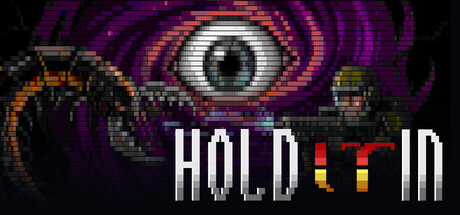
Some of the background music in Hold It In comes from a commercially-licensed third-party music pack bought from itch.io ("Hell Metal Songs" by thc555) that was created with AI-assisted music tools. All other audio (voice, sound effects), all art, and all game code were created without generative AI. No AI-generated content is created live during gameplay.
Partial game source codes, texture assets and store promotional artwork are created with generative AI tools. All AI-generated contents have been fully manually reviewed, modified and optimized by the developer before integrating into the final game build. No AI content is dynamically generated during gameplay.
This game uses generative AI tools in parts of the development and content creation process. Generative AI was used for concept exploration, drafting some 2D image/audio assets, and organizing text ideas. Final in-game content is reviewed and edited by the development team to ensure quality and consistency before release. We comply with applicable laws and platform policies, and will continue to refine or replace relevant content when needed.
AI is used for translation. I will let it translate by a human if there is enough interest.
AI is used to fix grammer and spelling as well as improving the text.
AI reviews my code.
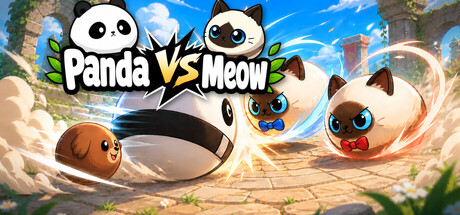
Some of the image assets in Panda vs Meow are created using generative AI tools and then manually edited and refined. Some of the music and sound effects are also AI-generated. Part of the game's code was written with AI assistance and reviewed by a human developer.
This game does not contain any real-time generative AI features. Some game assets, including but not limited to animation effects, videos, card effects, and similar materials, were created with the assistance of AI.
Some localization strings and background elements of the store capsule were initially generated using AI tools. All final text and visual elements were reviewed and edited by the developer before shipping.
We will use AI-generated marketing images for our promotional visuals. These will be applied in the following locations: the main promotional banner, vertical promotional banner, library promotional banner, library profile image, and library homepage image on the store page. The original materials are self-created and will be processed with AI for subsequent use. The game includes some UI icons /3D Asset that were initially generated by AI and subsequently edited manually for further application.
This game uses generative AI-assisted tools for some pre-generated art and audio assets, including portions of Steam store artwork, character and background assets, the application icon, and some BGM / SFX. All assets are selected, edited, integrated, and tested by the developer. The game does not include live-generated AI content during gameplay, and players will not encounter dynamically generated AI text, images, audio, or other content.
AI tools helped making some textures and part of the translations. The game itself runs no AI: nothing is generated while you play, and it never connects to an online service.
Some temporary placeholder visuals currently used in the game were created with the help of AI-assisted image generation tools. These assets are only used during early development and will gradually be replaced with original or professionally refined artwork.
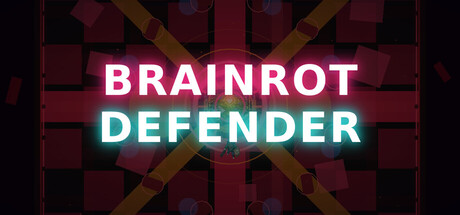
Some of this game's in-game text, including character dialogue and narrative/flavor writing was created with the help of generative AI tools during development, then reviewed and edited by the developer before release. The game's visual art is generated procedurally (algorithmically, not by AI). BrainRot Defender does not generate any content using AI in real time during gameplay, and does not connect to any external AI services.
During the development process, generative AI was utilized to assist in drafting and refining select in-game text, as well as to facilitate the multilingual localization of the store page copy. Furthermore, generative AI tools were employed to aid in concept design during the creation of the game's store page key art, various marketing materials, and community assets.
Artificial intelligence was used solely for text localization and language translations. The pixel art visuals, animations, and the original game soundtrack were created by the professional artists and composer listed in the game's 'Credits' section. Generative AI was not used at any stage of the artistic, visual, or audio production.
All 3D assets are from Synty Studios. Due to budget constraints (rideshare driver) I used generative AI for some pre-rendered artwork, store/marketing imagery, and voiceover content (I intend to replace all that by human-made content over time). The game does not use live generative AI during gameplay.
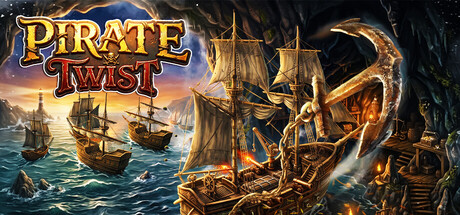
Pirate Twist is made by a solo developer, and generative AI tools were used across production. Specifically:
Art — some in-game visual art and the store capsule art were generated with Higgsfield image models against a fixed art-direction style, then hand-edited by the developer's wife: cut out, composited, colour-matched and retouched before going into the build.
Audio — the seven music tracks were generated with Suno (Premier). Sound effects were generated with the ElevenLabs Sound Effects API (Creator). All were then edited, pitch-shifted and mastered by the developer's wife.
Code — written with AI coding assistance.
No AI runs at runtime. Nothing is generated on your machine while you play, and the game makes no AI service calls during play.
Full commissioned art and audio is one of the items on the Roadmap for final release.
Generative AI was used as part of the art production process for selected store page visuals, story illustrations, and some card artwork. All AI-assisted assets were reviewed and refined before being included in the game.
I am a solo developer who worked with external freelancers for art and audio. Some assets provided by these contributors might have been created or assisted by generative AI tools, though their specific workflow was not monitored.
AI-Generated Content Disclosure
The developers describe how the game uses AI-generated content as follows:
Art & Icons: Some in-game skill icons and secondary UI decorative elements were assisted by AI generation tools for concept and asset creation, followed by meticulous manual polishing and refinement by our artists.
Music & Audio: Portions of the background music and ambient soundtracks were created with the assistance of AI music generation tools, ensuring strict compliance with commercial licensing.
Video & Animation: The complete in-game opening cinematic (OP) was created using AI video generation technologies.
Our Commitment: All AI-generated assets used in this game strictly adhere to copyright laws and commercial usage terms. They do not contain any infringing, pirated, or unauthorized copyrighted materials.
Generative AI was used during the development of this game. AI tools assisted with code debugging, algorithm design, and creative ideation. A significant portion of in-game assets—including 3D models, baked textures and materials, and visual artwork—were generated or modified using AI, and subsequently reviewed, adjusted, and integrated by the development team.
This game includes AI-assisted source assets for selected textures, environmental artwork, and portions of the soundtrack. All such materials were reviewed, substantially modified where needed, and manually integrated to fit the game's artistic direction. AI coding assistants were also used during development to improve productivity. Game design, programming, gameplay, balancing, and final creative decisions were performed by the developer.
This game uses AI-generated translation for localization in the following languages: Polish, Simplified Chinese, Brazilian Portuguese, Spanish, German, French, Korean, and Japanese.
AI tools were used to assist in the creation of temporary promotional artwork and concept visuals for the Steam store page. Gameplay systems, implementation, balancing, and final game integration are developed manually.
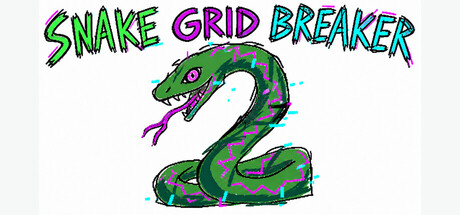
Generative AI was used as one of many development tools while creating Snake: Gridbreaker.
As a solo developer, I used it to support programming, localization, UI work, visual assets, icons, and the development of quality-of-life and accessibility improvements.
Every AI-assisted element was reviewed, edited, tested, and implemented by me. I designed the game, its mechanics, progression, and creative direction, and I remain fully responsible for the final experience.
The game does not generate content with AI during gameplay.
Generative AI was used to assist in the creation of some art assets. All AI-assisted content was reviewed and edited by the developer before being included in the game.
Generative AI was used during development as a production tool for portions of the game's source code, music production workflow, and synthetic voice-over generation.
AI-assisted code was reviewed, tested, modified where necessary, and integrated under the direct supervision of the developer. Some music tracks originated from AI-generated compositions or stems and were subsequently edited, arranged, mixed, and produced by the developer. Voice-over content is generated using commercially licensed AI voice technology from developer-written scripts.
The game's gameplay systems, game design, balancing, progression systems, procedural visual generation technology, world generation systems, writing, and overall creative direction were conceived, designed, and maintained by the developer.
The game does not use generative AI at runtime. No player-facing content is generated on-the-fly during gameplay. Visuals are created through deterministic procedural generation systems and pre-authored assets rather than generative image AI.
Character portraits, UI icons, and background art in this game were generated using AI image tools (Google Gemini) and then edited, composited, and finalized by the developer. Music and sound effects were AI-generated (Suno / ElevenLabs) and edited by the developer. AI (Claude Code) was also used as a coding assistant during development. No AI content is generated live during gameplay — all assets are fixed and authored before release.
Generative AI was used as a supplementary tool for certain visual and audio assets. Every AI-assisted asset underwent substantial manual editing, refinement, quality control, and integration by the development team.
Pre-generated 2D visual assets were created using AI tools. This includes the skill icons used in the game's UI, as well as the promotional capsule and cover artwork for the Steam store page.
Some of the CC0 soundtracks I found online turned out to be ai generated.
I'm currently working with a talented composer to replace them all with human-made ones.
Some 2D character art (cat portraits / cosmetics previews) and a subset of sound effects were created with AI-assisted tools. All final assets were curated, edited, and reviewed by the developer. The game does not run any generative AI at runtime — no user input is sent to AI services.
Some game assets and content were created with the assistance of generative AI tools during development. AI-assisted content was reviewed, curated, edited, and integrated into the final game by the developer. Generative AI is not used to create content during gameplay.
Some images featured on this store page and parts of the game's localization were created with the assistance of generative AI tools and have been reviewed for the final release.
Generative AI tools were used during development to assist with visual assets, concept art, icons, textures, voice/audio content, and some marketing materials. All AI-assisted content is reviewed and edited by the developer before being included in the game or store page.
1. Cover art is created in Unreal Engine and photoshop, and has a detail pass on top of it by AI.
2. Localisation on the steam page is translated by AI.
3. Music is generated by AI.
Some of the background music in Hold It In comes from a commercially-licensed third-party music pack bought from itch.io ("Hell Metal Songs" by thc555) that was created with AI-assisted music tools. All other audio (voice, sound effects), all art, and all game code were created without generative AI. No AI-generated content is created live during gameplay.
Partial game source codes, texture assets and store promotional artwork are created with generative AI tools. All AI-generated contents have been fully manually reviewed, modified and optimized by the developer before integrating into the final game build. No AI content is dynamically generated during gameplay.
This game uses generative AI tools in parts of the development and content creation process. Generative AI was used for concept exploration, drafting some 2D image/audio assets, and organizing text ideas. Final in-game content is reviewed and edited by the development team to ensure quality and consistency before release. We comply with applicable laws and platform policies, and will continue to refine or replace relevant content when needed.
AI is used for translation. I will let it translate by a human if there is enough interest.
AI is used to fix grammer and spelling as well as improving the text.
AI reviews my code.
Some of the image assets in Panda vs Meow are created using generative AI tools and then manually edited and refined. Some of the music and sound effects are also AI-generated. Part of the game's code was written with AI assistance and reviewed by a human developer.
This game does not contain any real-time generative AI features. Some game assets, including but not limited to animation effects, videos, card effects, and similar materials, were created with the assistance of AI.
Some localization strings and background elements of the store capsule were initially generated using AI tools. All final text and visual elements were reviewed and edited by the developer before shipping.
We will use AI-generated marketing images for our promotional visuals. These will be applied in the following locations: the main promotional banner, vertical promotional banner, library promotional banner, library profile image, and library homepage image on the store page. The original materials are self-created and will be processed with AI for subsequent use. The game includes some UI icons /3D Asset that were initially generated by AI and subsequently edited manually for further application.
This game uses generative AI-assisted tools for some pre-generated art and audio assets, including portions of Steam store artwork, character and background assets, the application icon, and some BGM / SFX. All assets are selected, edited, integrated, and tested by the developer. The game does not include live-generated AI content during gameplay, and players will not encounter dynamically generated AI text, images, audio, or other content.
AI tools helped making some textures and part of the translations. The game itself runs no AI: nothing is generated while you play, and it never connects to an online service.
Some temporary placeholder visuals currently used in the game were created with the help of AI-assisted image generation tools. These assets are only used during early development and will gradually be replaced with original or professionally refined artwork.
Some of this game's in-game text, including character dialogue and narrative/flavor writing was created with the help of generative AI tools during development, then reviewed and edited by the developer before release. The game's visual art is generated procedurally (algorithmically, not by AI). BrainRot Defender does not generate any content using AI in real time during gameplay, and does not connect to any external AI services.
During the development process, generative AI was utilized to assist in drafting and refining select in-game text, as well as to facilitate the multilingual localization of the store page copy. Furthermore, generative AI tools were employed to aid in concept design during the creation of the game's store page key art, various marketing materials, and community assets.
Artificial intelligence was used solely for text localization and language translations. The pixel art visuals, animations, and the original game soundtrack were created by the professional artists and composer listed in the game's 'Credits' section. Generative AI was not used at any stage of the artistic, visual, or audio production.
All 3D assets are from Synty Studios. Due to budget constraints (rideshare driver) I used generative AI for some pre-rendered artwork, store/marketing imagery, and voiceover content (I intend to replace all that by human-made content over time). The game does not use live generative AI during gameplay.
Pirate Twist is made by a solo developer, and generative AI tools were used across production. Specifically:
Art — some in-game visual art and the store capsule art were generated with Higgsfield image models against a fixed art-direction style, then hand-edited by the developer's wife: cut out, composited, colour-matched and retouched before going into the build.
Audio — the seven music tracks were generated with Suno (Premier). Sound effects were generated with the ElevenLabs Sound Effects API (Creator). All were then edited, pitch-shifted and mastered by the developer's wife.
Code — written with AI coding assistance.
No AI runs at runtime. Nothing is generated on your machine while you play, and the game makes no AI service calls during play.
Full commissioned art and audio is one of the items on the Roadmap for final release.
Generative AI was used as part of the art production process for selected store page visuals, story illustrations, and some card artwork. All AI-assisted assets were reviewed and refined before being included in the game.
I am a solo developer who worked with external freelancers for art and audio. Some assets provided by these contributors might have been created or assisted by generative AI tools, though their specific workflow was not monitored.
AI-Generated Content Disclosure
The developers describe how the game uses AI-generated content as follows:
Art & Icons: Some in-game skill icons and secondary UI decorative elements were assisted by AI generation tools for concept and asset creation, followed by meticulous manual polishing and refinement by our artists.
Music & Audio: Portions of the background music and ambient soundtracks were created with the assistance of AI music generation tools, ensuring strict compliance with commercial licensing.
Video & Animation: The complete in-game opening cinematic (OP) was created using AI video generation technologies.
Our Commitment: All AI-generated assets used in this game strictly adhere to copyright laws and commercial usage terms. They do not contain any infringing, pirated, or unauthorized copyrighted materials.
Generative AI was used during the development of this game. AI tools assisted with code debugging, algorithm design, and creative ideation. A significant portion of in-game assets—including 3D models, baked textures and materials, and visual artwork—were generated or modified using AI, and subsequently reviewed, adjusted, and integrated by the development team.
This game includes AI-assisted source assets for selected textures, environmental artwork, and portions of the soundtrack. All such materials were reviewed, substantially modified where needed, and manually integrated to fit the game's artistic direction. AI coding assistants were also used during development to improve productivity. Game design, programming, gameplay, balancing, and final creative decisions were performed by the developer.
This game uses AI-generated translation for localization in the following languages: Polish, Simplified Chinese, Brazilian Portuguese, Spanish, German, French, Korean, and Japanese.
AI tools were used to assist in the creation of temporary promotional artwork and concept visuals for the Steam store page. Gameplay systems, implementation, balancing, and final game integration are developed manually.
Generative AI was used as one of many development tools while creating Snake: Gridbreaker.
As a solo developer, I used it to support programming, localization, UI work, visual assets, icons, and the development of quality-of-life and accessibility improvements.
Every AI-assisted element was reviewed, edited, tested, and implemented by me. I designed the game, its mechanics, progression, and creative direction, and I remain fully responsible for the final experience.
The game does not generate content with AI during gameplay.
Generative AI was used to assist in the creation of some art assets. All AI-assisted content was reviewed and edited by the developer before being included in the game.
Generative AI was used during development as a production tool for portions of the game's source code, music production workflow, and synthetic voice-over generation.
AI-assisted code was reviewed, tested, modified where necessary, and integrated under the direct supervision of the developer. Some music tracks originated from AI-generated compositions or stems and were subsequently edited, arranged, mixed, and produced by the developer. Voice-over content is generated using commercially licensed AI voice technology from developer-written scripts.
The game's gameplay systems, game design, balancing, progression systems, procedural visual generation technology, world generation systems, writing, and overall creative direction were conceived, designed, and maintained by the developer.
The game does not use generative AI at runtime. No player-facing content is generated on-the-fly during gameplay. Visuals are created through deterministic procedural generation systems and pre-authored assets rather than generative image AI.
Character portraits, UI icons, and background art in this game were generated using AI image tools (Google Gemini) and then edited, composited, and finalized by the developer. Music and sound effects were AI-generated (Suno / ElevenLabs) and edited by the developer. AI (Claude Code) was also used as a coding assistant during development. No AI content is generated live during gameplay — all assets are fixed and authored before release.
Generative AI was used as a supplementary tool for certain visual and audio assets. Every AI-assisted asset underwent substantial manual editing, refinement, quality control, and integration by the development team.
Pre-generated 2D visual assets were created using AI tools. This includes the skill icons used in the game's UI, as well as the promotional capsule and cover artwork for the Steam store page.
Some of the CC0 soundtracks I found online turned out to be ai generated.
I'm currently working with a talented composer to replace them all with human-made ones.
Some 2D character art (cat portraits / cosmetics previews) and a subset of sound effects were created with AI-assisted tools. All final assets were curated, edited, and reviewed by the developer. The game does not run any generative AI at runtime — no user input is sent to AI services.