Public Steam disclosure research25,376 disclosures tracked
Where do games disclose AI use?
Search developers’ Steam disclosures, compare classified AI use across
games, and follow recorded changes.
This index adds cross-game classifications and statistics to
statements published on individual store pages.
Groups reflect automatic analysis of public disclosures; mature records are excluded. These counts do not measure AI use across all of Steam.
Missing or unclear statements cannot establish whether a game uses AI.
Some assets in Crown Cribbage were made with the help of generative AI tools:
- in-game music was generated with AI music tools
- capsule/key art
- marketing copy drafts
- assistance with programming
One point of emphasis:
The computer opponents in this game are not generative AI. They are hand-written heuristics, a fixed set of rules for discarding and pegging, tuned by
difficulty.
They see only what you see. They do not look at your hand, and nothing about them is generated while you play.
No AI content of any kind is created during a match.
Some visual assets, audio, voice-over and cinematic elements were created with the assistance of generative AI tools, then selected, edited, refined and integrated by the developer. No generative AI is used live during gameplay.
Generative AI tools were only used to assist with writing some C# code scripts during development and to translate/draft the text descriptions for the Steam Store page. There are no AI-generated visual (art/UI) or audio assets included in the game.
Generative AI was used to create some temporary artwork for the Steam store page and related marketing materials while the game is still in production. These assets are reviewed and curated by the development team and WILL be replaced with final production artwork before release. Generative AI is not used to generate content during gameplay.
AI was used to create textures, some of the code, create a player model and rig it for animation. The sounds of footsteps, goals and ball bounces, albeit mastered, started as AI generated before being edited and mastered. Localization languages were also created by AI. (Therefore any corrections will be welcome)
Animations, music, game design, and all other elements of creativity are the work of a human exclusively.
Badgerworks Studios will never rely on AI for creativity, music, ideas for games, and once an artist has been hired, AI models either. Due to lack of in-house ability to rig models or create them from scratch, the current player model was generated and rigged (skeleton matched to model) by AI. Animations were hand made, but on the AI created and rigged model.
No AI, LLM, of frontier models are being called during game play nor will any introduced features be allowed to do so.
We used AI tools (such as ChatGPT) to assist with game descriptions, promotional materials, and conceptual design. No AI is used in real-time gameplay or for generating assets during gameplay. All in-game content is manually crafted or pre-created.
Generative artificial intelligence was used during development mainly to assist with localization and code, with some 2D/3D assets, and selected audio assets. All AI-assisted content was manually reviewed, edited, and refined by the developer before use.
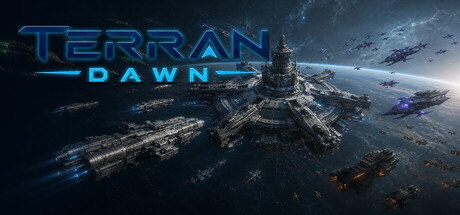
Terran Dawn is a solo-developed game, and generative AI tools were used
during its production. Everything AI-assisted is created ahead of time and
shipped as fixed files inside the build: the game generates nothing while
you play, contacts no AI service at runtime, and sends no player data
anywhere.
Where these tools were used:
- 3D assets: ship, station and building meshes were produced with AI
text-to-3D generation, then rescaled, re-oriented, re-textured and
hand-corrected to fit the engine.
- 2D art and textures: interface illustrations, encyclopedia art and some
surface textures were generated from hand-written prompts and edited
afterwards.
- Sound effects: a portion of the weapon, interface and explosion sounds
were generated with AI audio tools, then trimmed and mixed by hand.
- Music: the soundtrack was created with AI music generation.
- Voice-over: mission briefings and in-mission radio lines are AI
text-to-speech, performed from scripts written by the developer.
- Video transmissions: the in-game character broadcasts use a licensed
synthetic presenter and synthetic voice to deliver dialogue written by
the developer.
- Translation: the game's text was translated into its supported languages
with the help of an AI language model.
- Some of the game's source code was written with AI coding assistants.
The game's design, story, missions, rules and balance are written by the
developer. No generative AI runs while the game is playing.
Generative AI tools were used during development to assist with programming and implementation. The developer created the original game and codebase, with AI assistance used to modify and expand portions of the code, including implementation of the graphics and other visual/gameplay elements.
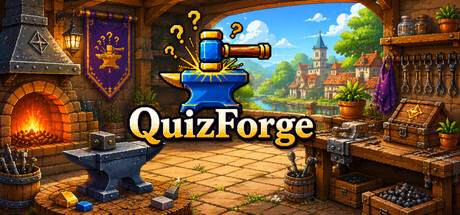
Some pre-generated game assets, artwork and translations were created or assisted using generative AI. All AI-generated content has been reviewed, edited and integrated by the developer. QuizForge does not use generative AI to create live in-game content during gameplay.
Generative AI was used to assist in the creation of pre-rendered 2D assets, including the store page capsule art, library images, trailer assets, and in-game loading screens.
Generative AI was used during development to create and iterate on selected pre-rendered 2D artwork, environmental textures, decals, and billboard/sign graphics. These assets were selected, edited, processed, and integrated by the developer. No AI content is generated during gameplay, and the game does not connect to external AI services.
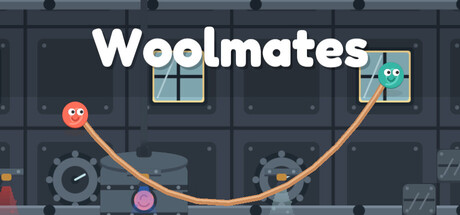
All graphics and sounds in Woolmates are calculated at runtime by the game itself; no AI-generated image, audio, or video files are delivered. AI assistance tools were used in the development of the program code as well as in text and marketing materials. No AI is used during the actual game.
The store page artwork (capsule images) was created with AI assistance and depicts the actual game. The game itself contains no AI-generated content: all gameplay, audio, and in-game visuals are created by the developer or by players themselves.
This work incorporates the use of generative artificial intelligence (AI) in the following areas:
Parts of the artwork, parts of the sound, and localization.
Some visual assets and promotional images were created with generative AI tools and later reviewed, modified, and integrated by the developer. No generative AI content is created during gameplay.
No live AI generation is used during gameplay. TinSpring Soccer's boards, characters, textures, and sounds are produced procedurally by game code. AI tools were used under developer direction for implementation, localization, and selected store page artwork.
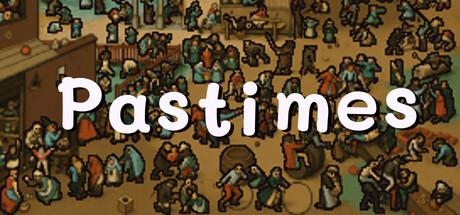
Generative AI was used during development for translations, some pixel art, and some music. AI-assisted content is human-reviewed before release. The main painting is historical public-domain art. Nothing is AI-generated during gameplay.
Generative AI was occasionally used to prototype assets and give ideas\reference for assets. It was also occasionally used to generate normal maps on textures I had created. Sometimes this had disastrous results.
MonsterBash includes pre-generated AI-assisted artwork for certain menu backgrounds and between-level illustrations. All AI-generated assets were reviewed, edited, and integrated by the developer. No AI-generated content is created during gameplay.
Some marketing materials for this game were made with generative AI: the trailer's narration uses an AI text-to-speech voice, and parts of this store page were drafted with AI assistance.
Nothing inside the game is AI-generated. The soundtrack is human-composed music licensed for commercial use, all artwork and logos are drawn programmatically by the game's own code, and every screenshot is captured from real gameplay. The game generates no AI content while you play.
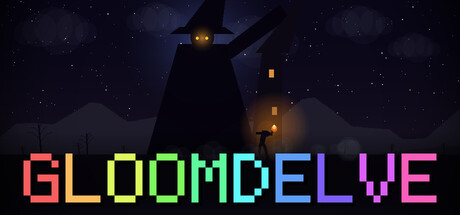
GloomDelve's visuals, audio, and dungeons are generated procedurally by hand-written code; calculated geometry, synthesized sound, and deterministic seed-based level generation, not by generative AI. Generative AI tools were used during development to assist with translating the interface into non-English languages. The game generates no content at runtime and connects to no AI service while you play. Every run is produced by the same deterministic procedural systems.
Some music tracks and visual art assets in this game were created with the help of generative AI tools. All such assets were curated, edited, and approved by the development team before being included in the build, and all required commercial-use rights have been secured.
All AI-generated content is pre-rendered and shipped with the game — no live AI generation occurs during gameplay, and the game does not connect to any external AI service at runtime.
The only AI assistance we used was for brainstorming and polishing the wording of the Steam store page description/marketing copy. AI was not used to generate visual assets or in-game content
Shadow Slayer is built almost entirely in code. The character and enemy art is
drawn procedurally as vector graphics, and the sound effects and adaptive music
layers are synthesized in real time in the browser - none of that is AI-generated.
Generative AI tools were used to help create some of the content that ships with
the game:
- Music: several of the recorded background-music tracks were produced with the
help of generative AI music tools.
- Localization: the non-English translations were produced with AI-assisted
translation and reviewed by the developer.
- Store page & marketing images: some capsule/promotional artwork was created
with generative AI image tools.
All AI-assisted content was selected, edited, and integrated by a human
developer. No AI content is generated live while you play - everything ships
pre-made and reviewed.
AI was used to create some promotional assets, including store capsule images, banners, and other marketing artwork. AI-generated content was reviewed and edited by the developer before use.
Generative AI was used to create selected voice performances (including the in-game commentator) as well as concept artwork and promotional illustrations. All AI-generated assets were reviewed, edited, and integrated by the developer.
Promotional artwork, Steam capsules, and certain marketing images were created with the assistance of generative AI and then reviewed, edited, and curated by PhoenixGold Game Studios. All gameplay, code, mechanics, characters, and in-game content were designed and implemented by the development team.
The game's art and animation content — including character sprites, animations, tilesets, UI elements, and store page artwork — was generated with the assistance of AI tools during development and then refined by the team. All AI-generated content was created during development; the game does not generate content while you play.
AI tools were used during development to assist with writing code, and to produce two categories of content shipped with the game: the original synthwave soundtrack (composed with AI music generation, curated and selected by the developer) and the interface translations for the non-English languages (reviewed by the developer). Some store page text was also drafted with AI assistance. All in-game worlds are generated procedurally by hand-written algorithms — no AI content is generated at runtime.
Some promotional key art (store capsule illustrations and website artwork) was created with generative AI tools and then curated and edited by the developer. All in-game content - graphics (procedural vector rendering), gameplay, text, and audio - is hand-authored. The game does not generate any content with AI at runtime and does not connect to any AI service.
Some assets in Crown Cribbage were made with the help of generative AI tools:
- in-game music was generated with AI music tools
- capsule/key art
- marketing copy drafts
- assistance with programming
One point of emphasis:
The computer opponents in this game are not generative AI. They are hand-written heuristics, a fixed set of rules for discarding and pegging, tuned by
difficulty.
They see only what you see. They do not look at your hand, and nothing about them is generated while you play.
No AI content of any kind is created during a match.
Some visual assets, audio, voice-over and cinematic elements were created with the assistance of generative AI tools, then selected, edited, refined and integrated by the developer. No generative AI is used live during gameplay.
Generative AI tools were only used to assist with writing some C# code scripts during development and to translate/draft the text descriptions for the Steam Store page. There are no AI-generated visual (art/UI) or audio assets included in the game.
Generative AI was used to create some temporary artwork for the Steam store page and related marketing materials while the game is still in production. These assets are reviewed and curated by the development team and WILL be replaced with final production artwork before release. Generative AI is not used to generate content during gameplay.
AI was used to create textures, some of the code, create a player model and rig it for animation. The sounds of footsteps, goals and ball bounces, albeit mastered, started as AI generated before being edited and mastered. Localization languages were also created by AI. (Therefore any corrections will be welcome)
Animations, music, game design, and all other elements of creativity are the work of a human exclusively.
Badgerworks Studios will never rely on AI for creativity, music, ideas for games, and once an artist has been hired, AI models either. Due to lack of in-house ability to rig models or create them from scratch, the current player model was generated and rigged (skeleton matched to model) by AI. Animations were hand made, but on the AI created and rigged model.
No AI, LLM, of frontier models are being called during game play nor will any introduced features be allowed to do so.
We used AI tools (such as ChatGPT) to assist with game descriptions, promotional materials, and conceptual design. No AI is used in real-time gameplay or for generating assets during gameplay. All in-game content is manually crafted or pre-created.
Generative artificial intelligence was used during development mainly to assist with localization and code, with some 2D/3D assets, and selected audio assets. All AI-assisted content was manually reviewed, edited, and refined by the developer before use.
Terran Dawn is a solo-developed game, and generative AI tools were used
during its production. Everything AI-assisted is created ahead of time and
shipped as fixed files inside the build: the game generates nothing while
you play, contacts no AI service at runtime, and sends no player data
anywhere.
Where these tools were used:
- 3D assets: ship, station and building meshes were produced with AI
text-to-3D generation, then rescaled, re-oriented, re-textured and
hand-corrected to fit the engine.
- 2D art and textures: interface illustrations, encyclopedia art and some
surface textures were generated from hand-written prompts and edited
afterwards.
- Sound effects: a portion of the weapon, interface and explosion sounds
were generated with AI audio tools, then trimmed and mixed by hand.
- Music: the soundtrack was created with AI music generation.
- Voice-over: mission briefings and in-mission radio lines are AI
text-to-speech, performed from scripts written by the developer.
- Video transmissions: the in-game character broadcasts use a licensed
synthetic presenter and synthetic voice to deliver dialogue written by
the developer.
- Translation: the game's text was translated into its supported languages
with the help of an AI language model.
- Some of the game's source code was written with AI coding assistants.
The game's design, story, missions, rules and balance are written by the
developer. No generative AI runs while the game is playing.
Generative AI tools were used during development to assist with programming and implementation. The developer created the original game and codebase, with AI assistance used to modify and expand portions of the code, including implementation of the graphics and other visual/gameplay elements.
Some pre-generated game assets, artwork and translations were created or assisted using generative AI. All AI-generated content has been reviewed, edited and integrated by the developer. QuizForge does not use generative AI to create live in-game content during gameplay.
Generative AI was used to assist in the creation of pre-rendered 2D assets, including the store page capsule art, library images, trailer assets, and in-game loading screens.
Generative AI was used during development to create and iterate on selected pre-rendered 2D artwork, environmental textures, decals, and billboard/sign graphics. These assets were selected, edited, processed, and integrated by the developer. No AI content is generated during gameplay, and the game does not connect to external AI services.
All graphics and sounds in Woolmates are calculated at runtime by the game itself; no AI-generated image, audio, or video files are delivered. AI assistance tools were used in the development of the program code as well as in text and marketing materials. No AI is used during the actual game.
The store page artwork (capsule images) was created with AI assistance and depicts the actual game. The game itself contains no AI-generated content: all gameplay, audio, and in-game visuals are created by the developer or by players themselves.
This work incorporates the use of generative artificial intelligence (AI) in the following areas:
Parts of the artwork, parts of the sound, and localization.
Some visual assets and promotional images were created with generative AI tools and later reviewed, modified, and integrated by the developer. No generative AI content is created during gameplay.
No live AI generation is used during gameplay. TinSpring Soccer's boards, characters, textures, and sounds are produced procedurally by game code. AI tools were used under developer direction for implementation, localization, and selected store page artwork.
Generative AI was used during development for translations, some pixel art, and some music. AI-assisted content is human-reviewed before release. The main painting is historical public-domain art. Nothing is AI-generated during gameplay.
Generative AI was occasionally used to prototype assets and give ideas\reference for assets. It was also occasionally used to generate normal maps on textures I had created. Sometimes this had disastrous results.
MonsterBash includes pre-generated AI-assisted artwork for certain menu backgrounds and between-level illustrations. All AI-generated assets were reviewed, edited, and integrated by the developer. No AI-generated content is created during gameplay.
Some marketing materials for this game were made with generative AI: the trailer's narration uses an AI text-to-speech voice, and parts of this store page were drafted with AI assistance.
Nothing inside the game is AI-generated. The soundtrack is human-composed music licensed for commercial use, all artwork and logos are drawn programmatically by the game's own code, and every screenshot is captured from real gameplay. The game generates no AI content while you play.
GloomDelve's visuals, audio, and dungeons are generated procedurally by hand-written code; calculated geometry, synthesized sound, and deterministic seed-based level generation, not by generative AI. Generative AI tools were used during development to assist with translating the interface into non-English languages. The game generates no content at runtime and connects to no AI service while you play. Every run is produced by the same deterministic procedural systems.
Some music tracks and visual art assets in this game were created with the help of generative AI tools. All such assets were curated, edited, and approved by the development team before being included in the build, and all required commercial-use rights have been secured.
All AI-generated content is pre-rendered and shipped with the game — no live AI generation occurs during gameplay, and the game does not connect to any external AI service at runtime.
The only AI assistance we used was for brainstorming and polishing the wording of the Steam store page description/marketing copy. AI was not used to generate visual assets or in-game content
Shadow Slayer is built almost entirely in code. The character and enemy art is
drawn procedurally as vector graphics, and the sound effects and adaptive music
layers are synthesized in real time in the browser - none of that is AI-generated.
Generative AI tools were used to help create some of the content that ships with
the game:
- Music: several of the recorded background-music tracks were produced with the
help of generative AI music tools.
- Localization: the non-English translations were produced with AI-assisted
translation and reviewed by the developer.
- Store page & marketing images: some capsule/promotional artwork was created
with generative AI image tools.
All AI-assisted content was selected, edited, and integrated by a human
developer. No AI content is generated live while you play - everything ships
pre-made and reviewed.
AI was used to create some promotional assets, including store capsule images, banners, and other marketing artwork. AI-generated content was reviewed and edited by the developer before use.
Generative AI was used to create selected voice performances (including the in-game commentator) as well as concept artwork and promotional illustrations. All AI-generated assets were reviewed, edited, and integrated by the developer.
Promotional artwork, Steam capsules, and certain marketing images were created with the assistance of generative AI and then reviewed, edited, and curated by PhoenixGold Game Studios. All gameplay, code, mechanics, characters, and in-game content were designed and implemented by the development team.
The game's art and animation content — including character sprites, animations, tilesets, UI elements, and store page artwork — was generated with the assistance of AI tools during development and then refined by the team. All AI-generated content was created during development; the game does not generate content while you play.
AI tools were used during development to assist with writing code, and to produce two categories of content shipped with the game: the original synthwave soundtrack (composed with AI music generation, curated and selected by the developer) and the interface translations for the non-English languages (reviewed by the developer). Some store page text was also drafted with AI assistance. All in-game worlds are generated procedurally by hand-written algorithms — no AI content is generated at runtime.
Some promotional key art (store capsule illustrations and website artwork) was created with generative AI tools and then curated and edited by the developer. All in-game content - graphics (procedural vector rendering), gameplay, text, and audio - is hand-authored. The game does not generate any content with AI at runtime and does not connect to any AI service.