Public Steam disclosure research27,951 disclosures tracked
Where do games disclose AI use?
Search developers’ Steam disclosures, compare classified AI use across
games, and follow recorded changes.
This index adds cross-game classifications and statistics to
statements published on individual store pages.
Groups reflect automatic analysis of public disclosures; mature records are excluded. These counts do not measure AI use across all of Steam.
Missing or unclear statements cannot establish whether a game uses AI.
All characters, creatures and the world of Vampus are designed and art-directed by the developer, a visual artist. Many designs started from the developer's own drawings and paintings. Generative AI tools (Microsoft Copilot and Meshy) were used to develop some of the designs and to turn them into 3D models and textures. Story and music are made by the developer.
Generative AI tools were used during development to create visual assets and music, and to assist with localization. All content is prepared in advance. The game does not generate AI content during gameplay or connect to external AI services.
Generative AI tools were used during development to create and assist with some pre-generated visual and audio assets. All AI-assisted content included in the game is reviewed, selected, and integrated by the developer. No generative AI content is created in real time during gameplay.
Generative AI tools were used during development to assist with programming and some written/game content. All generated material was reviewed and integrated by the developer. The game does not generate AI content during gameplay.
Generative AI tools were used during development, and every output was reviewed, edited and integrated by the developer. AI contributed to: parts of the code, the English translation and store copy, some tower and enemy 3D models and textures, UI icons, co-op stickers, title and loading screen illustrations, the opening and ending cinematics, the store key art, the promotional mascot, and the background music and some sound effects. Game design, levels, balance and overall direction were decided by the developer. Nothing is generated by AI while you play.
Generative AI was used to assist in creating some of the 2D artwork used for this game's store page and marketing assets (store capsule art and icon bases). All such assets were reviewed, edited and composited by the developer. The game itself does not generate content with AI at runtime.
Generative AI was used during development to assist in creating some character, monster, environment, UI icon, and store promotional artwork, as well as portions of the text and translations. These materials were selected, edited, and integrated by the developer. The game does not generate AI content during gameplay.
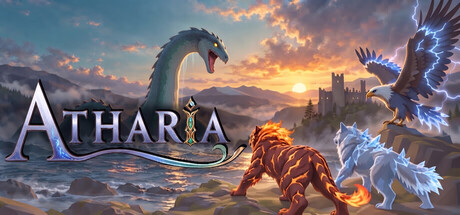
Atharia uses generative AI tools under the developer's constant direction. The combat animations are AI-generated video clips, converted into sprites and integrated into custom-built staging. Background environments and interface elements are also created with AI assistance. Every asset is art-directed, selected and validated by the developer before it enters the game.
Character, enemy and environment art were generated with AI tools, then curated, edited and integrated by the developer. Music and sound are synthesized in-engine from scores written into the game's code; the game ships no audio files and no AI audio-generation tools were used. The code, including those scores, was written by the developer with AI assistance. The game contains no live/runtime AI generation.
Generative AI was used during development to assist in creating and refining some pre-generated artwork, audio elements, text, and localized text. All content included with the game was selected, edited, and reviewed by the developer. The game does not generate AI content during gameplay and does not connect to external AI services.
This game uses generative AI to help create pre-generated content. Artwork (character art, backgrounds, card illustrations, icons) is produced with AI image generation as base material, then hand-curated, edited and integrated by the developer before it is finalized. Text is drafted with AI assistance and edited by hand. Cinematics and store videos are assembled from AI-generated footage and edited by hand. Background music and stingers are produced with AI music generation and hand-selected. The game contains no AI content generated at runtime and does not connect to any external AI service.
Generative AI was used to generate in-game card illustrations, graphical assets, and all programming code. The game design, world-building, and lore were created directly by the developer.
(게임 내 카드 일러스트와 그래픽 에셋 제작, 그리고 프로그래밍 코딩 전반에 생성형 AI를 활용했습니다. 게임 기획 및 배경 세계관 설정은 직접 작성했습니다.)
All of the art, over half of the music, about half of the sound effects and all translations are AI-generated, and the game and store text was drafted with AI and approved by the developer; nothing is generated at runtime.
Mythbound features a small portion of generated assets in the form of environmental props for it's Early Access period. No generated assets will be featured in the final release of the game.
AI-assisted tools were used during development to create fixed assets that are baked into the build and the store page:
- Pixel-art sprites for the sea creatures, the guardians, battle effects and Ariel
- Store page art (capsules, library images, logo)
- Drafts of some in-game text and the EN / RU / JA localization, reviewed by the developer
Game design, code, level layouts and music are human-authored. All music and sound effects are generated procedurally by the game's own code at runtime - there are no audio files and no AI model is involved.
No AI model runs while the game is playing. The build is fully offline.
Generative AI was used during development to create or refine some of the game’s visual assets and music, and to assist with localization. These assets were selected by the developer and edited and adapted as needed. The game does not generate AI content in real time during gameplay.
All 2D artwork (characters, board, keeper portraits, medals, and store assets) was created with generative AI tools under the developer's direction and curation. The pipa melody was performed and recorded live by a human musician (the developer's wife); the surrounding arrangement was AI-assisted. Game design, writing, and code are human-authored with AI assistance. Localization into 17 languages was AI-assisted with human review. The game contains no live/runtime AI generation.
During development, generative AI tools were used to create and assist with visual assets (character and enemy sprites, portraits, environments, props, illustrations and store artwork), music and some sound effects, and to assist with narrative text and localization. This content is prepared and integrated before release. The game does not generate AI content during play or connect to external AI services.
Parts of this game's 2D artwork (event panels, backgrounds, UI elements) were created using generative AI tools and were then curated, corrected and finished by our artist. Some music and ambience tracks were produced with AI assistance and manually edited. Event texts were drafted with LLM assistance and fully reviewed, edited and approved by the developers. The game contains NO live/runtime AI generation: all content is pre-generated and human-reviewed before shipping. No third-party copyrighted material and no real persons' likenesses were used in prompts.
This game and store contains 2D artwork pieces created with the assistance of generative AI. These images are used as static artwork in story-driven cutscenes to help illustrate and convey the game's narrative.
No AI-generated content is created during gameplay, all other game content was created without generative AI.
War of the Watchers uses generative AI in two places. Both are pre-generated before release and ship as fixed files; nothing is generated while you play.
Character dialogue is voiced using AI text-to-speech. Every line was written by the developer, and the tool performs those written lines. Each take is recorded before release and ships as an audio file.
Some promotional artwork, including the key art and store capsules, was produced with AI image tools and then edited by the developer.
Game code, level design and all in-game visuals are hand-authored. No content is generated during gameplay.
This game and its store page use generative AI-assisted content, including artwork, music, sound, and other creative assets. Assets are created or assisted with AI tools, then curated and implemented by the developer. No live AI-generated player content is used during gameplay.
The branching narrative in FOREST QUEST '88 was generated during development using a locally-run AI language model (an offline Dolphin/LLaMA-family model via Ollama). All AI-generated text was produced ahead of time, then reviewed, edited, and curated by the developer before being baked into the finished game as fixed, hand-checked content. The shipped game contains no live AI generation — it plays back a static, pre-authored story. No player data is sent to any AI service; the game runs fully offline.
Some store artwork (capsules, hero art, page background) was created with generative AI and then edited by hand. All in-game art, audio and text are hand-made or licensed. The game does not generate any content at runtime.
This game is made by one developer working with AI assistants. AI tools helped write the game's code and much of its English text, including this store page.
The folktales the game retells are traditional Mongolian üliger, not machine-invented, and every Mongolian word in the game is checked by a native speaker before it ships.
Nothing is generated while you play. The game runs offline, creates no content at runtime, and connects to no AI service.
This game uses some pre-generated content created with generative AI tools. It does not use generative AI to generate content in real time in response to player actions.
Artwork
Generative AI tools were used to create some in-game graphics, as well as images for the Steam store page and promotional and marketing materials. Generated assets are reviewed by the developer and edited or adjusted when necessary. Some assets are used without additional editing.
Translation
AI tools are used to assist with translation and localization for some languages other than Japanese. Translations are reviewed and corrected by the developer.
Pocket Beasts uses generative AI tools to assist in the creation of some visual assets, including creature and character artwork, in portions of the game's text and localization, and in some of the game's sound, including background music. Not all assets are AI-generated; some artwork is sourced from purchased assets. All AI-assisted content is reviewed and edited by the development team. No content is generated live during gameplay — all assets are pre-rendered — and the game does not connect to any external AI service at runtime.
Some visual and audio assets in this game were created with generative AI during development.
• Yokai piece illustrations were generated with OpenAI GPT Images, then selected and cropped for in-game use. The same art may also appear in store screenshots.
• Title and battle music were generated with Google Gemini (Lyria), then selected for looping playback.
Rules, gameplay code, sound effects, and UI text were not live-generated. This game does not call an AI service while you play.
Generative AI tools were used during development to assist in the creation of some systems, 3D models, textures, and localized translations included in the game.
Generative AI tools were used during development to help create visual assets for this game, including character art, environments such as the temple, weapons, and other in-game artwork, as well as store and marketing images (capsule art, logo, and store background). All AI-assisted content was reviewed, edited, and finalized by the developer, who holds the rights to use it. No AI-generated content is created live during gameplay.
# AI Disclosure
Generative AI was used during development as a creative support tool for selected visual and audio assets. All AI-assisted content was reviewed, curated and integrated by the developer. No generative AI is used during gameplay.
Some of the artwork was created using AI tools. The code was also reviewed with, or assisted by, AI.
If the concept finds its audience, we intend to pay an artist to produce artwork that is not AI-generated. Artists who would like to be part of the project are welcome to join us.
We used generative AI tools (such as Claude) during development to assist with creating certain in-game assets, textures, or text elements. All AI-generated content has been reviewed, selected, and integrated by human creators into the final game.
Parts of this game were made with the help of generative AI tools. AI assistance was used for the source code, the in-game and store text, the store and library artwork, and the music and sound effects. Everything generated was reviewed and edited by the developer before it shipped. Nothing is generated while you play: the game ships fixed assets and makes no calls to any AI service.
Google Translate aided in the japanese translation of the game. but it kept throwing out overly polite phrases, so I still had to do a lot to get it done.
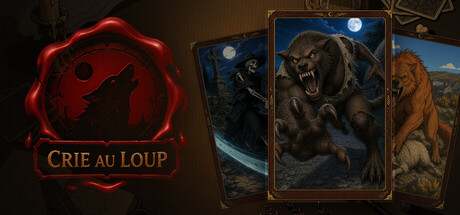
Crie au loup is made with AI, from the first prototype to the illustrations. That is not a manufacturing detail: it is as much the project as the game itself.
My role is not a craftsman's: I painted no card, and I did not write the code line by line. I designed the system, I direct it, I arbitrate and I verify. Deciding what makes it into the game, what gets redone, what gets cut: that is production work, and it is mine.
What is generated: the creature and location artwork, the interface, a large share of the code and the writing. What is measured rather than assumed: card balance, computed over thousands of simulated matches before every update. What is verified: the historical sources behind every legend, published one by one on the official site, where you can open them and prove me wrong.
What is never generated is your match. No image, no text and no game decision comes out of a model while you play: the engine is deterministic, and the solo opponent is a classic program applying the rules.
Crie au loup is one of the projects I run around generative AI, and the only one you can play. The making-of is documented without varnish in the devlog on the official site.
As a solo game designer, bringing a video game to life is something I always dreamed of. To help realize my creative vision, I used AI tools to assist with certain aspects of development such as game backgrounds and sound effects.
It is important to note that AI was used as a starting point, not a final solution. Every asset was reviewed by hand to ensure it fits the game's world and artistic direction. The core gameplay, design, and story remain 100% created by me.
Thank you for supporting indie development!
Part of the program code, art materials, and text content in this work were created using generative artificial intelligence and have been manually reviewed and adjusted to ensure a seamless gaming experience. During gameplay, AI does not generate content in real-time, all content is pre generated.
Coquí Crusader was made with AI-assisted tools under the developer's direction.
The coquí mascot logo and the background music were AI-generated. AI coding assistance was used to build the game and to help write its in-game and store text, all reviewed by the developer.
Every design decision was made by the developer: the mechanics, the progression and balance, and the Puerto Rican setting — the ten zones based on real landmarks, the folklore creatures from Taíno legend, and the Spanish localization.
No content is generated during gameplay, and the game never connects to any external AI service.
Some game art was created with the assistance of generative AI. Examples of where generative AI was used would be as follows, Creature art, Logo, Music, Game systems.
Some of the 2D artwork in this game — character portraits, monster illustrations, board tiles, backgrounds and store art — was created with the help of generative AI image tools, then reviewed, edited and assembled by the developer. All generated assets were checked before shipping. The game does not generate any content live during play: everything is pre-rendered and included in the build. Game design, rules, code, text and level layout were authored by the developer.