Public Steam disclosure research25,376 disclosures tracked
Where do games disclose AI use?
Search developers’ Steam disclosures, compare classified AI use across
games, and follow recorded changes.
This index adds cross-game classifications and statistics to
statements published on individual store pages.
Groups reflect automatic analysis of public disclosures; mature records are excluded. These counts do not measure AI use across all of Steam.
Missing or unclear statements cannot establish whether a game uses AI.
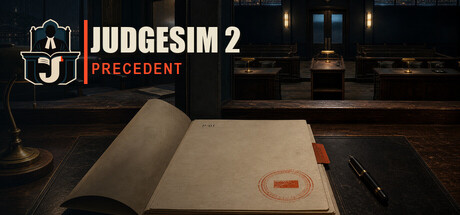
Generative AI tools were used to assist in creating select 2D artwork for this game illustrations for collectible cards, artwork for the card battle/arena scene, and the game's logo and store capsule art. All AI-assisted artwork was selected, edited, and finalized by the development team before inclusion. Generative AI was not used to create the 3D open-world environment, or other gameplay systems/mechanics. This is for the demo build, and some or all AI-assisted art may be replaced with original human-made artwork in the full release.
As a solo developer, I made use of AI for generation of models and music to act as base components. These typically went through much manual editing afterwards.
Some AI was used for testing & improvements to code in some areas
The visual assets in the game are generated using AI, including UI elements, map backgrounds, equipment icons, in-game items, and character animations.
The programming code of the game is generated using AI.
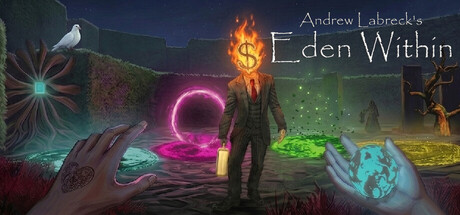
There are several AI generated models, and their textures. Which will likely continue to be the only AI use in the game, other than the use of AI for coding help. But this game is far from "vibe coded."
There is no AI generated text, and will never be. There are currently no AI generated sounds, there may be a few added depending on achievability without.
The text will always and forever be written by a human, me, Andrew Labreck. As the story is the driving factor for me making this entire game.
Likely, the music will continue to be human produced as well.
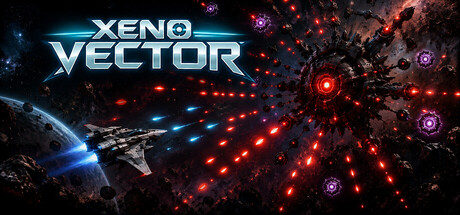
AI-assisted coding was used in the development of Xenovector, including systems responsible for procedural environments, visual effects and dynamically assembled in-game scenery.
AI-generated or AI-assisted artwork was also used for in-game backgrounds and graphical elements, in addition to promotional/store assets.
Generative AI was used during development to assist with programming and to help
produce some 3D models and logo artwork, all reviewed and integrated by the developer.
No AI runs while you play: the game is fully offline and generates no content at runtime.
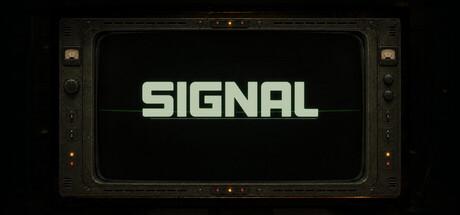
Generative AI tools were used to create pre-generated visual assets used in the game and its marketing, including the station environment, CRT console artwork, and selected trailer, store, and event artwork.
All outputs were art-directed, edited, composited, and approved by Ruldae before inclusion.
SIGNAL does not use generative AI while the game is running. No player input or personal data is sent to an AI service, and the game contains no live-generated AI content.
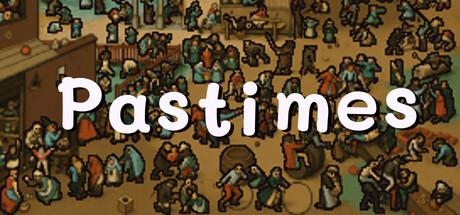
Generative AI was used during development for translations, some pixel art, and some music. AI-assisted content is human-reviewed before release. The main painting is historical public-domain art. Nothing is AI-generated during gameplay.
AI tool assisted in translating the store page into 15 different languages.
We do NOT use AI-generated art, and we never intentionally include AI assets in our game. We sometimes buy assets and use stock photos. We do our best to verify them, but nowadays, distinguishing AI from human-made art can be hard.
That said, if there is any specific artwork that you believe looks like AI or raises concerns, we would appreciate it if you could point it out on our Discord server. We will investigate and replace anything that might have slipped through.
AI-generated art is NOT something we want to include in our game.
Pre-generated AI content: Character voice-over audio was generated using ElevenLabs, and the crow image used in the game's logo was generated using Google Flow. These assets are pre-generated and included in the game; no AI content is generated dynamically during gameplay.
Generative AI tools were used during development to create portions of the game’s artwork,sound and localization. Each AI-assisted asset was reviewed, edited, palette-matched, and curated by the developer.
This game uses AI-assisted tools solely for programming and logic development. AI helped generate some basic code frameworks, but all core game logic was manually written, tested, and optimized.
All art, music and story are 100% human created. All voice acting has a live voice actor recording/performance for every line of dialogue, voice changers were used on certain characters to pitch the sound higher or lower to better suit those specific characters. Some artist-created hand-painted assets were positioned into specific starting poses and ending poses, with in-between frames generated (affecting less-than 1% of the game animations, majority (99%) are animated by hand using 2D-bone-rigging and frame-by-frame animation), some generated in-between frames were then hand-painted over before being included in the game.
AI-generated content was used for some 2D artwork, loading screen assets, and some secondary 3D models. I reviewed, edited, and integrated all AI-assisted content into the game. The main game systems, world design, gameplay, narrative, and historical research were created and developed by me.
Generative AI tools were used to assist with the creation of some visual assets and music for the game. The resulting content was reviewed, edited, and integrated by the development team.
StorySmith uses generative AI to write its stories live as you and your Twitch chat make choices. The AI model runs locally on your machine by default, with an optional bring-your-own-key cloud option — so your playthroughs stay private and no two are ever the same.
Ai was used to develop the code, artwork, various events, and dialogue in the game. Most player-facing text was reviewed by humans and many of the events and conversations were approved, improved, or rewritten by humans. There is no run-time AI usage, everything was created before the game runs, only standard computer actions are done at runtime. ex. selections and randomization of existing content.
Some of this game's content was created with generative AI tools and then reviewed and edited by the developer. This includes visual assets (2D art, 3D models and characters), some in-game text and localization, and some audio. No content is generated by AI during gameplay.
The game contains pre-generated visual and audio assets created with the assistance of generative AI tools during development. OpenAI-assisted tools were used for selected visual assets, Suno was used for pre-generated medieval-inspired music, and ElevenLabs was used for selected sound effects, ambience, and voice elements. All outputs were reviewed, selected, edited, and integrated by the developer. The game does not use live-generated AI and does not connect to an AI service while running.
Generative AI tools were used during development to assist in creating visual concept art, UI background textures, and promotional graphics, as well as providing development assistance for code optimization and localization text. All AI-assisted assets were pre-generated prior to release, curated, and manually edited by the developer. The game does not feature any live or real-time AI content generation during gameplay.
None of the game's artwork, audio, or imagery is AI-generated. Portraits, interface, and all store and marketing art are hand-authored vector and procedural work, and that is a hard rule of the project. We do use AI assistance during development for writing and code, including drafting store text and the scripts that lay out our marketing art, all of it reviewed and edited by hand. No image-generation models are used anywhere, in the game or in its marketing.
Dialogue and narration are generated at runtime by a small language model running entirely on the player's machine. Nothing is sent to any server. The model has no authority over the game: a deterministic simulation decides every outcome, fact, and number, and the model only phrases scenes from state the engine hands it. Its output is structurally constrained and validated against the simulation before it appears, and invalid output is rejected. Prompts and validation keep generated text within the game's fiction and its PG-13 register. Player-typed orders go only to the local model and never leave the machine.
Generative AI was used during development to create a limited number of in-game images and to generate translations for multiple languages. All AI-generated content was reviewed and edited as needed by the development team.
This game uses AI-generated content in two areas: background music tracks were created using Mureka AI, and some pixel art assets were generated using PixelLab. All AI-generated content was reviewed, curated, and integrated by the developer.
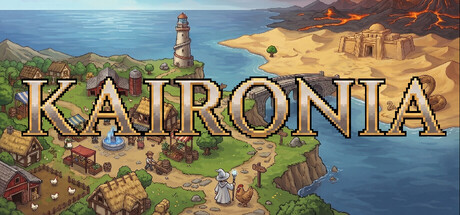
Kaironia uses generative AI tools during the development process to create pre-rendered assets. Specifically, AI-assisted tools were used to help create background music tracks, certain 2D environmental icons and images, and to assist with multi-language text localization. None of these assets are generated dynamically or live during gameplay.
Generative AI was used during development for certain text descriptions and for a limited number of illustrative assets. These visuals were subsequently reworked by the game’s artist for consistency with the game’s final style. No generative AI is used during gameplay.
Generative AI tools were used during the production of the game as creative and technical support. This applies only to content prepared in advance during development.
AI was used in several areas, including:
Artwork and promotional materials — generating base images, character concepts, interface concepts, reference images, and materials later used as a foundation for manual editing or further production.
3D models — some models are created with the help of AI tools and an image-to-3D workflow, then selected, adjusted, and integrated into the game.
Voice acting — character voices are created using AI-based voice synthesis.
Code and production tools — AI assistants support coding, code analysis, refactoring, and optimization.
Design consultation — AI tools are used as support for analyzing ideas, designing interfaces, refining descriptions, and planning game systems.
The main concept of the game, story structure, quest dependencies, world direction, and dialogue content are created and supervised by the game’s author. Content created with the help of AI is selected, edited, and implemented manually.
The game does not contain AI-generated content created in real time during gameplay.
Generative AI tools were used to assist in creating select 2D artwork for this game illustrations for collectible cards, artwork for the card battle/arena scene, and the game's logo and store capsule art. All AI-assisted artwork was selected, edited, and finalized by the development team before inclusion. Generative AI was not used to create the 3D open-world environment, or other gameplay systems/mechanics. This is for the demo build, and some or all AI-assisted art may be replaced with original human-made artwork in the full release.
As a solo developer, I made use of AI for generation of models and music to act as base components. These typically went through much manual editing afterwards.
Some AI was used for testing & improvements to code in some areas
The visual assets in the game are generated using AI, including UI elements, map backgrounds, equipment icons, in-game items, and character animations.
The programming code of the game is generated using AI.
There are several AI generated models, and their textures. Which will likely continue to be the only AI use in the game, other than the use of AI for coding help. But this game is far from "vibe coded."
There is no AI generated text, and will never be. There are currently no AI generated sounds, there may be a few added depending on achievability without.
The text will always and forever be written by a human, me, Andrew Labreck. As the story is the driving factor for me making this entire game.
Likely, the music will continue to be human produced as well.
AI-assisted coding was used in the development of Xenovector, including systems responsible for procedural environments, visual effects and dynamically assembled in-game scenery.
AI-generated or AI-assisted artwork was also used for in-game backgrounds and graphical elements, in addition to promotional/store assets.
Generative AI was used during development to assist with programming and to help
produce some 3D models and logo artwork, all reviewed and integrated by the developer.
No AI runs while you play: the game is fully offline and generates no content at runtime.
Generative AI tools were used to create pre-generated visual assets used in the game and its marketing, including the station environment, CRT console artwork, and selected trailer, store, and event artwork.
All outputs were art-directed, edited, composited, and approved by Ruldae before inclusion.
SIGNAL does not use generative AI while the game is running. No player input or personal data is sent to an AI service, and the game contains no live-generated AI content.
Generative AI was used during development for translations, some pixel art, and some music. AI-assisted content is human-reviewed before release. The main painting is historical public-domain art. Nothing is AI-generated during gameplay.
AI tool assisted in translating the store page into 15 different languages.
We do NOT use AI-generated art, and we never intentionally include AI assets in our game. We sometimes buy assets and use stock photos. We do our best to verify them, but nowadays, distinguishing AI from human-made art can be hard.
That said, if there is any specific artwork that you believe looks like AI or raises concerns, we would appreciate it if you could point it out on our Discord server. We will investigate and replace anything that might have slipped through.
AI-generated art is NOT something we want to include in our game.
Pre-generated AI content: Character voice-over audio was generated using ElevenLabs, and the crow image used in the game's logo was generated using Google Flow. These assets are pre-generated and included in the game; no AI content is generated dynamically during gameplay.
Generative AI tools were used during development to create portions of the game’s artwork,sound and localization. Each AI-assisted asset was reviewed, edited, palette-matched, and curated by the developer.
This game uses AI-assisted tools solely for programming and logic development. AI helped generate some basic code frameworks, but all core game logic was manually written, tested, and optimized.
All art, music and story are 100% human created. All voice acting has a live voice actor recording/performance for every line of dialogue, voice changers were used on certain characters to pitch the sound higher or lower to better suit those specific characters. Some artist-created hand-painted assets were positioned into specific starting poses and ending poses, with in-between frames generated (affecting less-than 1% of the game animations, majority (99%) are animated by hand using 2D-bone-rigging and frame-by-frame animation), some generated in-between frames were then hand-painted over before being included in the game.
AI-generated content was used for some 2D artwork, loading screen assets, and some secondary 3D models. I reviewed, edited, and integrated all AI-assisted content into the game. The main game systems, world design, gameplay, narrative, and historical research were created and developed by me.
Generative AI tools were used to assist with the creation of some visual assets and music for the game. The resulting content was reviewed, edited, and integrated by the development team.
StorySmith uses generative AI to write its stories live as you and your Twitch chat make choices. The AI model runs locally on your machine by default, with an optional bring-your-own-key cloud option — so your playthroughs stay private and no two are ever the same.
Ai was used to develop the code, artwork, various events, and dialogue in the game. Most player-facing text was reviewed by humans and many of the events and conversations were approved, improved, or rewritten by humans. There is no run-time AI usage, everything was created before the game runs, only standard computer actions are done at runtime. ex. selections and randomization of existing content.
Some of this game's content was created with generative AI tools and then reviewed and edited by the developer. This includes visual assets (2D art, 3D models and characters), some in-game text and localization, and some audio. No content is generated by AI during gameplay.
The game contains pre-generated visual and audio assets created with the assistance of generative AI tools during development. OpenAI-assisted tools were used for selected visual assets, Suno was used for pre-generated medieval-inspired music, and ElevenLabs was used for selected sound effects, ambience, and voice elements. All outputs were reviewed, selected, edited, and integrated by the developer. The game does not use live-generated AI and does not connect to an AI service while running.
Generative AI tools were used during development to assist in creating visual concept art, UI background textures, and promotional graphics, as well as providing development assistance for code optimization and localization text. All AI-assisted assets were pre-generated prior to release, curated, and manually edited by the developer. The game does not feature any live or real-time AI content generation during gameplay.
None of the game's artwork, audio, or imagery is AI-generated. Portraits, interface, and all store and marketing art are hand-authored vector and procedural work, and that is a hard rule of the project. We do use AI assistance during development for writing and code, including drafting store text and the scripts that lay out our marketing art, all of it reviewed and edited by hand. No image-generation models are used anywhere, in the game or in its marketing.
Dialogue and narration are generated at runtime by a small language model running entirely on the player's machine. Nothing is sent to any server. The model has no authority over the game: a deterministic simulation decides every outcome, fact, and number, and the model only phrases scenes from state the engine hands it. Its output is structurally constrained and validated against the simulation before it appears, and invalid output is rejected. Prompts and validation keep generated text within the game's fiction and its PG-13 register. Player-typed orders go only to the local model and never leave the machine.
Generative AI was used during development to create a limited number of in-game images and to generate translations for multiple languages. All AI-generated content was reviewed and edited as needed by the development team.
This game uses AI-generated content in two areas: background music tracks were created using Mureka AI, and some pixel art assets were generated using PixelLab. All AI-generated content was reviewed, curated, and integrated by the developer.
Kaironia uses generative AI tools during the development process to create pre-rendered assets. Specifically, AI-assisted tools were used to help create background music tracks, certain 2D environmental icons and images, and to assist with multi-language text localization. None of these assets are generated dynamically or live during gameplay.
Generative AI was used during development for certain text descriptions and for a limited number of illustrative assets. These visuals were subsequently reworked by the game’s artist for consistency with the game’s final style. No generative AI is used during gameplay.
Generative AI tools were used during the production of the game as creative and technical support. This applies only to content prepared in advance during development.
AI was used in several areas, including:
Artwork and promotional materials — generating base images, character concepts, interface concepts, reference images, and materials later used as a foundation for manual editing or further production.
3D models — some models are created with the help of AI tools and an image-to-3D workflow, then selected, adjusted, and integrated into the game.
Voice acting — character voices are created using AI-based voice synthesis.
Code and production tools — AI assistants support coding, code analysis, refactoring, and optimization.
Design consultation — AI tools are used as support for analyzing ideas, designing interfaces, refining descriptions, and planning game systems.
The main concept of the game, story structure, quest dependencies, world direction, and dialogue content are created and supervised by the game’s author. Content created with the help of AI is selected, edited, and implemented manually.
The game does not contain AI-generated content created in real time during gameplay.