Public Steam disclosure research25,376 disclosures tracked
Where do games disclose AI use?
Search developers’ Steam disclosures, compare classified AI use across
games, and follow recorded changes.
This index adds cross-game classifications and statistics to
statements published on individual store pages.
Groups reflect automatic analysis of public disclosures; mature records are excluded. These counts do not measure AI use across all of Steam.
Missing or unclear statements cannot establish whether a game uses AI.
Partial game source codes, texture assets and store promotional artwork are created with generative AI tools. All AI-generated contents have been fully manually reviewed, modified and optimized by the developer before integrating into the final game build. No AI content is dynamically generated during gameplay.
This game uses generative AI to create realistic player behavior, match commentary, dynamic tactics, and some images and music may also be generated by AI, improving replayability while keeping user data private and not used to train external models.
Some images in the game are AI-assisted assets that have been carefully edited and refined by me. The artwork is a blend of self-designed visuals and AI-generated elements, with adjustments made to harmonize color patterns.
Generative AI tools were used exclusively to create the main menu background illustration and the visual assets/textures for the enemy characters. No other parts of the game utilize artificial intelligence, and all other assets were created or acquired manually by the developers. The game does not contain any live-generated or real-time AI content.
During the development of Super Monsterdoom, generative AI tools were used to support text creation, visual exploration, and mechanical iteration. As a solo developer, these tools were key to accelerating and expanding the process, but every final asset, text, and design decision went through extensive human editing, refinement, and hands-on work.
As a solo developer, I used every tool available to bring Dungeon Dash to life. The game design, mechanics, storyline, and level designs are entirely original, conceived long before AI tools entered the picture. The artwork combines hand drawn, stock, and AI generated assets, all of which have been further modified and animated by hand to fit the vision of the game.
This game uses generative artificial intelligence (AI) to create some of its visual art assets. Certain in-game images and illustrations were partially generated with the assistance of AI-based painting tools.
This game includes pre-generated content created with the assistance of generative AI tools during development. AI tools were used to assist with some 2D visual assets, icons, background concept art, text drafting/localization, and programming support.
All AI-assisted content is reviewed, edited, and integrated by the developer before being included in the game or store materials. The game does not use live generative AI during gameplay.
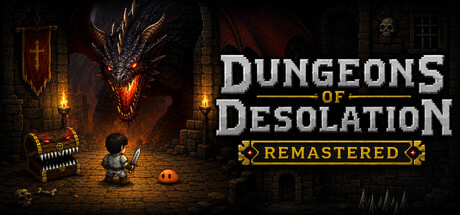
Dungeons of Desolation Remastered is based on my original 2012 Xbox Live Indie Games release. The original artwork, music, sound effects, code, game design, story, systems, and overall creative direction were created by me as an individual developer.
For this remastered PC version, I have used generative AI tools as part of the development process to assist with asset upscaling/enhancement and with porting/refactoring the original XNA codebase to a modern MonoGame version. AI-assisted work is reviewed, edited, and integrated by me.
Generative AI is not used to dynamically generate gameplay, story, dialogue, items, levels, or player-facing content at runtime.
We utilized generative AI tools (such as Midjourney and Stable Diffusion) during the development phase to assist in creating 2D concept art, UI elements, and background textures for the game. We carefully reviewed, edited, and upscaled all generated assets manually to ensure they do not infringe on any existing intellectual property or copyrights. No content is generated in real-time during gameplay.
Generative AI tools were used during development to assist with writing and debugging parts of the game code. Some visual or text assets may have been created or edited with the assistance of generative AI. The game does not use live generative AI during gameplay.
This game incorporates AI assistance in its development. The overall vision and execution remain that of the developer.
All language translations were done using Claude. If there are any mistranslations, please contact me to fix them!
This game uses AI-assisted tools in the following areas of development:
Localization: Some translations were assisted or reviewed using AI language tools.
Sound Effects: Some SFX were generated or prototyped using AI audio tools.
No in-game visuals are using AI except the main menu art as of now. Promotional materials may still have AI generated content.
All AI-assisted content was reviewed, curated, and approved by the development team. No AI content is generated at runtime.
As a solo indie developer, I have utilized AI-generated content to assist in the creation of certain assets within the game, including images, audio, and code. Thank you for your understanding and support.
Many of the assets and code in the game were created with the help of artificial intelligence. Since we don't have an artist, 95% of the visuals were created by AI.
The developer uses generative AI tools throughout the entire development process of this game.
Visual Arts: All character illustrations, card designs, backgrounds, and UI elements were generated using AI. The developer has manually reviewed and post-processed these assets to ensure artistic consistency and quality.
Code & Programming: The core game logic and systems were developed with the assistance of large language models (LLMs) to ensure stability and efficiency.
Script & Dialogue: All narrative content, world-building lore, and character dialogues were generated using AI and subsequently edited by the developer for narrative flow.
Commitment to Safety: > We ensure that the AI models and prompts used in development do not generate illegal or infringing content. All AI-generated assets have been thoroughly screened to comply with Steam's distribution policies.
This game utilizes generative AI tools to assist in the creation of visual assets, specifically sprites, as well as for generating in-game text for English language.
Generative AI was used as an assistive tool during development for (a) translating portions of in-game text (always human-reviewed/edited) and (b) creating or iterating some 2D art assets. All AI-assisted content is curated and may be further edited before shipping. No AI features are present in-game at runtime (no user prompts, no procedural AI generation), and no user data is used for AI training.
Satarichi: Heroes De Caelum is a work based on the original intellectual property of Jose Luis Matias Martinez (Rol, 2012; Novela, 2025), with character designs by Artemio Guevara. Generative AI has been used exclusively as technical assistance for the animation of original art and in the production of soundtrack segments, integrated with compositions under commercial license. All material has been supervised and edited manually.
This is a genuine work of 'Cyber-Stitching.' We employed a never-tiring AI assistant to handle the code architecture (composed of 50% blind faith and 50% compiler errors) and some generative architectural models. The student developer's primary role was cheering the AI on from a dorm room and stitching these scattered soul fragments into the underground space you see now. To be honest, without the AI’s infinite patience, this pile of 'crispy' code garbage wouldn't even exist.
This game uses generative AI tools during development to assist with concept art, visual ideation, and early image drafts, as well as initial text prototyping.
All final in-game visuals, UI elements, written content, and gameplay systems are curated, reviewed, and approved by the development team.
No generative AI is used to create content dynamically during gameplay, and no player-facing content is generated in real time.
AI was used during development to help create some visual assets, including certain textures, logo elements, and background images. These assets were reviewed, edited, and integrated by the developer before being used in the game. The game does not use live AI generation during gameplay.
Partial game source codes, texture assets and store promotional artwork are created with generative AI tools. All AI-generated contents have been fully manually reviewed, modified and optimized by the developer before integrating into the final game build. No AI content is dynamically generated during gameplay.
This game uses generative AI to create realistic player behavior, match commentary, dynamic tactics, and some images and music may also be generated by AI, improving replayability while keeping user data private and not used to train external models.
Some images in the game are AI-assisted assets that have been carefully edited and refined by me. The artwork is a blend of self-designed visuals and AI-generated elements, with adjustments made to harmonize color patterns.
Generative AI tools were used exclusively to create the main menu background illustration and the visual assets/textures for the enemy characters. No other parts of the game utilize artificial intelligence, and all other assets were created or acquired manually by the developers. The game does not contain any live-generated or real-time AI content.
During the development of Super Monsterdoom, generative AI tools were used to support text creation, visual exploration, and mechanical iteration. As a solo developer, these tools were key to accelerating and expanding the process, but every final asset, text, and design decision went through extensive human editing, refinement, and hands-on work.
As a solo developer, I used every tool available to bring Dungeon Dash to life. The game design, mechanics, storyline, and level designs are entirely original, conceived long before AI tools entered the picture. The artwork combines hand drawn, stock, and AI generated assets, all of which have been further modified and animated by hand to fit the vision of the game.
This game uses generative artificial intelligence (AI) to create some of its visual art assets. Certain in-game images and illustrations were partially generated with the assistance of AI-based painting tools.
This game includes pre-generated content created with the assistance of generative AI tools during development. AI tools were used to assist with some 2D visual assets, icons, background concept art, text drafting/localization, and programming support.
All AI-assisted content is reviewed, edited, and integrated by the developer before being included in the game or store materials. The game does not use live generative AI during gameplay.
Dungeons of Desolation Remastered is based on my original 2012 Xbox Live Indie Games release. The original artwork, music, sound effects, code, game design, story, systems, and overall creative direction were created by me as an individual developer.
For this remastered PC version, I have used generative AI tools as part of the development process to assist with asset upscaling/enhancement and with porting/refactoring the original XNA codebase to a modern MonoGame version. AI-assisted work is reviewed, edited, and integrated by me.
Generative AI is not used to dynamically generate gameplay, story, dialogue, items, levels, or player-facing content at runtime.
We utilized generative AI tools (such as Midjourney and Stable Diffusion) during the development phase to assist in creating 2D concept art, UI elements, and background textures for the game. We carefully reviewed, edited, and upscaled all generated assets manually to ensure they do not infringe on any existing intellectual property or copyrights. No content is generated in real-time during gameplay.
Generative AI tools were used during development to assist with writing and debugging parts of the game code. Some visual or text assets may have been created or edited with the assistance of generative AI. The game does not use live generative AI during gameplay.
This game incorporates AI assistance in its development. The overall vision and execution remain that of the developer.
All language translations were done using Claude. If there are any mistranslations, please contact me to fix them!
This game uses AI-assisted tools in the following areas of development:
Localization: Some translations were assisted or reviewed using AI language tools.
Sound Effects: Some SFX were generated or prototyped using AI audio tools.
No in-game visuals are using AI except the main menu art as of now. Promotional materials may still have AI generated content.
All AI-assisted content was reviewed, curated, and approved by the development team. No AI content is generated at runtime.
As a solo indie developer, I have utilized AI-generated content to assist in the creation of certain assets within the game, including images, audio, and code. Thank you for your understanding and support.
Many of the assets and code in the game were created with the help of artificial intelligence. Since we don't have an artist, 95% of the visuals were created by AI.
The developer uses generative AI tools throughout the entire development process of this game.
Visual Arts: All character illustrations, card designs, backgrounds, and UI elements were generated using AI. The developer has manually reviewed and post-processed these assets to ensure artistic consistency and quality.
Code & Programming: The core game logic and systems were developed with the assistance of large language models (LLMs) to ensure stability and efficiency.
Script & Dialogue: All narrative content, world-building lore, and character dialogues were generated using AI and subsequently edited by the developer for narrative flow.
Commitment to Safety: > We ensure that the AI models and prompts used in development do not generate illegal or infringing content. All AI-generated assets have been thoroughly screened to comply with Steam's distribution policies.
This game utilizes generative AI tools to assist in the creation of visual assets, specifically sprites, as well as for generating in-game text for English language.
Generative AI was used as an assistive tool during development for (a) translating portions of in-game text (always human-reviewed/edited) and (b) creating or iterating some 2D art assets. All AI-assisted content is curated and may be further edited before shipping. No AI features are present in-game at runtime (no user prompts, no procedural AI generation), and no user data is used for AI training.
Satarichi: Heroes De Caelum is a work based on the original intellectual property of Jose Luis Matias Martinez (Rol, 2012; Novela, 2025), with character designs by Artemio Guevara. Generative AI has been used exclusively as technical assistance for the animation of original art and in the production of soundtrack segments, integrated with compositions under commercial license. All material has been supervised and edited manually.
This is a genuine work of 'Cyber-Stitching.' We employed a never-tiring AI assistant to handle the code architecture (composed of 50% blind faith and 50% compiler errors) and some generative architectural models. The student developer's primary role was cheering the AI on from a dorm room and stitching these scattered soul fragments into the underground space you see now. To be honest, without the AI’s infinite patience, this pile of 'crispy' code garbage wouldn't even exist.
This game uses generative AI tools during development to assist with concept art, visual ideation, and early image drafts, as well as initial text prototyping.
All final in-game visuals, UI elements, written content, and gameplay systems are curated, reviewed, and approved by the development team.
No generative AI is used to create content dynamically during gameplay, and no player-facing content is generated in real time.
AI was used during development to help create some visual assets, including certain textures, logo elements, and background images. These assets were reviewed, edited, and integrated by the developer before being used in the game. The game does not use live AI generation during gameplay.