Public Steam disclosure research25,508 disclosures tracked
Where do games disclose AI use?
Search developers’ Steam disclosures, compare classified AI use across
games, and follow recorded changes.
This index adds cross-game classifications and statistics to
statements published on individual store pages.
Groups reflect automatic analysis of public disclosures; mature records are excluded. These counts do not measure AI use across all of Steam.
Missing or unclear statements cannot establish whether a game uses AI.
Some vfx sprite sheets and art were generated and then photoshopped and shaders added. I generated some images 100 plus times to make sure the style didn't drift. I photoshopped AI images to get what I wanted. AI generated images were guided by my thoughts the entire time.
We used generative AI tools to assist with drafting and localizing store page text. All AI-assisted text is reviewed and edited by our team before publication. The game does not use live-generated AI content during gameplay.
Some visual assets and promotional materials for Frozen Christmas Magic: Santa’s Hidden Village were created with the assistance of generative AI tools, then manually directed, selected, edited and integrated by the developer as part of the game’s artistic production pipeline.
No real-time generative AI is used during gameplay.
Some visual elements in this game, such as textures and illustrations, were partially generated or enhanced using artificial intelligence tools, and then manually refined and integrated by the development team.
Generative AI tools were used to assist in the creation of certain promotional images, store page artwork and trailer visuals. All gameplay systems, game design decisions, implementation and final game content were created, reviewed and integrated by the developer.
The game contains in-game narrative and dialogue text that was created with the assistance of generative AI and then reviewed by the developer. All artwork and music are human-created.
AI assisted assets and text are developer edited. The core game is playable without AI. Optional advisor commentary can use local Ollama or Anthropic only if the player enables it and provides their own key.
Generative AI tools were used during development to assist with early concept art, visual ideation, logos, and certain promotional materials. All final in-game content and gameplay implementation were curated, edited, and integrated by the developers.
I use AI to summarize documentation, criticize my code, and help me make sense of error messages.
Sometimes I feel discouraged and I ask AI to write stuff for me. Seeing the garbage it produces makes me feel better, and encourages me to try again :)
Some background images were expanded to fit higher resolutions with the assistance of generative AI tools.
All core content and gameplay experiences were designed and created by the developer.
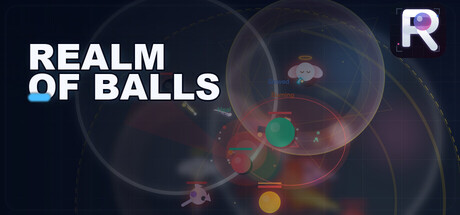
Realm of Balls was developed with the help of generative AI tools during production, but the game does not include live AI-generated content for players.
AI-Generated Content Disclosure
Certain character images were initially generated by AI tools, then significantly edited, redrawn, and refined by hand using Photoshop. All final in-game visuals are manually adjusted and do not contain unmodified AI output.
Some visual assets used on this Steam page were edited or retouched using AI-assisted tools, and the achievement icons were created using generative AI / AI-assisted tools.
All gameplay systems, game design decisions, balancing decisions, story/context decisions, implementation choices, and final creative decisions were made by the development team.
Generative AI tools were used only as assistive tools during development. This may include support for brainstorming, improving workflows, and creating or refining some static 2D visual materials used in the game and its marketing, such as item icons, UI-related images, capsule/key art elements, and visuals that may appear in trailers or screenshots.
All AI-assisted materials were reviewed, selected, edited, and approved by the developers before being included. No AI system makes gameplay decisions, controls game logic, generates levels, creates player-facing content, or produces images, videos, text, audio, or any other content in real time during gameplay.
The development of Eldara incorporated AI-generated content. Specifically, AI image generation tools were used to create certain in-game visual assets, including monster portraits, pet illustrations, item icons, and character artwork.
All AI-generated assets were manually reviewed, curated, and integrated by the developer before inclusion in the final product. No real-world copyrighted artwork was intentionally used as input to the AI generation process.
No AI is used live during gameplay — all assets are pre-generated and shipped with the game. There is no live AI generation, AI dialogue, or AI-driven content while playing.
This game uses AI tools during development to assist with the creation of certain 3D models and prototyping. All gameplay design, final programming, balancing, creative direction, and system integration were carried out by the developer.
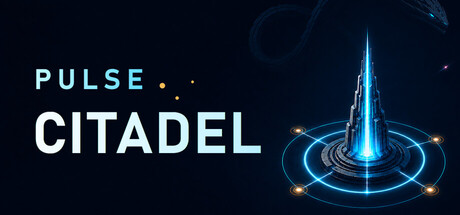
Generative AI tools were used during development for selected marketing art concepts and production assistance. Final assets and text were reviewed and edited by the developer. Pulse Citadel does not use live-generated AI during gameplay; in-game research nodes, combat behavior, progression, achievements, and UI text are fixed content.
As a legally blind solo developer, AI-assisted tools helped with visual concepting and production support. All final store materials and game content were reviewed, selected, and edited by the developer.
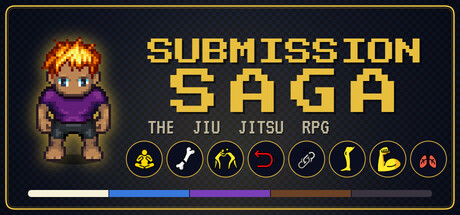
Some UI icons, character and creature sprites, and other in-game graphics in Submission Saga were created with the assistance of generative AI image tools (including Pixellab.ai), and portions of the store page text were drafted with AI writing assistance. Portions of the game's source code were also written with the assistance of an AI coding assistant. All AI-generated content was reviewed, edited, and curated by the developer before inclusion. No AI is used to generate content live during gameplay.
We use AI to code faster and generate placeholder art assets. All the AI-generated art assets (and most of the stock assets) will be replaced before the game is launched. The game design, art direction, and overall vision is all from our (human!) team.
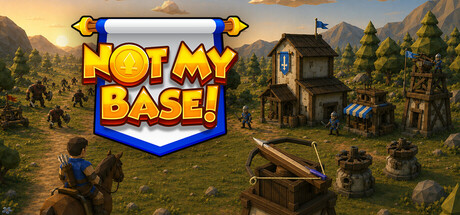
Some visual assets in Not My Base! — including selected icons and splash screen artwork — were created or assisted using Generative Artificial Intelligence tools.
All AI-generated content was reviewed, edited, and integrated by the developer to fit the game’s artistic style and gameplay needs.
During the development of this game, generative AI is used as a supporting tool for parts of the Japanese / English translation drafts. Final wording is reviewed and adjusted internally before being adopted.
Some of the text descriptions on the game’s store page, certain in-game localization texts, and some images used in the test version were generated with the help of AI technology.
This game is the handcrafted work of developer duo. During the development process, generative tools were used as supportive instruments within the creative workflow. The final game experience fully reflects the developer’s original creative vision and craftsmanship.
Some of the music in BomBom Saga is AI-Assisted. This means that the original composition — the soul of the track, the rhythm, lyrics, and beatbox — was 100% created by me.After creation, I used an AI music editing tool (fully licensed for commercial use) strictly to polish, enhance, and refine the instruments. The AI acted merely as a finalization tool, not a creator. No purely AI-generated content is present in the game. Furthermore, I conducted exhaustive copyright checks over several days to guarantee that all tracks are completely safe and free of any infringements.
The static pixel art images of the creatures (Deeplords) and environmental elements were pre-generated using AI tools and subsequently animated with another AI tool based on the developer's specific directions. Leveraging 10 years of professional 3D modeling experience, these assets were then integrated as textures and sprites inside complex 3D environments and dioramas modeled manually by the developer in Blender and structured in Unity. The game's Unity C# scripts were pre-generated using AI co-pilot tools based on the precise gameplay logic requested by the developer, followed by extensive manual debugging, correction, and multi-turn optimization cycles. Lastly, the soundtrack and audio elements were pre-generated using AI tools based on specific genre and stylistic vibes provided by the developer, then manually reviewed and refined to perfectly fit the dark atmosphere of the individual biomes.
Generative AI tools were used during development to assist with portions of the game's programming workflow, including prototyping, debugging, and code iteration. All code is reviewed, modified, integrated, and validated by the developer.
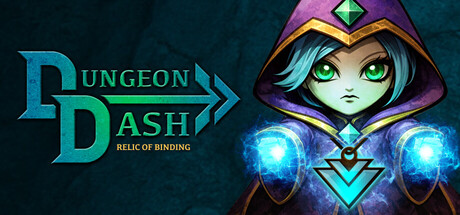
As a solo developer, I used every tool available to bring Dungeon Dash to life. The game design, mechanics, storyline, and level designs are entirely original, conceived long before AI tools entered the picture. The artwork combines hand drawn, stock, and AI generated assets, all of which have been further modified and animated by hand to fit the vision of the game.
Some store-page and marketing visual assets may be created or assisted with generative AI. The game itself does not generate AI content during gameplay.
I'm a solo developer. Without AI tools, this game would not exist — the art, music, and copy would have been unaffordable to commission and impossible for me to produce alone. AI let me focus on what I actually built by hand: the game design, the mechanics, the 181 tomes, the scoring engine, the balance, the words.
What's AI-generated:
• Visual art (backgrounds, character portraits, tome/scroll/blessing illustrations, store page art) — generated with AI image tools, curated and selected by me
• Music — generated with AI audio tools, curated and selected by me
• Some flavor text and descriptive copy — drafted with AI assistance, edited by me
What's not AI:
• The game itself — every system, mechanic, balance number, character design, and core decision is mine
• The dictionary, the tile distributions, the scoring math, the run structure, the boss fights — hand-built
• The code — written by me with the help of AI assistants the same way any modern developer uses them
No AI runs at runtime. Nothing is generated for you on the fly during play. Everything you see was reviewed before it shipped.
Generative AI was used during development to assist with some visual concept art, store page images, and marketing assets. All AI-assisted content is manually reviewed, edited, and curated by the developer. The game does not include real-time generative AI content.
Dead Sector's in-game rank insignia icons, app icon, and Steam store graphics were produced procedurally via custom Python rendering scripts (PIL and resvg) authored with AI coding assistance. The output is deterministic vector and raster compositing, not generative-AI imagery. No image, audio, or animation generation models were used in any content shipped with the game. Game design, mechanics design and logic are original developer work.
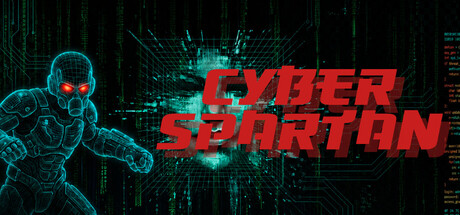
Cyber Spartan uses AI-generated content for select visual assets, including character expression artwork and some promotional materials. Core gameplay code, game design, and level design are human-directed. AI tools were used as a creative partner
throughout development.
Generative AI tools were used during development to create selected promotional graphics and visual materials. The game does not use generative AI during gameplay.
Some vfx sprite sheets and art were generated and then photoshopped and shaders added. I generated some images 100 plus times to make sure the style didn't drift. I photoshopped AI images to get what I wanted. AI generated images were guided by my thoughts the entire time.
We used generative AI tools to assist with drafting and localizing store page text. All AI-assisted text is reviewed and edited by our team before publication. The game does not use live-generated AI content during gameplay.
Some visual assets and promotional materials for Frozen Christmas Magic: Santa’s Hidden Village were created with the assistance of generative AI tools, then manually directed, selected, edited and integrated by the developer as part of the game’s artistic production pipeline.
No real-time generative AI is used during gameplay.
Some visual elements in this game, such as textures and illustrations, were partially generated or enhanced using artificial intelligence tools, and then manually refined and integrated by the development team.
Generative AI tools were used to assist in the creation of certain promotional images, store page artwork and trailer visuals. All gameplay systems, game design decisions, implementation and final game content were created, reviewed and integrated by the developer.
The game contains in-game narrative and dialogue text that was created with the assistance of generative AI and then reviewed by the developer. All artwork and music are human-created.
AI assisted assets and text are developer edited. The core game is playable without AI. Optional advisor commentary can use local Ollama or Anthropic only if the player enables it and provides their own key.
Generative AI tools were used during development to assist with early concept art, visual ideation, logos, and certain promotional materials. All final in-game content and gameplay implementation were curated, edited, and integrated by the developers.
I use AI to summarize documentation, criticize my code, and help me make sense of error messages.
Sometimes I feel discouraged and I ask AI to write stuff for me. Seeing the garbage it produces makes me feel better, and encourages me to try again :)
Some background images were expanded to fit higher resolutions with the assistance of generative AI tools.
All core content and gameplay experiences were designed and created by the developer.
Realm of Balls was developed with the help of generative AI tools during production, but the game does not include live AI-generated content for players.
AI-Generated Content Disclosure
Certain character images were initially generated by AI tools, then significantly edited, redrawn, and refined by hand using Photoshop. All final in-game visuals are manually adjusted and do not contain unmodified AI output.
Some visual assets used on this Steam page were edited or retouched using AI-assisted tools, and the achievement icons were created using generative AI / AI-assisted tools.
All gameplay systems, game design decisions, balancing decisions, story/context decisions, implementation choices, and final creative decisions were made by the development team.
Generative AI tools were used only as assistive tools during development. This may include support for brainstorming, improving workflows, and creating or refining some static 2D visual materials used in the game and its marketing, such as item icons, UI-related images, capsule/key art elements, and visuals that may appear in trailers or screenshots.
All AI-assisted materials were reviewed, selected, edited, and approved by the developers before being included. No AI system makes gameplay decisions, controls game logic, generates levels, creates player-facing content, or produces images, videos, text, audio, or any other content in real time during gameplay.
The development of Eldara incorporated AI-generated content. Specifically, AI image generation tools were used to create certain in-game visual assets, including monster portraits, pet illustrations, item icons, and character artwork.
All AI-generated assets were manually reviewed, curated, and integrated by the developer before inclusion in the final product. No real-world copyrighted artwork was intentionally used as input to the AI generation process.
No AI is used live during gameplay — all assets are pre-generated and shipped with the game. There is no live AI generation, AI dialogue, or AI-driven content while playing.
This game uses AI tools during development to assist with the creation of certain 3D models and prototyping. All gameplay design, final programming, balancing, creative direction, and system integration were carried out by the developer.
Generative AI tools were used during development for selected marketing art concepts and production assistance. Final assets and text were reviewed and edited by the developer. Pulse Citadel does not use live-generated AI during gameplay; in-game research nodes, combat behavior, progression, achievements, and UI text are fixed content.
As a legally blind solo developer, AI-assisted tools helped with visual concepting and production support. All final store materials and game content were reviewed, selected, and edited by the developer.
Some UI icons, character and creature sprites, and other in-game graphics in Submission Saga were created with the assistance of generative AI image tools (including Pixellab.ai), and portions of the store page text were drafted with AI writing assistance. Portions of the game's source code were also written with the assistance of an AI coding assistant. All AI-generated content was reviewed, edited, and curated by the developer before inclusion. No AI is used to generate content live during gameplay.
We use AI to code faster and generate placeholder art assets. All the AI-generated art assets (and most of the stock assets) will be replaced before the game is launched. The game design, art direction, and overall vision is all from our (human!) team.
Some visual assets in Not My Base! — including selected icons and splash screen artwork — were created or assisted using Generative Artificial Intelligence tools.
All AI-generated content was reviewed, edited, and integrated by the developer to fit the game’s artistic style and gameplay needs.
During the development of this game, generative AI is used as a supporting tool for parts of the Japanese / English translation drafts. Final wording is reviewed and adjusted internally before being adopted.
Some of the text descriptions on the game’s store page, certain in-game localization texts, and some images used in the test version were generated with the help of AI technology.
This game is the handcrafted work of developer duo. During the development process, generative tools were used as supportive instruments within the creative workflow. The final game experience fully reflects the developer’s original creative vision and craftsmanship.
Some of the music in BomBom Saga is AI-Assisted. This means that the original composition — the soul of the track, the rhythm, lyrics, and beatbox — was 100% created by me.After creation, I used an AI music editing tool (fully licensed for commercial use) strictly to polish, enhance, and refine the instruments. The AI acted merely as a finalization tool, not a creator. No purely AI-generated content is present in the game. Furthermore, I conducted exhaustive copyright checks over several days to guarantee that all tracks are completely safe and free of any infringements.
The static pixel art images of the creatures (Deeplords) and environmental elements were pre-generated using AI tools and subsequently animated with another AI tool based on the developer's specific directions. Leveraging 10 years of professional 3D modeling experience, these assets were then integrated as textures and sprites inside complex 3D environments and dioramas modeled manually by the developer in Blender and structured in Unity. The game's Unity C# scripts were pre-generated using AI co-pilot tools based on the precise gameplay logic requested by the developer, followed by extensive manual debugging, correction, and multi-turn optimization cycles. Lastly, the soundtrack and audio elements were pre-generated using AI tools based on specific genre and stylistic vibes provided by the developer, then manually reviewed and refined to perfectly fit the dark atmosphere of the individual biomes.
Generative AI tools were used during development to assist with portions of the game's programming workflow, including prototyping, debugging, and code iteration. All code is reviewed, modified, integrated, and validated by the developer.
As a solo developer, I used every tool available to bring Dungeon Dash to life. The game design, mechanics, storyline, and level designs are entirely original, conceived long before AI tools entered the picture. The artwork combines hand drawn, stock, and AI generated assets, all of which have been further modified and animated by hand to fit the vision of the game.
Some store-page and marketing visual assets may be created or assisted with generative AI. The game itself does not generate AI content during gameplay.
I'm a solo developer. Without AI tools, this game would not exist — the art, music, and copy would have been unaffordable to commission and impossible for me to produce alone. AI let me focus on what I actually built by hand: the game design, the mechanics, the 181 tomes, the scoring engine, the balance, the words.
What's AI-generated:
• Visual art (backgrounds, character portraits, tome/scroll/blessing illustrations, store page art) — generated with AI image tools, curated and selected by me
• Music — generated with AI audio tools, curated and selected by me
• Some flavor text and descriptive copy — drafted with AI assistance, edited by me
What's not AI:
• The game itself — every system, mechanic, balance number, character design, and core decision is mine
• The dictionary, the tile distributions, the scoring math, the run structure, the boss fights — hand-built
• The code — written by me with the help of AI assistants the same way any modern developer uses them
No AI runs at runtime. Nothing is generated for you on the fly during play. Everything you see was reviewed before it shipped.
Generative AI was used during development to assist with some visual concept art, store page images, and marketing assets. All AI-assisted content is manually reviewed, edited, and curated by the developer. The game does not include real-time generative AI content.
Dead Sector's in-game rank insignia icons, app icon, and Steam store graphics were produced procedurally via custom Python rendering scripts (PIL and resvg) authored with AI coding assistance. The output is deterministic vector and raster compositing, not generative-AI imagery. No image, audio, or animation generation models were used in any content shipped with the game. Game design, mechanics design and logic are original developer work.
Cyber Spartan uses AI-generated content for select visual assets, including character expression artwork and some promotional materials. Core gameplay code, game design, and level design are human-directed. AI tools were used as a creative partner
throughout development.
Generative AI tools were used during development to create selected promotional graphics and visual materials. The game does not use generative AI during gameplay.