Public Steam disclosure research26,754 disclosures tracked
Where do games disclose AI use?
Search developers’ Steam disclosures, compare classified AI use across
games, and follow recorded changes.
This index adds cross-game classifications and statistics to
statements published on individual store pages.
Groups reflect automatic analysis of public disclosures; mature records are excluded. These counts do not measure AI use across all of Steam.
Missing or unclear statements cannot establish whether a game uses AI.
Some early UI and graphic base elements were prototyped with the assistance of AI tools. All assets used in the final game were reviewed, cleaned, and refined by human artists to ensure originality and quality.
A few art reference and images were generated using AI tools. All core gameplay, environments, concept art, 2D and 3D animations, paintings and the rest of the game content are fully handcrafted and developed by our team.
The 3D models in the game are generated by Tencent Hengyuan 3D AI. Tencent officially stated: Service fee: To enable you to enjoy the 3D intelligent creation experience without any burden, this service is currently available for you to use for free. The introduction of Van Gogh's paintings was based on Baidu's Wenxin Yiyan. Wenxin Yiyan officially stated: The original copywriting generated by users based on Wenxin Yiyan belongs to the user themselves. It has been re-edited, modified, processed and polished by the author, and has undergone careful proofreading. The 12 large game scenes in the game were downloaded as paid scenes from the "Aigewe" website. I did indeed use artificial intelligence technology as an auxiliary solution.
Our game features AI-powered character interactions using advanced language models. Players can engage in dynamic, natural conversations with in-game characters, making each experience unique and immersive."
Generative AI tools were used to assist in the creation of some in-game art assets, such as icons, textures, and concept art. All AI-assisted assets were reviewed and refined by our team before implementation.
We use AI in early conceptual design, to figure out an appropriate background art. We then go through several iterations manually with artist modifications, to produce a good, highly polished background that gels well with our characters, story and intended art style.
Our characters are hand drawn by humans.
Our objects are hand drawn by humans.
All user interface (UI) elements are hand drawn by humans.
All animations are hand drawn and meticulously rigged (also by humans) using bone animation.
Art: AI assisted with initial sketch concepts; final artwork is entirely hand-crafted.
Localization: AI translation used for initial processing; all text is human-reviewed and optimized.
Through the chat system, players can talk and interact with their closest companion pets in real-time.
To ensure a safe experience, this pet conversation feature applies both DeepSeek’s filtering system and an in-game keyword moderation system during the content generation process. These safeguards are designed to ensure compliance with Steam’s guidelines—preventing content that promotes hate or discrimination, incites violence, depicts real individuals in explicit ways, or infringes on copyrights.
Some email backgrounds and stationery designs in this app were created using AI tools (Playground AI, ChatGPT, PromeAI) to generate pre-rendered visual content. AI is not used during gameplay or to interact with users.
We used generative AI tools during the development phase of the game to assist with the character controller code, the multiplayer system, and localization. We also used AI for language translation of the game’s store page and in-game texts. No AI-generated content is used during gameplay or at runtime.
Kayotica includes a unique AI-driven detective system. During certain scenes, players talk to the AI who takes a role of a characters. The AI is limited to the story world and cannot go outside the game’s narrative. Player choices in these moments influence relationships and the upcoming story choices.
Some images in the game are AI-generated but are consistent with our characters and our color chart.
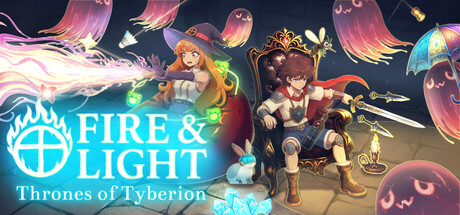
AI makes a lot of things easier for drawing, 3D, animation, code, music... but I don't use AI to avoid having to work, nor in place of my imagination: I create the lore, the character designs, the enemies and bosses, the powers and their combined effects, I write the dialogues myself and even the song lyrics.
In short, I don't use AI to create, but to produce with the means I have (I document all of this in the YouTube devlog.) And the more Tyberion takes shape, the more I replace AI assets with handmade assets.
Some non-player character voices are generated using AI voice synthesis. This allows for faster iteration and more immersive atmosphere during development. No gameplay, narrative choices, or in-game content are generated by AI.
As an indie game developed by a team of two, some of the in-game visuals, UI elements, and sound effects were created using a combination of human work and AI-assisted tools. These assets are pre-rendered and do not change during gameplay.
This game uses generative AI to create some visual assets. Specifically, we used AI generated artwork for certain marketing materials on the Steam store (capsules, headers, and logos), as well as a limited number of in-game illustrative images. All AI generated content has been reviewed, edited, and approved by our team to ensure originality, consistency, and compliance with Steam’s content policies. The gameplay itself, core art assets, and all game systems were created directly by our team.
AI tools were used during development for prototyping, text correction, and translation support.
No AI-generated images or assets are present in the final game or on the store page.
All visual and gameplay content is original and created by the developer.
Some promotional images and parts of the in-game text translations were created with the help of AI tools, but all content was reviewed and finalized by the development team.