Public Steam disclosure research25,376 disclosures tracked
Where do games disclose AI use?
Search developers’ Steam disclosures, compare classified AI use across
games, and follow recorded changes.
This index adds cross-game classifications and statistics to
statements published on individual store pages.
Groups reflect automatic analysis of public disclosures; mature records are excluded. These counts do not measure AI use across all of Steam.
Missing or unclear statements cannot establish whether a game uses AI.
This software uses generative artificial intelligence to create custom voice output based on user‑provided text or prompts. The AI system analyzes the input and produces natural‑sounding speech in real time.
The game uses an AI system developed in-house, allowing Nori to understand and respond to what you say in real time, while remembering the conversations you’ve shared. Generative AI is used exclusively for Nori’s dialogue, voice, and interactive responses.
All artwork, models, music, and narrative text in the game are created by human artists and writers. The game contains no AI-generated artwork.
RLG:Origins uses a locally operated generative AI model during play to interpret free-form player input and generate GM narration and character dialogue. AI-generated text does not establish game facts or decide outcomes. A separate deterministic rules system validates actions and controls game-state changes. Generation takes place on the player's device, and player input is not sent to an external AI service.
This game adopts generative AI technology to provide players with real-time interactive text dialogue with in-game NPCs. We have set strict content filtering rules to prevent the generation of inappropriate, illegal, pornographic or violent content. Players can report improper AI outputs through Steam's built-in marking tool.
Deepclaim was made by a solo developer working with an AI coding assistant (Anthropic's Claude). The AI assisted in writing the game's code, which draws all of the game's visuals procedurally at runtime (the game ships with no image files) and synthesizes all of its audio procedurally (no audio files). AI assistance was also used for some in-game text, the Steam store page description, and the store/marketing capsule images. All AI-assisted output was directed, reviewed, and edited by the developer.
GnollHack features 'Overseer', an optional in-game AI assistant. Using external generative AI models, Overseer provides live-generated text responses to players during gameplay. Players can ask questions about mechanics or request contextual hints based on their current game state. AI content is strictly limited to text chat, and the service utilizes safety filters and prompt guardrails to ensure responses are safe, relevant, and free of illegal or harmful content.
This game uses AI-generated content. The character artwork was pre-generated locally with an image model (Animagine XL 3.1) and manually curated by the developer. During gameplay, the mascot's chat replies (text only) are generated in real time by a bundled local language model (Google Gemma 3 via the Ollama runtime) running entirely on your PC. No internet connection is used and no conversation data leaves your device.
This game uses AI technology in the production of some of its illustrations, music, voice, and text assets. All generated assets have been reviewed and adjusted by the developer before inclusion.
The game also includes an "offline AI study assistant." This assistant does NOT generate text. It identifies the intent of the player's question and searches through study data that the developer has written and verified in advance, then displays the matching explanation as-is. It uses two bundled machine-learning models to improve search accuracy (an embedding model, multilingual-e5-large / MIT, and a re-ranking model, ms-marco-MiniLM-L-6-v2 / Apache-2.0), but these models do not generate any answer text. All processing runs entirely on the player's device with no external data transmission (no GPU required; runs on CPU). Any explanation shown was written and verified in advance by the developer. Note that it cannot answer topics outside the included data, and content may become outdated due to changes in exam rules or laws, so please confirm important matters with official exam information. This AI assistant is a supplementary study feature.
This game includes optional local AI features:
Text Generation: A local language model periodically generates in-game short story events based on the player's typing activity.
Image Generation: A local image generation model may probabilistically generate illustrations for the corresponding story when a story event is triggered.
The AI features are purely an advanced option; whether you use them or not does not affect the core gameplay experience.
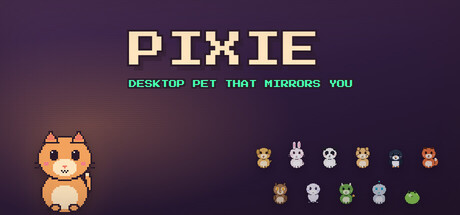
Live-generated: Pixie's chat feature generates the pet's replies with a language model that ships inside the product and runs entirely on the player's own computer. There is no third-party AI service, no API key and no account of any kind; the feature makes no network requests at all and works with the machine fully offline. The model is Gemma 4 E2B, licensed under the Apache License 2.0 and redistributed with the notices required by that license.
Pre-generated: written text in the product and on this store page — including the interface strings and their translations into the supported languages — was produced with the help of an AI writing assistant.
All art, animation and characters are hand-made: every sprite is drawn at runtime by a parametric pixel renderer written for this project, with no generative AI involved at any stage.
Camera and microphone input are processed entirely on-device (MediaPipe) and are never sent to any server.
This game uses a bundled on-device AI model to estimate body-shape parameters from a player-selected full-body photo and apply them to a predefined 3D character mesh. The photo is processed locally and is not sent to an external AI service. Photo-based appearance projection is handled separately as user-provided character customization and is not open-ended AI image generation.
CivEconomy: Future Leader uses locally-running AI for two optional gameplay features. All AI processing runs entirely on the player's machine — no data is sent to external servers.
Text AI (Command Processing): An on-device language model (Llama 3.2 1B via Ollama) interprets natural language player commands and classifies them into game actions. A keyword-matching fallback system works identically without AI enabled.
Image AI (Chieftain Portraits): An on-device Stable Diffusion 1.5 model generates decorative chieftain portrait images. These are purely cosmetic with no gameplay impact.
Both features are completely optional. The game is fully functional and playable without any AI features active.
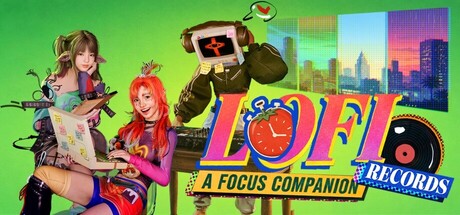
Lo-Fi with Ruka includes optional live generative AI features. Players may provide their own DeepSeek and StepFun API keys to generate short companion chat replies, personalized study-story chapters, and synthesized voice. These features are disabled without player-provided keys. Prompts, the current focus goal or status, and limited recent non-sensitive study context are sent only to the selected providers. API keys and generated content remain local and are not uploaded to Steam Cloud.
Quillzyra: Character Studio uses generative AI locally on the user's computer to create and interact with fictional characters. The application may generate character dialogue, personality text, memory summaries, character descriptions, and optional 2D character portraits based on user input.
The AI features are intended for fictional character creation, simulation, and conversation. The application does not rely on an external AI service during gameplay.
StorySmith uses generative AI to write its stories live as you and your Twitch chat make choices. The AI model runs locally on your machine by default, with an optional bring-your-own-key cloud option — so your playthroughs stay private and no two are ever the same.
This app includes an optional AI chat feature: your cheer character can chat with you in real time, powered by generative AI. Using the chat feature consumes an in-app currency ("gems"), which can be purchased. A background image used on the store/library page (depicting a keyboard and a mug) was also created with the assistance of generative AI tools.
Mars Directive features autonomous AI characters powered by Large Language Models. They don't just generate dialogue—they can observe their surroundings, reason about situations, make independent decisions, interact with the environment, and communicate naturally with both the player and each other. Their behavior is guided by character definitions, gameplay context, and behavioral rules to ensure a consistent gameplay experience.
This application uses generative AI technology (Large Language Models), such as Google Gemini, for character interaction and to enable characters to understand and react to your desktop environment.
Character Chat: The AI generates real-time responses based on character personalities in response to player input.
Visual Understanding (Optional): Only with player permission, the AI analyzes desktop screens or webcam images to provide context-aware reactions.
Web Search: The AI may utilize real-time internet searches to retrieve up-to-date information.
To ensure the prevention of inappropriate content generation, we have implemented custom prompt restrictions and usage limits (quotas) in addition to the standard safety filters of the AI service.
The characters in Conversation Simulator are played live by an AI language model that runs entirely on your computer — no cloud AI service is involved. All character dialogue and end-of-session feedback is generated locally during play. A built-in safety policy that cannot be disabled keeps generated content within a PG/PG-13 boundary: no sexual content, no content involving minors, no impersonation of real people, no voice cloning, and no claims to be a real therapist, doctor, or lawyer. Self-harm and crisis topics are intercepted and answered with a resource message instead of AI-generated content.
This game uses generative AI. Some art, UI text and pet quotes were made with AI assistance and human-reviewed. The optional AI Fusion feature uses your own local Claude Code / Codex CLI to design creatures (restricted parametric vector art, schema-validated), shown on your machine and optionally shared via Steam Workshop. No online AI service, no API key.
SnapQuest uses live-generated AI as part of its core photo-scanning mechanic. When a player captures or selects a photo, a vision-language model analyzes the image and generates structured card content, including a card name, description, category, and gameplay attributes. The card artwork uses the player's submitted photo rather than an AI-generated replacement image. Generated results vary depending on the submitted photo.
Generative AI was used during development to assist with localization and the creation of character voices. During gameplay, AI generates Amber’s dialogue and speech in real time and determines her actions and facial expressions based on the player’s interactions.
The core gameplay of this game adopts an independent AI warlord confrontation system. All Three Kingdoms generals and regional lord NPCs make autonomous decisions on their own, and can independently launch alliances, declarations of war, diplomatic negotiations, grain supply trades, secret betrayals and other political strategic behaviors. In-game plot dialogues and interactions among warlords are dynamically generated by AI. A built-in content safety filter is activated throughout the game to prevent the generation of illegal, violent and inappropriate content.
This game uses generative AI to interpret the player’s written question and create tarot-style responses during each reading. AI-generated text is used for card interpretations and the final answer. The game does not use AI to make real predictions or provide professional advice.
To create realistic interrogation scenarios in this detective game, this game packages a local, offline LLM to serve as the brain of the NPC suspects. This allows the user to lead the investigation however they like. Generative AI was NOT used to create this game, but an LLM is featured as a main game mechanic in the form of freeform NPC conversation.
Pre-generated: Store page capsule art and marketing images were created with AI assistance. In-game text (unit descriptions, UI copy) and the store description were written with AI assistance. All in-game visuals are drawn procedurally at runtime by the game's own code. No AI model runs in the game and no content is generated during play. All AI-assisted output was reviewed and edited by the developer and contains no third-party or infringing material.
NarrationOS uses generative AI to create its output. It synthesizes speech from your books using an AI voice model (Resemble AI's Chatterbox) and can generate a custom voice from a short recording you supply. A local AI language model assists with text analysis. All generation happens locally on your device. You are responsible for having the rights to any content or voice you use, and voice cloning requires your confirmation of consent.
This application uses AI-powered text-to-speech (Microsoft Edge-TTS) to read
aloud text files that you import yourself. An on-device language model (or an
optional API you configure) analyzes the imported text to identify speakers and
assign voices. The app does not generate any original story, art, or music
content — all audio is synthesized from text you provide.
This game uses generative AI only for in-game character dialogue. Players can communicate with certain characters using natural language, and the AI generates text responses based on the game's setting and the current conversation context. Apart from character dialogue text, the game's artwork, music, sound effects, code, store page assets, and marketing materials are not generated by AI.
None of the game's artwork, audio, or imagery is AI-generated. Portraits, interface, and all store and marketing art are hand-authored vector and procedural work, and that is a hard rule of the project. We do use AI assistance during development for writing and code, including drafting store text and the scripts that lay out our marketing art, all of it reviewed and edited by hand. No image-generation models are used anywhere, in the game or in its marketing.
Dialogue and narration are generated at runtime by a small language model running entirely on the player's machine. Nothing is sent to any server. The model has no authority over the game: a deterministic simulation decides every outcome, fact, and number, and the model only phrases scenes from state the engine hands it. Its output is structurally constrained and validated against the simulation before it appears, and invalid output is rejected. Prompts and validation keep generated text within the game's fiction and its PG-13 register. Player-typed orders go only to the local model and never leave the machine.
The game's fighters are controlled by AI models (LLMs) chosen by the player and reached through their own OpenRouter API key. During a match the model decides the character's actions and writes the short taunts shown on screen (text only). The game does not generate images, audio, music or voices with AI: every character, arena, soundtrack and sound effect is authored in advance and ships with the game. Every AI-generated line goes through an illegal content filter before it is displayed, on the player's computer and again on the server that hosts online matches, and online matches have a report system reviewed by a human team.
Generative AI tools were used to assist in the creation of selected promotional and store artwork. During gameplay, players can also optionally use generative AI to create custom word sets and hints.
Train Trek uses generative AI in two ways.
During development we used AI tools to help make some assets: the user-interface art (HUD and menu icons, menu artwork, frames, button plates, mouse cursors), the instrumental soundtrack, and some sound effects. All of it was chosen, edited and finished by hand before it shipped. The 3D models are built procedurally by our own scripts, and the design, world generation and balancing are authored by hand. Parts of the source code were written with an AI coding assistant, reviewed and tested by the developer.
While you play, the game speaks using a text-to-speech model that ships inside the game and runs entirely on your own computer. It voices tutorial guidance, hints and menu narration instead of pre-recorded audio. It needs no internet connection, sends nothing anywhere, and never records or listens to you. It only reads lines we wrote and shipped with the game - it does not invent dialogue.
Pocket Chief! uses generative AI for optional text conversations, activity summaries, and task organization. Some artwork and localization used in the product and its marketing were also created with AI assistance. Users can choose Pocket Chief Cloud, connect their own compatible model provider (BYOK), or use a local model endpoint.
Players may select a preset worldview and character template, or customize their own worldview and character settings before starting the game. They can interact via text typing in the in-game chat window, as well as click AI-provided options to engage with AI-generated content.
The Steam version provides only local generative AI that runs on the user’s device. It does not include third-party online AI services or support the configuration of external API keys.**[Important Information Before Purchase]:** The response speed of local models will vary depending on your device’s CPU, GPU, and memory configuration. The intelligence level of the built-in local models differs significantly from that of large online models.
VOXSHIFT uses AI-powered speech processing, translation, and text-to-speech / voice output features.
The app processes user-provided microphone input and can generate translated speech or processed audio output for the user to listen to or route to other applications. AI is used as part of the app's core audio workflow, not to create characters, story content, levels, or gameplay assets.
Some store and marketing materials may also describe or demonstrate these AI-powered audio features.
Campaign Forge uses generative AI as a core, opt-in feature. Worlds, characters, regions, and stories are generated live, on demand, at the player's direction, using an AI provider and model the player chooses (paid cloud, free cloud, or a fully local/offline model — bring your own API key or run locally).
This software uses generative AI to transcribe speech, translate live voice and text between languages, and optionally generate translated speech output. Depending on the mode selected by the user, these features may run through third-party online AI services or local models included with or configured for the software.
This game uses generative AI during gameplay to create an original in-game character called a "Logos" for use by that player. Based on text entered or selected by the player, the AI generates a 2D illustration of the Logos in real time, along with its name, flavor text, and similar content. The generated Logos can be added to your deck and used to progress through the game.
The game also includes pre-generated AI content: enemy and event illustrations were created with Adobe Firefly during development. Generation is performed using cloud-based external AI services (Adobe Firefly for image generation, OpenAI for text generation).
The words entered by the player, generation conditions, and the data of the generated Logos are sent to and stored on our server. These records are used to provide the generation feature, review reported results, and investigate errors. A generated Logos is visible only to the player who created it and is not shared with other players.
Some information required for generation is sent from our server to external AI services. Data sent from our server to these services is not used to train or improve their models. Please do not enter any personal information, such as your name or contact details, or any confidential information you would not want third parties to know.
Salt and Soil uses generative AI during gameplay to create some Annual Family Council narrative text and structured choice outcomes based on the current campaign state. Generated council content is constrained by the game’s historical setting, family data, localization rules, and gameplay schema, then validated before it is shown to the player.
Pueblo Duerme uses generative AI during gameplay to create short in-game text chat messages for bot players in social deduction matches. The game includes local Qwen3 GGUF models that run on the player's PC through a local llama-server process, with Quality and Performance modes available in the settings menu. Player messages are not sent to an external AI service. The system is limited to gameplay dialogue and uses validation and fallback responses to keep messages within the game's rules.
This software uses generative artificial intelligence to create custom voice output based on user‑provided text or prompts. The AI system analyzes the input and produces natural‑sounding speech in real time.
The game uses an AI system developed in-house, allowing Nori to understand and respond to what you say in real time, while remembering the conversations you’ve shared. Generative AI is used exclusively for Nori’s dialogue, voice, and interactive responses.
All artwork, models, music, and narrative text in the game are created by human artists and writers. The game contains no AI-generated artwork.
RLG:Origins uses a locally operated generative AI model during play to interpret free-form player input and generate GM narration and character dialogue. AI-generated text does not establish game facts or decide outcomes. A separate deterministic rules system validates actions and controls game-state changes. Generation takes place on the player's device, and player input is not sent to an external AI service.
This game adopts generative AI technology to provide players with real-time interactive text dialogue with in-game NPCs. We have set strict content filtering rules to prevent the generation of inappropriate, illegal, pornographic or violent content. Players can report improper AI outputs through Steam's built-in marking tool.
Deepclaim was made by a solo developer working with an AI coding assistant (Anthropic's Claude). The AI assisted in writing the game's code, which draws all of the game's visuals procedurally at runtime (the game ships with no image files) and synthesizes all of its audio procedurally (no audio files). AI assistance was also used for some in-game text, the Steam store page description, and the store/marketing capsule images. All AI-assisted output was directed, reviewed, and edited by the developer.
GnollHack features 'Overseer', an optional in-game AI assistant. Using external generative AI models, Overseer provides live-generated text responses to players during gameplay. Players can ask questions about mechanics or request contextual hints based on their current game state. AI content is strictly limited to text chat, and the service utilizes safety filters and prompt guardrails to ensure responses are safe, relevant, and free of illegal or harmful content.
This game uses AI-generated content. The character artwork was pre-generated locally with an image model (Animagine XL 3.1) and manually curated by the developer. During gameplay, the mascot's chat replies (text only) are generated in real time by a bundled local language model (Google Gemma 3 via the Ollama runtime) running entirely on your PC. No internet connection is used and no conversation data leaves your device.
This game uses AI technology in the production of some of its illustrations, music, voice, and text assets. All generated assets have been reviewed and adjusted by the developer before inclusion.
The game also includes an "offline AI study assistant." This assistant does NOT generate text. It identifies the intent of the player's question and searches through study data that the developer has written and verified in advance, then displays the matching explanation as-is. It uses two bundled machine-learning models to improve search accuracy (an embedding model, multilingual-e5-large / MIT, and a re-ranking model, ms-marco-MiniLM-L-6-v2 / Apache-2.0), but these models do not generate any answer text. All processing runs entirely on the player's device with no external data transmission (no GPU required; runs on CPU). Any explanation shown was written and verified in advance by the developer. Note that it cannot answer topics outside the included data, and content may become outdated due to changes in exam rules or laws, so please confirm important matters with official exam information. This AI assistant is a supplementary study feature.
This game includes optional local AI features:
Text Generation: A local language model periodically generates in-game short story events based on the player's typing activity.
Image Generation: A local image generation model may probabilistically generate illustrations for the corresponding story when a story event is triggered.
The AI features are purely an advanced option; whether you use them or not does not affect the core gameplay experience.
Live-generated: Pixie's chat feature generates the pet's replies with a language model that ships inside the product and runs entirely on the player's own computer. There is no third-party AI service, no API key and no account of any kind; the feature makes no network requests at all and works with the machine fully offline. The model is Gemma 4 E2B, licensed under the Apache License 2.0 and redistributed with the notices required by that license.
Pre-generated: written text in the product and on this store page — including the interface strings and their translations into the supported languages — was produced with the help of an AI writing assistant.
All art, animation and characters are hand-made: every sprite is drawn at runtime by a parametric pixel renderer written for this project, with no generative AI involved at any stage.
Camera and microphone input are processed entirely on-device (MediaPipe) and are never sent to any server.
This game uses a bundled on-device AI model to estimate body-shape parameters from a player-selected full-body photo and apply them to a predefined 3D character mesh. The photo is processed locally and is not sent to an external AI service. Photo-based appearance projection is handled separately as user-provided character customization and is not open-ended AI image generation.
CivEconomy: Future Leader uses locally-running AI for two optional gameplay features. All AI processing runs entirely on the player's machine — no data is sent to external servers.
Text AI (Command Processing): An on-device language model (Llama 3.2 1B via Ollama) interprets natural language player commands and classifies them into game actions. A keyword-matching fallback system works identically without AI enabled.
Image AI (Chieftain Portraits): An on-device Stable Diffusion 1.5 model generates decorative chieftain portrait images. These are purely cosmetic with no gameplay impact.
Both features are completely optional. The game is fully functional and playable without any AI features active.
Lo-Fi with Ruka includes optional live generative AI features. Players may provide their own DeepSeek and StepFun API keys to generate short companion chat replies, personalized study-story chapters, and synthesized voice. These features are disabled without player-provided keys. Prompts, the current focus goal or status, and limited recent non-sensitive study context are sent only to the selected providers. API keys and generated content remain local and are not uploaded to Steam Cloud.
Quillzyra: Character Studio uses generative AI locally on the user's computer to create and interact with fictional characters. The application may generate character dialogue, personality text, memory summaries, character descriptions, and optional 2D character portraits based on user input.
The AI features are intended for fictional character creation, simulation, and conversation. The application does not rely on an external AI service during gameplay.
StorySmith uses generative AI to write its stories live as you and your Twitch chat make choices. The AI model runs locally on your machine by default, with an optional bring-your-own-key cloud option — so your playthroughs stay private and no two are ever the same.
This app includes an optional AI chat feature: your cheer character can chat with you in real time, powered by generative AI. Using the chat feature consumes an in-app currency ("gems"), which can be purchased. A background image used on the store/library page (depicting a keyboard and a mug) was also created with the assistance of generative AI tools.
Mars Directive features autonomous AI characters powered by Large Language Models. They don't just generate dialogue—they can observe their surroundings, reason about situations, make independent decisions, interact with the environment, and communicate naturally with both the player and each other. Their behavior is guided by character definitions, gameplay context, and behavioral rules to ensure a consistent gameplay experience.
This application uses generative AI technology (Large Language Models), such as Google Gemini, for character interaction and to enable characters to understand and react to your desktop environment.
Character Chat: The AI generates real-time responses based on character personalities in response to player input.
Visual Understanding (Optional): Only with player permission, the AI analyzes desktop screens or webcam images to provide context-aware reactions.
Web Search: The AI may utilize real-time internet searches to retrieve up-to-date information.
To ensure the prevention of inappropriate content generation, we have implemented custom prompt restrictions and usage limits (quotas) in addition to the standard safety filters of the AI service.
The characters in Conversation Simulator are played live by an AI language model that runs entirely on your computer — no cloud AI service is involved. All character dialogue and end-of-session feedback is generated locally during play. A built-in safety policy that cannot be disabled keeps generated content within a PG/PG-13 boundary: no sexual content, no content involving minors, no impersonation of real people, no voice cloning, and no claims to be a real therapist, doctor, or lawyer. Self-harm and crisis topics are intercepted and answered with a resource message instead of AI-generated content.
This game uses generative AI. Some art, UI text and pet quotes were made with AI assistance and human-reviewed. The optional AI Fusion feature uses your own local Claude Code / Codex CLI to design creatures (restricted parametric vector art, schema-validated), shown on your machine and optionally shared via Steam Workshop. No online AI service, no API key.
SnapQuest uses live-generated AI as part of its core photo-scanning mechanic. When a player captures or selects a photo, a vision-language model analyzes the image and generates structured card content, including a card name, description, category, and gameplay attributes. The card artwork uses the player's submitted photo rather than an AI-generated replacement image. Generated results vary depending on the submitted photo.
Generative AI was used during development to assist with localization and the creation of character voices. During gameplay, AI generates Amber’s dialogue and speech in real time and determines her actions and facial expressions based on the player’s interactions.
The core gameplay of this game adopts an independent AI warlord confrontation system. All Three Kingdoms generals and regional lord NPCs make autonomous decisions on their own, and can independently launch alliances, declarations of war, diplomatic negotiations, grain supply trades, secret betrayals and other political strategic behaviors. In-game plot dialogues and interactions among warlords are dynamically generated by AI. A built-in content safety filter is activated throughout the game to prevent the generation of illegal, violent and inappropriate content.
This game uses generative AI to interpret the player’s written question and create tarot-style responses during each reading. AI-generated text is used for card interpretations and the final answer. The game does not use AI to make real predictions or provide professional advice.
To create realistic interrogation scenarios in this detective game, this game packages a local, offline LLM to serve as the brain of the NPC suspects. This allows the user to lead the investigation however they like. Generative AI was NOT used to create this game, but an LLM is featured as a main game mechanic in the form of freeform NPC conversation.
Pre-generated: Store page capsule art and marketing images were created with AI assistance. In-game text (unit descriptions, UI copy) and the store description were written with AI assistance. All in-game visuals are drawn procedurally at runtime by the game's own code. No AI model runs in the game and no content is generated during play. All AI-assisted output was reviewed and edited by the developer and contains no third-party or infringing material.
NarrationOS uses generative AI to create its output. It synthesizes speech from your books using an AI voice model (Resemble AI's Chatterbox) and can generate a custom voice from a short recording you supply. A local AI language model assists with text analysis. All generation happens locally on your device. You are responsible for having the rights to any content or voice you use, and voice cloning requires your confirmation of consent.
This application uses AI-powered text-to-speech (Microsoft Edge-TTS) to read
aloud text files that you import yourself. An on-device language model (or an
optional API you configure) analyzes the imported text to identify speakers and
assign voices. The app does not generate any original story, art, or music
content — all audio is synthesized from text you provide.
This game uses generative AI only for in-game character dialogue. Players can communicate with certain characters using natural language, and the AI generates text responses based on the game's setting and the current conversation context. Apart from character dialogue text, the game's artwork, music, sound effects, code, store page assets, and marketing materials are not generated by AI.
None of the game's artwork, audio, or imagery is AI-generated. Portraits, interface, and all store and marketing art are hand-authored vector and procedural work, and that is a hard rule of the project. We do use AI assistance during development for writing and code, including drafting store text and the scripts that lay out our marketing art, all of it reviewed and edited by hand. No image-generation models are used anywhere, in the game or in its marketing.
Dialogue and narration are generated at runtime by a small language model running entirely on the player's machine. Nothing is sent to any server. The model has no authority over the game: a deterministic simulation decides every outcome, fact, and number, and the model only phrases scenes from state the engine hands it. Its output is structurally constrained and validated against the simulation before it appears, and invalid output is rejected. Prompts and validation keep generated text within the game's fiction and its PG-13 register. Player-typed orders go only to the local model and never leave the machine.
The game's fighters are controlled by AI models (LLMs) chosen by the player and reached through their own OpenRouter API key. During a match the model decides the character's actions and writes the short taunts shown on screen (text only). The game does not generate images, audio, music or voices with AI: every character, arena, soundtrack and sound effect is authored in advance and ships with the game. Every AI-generated line goes through an illegal content filter before it is displayed, on the player's computer and again on the server that hosts online matches, and online matches have a report system reviewed by a human team.
Generative AI tools were used to assist in the creation of selected promotional and store artwork. During gameplay, players can also optionally use generative AI to create custom word sets and hints.
Train Trek uses generative AI in two ways.
During development we used AI tools to help make some assets: the user-interface art (HUD and menu icons, menu artwork, frames, button plates, mouse cursors), the instrumental soundtrack, and some sound effects. All of it was chosen, edited and finished by hand before it shipped. The 3D models are built procedurally by our own scripts, and the design, world generation and balancing are authored by hand. Parts of the source code were written with an AI coding assistant, reviewed and tested by the developer.
While you play, the game speaks using a text-to-speech model that ships inside the game and runs entirely on your own computer. It voices tutorial guidance, hints and menu narration instead of pre-recorded audio. It needs no internet connection, sends nothing anywhere, and never records or listens to you. It only reads lines we wrote and shipped with the game - it does not invent dialogue.
Pocket Chief! uses generative AI for optional text conversations, activity summaries, and task organization. Some artwork and localization used in the product and its marketing were also created with AI assistance. Users can choose Pocket Chief Cloud, connect their own compatible model provider (BYOK), or use a local model endpoint.
Players may select a preset worldview and character template, or customize their own worldview and character settings before starting the game. They can interact via text typing in the in-game chat window, as well as click AI-provided options to engage with AI-generated content.
The Steam version provides only local generative AI that runs on the user’s device. It does not include third-party online AI services or support the configuration of external API keys.**[Important Information Before Purchase]:** The response speed of local models will vary depending on your device’s CPU, GPU, and memory configuration. The intelligence level of the built-in local models differs significantly from that of large online models.
VOXSHIFT uses AI-powered speech processing, translation, and text-to-speech / voice output features.
The app processes user-provided microphone input and can generate translated speech or processed audio output for the user to listen to or route to other applications. AI is used as part of the app's core audio workflow, not to create characters, story content, levels, or gameplay assets.
Some store and marketing materials may also describe or demonstrate these AI-powered audio features.
Campaign Forge uses generative AI as a core, opt-in feature. Worlds, characters, regions, and stories are generated live, on demand, at the player's direction, using an AI provider and model the player chooses (paid cloud, free cloud, or a fully local/offline model — bring your own API key or run locally).
This software uses generative AI to transcribe speech, translate live voice and text between languages, and optionally generate translated speech output. Depending on the mode selected by the user, these features may run through third-party online AI services or local models included with or configured for the software.
This game uses generative AI during gameplay to create an original in-game character called a "Logos" for use by that player. Based on text entered or selected by the player, the AI generates a 2D illustration of the Logos in real time, along with its name, flavor text, and similar content. The generated Logos can be added to your deck and used to progress through the game.
The game also includes pre-generated AI content: enemy and event illustrations were created with Adobe Firefly during development. Generation is performed using cloud-based external AI services (Adobe Firefly for image generation, OpenAI for text generation).
The words entered by the player, generation conditions, and the data of the generated Logos are sent to and stored on our server. These records are used to provide the generation feature, review reported results, and investigate errors. A generated Logos is visible only to the player who created it and is not shared with other players.
Some information required for generation is sent from our server to external AI services. Data sent from our server to these services is not used to train or improve their models. Please do not enter any personal information, such as your name or contact details, or any confidential information you would not want third parties to know.
Salt and Soil uses generative AI during gameplay to create some Annual Family Council narrative text and structured choice outcomes based on the current campaign state. Generated council content is constrained by the game’s historical setting, family data, localization rules, and gameplay schema, then validated before it is shown to the player.
Pueblo Duerme uses generative AI during gameplay to create short in-game text chat messages for bot players in social deduction matches. The game includes local Qwen3 GGUF models that run on the player's PC through a local llama-server process, with Quality and Performance modes available in the settings menu. Player messages are not sent to an external AI service. The system is limited to gameplay dialogue and uses validation and fallback responses to keep messages within the game's rules.