Public Steam disclosure research25,376 disclosures tracked
Where do games disclose AI use?
Search developers’ Steam disclosures, compare classified AI use across
games, and follow recorded changes.
This index adds cross-game classifications and statistics to
statements published on individual store pages.
Groups reflect automatic analysis of public disclosures; mature records are excluded. These counts do not measure AI use across all of Steam.
Missing or unclear statements cannot establish whether a game uses AI.
Generative AI tools were used to create selected pre-generated visual concept art and marketing assets. All AI-assisted material is created before release and reviewed by the development team. The game does not generate AI content during gameplay and does not connect to external AI services during play.
During the development of the game, generative AI tools were used to create some decorative props and certain sound effects. All AI-generated content was reviewed, edited, and manually integrated by the developer to ensure consistency with the game's artistic style and quality standards. Artificial intelligence was not used to generate gameplay code or core gameplay mechanics.
Generative AI was used to assist in creating certain promotional and store page artwork. All AI-generated content was reviewed, edited, and refined by the developer. No generative AI is used during gameplay.
Some desk doodle or promotional art assets may have been created with AI-assisted tools and edited by the developer before being included in the game. No real-time generative AI is used during gameplay.
AI tools were used during development to assist with programming and debugging. All game design, mechanics, artwork, audio, and final implementation decisions were created and managed by the developer.
This game may use AI tools to help create some map and UI assets used inside the game, along with sound effects, since the small development team does not include a dedicated UI or sound designer. All content assisted by AI is reviewed and adjusted by the developer before being included in the game. No AI is used to generate content in real time during gameplay, and core visual art is created without AI. We are working to remove all AI visuals before the full release.
استُخدمت أدوات الذكاء الاصطناعي أثناء التطوير للمساعدة في كتابة أجزاء من كود اللعبة وبعض النصوص داخلها، مثل التلميحات ورسائل الواجهة، وكذلك في إنشاء بعض النماذج ثلاثية الأبعاد والخامات (التكستشر). جميع المحتوى المُنجز بمساعدة الذكاء الاصطناعي تمت مراجعته وتعديله واعتماده من المطوّر. قصة اللعبة وتصميمها وإخراجها من صنع الإنسان بالكامل، ولا يتم توليد أي محتوى بالذكاء الاصطناعي أثناء اللعب.
Our Policy on AI & Procedural Generation
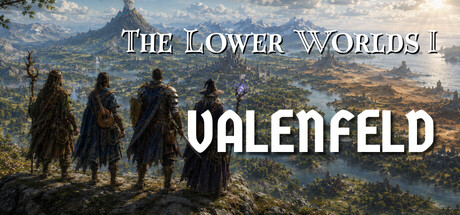
Valenfeld is built by one person, on a shoestring budget, with an Elder Scrolls–sized ambition. Here is exactly how, and why, AI fits into that.
Why we use it
Valenfeld is a solo indie project chasing a scope that normally takes a studio of dozens: a massive, hand-lorekept world you can wander for years without hitting an edge. That scope is not achievable by one person typing every tree, every ruin, and every line of dialogue by hand on a shoestring budget and an ambitious timeline. So we lean on AI-enabled workflows and, more importantly, cutting-edge procedural algorithms to scale content production and world scale to match the ambition — not to replace it.
What always stays human
Every piece of content in the game — every place, character, creature, item, quest, and line of lore — is built and overseen by a human creator and judge, grounded in our own ideas, our own lore, and our own systems design. AI does not decide what Valenfeld is. It never originates the world's canon, its themes, or its design intent on its own; it accelerates producing what we've already decided the world should be, and everything it touches is reviewed before it ships.
Not AI slop — procedural generation is the point
We're not interested in dumping raw model output into the game and calling it done. Our actual goal is an experimental, large-scale world built on cutting-edge procedural algorithms — terrain, dungeons, towns, ecosystems, even history — designed to be massively replayable for years, not a one-and-done AI slideshow. AI-assisted tooling is one part of the production pipeline that gets us there faster on a small budget; the procedural systems and the authored lore they run on are the actual craft, and that's where our attention to detail goes.
Our bet
We believe that if we focus relentlessly on delivering the best game possible — with a genuinely obsessive eye for detail on everything we ship — we can produce something great on a low budget and a small team of one. That is the bar we hold ourselves to, not "shipped fast" or "shipped cheap."
As we grow
This is how we build today, as a solo project with an ambitious scope and timeline. If and when Valenfeld earns a bigger budget for this game or for future releases, we intend to keep building just as ambitiously — with a team of art, lore, and gameplay experts working alongside these same tools, not replaced by them. Thinking about the best possible game comes first; everything else, including how we scale to build it, follows from that.
— Metatransformer Studios
Some of concept art and in-game promotional materials on the game's Steam store page were created using generative artificial intelligence tools. The game's coding and script were entirely written by developer.
The game has used AI to enhance the game's store description, help improve the game's narrative and to assist with localisation using Google Translate.
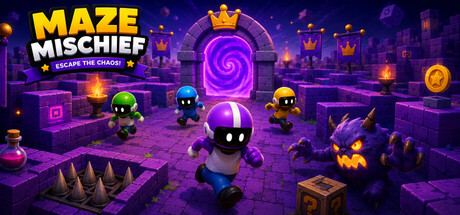
Some promotional images and marketing content for Maze Mischief were created with the assistance of generative artificial intelligence tools and subsequently reviewed and adjusted by the developer.
Generative AI was used during development to create a limited number of in-game images and to generate translations for multiple languages. All AI-generated content was reviewed and edited as needed by the development team.
In-Game Text Creation and Translation: We use AI to create and translate text for in-game content and store descriptions.
Program Code Generation: We use AI to create and optimize the programming code that implements the game’s features and systems.
Sound Effect Generation: We use AI to generate sound effects used in the game.
Generative AI was used to assist in the creation of certain Steam store page artwork (excluding screenshots and trailers) and in the multilingual localization of the store page.
Some store artwork and promotional assets were created with the assistance of AI tools. The final game content, gameplay, and mechanics were developed by our team.
AI is NOT used in the graphics, sound effects, music, or code, and none of these contain any AI-generated content. AI is used ONLY to produce higher-quality text translations than standard translation tools, and for no other purpose.
AI was used to assist with the localization process.
All other core game content including game design, programming, art direction, and gameplay systems
was created by the human development team.
Even if we prefer manual craft & procedural generation, some 3d Models/Cinematics in this game were created with the assistance of AI generative tools during production. However, think AI more as an automation/interpolation tool to win time and focus on gamers really want: innovative gameplay and FUN!
Generative AI was used to assist in creating certain environmental textures, decorative artwork, and promotional materials. All gameplay systems, programming, level design, puzzles, story, and core game content were created by the developer and manually integrated into the game
Some art assets, textures, and sound effects are created with the assistance of AI tools, then curated and edited by the developer. All game design, gameplay systems, code architecture, physics simulation, and mission design are human-made. No AI-generated content is created at runtime.
As a solo developer with a limited budget, I use AI tools to help produce some assets and sounds. This lets me keep my time focused where a solo dev's hours matter most — the core gameplay, the physics simulation, and mission design — while still delivering production quality that would normally require an extended team. Every AI-assisted asset is curated, edited, and integrated by hand.
AI was used to create some textures that were applied to custom 3D models such as environmental items, clothing, weapons, 3 of the player faces, and some of the 2D UI background.
The artwork, background music, in-game text and story, localizations into all supported languages, and store-page text in this game were created using generative AI tools, then curated, edited, and assembled by the developer. The game contains no live AI generation — all content is fixed and produced ahead of release.
Utilizing artificial intelligence, we enhanced vintage photographs and photographs of the development team to align with the game’s aesthetic for paintings in game.
For the store page and in-game multilingual texts, the Simplified Chinese version was written entirely by the developer. All other languages (Traditional Chinese, English, Russian, French, Japanese, and Latin American Spanish) were translated with the assistance of generative AI. All core content of the game (mechanic design, scene construction, character and story development, art assets, and audio) was independently created by the developer. AI was used solely for language localization and did not participate in the generation of any other content.
Some asset textures, background music, and assistance with game development questions include AI-generated content.
No AI translation was used for Japanese, English, Korean, or Czech.
Generative AI tools were used in the creation of some visual and textual content used in marketing materials and certain in-game assets. All core gameplay design and systems were developed independently.
I use generative AI exclusively as a temporary tool for rapid prototyping and placeholder content during early solo development. All AI-generated elements in Vigilum are planned to be fully replaced with custom, human-made assets for the final v1.0 release.
-> 3D Models: I used generative AI tools to create two 3D assets (the Vylem gem and the Blood Sigil element). These are temporary placeholders, and I am currently prioritizing remaking them myself during the Early Access phase.
-> 2D Assets: A few UI icons and images were generated with AI. I intend to commission a professional artist to completely replace these 2D elements as soon as funding allows.
Generative AI tools were used to create selected pre-generated visual concept art and marketing assets. All AI-assisted material is created before release and reviewed by the development team. The game does not generate AI content during gameplay and does not connect to external AI services during play.
During the development of the game, generative AI tools were used to create some decorative props and certain sound effects. All AI-generated content was reviewed, edited, and manually integrated by the developer to ensure consistency with the game's artistic style and quality standards. Artificial intelligence was not used to generate gameplay code or core gameplay mechanics.
Generative AI was used to assist in creating certain promotional and store page artwork. All AI-generated content was reviewed, edited, and refined by the developer. No generative AI is used during gameplay.
Some desk doodle or promotional art assets may have been created with AI-assisted tools and edited by the developer before being included in the game. No real-time generative AI is used during gameplay.
AI tools were used during development to assist with programming and debugging. All game design, mechanics, artwork, audio, and final implementation decisions were created and managed by the developer.
This game may use AI tools to help create some map and UI assets used inside the game, along with sound effects, since the small development team does not include a dedicated UI or sound designer. All content assisted by AI is reviewed and adjusted by the developer before being included in the game. No AI is used to generate content in real time during gameplay, and core visual art is created without AI. We are working to remove all AI visuals before the full release.
استُخدمت أدوات الذكاء الاصطناعي أثناء التطوير للمساعدة في كتابة أجزاء من كود اللعبة وبعض النصوص داخلها، مثل التلميحات ورسائل الواجهة، وكذلك في إنشاء بعض النماذج ثلاثية الأبعاد والخامات (التكستشر). جميع المحتوى المُنجز بمساعدة الذكاء الاصطناعي تمت مراجعته وتعديله واعتماده من المطوّر. قصة اللعبة وتصميمها وإخراجها من صنع الإنسان بالكامل، ولا يتم توليد أي محتوى بالذكاء الاصطناعي أثناء اللعب.
Our Policy on AI & Procedural Generation
Valenfeld is built by one person, on a shoestring budget, with an Elder Scrolls–sized ambition. Here is exactly how, and why, AI fits into that.
Why we use it
Valenfeld is a solo indie project chasing a scope that normally takes a studio of dozens: a massive, hand-lorekept world you can wander for years without hitting an edge. That scope is not achievable by one person typing every tree, every ruin, and every line of dialogue by hand on a shoestring budget and an ambitious timeline. So we lean on AI-enabled workflows and, more importantly, cutting-edge procedural algorithms to scale content production and world scale to match the ambition — not to replace it.
What always stays human
Every piece of content in the game — every place, character, creature, item, quest, and line of lore — is built and overseen by a human creator and judge, grounded in our own ideas, our own lore, and our own systems design. AI does not decide what Valenfeld is. It never originates the world's canon, its themes, or its design intent on its own; it accelerates producing what we've already decided the world should be, and everything it touches is reviewed before it ships.
Not AI slop — procedural generation is the point
We're not interested in dumping raw model output into the game and calling it done. Our actual goal is an experimental, large-scale world built on cutting-edge procedural algorithms — terrain, dungeons, towns, ecosystems, even history — designed to be massively replayable for years, not a one-and-done AI slideshow. AI-assisted tooling is one part of the production pipeline that gets us there faster on a small budget; the procedural systems and the authored lore they run on are the actual craft, and that's where our attention to detail goes.
Our bet
We believe that if we focus relentlessly on delivering the best game possible — with a genuinely obsessive eye for detail on everything we ship — we can produce something great on a low budget and a small team of one. That is the bar we hold ourselves to, not "shipped fast" or "shipped cheap."
As we grow
This is how we build today, as a solo project with an ambitious scope and timeline. If and when Valenfeld earns a bigger budget for this game or for future releases, we intend to keep building just as ambitiously — with a team of art, lore, and gameplay experts working alongside these same tools, not replaced by them. Thinking about the best possible game comes first; everything else, including how we scale to build it, follows from that.
— Metatransformer Studios
Some of concept art and in-game promotional materials on the game's Steam store page were created using generative artificial intelligence tools. The game's coding and script were entirely written by developer.
The game has used AI to enhance the game's store description, help improve the game's narrative and to assist with localisation using Google Translate.
Some promotional images and marketing content for Maze Mischief were created with the assistance of generative artificial intelligence tools and subsequently reviewed and adjusted by the developer.
Generative AI was used during development to create a limited number of in-game images and to generate translations for multiple languages. All AI-generated content was reviewed and edited as needed by the development team.
In-Game Text Creation and Translation: We use AI to create and translate text for in-game content and store descriptions.
Program Code Generation: We use AI to create and optimize the programming code that implements the game’s features and systems.
Sound Effect Generation: We use AI to generate sound effects used in the game.
Generative AI was used to assist in the creation of certain Steam store page artwork (excluding screenshots and trailers) and in the multilingual localization of the store page.
Some store artwork and promotional assets were created with the assistance of AI tools. The final game content, gameplay, and mechanics were developed by our team.
AI is NOT used in the graphics, sound effects, music, or code, and none of these contain any AI-generated content. AI is used ONLY to produce higher-quality text translations than standard translation tools, and for no other purpose.
AI was used to assist with the localization process.
All other core game content including game design, programming, art direction, and gameplay systems
was created by the human development team.
Even if we prefer manual craft & procedural generation, some 3d Models/Cinematics in this game were created with the assistance of AI generative tools during production. However, think AI more as an automation/interpolation tool to win time and focus on gamers really want: innovative gameplay and FUN!
Generative AI was used to assist in creating certain environmental textures, decorative artwork, and promotional materials. All gameplay systems, programming, level design, puzzles, story, and core game content were created by the developer and manually integrated into the game
Some art assets, textures, and sound effects are created with the assistance of AI tools, then curated and edited by the developer. All game design, gameplay systems, code architecture, physics simulation, and mission design are human-made. No AI-generated content is created at runtime.
As a solo developer with a limited budget, I use AI tools to help produce some assets and sounds. This lets me keep my time focused where a solo dev's hours matter most — the core gameplay, the physics simulation, and mission design — while still delivering production quality that would normally require an extended team. Every AI-assisted asset is curated, edited, and integrated by hand.
AI was used to create some textures that were applied to custom 3D models such as environmental items, clothing, weapons, 3 of the player faces, and some of the 2D UI background.
The artwork, background music, in-game text and story, localizations into all supported languages, and store-page text in this game were created using generative AI tools, then curated, edited, and assembled by the developer. The game contains no live AI generation — all content is fixed and produced ahead of release.
Utilizing artificial intelligence, we enhanced vintage photographs and photographs of the development team to align with the game’s aesthetic for paintings in game.
For the store page and in-game multilingual texts, the Simplified Chinese version was written entirely by the developer. All other languages (Traditional Chinese, English, Russian, French, Japanese, and Latin American Spanish) were translated with the assistance of generative AI. All core content of the game (mechanic design, scene construction, character and story development, art assets, and audio) was independently created by the developer. AI was used solely for language localization and did not participate in the generation of any other content.
Some asset textures, background music, and assistance with game development questions include AI-generated content.
No AI translation was used for Japanese, English, Korean, or Czech.
Generative AI tools were used in the creation of some visual and textual content used in marketing materials and certain in-game assets. All core gameplay design and systems were developed independently.
I use generative AI exclusively as a temporary tool for rapid prototyping and placeholder content during early solo development. All AI-generated elements in Vigilum are planned to be fully replaced with custom, human-made assets for the final v1.0 release.
-> 3D Models: I used generative AI tools to create two 3D assets (the Vylem gem and the Blood Sigil element). These are temporary placeholders, and I am currently prioritizing remaking them myself during the Early Access phase.
-> 2D Assets: A few UI icons and images were generated with AI. I intend to commission a professional artist to completely replace these 2D elements as soon as funding allows.