Public Steam disclosure research26,450 disclosures tracked
Where do games disclose AI use?
Search developers’ Steam disclosures, compare classified AI use across
games, and follow recorded changes.
This index adds cross-game classifications and statistics to
statements published on individual store pages.
Groups reflect automatic analysis of public disclosures; mature records are excluded. These counts do not measure AI use across all of Steam.
Missing or unclear statements cannot establish whether a game uses AI.
Generative AI tools are used during development for selected graphics, text and translations, including store and marketing materials. These assets are created in advance.
Some prerecorded music, sound effects, environmental ambience and synthetic voice lines were created using generative AI during development. This includes character voices, announcements and fictional radio content. Aisterpiece Studios selects, edits and integrates these assets before release.
The game does not generate AI content live during gameplay and does not call external AI services during gameplay.
Generative AI was used during the development of Aircraft Broker to assist with creating some visual artwork and other game content. AI-generated assets were reviewed and edited as needed and are used as part of the game's overall presentation. The core gameplay, systems, and business simulation are designed and developed for Aircraft Broker.
Generative AI was used to create the landscape artwork, store capsule artwork and Steam library artwork. Rico Trebeljahr directed and selected the artwork.
No generative AI content: all card art, music and sound are human-made or licensed, all in-game text is the developer's own, and nothing is generated at runtime. The game's code, including the code that draws its pixel art, was written with AI coding assistance under the developer's direction and review.
Generative AI was used for graphics, sounds, and some rules text. The story, characters, encounters and levels are made by hand, and every design decision is my own.
Some preset ship hull shapes were created by generating 3D models with an AI tool, then converting them into the game's block format and editing them by hand.
Some illustrations, marketing images, translations and musical material were created with AI assistance and reviewed by the developer. The game does not generate content with AI or connect to external AI services during gameplay.
Shoji Flow includes an optional AI feature (off by default) that runs a small language model entirely locally on your device. When enabled, it generates short text — names, tags, and descriptions for your window layouts and layout suggestions — based on the names of the apps you use. The model files need a one-time download, and the app asks before each download. Generation itself needs no internet connection, and no data is transmitted. By default, it also reads the titles of your open windows to make naming more precise. You can turn this off in the AI settings. Some store page artwork was created with the assistance of generative AI tools and was reviewed by the developer.
Make A Racket is developed by a solo developer. Generative AI tools have been used to assist in the creation of some pre-generated visual assets, including certain signs, billboards, icons, promotional artwork and other decorative imagery.
AI-generated content may be edited, modified or incorporated into original artwork before being included in the game or its marketing materials. Any reference material provided to generative AI tools for image generation was responsibly sourced and used with appropriate rights or permissions.
Generative AI was not used to create the game's 3D models.
Make A Racket does not currently use generative AI to generate content during gameplay.
Some promotional artwork was created using generative AI, including the Steam library background and campfire icons. The game does not generate AI content during gameplay or connect to third-party AI services.
Generative AI tools were used during development to assist with some artwork, promotional assets, and localized text. These assets are selected, edited, and reviewed by the developer before release. The game does not generate AI content during gameplay.
Generative AI tools were used during the development of Javi Romero of the Dead to assist in creating certain visual assets, character sprites, illustrations, music, and narrative elements. All AI-assisted content was generated prior to release and integrated into the game during development.
The game does not use real-time generative AI or connect to external AI services during gameplay.
During the development of this game, artificial intelligence (AI) tools were used in a supportive, non-generative manner:
Programming: AI tools were used to assist with code generation and optimization (e.g., for scripting and gameplay logic).
Graphics & Assets: Licensed or original artwork was enhanced using AI-based upscaling tools to improve resolution and sharpness. No fully AI-generated characters or scenes were included without manual review and adjustment.
Text Content: AI was used to help draft and refine in-game text (such as descriptions, tooltips) and store page copy. All text content was manually reviewed, edited, and approved before inclusion.
No generative AI systems are active during live gameplay.
All visual, audio, and text content in the game is static and manually verified — nothing is dynamically generated or altered by AI while playing.
The game does not process or generate user-submitted content, so there is no risk of inappropriate or copyrighted AI material being displayed to players.
Generative AI was used as an assistive tool during the creation of some visual concept art and graphic design elements. All such material was selected, edited, and integrated by the development team. The game does not generate AI content during gameplay.
there are NO ai generated images by the developer. there is one image that looks ai, and probably is, but it was downloaded from google. [ronald dump's pfp in truthnet]
Our game uses AI only for auxiliary tasks:
Generated individual illustrations for the user interface and loading screen.
AI also helped create the game description for the store page.
⚠️ The gameplay, storyline, music, and mechanics are created manually and do not depend on AI.
We confirm that AI-generated images are used in the game during Early Access. All quest dialogue is written by hand, the game world is manually assembled in Unreal Engine 5, and the game’s code is written by our developers. Some parts of the world may also contain ready-made assets.
AI tools were used during development to help with code, art (backgrounds, portraits, creatures and items), translations and some sound effects. Every asset was reviewed and edited by the developer. The books, crafting minigames and music were made without AI. No content is generated while the game is running.
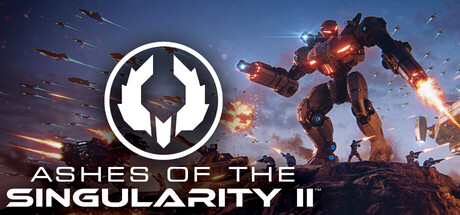
AI was used to provide post processing effects and animation to art created by human Stardock artists for some of the campaign cutscenes. Some cutscenes use Stardock human artist-made 3D assets with AI to composite the final shot. Lastly, some in-game unit barks, notifications, and a few minor characters use pre-generated ElevenLabs stock voices. All lines were written by Stardock designers and reviewed before inclusion, and nothing is generated live during play.
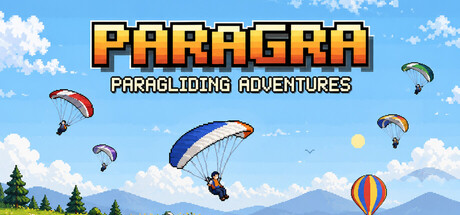
Paragra has been prototyped since 2020 by a solo developer. The final version was made with the help of AI tools, which assisted with code, pixel graphics, sound effects and text. All content was directed, edited, tuned and tested by the developer. The game does not generate any AI content while you play.
Some of the game's pixel art (such as backgrounds, buildings, sprites, icons and the logo) was created with the help of generative AI image tools, then edited, cleaned up and integrated into the game by the developer. Nothing is generated by AI while you play.
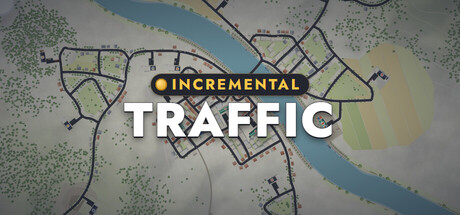
I built Incremental Traffic together with an AI coding assistant. That includes the code that draws everything you see.
There are no AI-painted images, textures, sounds or music in the game.
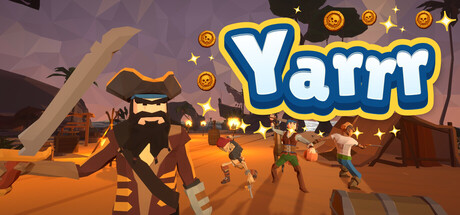
Some of Yarrr's 2D art was created with the help of AI tools: the relic, spell and passive icons, and the event illustrations. Every image and sound was selected, edited and placed in the game by hand.
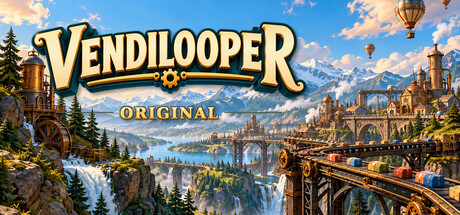
We used AI to create the game's assets and promotional artwork. Some assets (specifically the main game objects and machinery) were then manually edited in Blender. Others were further refined through several rounds of revisions by AI based on human prompts to add details, weathering polish, reduce mistakes and misplacements and add animated visual effects.
All content is created in advance. The game does not generate AI content during gameplay.
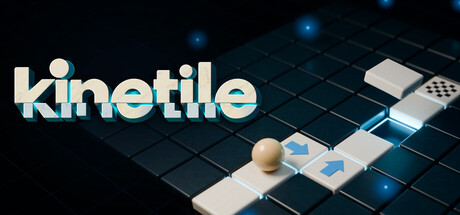
Kinetile is an expanded successor to Leadball, the iOS puzzle game released in 2015. Generative AI tools helped create the music, sound effects, in-game artwork and store artwork for this new PC edition. These tools helped give the larger game a fresh audiovisual presentation. All AI-assisted content was prepared during development and is included as finished assets. Nothing is generated by AI during play, and the game does not connect to AI services.
Generative AI was used for some 3D models, textures, text and translations, as well as promotional images, video and audio. No AI content is generated during gameplay.
Generative AI tools were used during development to create some character and monster images and animations, backgrounds, icons, music, in-game text and translations, and store artwork. These assets are created in advance and included in the game. The game does not generate new content or connect to external AI services during gameplay.
Generative AI tools were used during game development to assist with adapting and expanding in-game text and preparing translations. Generative AI was also used to create promotional artwork.
All in-game text is prepared in advance. The game does not generate AI content during gameplay or connect to external AI services.
Generative AI assisted with some character illustrations, decorative paintings, presentation images, achievement icons, marketing artwork, musical notes and arrangement materials, and text during development. These are fixed, pre-generated assets. The game does not generate content or connect to generative AI services during play. Store screenshots are direct captures from the running game and were not repainted with generative AI.
Generative AI tools helped make a large part of this game's art and some of its sound and text. The developer directed, reviewed and edited all of it.
- 3D models: most parts, launch-site props, station modules, interior fittings, lunar rocks, and the crew characters (body, head, suits) with their gear were generated with Meshy (paid commercial plan) from the developer's concept images or text prompts, and many were re-textured with Meshy. The concept images were made with image models (OpenAI gpt-image, nano-banana, Meshy text-to-image). A few fallback part models were reconstructed locally with TRELLIS.2.
- Images: the ground detail textures (grass, sand, pad concrete), the tree leaf cards, a floor-marking decal and the near-future cabin's holographic landscape are image-model pictures; a suit fabric texture derives from a FLUX.1-schnell image; a terrain detail field comes from an open terrain-diffusion model.
- Sound: some engine, ignition, shutdown, venting and RCS sounds were generated locally with Stable Audio Open 1.0, then edited.
- Text and code: the developer works with an AI assistant (Claude); the store page text and the in-game text were drafted with it and edited by the developer.
- Animation: the crew walk on motion-capture data (CMU Graphics Lab Motion Capture Database); an optional legacy walk is baked from reinforcement-learning policies the developer trained.
Not AI-generated: the remaining sounds (in-house synthesis and a NASA public-domain recording), the flag, the visual effects and the fonts (OFL).
Nothing is generated while you play.
Generative AI was used to help write dialogue based on the author's ideas, to translate texts, to draft the store page description, and to create the game icon and Steam achievement icons. No generative AI is used during gameplay.
The key art, logo, character illustrations, backgrounds, achievement and app icons, and the background music were created with AI generation tools and then edited and adjusted by our team. No content is generated by AI while you play.
Some content was made with generative AI tools under our direction: the background music, the logo, and the game text and its translations. Everything you see in the game is drawn by the game's own code. No content is generated by AI while you play.
Generative AI tools were used during the development of this game.
Generative AI assisted in the creation and refinement of certain in-game graphics, UI designs, animations, and programming code.
AI-assisted content was reviewed and modified by the developer before being incorporated into the game.
AI tools helped write some of the store page text and parts of the game's code and in-game text. All of it was reviewed and edited by the developer. The game does not generate any content with AI while you play.
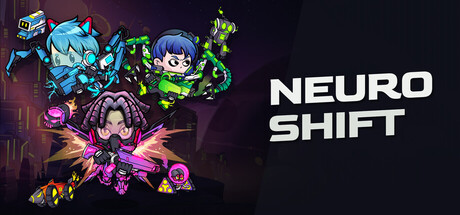
NEUROSHIFT's characters, enemies, weapons and animations are original hand-made art. Some environment and interface artwork (such as station rooms, screen backdrops and supply crates) was created with AI image generation and then edited and integrated by the developer. Nothing is generated by AI while you play.
Generative AI tools were used to assist with writing and translating the store page text. All final text was reviewed and edited by the developer. No AI-generated content is used for in-game artwork, music, or sound effects.