Public Steam disclosure research25,376 disclosures tracked
Where do games disclose AI use?
Search developers’ Steam disclosures, compare classified AI use across
games, and follow recorded changes.
This index adds cross-game classifications and statistics to
statements published on individual store pages.
Groups reflect automatic analysis of public disclosures; mature records are excluded. These counts do not measure AI use across all of Steam.
Missing or unclear statements cannot establish whether a game uses AI.
This game uses pre-generated AI only for certain 2D background images and promotional store visuals. These assets were created before release and remain fixed. The game does not include any live AI generation during gameplay.
Generative AI tools were used during development to assist with character artwork, educational text, translations, musical compositions, and store and marketing materials. This content was prepared during development. The game does not use generative AI during gameplay or connect to external AI services.
Generative AI was used to help create some of this game's marketing artwork, including the store page header and capsule images, based on descriptive prompts we wrote. Generative AI was also used to assist with writing the game's English-language localization (in-game menus and interface text).
Generative AI tools were used during development to assist with language translation and localization, as well as researching historical and contextual lore to ensure narrative accuracy. All final text, gameplay content, and lore were reviewed and edited by human creators.
Nest Rivals uses pre-generated AI-assisted artwork in selected sprites, environment textures, bestiary illustrations and marketing images. Some music and sound effects, as well as parts of this Steam store description, were also created with AI assistance. These materials were selected and integrated by the developer. The game does not generate AI content during gameplay.
Voltwood was developed with AI assistance. Pre-generated AI content that ships in the game and on the store page includes: 3D unit, structure, and environment models generated with Meshy from our own concept art; 2D art generated with ChatGPT from the developer's direction, including store capsule art, the app icon and key art, menu artwork, and achievement icons; music generated with Mureka; sound effects and character voice lines generated with ElevenLabs; game code, UI icons, and interface and store-page translations authored with Anthropic Claude. All AI output was reviewed, curated, and integrated by the developer, and all of it is owned by the developer under the respective services' paid-tier terms.
Generative AI was used only for the character portrait artwork currently included in the demo. No generative AI was used for gameplay, programming, game assets, localization, or other game content.
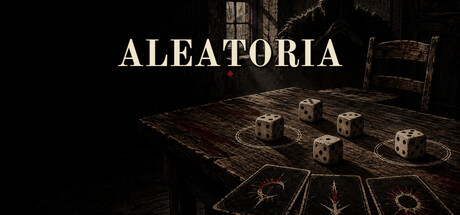
Pre-generated content only, nothing is generated while you play. All image motifs (130 modifier cards, 44 enemy portraits, 24 dice, 5 items, 7 set emblems, the title logo) were generated with Google's Gemini image model from written prompts and then hand-reduced to the game's palette and pixel size. Music: the fight track was generated with Suno, the title, boss and shop tracks with Eleven Music (ElevenLabs). Thirteen sound effects (boss entrance, curse, win, loss, dice shaking, dice landing, clicks, coins) were generated with ElevenLabs Sound Generation; all remaining sounds are synthesized in code. Rules, code, texts and translations were written by the developer, with AI assistance during development.
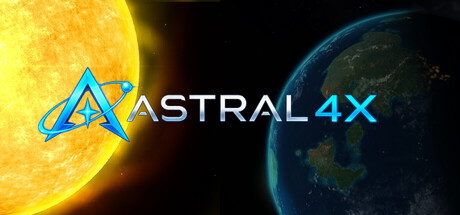
AstralX uses generative AI only for some 2D illustrative images, primarily certain biome visuals and depictions of some races/species. The game contains well over 1,000 such visual elements, which is why generative AI was used to assist with part of this 2D artwork.
Generative AI is not used for the game's simulation, mathematical calculations, gameplay rules, mechanics, or underlying systems. These elements were designed and developed manually by the developer. 3D content is also not generated using AI.
The music was composed manually and performed by a real pianist. The sound design was likewise created through traditional human production rather than generative AI.
No generative AI is used dynamically during gameplay.
The soundtrack was composed with Suno, and the sound effects and unit/announcer voice lines were generated with ElevenLabs; all were selected, edited and mixed by the developer. The title logo illustration was drafted with an AI image tool and finished by hand. The UI frame art is a licensed commercial kit (not AI). No AI content is generated while the game runs.
Generative AI tools were used during development, under our creative direction, to help create the game’s artwork, written content and marketing materials. AI tools also assisted with programming. This content was prepared before release. Risk Trader does not generate AI content during gameplay or connect to an external AI service; its in-game coach uses locally stored rules and messages.
Generative AI tools were used during development to assist with artwork (item illustrations, backgrounds and UI art), audio, and localisation. All AI-assisted content is pre-generated and reviewed, edited and finished by the developer before it ships. Nothing is generated at runtime, and the game contains no AI features while you play.
During development, generative artificial intelligence tools were used to create some pre-rendered static images featured in the game and in the Store page materials (illustrations and promotional graphics).
All content was selected, reviewed and integrated manually by the developer.
The game does not use generative AI during gameplay and does not generate content in real time.
Generative AI tools were used during development to assist with visual assets, music and programming. Generated outputs were reviewed, edited and integrated by the developer to fit the game’s design and creative direction.
Generative AI tools were used during development to create some artwork, music, text and translations, including promotional material. This content is prepared in advance. The game does not generate AI content or connect to AI services while you play.
The game includes a limited number of developer-reviewed AI-assisted 2D atmospheric illustrations used as static, non-interactive UI/background art. They are not gameplay screenshots, playable characters, dialogue, code, or user-generated content. Interactive levels, gameplay systems, text, and the in-game 3D presentation are authored or assembled by the developer using project-owned and separately tracked third-party assets.
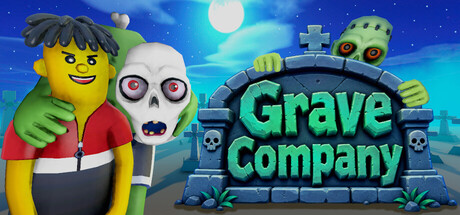
Some artwork and localization in Grave Company were created with the assistance of generative AI. This content was reviewed and adjusted by the development team before release.
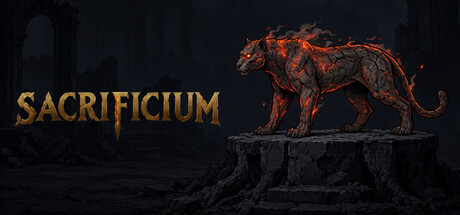
Some of the visual assets in Sacrificium — creature sprites, animations and background art — were created with the help of generative AI tools, then reviewed, edited and integrated by hand. All generative AI content is pre-generated; nothing is generated at runtime while you play. Game design, code, systems and all in-game text were written entirely by a human.
Generative AI tools were used throughout development: the game's code and its in-game text, the paintings, achievement icons and interface art, the 3D models, and the music and sound effects. Everything was reviewed, edited and tested, and ships as fixed content. Nothing is generated while you play: the game runs no model and makes no network call.
English localization text in the game was produced with AI assistance and reviewed by the developer. Parts of the store page description were also drafted with AI assistance.
The music in Ammerow: Lands Beyond was created with Claude Compose, a bespoke composition system built for this project. Rather than a generative music model, it works like a tireless studio composer: an AI assistant (Anthropic's Claude) writes and runs code that composes each piece note by note — melody, harmony, counterpoint and orchestration derived from music theory — and performs it through real, licensed virtual instruments in a professional DAW (Ableton Live). It then "listens back" by analysing the rendered audio to refine the balance. No generative audio/music model was used, no AI was trained on other artists' recordings, and no track was produced from a prompt. Every note is placed deliberately, and every piece is directed, reviewed and approved by a human. The result is authored, not generated.
The sound effects are an original, human-directed procedural synthesis library. Claude Code assisted in writing custom Python DSP software and individual cue recipes; every waveform was deterministically rendered from mathematical models and recorded seeds. No recordings, performers, samples, stock audio, sample libraries or generative-audio service were used.
Ammerow is designed primarily as a coloured ASCII game. Selected creature, item and shopkeeper illustrations began as AI-generated source images and are converted through a deterministic ASCII-art pipeline. The optional tile mode is a work-in-progress secondary presentation. Its small atlases were programmatically drawn in a custom SDL application using natural-language Codex direction. No generative-image model, inherited tileset, traced artwork or third-party graphical asset was used.
Some narrative, gameplay data and other player-facing material were also developed with AI assistance under human direction and review.
Some Steam marketing backgrounds were created using OpenAI image-generation tools and then selected, reviewed and combined with deterministic Ammerow branding by the developer.
No AI runs while the game is being played.
Game illustrations and some sound effects, as well as part of the text and localization, are created using generative AI tools, then manually refined and validated. No content is generated by AI in real time, and the game design is human-made.
Pre-generated content only. Some 2D art assets in the game (planet, star and interface sprites) and the store page capsule artwork were produced using generative AI image tools, then edited, composited, colour-corrected and integrated by hand. No generative AI runs at runtime and no content is generated live during gameplay. All audio is either licensed under Creative Commons with attribution given in-game, or original.
All previously used AI-generated or AI-assisted content has now been completely removed from both the full game and the demo. (That was old UI and intro).
**No AI-generated images are used in the game.**
**The only remaining use of AI in the game is for localization and translations.**
As the game generates revenue, I plan to hire professional translators for each supported language and gradually replace all AI-assisted translations with professionally translated versions.
This game uses artwork, audio, and other assets created with generative AI during development. These assets are generated in advance and included in the game installation. Generative AI is also used to create Steam store artwork. The game does not generate AI content during gameplay or connect to external AI services.
Generative AI tools were used during development to assist with the creation of some pre-generated 2D visual assets, illustrations, and written content drafts. All AI-assisted content is reviewed, edited, and curated by the development team before being included in the game or promotional materials. The game does not use generative AI to create content in real time during gameplay.
Generative tools were used during development to create and refine pre-generated artwork, some 3D assets, textures, audio, cinematic sequences, and store/marketing materials, including translated store descriptions. These assets are included as fixed content. The game does not generate AI content during play and does not connect to a generative AI service.
Generative AI was used during development to help create pre-rendered content that ships with the game: in-game text and narrative templates, store page copy, and 2D brand artwork - all reviewed by the developer. The simulation itself (players, teams, seasons, statistics) is produced at runtime by the game's own deterministic statistical engine, not by AI. No AI-generated content is created while you play.
EVER BELOW was created with the assistance of generative AI across parts of its content creation and development process, including visual assets and marketing materials. All AI-assisted content was manually reviewed, selected, edited where necessary, and all final creative and development decisions were made by the developer.
This game utilizes generative AI technologies in the following areas: [Pre-generated Content] Part of BGM: AI-generated audio is temporarily used as placeholder assets during development (to be progressively replaced in future updates). [Real-time Generation during Gameplay] In-Game Text: Dynamic generation of dialogues and narrative text tailored to in-game situations. Character Voice: Real-time speech synthesis for character voices based on generated text. *All real-time generation processes run entirely locally and securely on the player's machine, with no data transmitted to external servers. Furthermore, there is no feature allowing players to freely input custom text or prompts.
As a solo developer several of the art assets used during the development of the game are generated using AI models with art references. Should the game be successful it is my hope to slowly start using commissioned art.
I am a solo developer leveraging AI to improve my efficiency while moonlighting this project. Hence, many temporary AI-generated assets make their way into the game but I hope to replace over 90% of those with handcrafted assets over time.
AI tools assist with programming, translation, and creating selected visual assets and marketing materials. All AI-assisted content is reviewed and edited by the developer before inclusion.
Most of Stackade's code was written with generative AI coding tools, working to the developer's direction. Everything you see on the board is drawn by that code; the game contains no AI-generated images. The ten translations besides English were produced with AI. Parts of this store page, its marketing images and its trailer were also made with AI assistance. The sound effects and music are recordings made by people and are credited in the game. Nothing is generated by AI while you play, and the game never connects to an AI service.
AI-based coding assistants were used to help write this game's source code during development. The game contains no generative AI at runtime: the entire simulated world is created by deterministic, hand-authored procedural generation from a seed, not by AI.
We conducted game testing with AI bots and fine-tuned the balance.
TIC.EXE does not use AI while you play. The procedurally generated boards, runs and the chiptune soundtrack are all produced by hand-written algorithms, and no content is generated at runtime.
Diplomacy, or Else! was built with AI-assisted development. Generative AI was used, under the developer's direction and review, for game code and for writing text: interface strings, the in-game diplomacy word tables, achievement names and descriptions, and this store page, including their German, Spanish, Brazilian Portuguese and Ukrainian translations. The soundtrack was produced with an AI music tool and edited by the developer. Artwork, icons, the trailer and sound effects were made without generative AI. The game does not generate content during play and does not connect to any AI service.
Pie Paw includes pre-generated, AI-assisted artwork used in the game and on the Steam store page. All such content is created before release, then reviewed, selected, and edited by the development team. The game does not use generative AI during gameplay and does not connect to external AI services.
The text in HEATSINK — its interface strings and its translations — was written with the assistance of generative AI.
Nothing is generated while you play. There are no AI-generated images or audio in this game, because there are no image or audio files at all: every shape on screen is drawn by code, and every sound is synthesised when the game launches.
Some of the assets in this game were created using generative AI tools. Generated assets were reviewed by the developer and edited where necessary before use. The game itself does not use AI to generate content or code while it is running, and it does not connect to any external AI service.
This game uses pre-generated AI only for certain 2D background images and promotional store visuals. These assets were created before release and remain fixed. The game does not include any live AI generation during gameplay.
Generative AI tools were used during development to assist with character artwork, educational text, translations, musical compositions, and store and marketing materials. This content was prepared during development. The game does not use generative AI during gameplay or connect to external AI services.
Generative AI was used to help create some of this game's marketing artwork, including the store page header and capsule images, based on descriptive prompts we wrote. Generative AI was also used to assist with writing the game's English-language localization (in-game menus and interface text).
Generative AI tools were used during development to assist with language translation and localization, as well as researching historical and contextual lore to ensure narrative accuracy. All final text, gameplay content, and lore were reviewed and edited by human creators.
Nest Rivals uses pre-generated AI-assisted artwork in selected sprites, environment textures, bestiary illustrations and marketing images. Some music and sound effects, as well as parts of this Steam store description, were also created with AI assistance. These materials were selected and integrated by the developer. The game does not generate AI content during gameplay.
Voltwood was developed with AI assistance. Pre-generated AI content that ships in the game and on the store page includes: 3D unit, structure, and environment models generated with Meshy from our own concept art; 2D art generated with ChatGPT from the developer's direction, including store capsule art, the app icon and key art, menu artwork, and achievement icons; music generated with Mureka; sound effects and character voice lines generated with ElevenLabs; game code, UI icons, and interface and store-page translations authored with Anthropic Claude. All AI output was reviewed, curated, and integrated by the developer, and all of it is owned by the developer under the respective services' paid-tier terms.
Generative AI was used only for the character portrait artwork currently included in the demo. No generative AI was used for gameplay, programming, game assets, localization, or other game content.
Pre-generated content only, nothing is generated while you play. All image motifs (130 modifier cards, 44 enemy portraits, 24 dice, 5 items, 7 set emblems, the title logo) were generated with Google's Gemini image model from written prompts and then hand-reduced to the game's palette and pixel size. Music: the fight track was generated with Suno, the title, boss and shop tracks with Eleven Music (ElevenLabs). Thirteen sound effects (boss entrance, curse, win, loss, dice shaking, dice landing, clicks, coins) were generated with ElevenLabs Sound Generation; all remaining sounds are synthesized in code. Rules, code, texts and translations were written by the developer, with AI assistance during development.
AstralX uses generative AI only for some 2D illustrative images, primarily certain biome visuals and depictions of some races/species. The game contains well over 1,000 such visual elements, which is why generative AI was used to assist with part of this 2D artwork.
Generative AI is not used for the game's simulation, mathematical calculations, gameplay rules, mechanics, or underlying systems. These elements were designed and developed manually by the developer. 3D content is also not generated using AI.
The music was composed manually and performed by a real pianist. The sound design was likewise created through traditional human production rather than generative AI.
No generative AI is used dynamically during gameplay.
The soundtrack was composed with Suno, and the sound effects and unit/announcer voice lines were generated with ElevenLabs; all were selected, edited and mixed by the developer. The title logo illustration was drafted with an AI image tool and finished by hand. The UI frame art is a licensed commercial kit (not AI). No AI content is generated while the game runs.
Generative AI tools were used during development, under our creative direction, to help create the game’s artwork, written content and marketing materials. AI tools also assisted with programming. This content was prepared before release. Risk Trader does not generate AI content during gameplay or connect to an external AI service; its in-game coach uses locally stored rules and messages.
Generative AI tools were used during development to assist with artwork (item illustrations, backgrounds and UI art), audio, and localisation. All AI-assisted content is pre-generated and reviewed, edited and finished by the developer before it ships. Nothing is generated at runtime, and the game contains no AI features while you play.
During development, generative artificial intelligence tools were used to create some pre-rendered static images featured in the game and in the Store page materials (illustrations and promotional graphics).
All content was selected, reviewed and integrated manually by the developer.
The game does not use generative AI during gameplay and does not generate content in real time.
Generative AI tools were used during development to assist with visual assets, music and programming. Generated outputs were reviewed, edited and integrated by the developer to fit the game’s design and creative direction.
Generative AI tools were used during development to create some artwork, music, text and translations, including promotional material. This content is prepared in advance. The game does not generate AI content or connect to AI services while you play.
The game includes a limited number of developer-reviewed AI-assisted 2D atmospheric illustrations used as static, non-interactive UI/background art. They are not gameplay screenshots, playable characters, dialogue, code, or user-generated content. Interactive levels, gameplay systems, text, and the in-game 3D presentation are authored or assembled by the developer using project-owned and separately tracked third-party assets.
Some artwork and localization in Grave Company were created with the assistance of generative AI. This content was reviewed and adjusted by the development team before release.
Some of the visual assets in Sacrificium — creature sprites, animations and background art — were created with the help of generative AI tools, then reviewed, edited and integrated by hand. All generative AI content is pre-generated; nothing is generated at runtime while you play. Game design, code, systems and all in-game text were written entirely by a human.
Generative AI tools were used throughout development: the game's code and its in-game text, the paintings, achievement icons and interface art, the 3D models, and the music and sound effects. Everything was reviewed, edited and tested, and ships as fixed content. Nothing is generated while you play: the game runs no model and makes no network call.
English localization text in the game was produced with AI assistance and reviewed by the developer. Parts of the store page description were also drafted with AI assistance.
The music in Ammerow: Lands Beyond was created with Claude Compose, a bespoke composition system built for this project. Rather than a generative music model, it works like a tireless studio composer: an AI assistant (Anthropic's Claude) writes and runs code that composes each piece note by note — melody, harmony, counterpoint and orchestration derived from music theory — and performs it through real, licensed virtual instruments in a professional DAW (Ableton Live). It then "listens back" by analysing the rendered audio to refine the balance. No generative audio/music model was used, no AI was trained on other artists' recordings, and no track was produced from a prompt. Every note is placed deliberately, and every piece is directed, reviewed and approved by a human. The result is authored, not generated.
The sound effects are an original, human-directed procedural synthesis library. Claude Code assisted in writing custom Python DSP software and individual cue recipes; every waveform was deterministically rendered from mathematical models and recorded seeds. No recordings, performers, samples, stock audio, sample libraries or generative-audio service were used.
Ammerow is designed primarily as a coloured ASCII game. Selected creature, item and shopkeeper illustrations began as AI-generated source images and are converted through a deterministic ASCII-art pipeline. The optional tile mode is a work-in-progress secondary presentation. Its small atlases were programmatically drawn in a custom SDL application using natural-language Codex direction. No generative-image model, inherited tileset, traced artwork or third-party graphical asset was used.
Some narrative, gameplay data and other player-facing material were also developed with AI assistance under human direction and review.
Some Steam marketing backgrounds were created using OpenAI image-generation tools and then selected, reviewed and combined with deterministic Ammerow branding by the developer.
No AI runs while the game is being played.
Game illustrations and some sound effects, as well as part of the text and localization, are created using generative AI tools, then manually refined and validated. No content is generated by AI in real time, and the game design is human-made.
Pre-generated content only. Some 2D art assets in the game (planet, star and interface sprites) and the store page capsule artwork were produced using generative AI image tools, then edited, composited, colour-corrected and integrated by hand. No generative AI runs at runtime and no content is generated live during gameplay. All audio is either licensed under Creative Commons with attribution given in-game, or original.
All previously used AI-generated or AI-assisted content has now been completely removed from both the full game and the demo. (That was old UI and intro).
**No AI-generated images are used in the game.**
**The only remaining use of AI in the game is for localization and translations.**
As the game generates revenue, I plan to hire professional translators for each supported language and gradually replace all AI-assisted translations with professionally translated versions.
This game uses artwork, audio, and other assets created with generative AI during development. These assets are generated in advance and included in the game installation. Generative AI is also used to create Steam store artwork. The game does not generate AI content during gameplay or connect to external AI services.
Generative AI tools were used during development to assist with the creation of some pre-generated 2D visual assets, illustrations, and written content drafts. All AI-assisted content is reviewed, edited, and curated by the development team before being included in the game or promotional materials. The game does not use generative AI to create content in real time during gameplay.
Generative tools were used during development to create and refine pre-generated artwork, some 3D assets, textures, audio, cinematic sequences, and store/marketing materials, including translated store descriptions. These assets are included as fixed content. The game does not generate AI content during play and does not connect to a generative AI service.
Generative AI was used during development to help create pre-rendered content that ships with the game: in-game text and narrative templates, store page copy, and 2D brand artwork - all reviewed by the developer. The simulation itself (players, teams, seasons, statistics) is produced at runtime by the game's own deterministic statistical engine, not by AI. No AI-generated content is created while you play.
EVER BELOW was created with the assistance of generative AI across parts of its content creation and development process, including visual assets and marketing materials. All AI-assisted content was manually reviewed, selected, edited where necessary, and all final creative and development decisions were made by the developer.
This game utilizes generative AI technologies in the following areas: [Pre-generated Content] Part of BGM: AI-generated audio is temporarily used as placeholder assets during development (to be progressively replaced in future updates). [Real-time Generation during Gameplay] In-Game Text: Dynamic generation of dialogues and narrative text tailored to in-game situations. Character Voice: Real-time speech synthesis for character voices based on generated text. *All real-time generation processes run entirely locally and securely on the player's machine, with no data transmitted to external servers. Furthermore, there is no feature allowing players to freely input custom text or prompts.
As a solo developer several of the art assets used during the development of the game are generated using AI models with art references. Should the game be successful it is my hope to slowly start using commissioned art.
I am a solo developer leveraging AI to improve my efficiency while moonlighting this project. Hence, many temporary AI-generated assets make their way into the game but I hope to replace over 90% of those with handcrafted assets over time.
AI tools assist with programming, translation, and creating selected visual assets and marketing materials. All AI-assisted content is reviewed and edited by the developer before inclusion.
Most of Stackade's code was written with generative AI coding tools, working to the developer's direction. Everything you see on the board is drawn by that code; the game contains no AI-generated images. The ten translations besides English were produced with AI. Parts of this store page, its marketing images and its trailer were also made with AI assistance. The sound effects and music are recordings made by people and are credited in the game. Nothing is generated by AI while you play, and the game never connects to an AI service.
AI-based coding assistants were used to help write this game's source code during development. The game contains no generative AI at runtime: the entire simulated world is created by deterministic, hand-authored procedural generation from a seed, not by AI.
We conducted game testing with AI bots and fine-tuned the balance.
TIC.EXE does not use AI while you play. The procedurally generated boards, runs and the chiptune soundtrack are all produced by hand-written algorithms, and no content is generated at runtime.
Diplomacy, or Else! was built with AI-assisted development. Generative AI was used, under the developer's direction and review, for game code and for writing text: interface strings, the in-game diplomacy word tables, achievement names and descriptions, and this store page, including their German, Spanish, Brazilian Portuguese and Ukrainian translations. The soundtrack was produced with an AI music tool and edited by the developer. Artwork, icons, the trailer and sound effects were made without generative AI. The game does not generate content during play and does not connect to any AI service.
Pie Paw includes pre-generated, AI-assisted artwork used in the game and on the Steam store page. All such content is created before release, then reviewed, selected, and edited by the development team. The game does not use generative AI during gameplay and does not connect to external AI services.
The text in HEATSINK — its interface strings and its translations — was written with the assistance of generative AI.
Nothing is generated while you play. There are no AI-generated images or audio in this game, because there are no image or audio files at all: every shape on screen is drawn by code, and every sound is synthesised when the game launches.
Some of the assets in this game were created using generative AI tools. Generated assets were reviewed by the developer and edited where necessary before use. The game itself does not use AI to generate content or code while it is running, and it does not connect to any external AI service.