Public Steam disclosure research25,376 disclosures tracked
Where do games disclose AI use?
Search developers’ Steam disclosures, compare classified AI use across
games, and follow recorded changes.
This index adds cross-game classifications and statistics to
statements published on individual store pages.
Groups reflect automatic analysis of public disclosures; mature records are excluded. These counts do not measure AI use across all of Steam.
Missing or unclear statements cannot establish whether a game uses AI.
Generative AI tools assisted with portions of development, including some player-facing UI, tutorial and campaign text, and implementation code.
All output was reviewed and edited by the developer. The game does not generate AI content while running.
Maps and terrain are generated using deterministic procedural algorithms and public-domain geographic data. Audio uses licensed recordings and conventional synthesis/editing, not generative AI.
This game uses AI-generated voice acting. All character voices were synthesized with ElevenLabs using original text prompts and original scripts written for this game. No real person's voice was cloned, recorded, or used as source material. Some creature and ambient sound effects are also AI-generated. All audio is pre-generated and ships with the game; nothing is generated at runtime.
The hero image, small capsule, main capsule, vertical capsule, library capsule, library hero image, library logo and library home page art were created with AI assistance.
The in-game warning UI and spray decals are AI-generated.
Besides this, all gameplay videos and screenshots you see in the store are captured from actual gameplay footage, with no retouching or AI generation applied.
The game's art and audio content — including visual assets, UI elements, and store page artwork — was generated with the assistance of AI tools during development and then refined by the team. All AI-generated content was created during development; the game does not generate content while you play.
Programming: AI tools (Cursor) were utilized to assist with drafting partial code blocks and isolated scripts. The overall core logic, architecture, and system design were manually programmed by the developer.
Art Assets: An AI image generator (PixelLab) was used to help conceptualize and generate some of the pixel art assets. These assets were manually reviewed and integrated to fit the game's retro aesthetic.
Localization / Translation: AI translation tools were used to assist in translating in-game text and store page descriptions into multiple languages.
This game used AI to help quickly iterate through designs for some UI elements using our own artwork as a baseline. AI is used to generate sound effects AI is also used to help translate the game.
The developer used generative AI as a tool during development. Store page and marketing copy was drafted with an AI writing assistant and edited by the developer. All artwork, logos, and screenshots are human-created or captured from real gameplay. The game does not use generative AI to create any content live during play all in-game text, events, and outcomes come from the developer's own hand-authored, deterministic systems. All AI-assisted content is reviewed by the developer before release.
The game's art content — including unit art, terrain tiles, UI elements, and store page artwork — was generated with the assistance of AI tools during development and then refined by the team. All AI-generated content was created during development; the game does not generate content while you play.
The core gameplay of this game adopts an independent AI warlord confrontation system. All Three Kingdoms generals and regional lord NPCs make autonomous decisions on their own, and can independently launch alliances, declarations of war, diplomatic negotiations, grain supply trades, secret betrayals and other political strategic behaviors. In-game plot dialogues and interactions among warlords are dynamically generated by AI. A built-in content safety filter is activated throughout the game to prevent the generation of illegal, violent and inappropriate content.
Game art assets are generated using AI tools to create initial concept art, which is then manually adjusted and modified by artists. The final works combine AI-generated foundational designs with human artistic revisions.
Some dynamic art assets are assisted in their creation by AI tools.
3d Models for Space Ships created with Meshy.
cooperation in Thinking, design and balance.
C# coding.
Unity Editor Agent for crafting suns and planets out of bought Unity Asset Store Assets.
Generative AI tools were used to help create parts of this game, always under the developer's direction: a significant part of the artwork (such as backgrounds, unit graphics, UI elements and store page images) was created with AI assistance and then reviewed, edited and hand-tuned by the developer. AI also assisted in writing the in-game text and translating it, along with this store page, into the supported languages. Music and sound effects are not AI-generated. No AI content is generated live during gameplay.
Some store and marketing artwork (capsule/header images) was created with AI image
tools and then reviewed and edited by the developer. Some in-game commander avatars
were also AI-assisted. The game does not generate any AI content live during play.
During the development process, we may use AI-based tools. In all such cases, the final product reflects the creativity and expression of our own development team.
Artificial intelligence was used to generate the base concepts for the characters and planets in the game. All generated assets were then significantly edited, refined, and finalized manually to fit the game's unique art style.
This game makes use of AI for localization of the following languages: Ukrainian, Spanish, Japanese, Korean, Polish, Portugese (Brasil), Russian, Simplified Chinese, Traditional Chinese, Turkish, Hindi. We're working with native translators, so expect this list to become shorter with time.
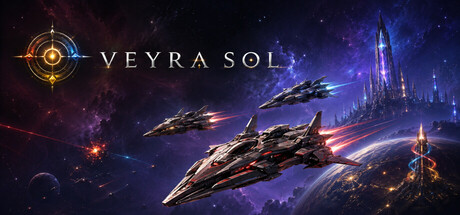
Veyrasol uses generative AI tools as part of its art pipeline. Both 3D models and 2D artwork used in the game (illustrations, backgrounds, UI and unit icons), as well as store page and marketing graphics such as capsule images and banners, were created with the help of generative AI tools and then reviewed, edited and assembled by the developer. Generative AI tools were also used to help write parts of the marketing website and store page copy. The core game (engine, server logic, real-time combat, and systems) is hand-coded by the developer, and no content is generated by AI at runtime during play.
This game uses generative AI to assist with parts of the localization process. All AI-assisted translations are reviewed and edited by the developer before being included in the game.
Some visual assets in this game (such as illustrations, icons, and background images) were created with the assistance of generative AI tools. All AI-generated content was reviewed, edited, and curated by our development team before being included in the game.
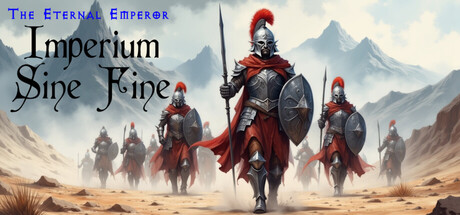
As a solo developer, I used generative AI tools to help create some of the game's icons, artwork, and written text, which I then reviewed and edited by hand. The game's design, code, and systems are my own work, and the world, its factions, and its story are built on lore I have developed across the Imperium Sine Fine saga. Nothing is AI-generated during gameplay.
Some visual assets in this game (such as illustrations, icons, and background images) were created with the assistance of generative AI tools. All AI-generated content was reviewed, edited, and curated by our development team before being included in the game.
Bear with me. As a solo-creator I really want to first focus on the game complex logic and its user interface and features, which are crucial to me to give you the best possible experience I can. So this game includes a small number of artworks and music tracks generated using AI tools, which where still edited and refined by me before being included in the final build. I'm working hard to make the game even better at every release. Thank you!
We used generative AI tools to assist in creating in-game background illustrations. All AI-generated assets were pre-rendered during development and do not generate content in real-time.
We used generative AI tools during development to create game icons. All assets were reviewed and integrated manually. The game does not generate content in real-time.
The game does not use AI to generate content for the game. Some of the game content was developed using AI, but the game itself does not use AI to generate any content.
Some art assets, textures, and sound effects are created with the assistance of AI tools, then curated and edited by the developer. All game design, gameplay systems, code architecture, physics simulation, and mission design are human-made. No AI-generated content is created at runtime.
As a solo developer with a limited budget, I use AI tools to help produce some assets and sounds. This lets me keep my time focused where a solo dev's hours matter most — the core gameplay, the physics simulation, and mission design — while still delivering production quality that would normally require an extended team. Every AI-assisted asset is curated, edited, and integrated by hand.
During production we use generative AI in one narrow way: internal placeholders. Rough concept sketches and scratch voice lines hold a spot while the real assets are being made. Every placeholder is flagged in-engine, and none of it ships in the game players buy — the release version contains no generative AI content. Testers in early builds may spot flagged placeholders; that's what the flags are for. All art, writing, and voice work in the finished game is made by people. We know even placeholder use is a fair thing to question, so where we do use these tools, we aim for ones that license their training data and compensate the creators behind it.
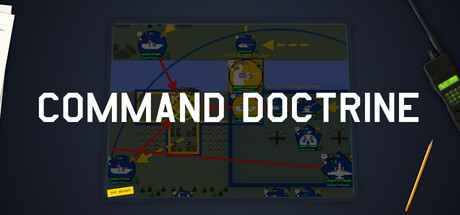
Command Doctrine uses generative AI to create some of the content you play. When you generate a scenario or a campaign, an AI model produces the map, the opposing forces, the objectives, and the written mission briefing from your prompt. AI is also used to write narrative battle reports, to create the images that accompany them, and to interpret the natural-language orders you give your units. This content is generated live by third-party AI services. We apply content moderation and input filtering to guard against inappropriate or unsafe output.
Some visual assets, including characters, environments, objects, and backgrounds, were produced with the help of generative AI tools during development, then curated, edited, cleaned up, and integrated manually under human art direction to achieve a consistent visual style.
The capsule images and promotional artworks on the Steam store page of this game are AI-generated. All images have been manually adjusted in composition, refined in details and post-processed with text addition, without any copyrighted third-party materials. No real-time AI content generation during gameplay.
Generative artificial intelligence was employed during pre-production and development to create concept art, historical background illustrations, and compose the soundtrack. Additionally, AI was used to generate initial base meshes for select 3D models, which were then fully refined, textured, and optimized manually by the development team.
I have utilized AI tools to assist in the creation of some store page assets and in-game textures. These AI-generated elements were used as a foundational base, which were then heavily edited, polished, and manually integrated by me to ensure they align with the game's unique art style and technical requirements. No AI tools were used to generate the core gameplay logic or narrative content; their usage was strictly limited to the visual asset production pipeline.
AI image generation tools (ChatGPT/DALL-E) were used to create unit artwork, faction sprites, and promotional images for this game. No AI was used to generate game code, narrative text, or audio content.
Generative AI tools assisted with portions of development, including some player-facing UI, tutorial and campaign text, and implementation code.
All output was reviewed and edited by the developer. The game does not generate AI content while running.
Maps and terrain are generated using deterministic procedural algorithms and public-domain geographic data. Audio uses licensed recordings and conventional synthesis/editing, not generative AI.
This game uses AI-generated voice acting. All character voices were synthesized with ElevenLabs using original text prompts and original scripts written for this game. No real person's voice was cloned, recorded, or used as source material. Some creature and ambient sound effects are also AI-generated. All audio is pre-generated and ships with the game; nothing is generated at runtime.
The hero image, small capsule, main capsule, vertical capsule, library capsule, library hero image, library logo and library home page art were created with AI assistance.
The in-game warning UI and spray decals are AI-generated.
Besides this, all gameplay videos and screenshots you see in the store are captured from actual gameplay footage, with no retouching or AI generation applied.
The game's art and audio content — including visual assets, UI elements, and store page artwork — was generated with the assistance of AI tools during development and then refined by the team. All AI-generated content was created during development; the game does not generate content while you play.
Programming: AI tools (Cursor) were utilized to assist with drafting partial code blocks and isolated scripts. The overall core logic, architecture, and system design were manually programmed by the developer.
Art Assets: An AI image generator (PixelLab) was used to help conceptualize and generate some of the pixel art assets. These assets were manually reviewed and integrated to fit the game's retro aesthetic.
Localization / Translation: AI translation tools were used to assist in translating in-game text and store page descriptions into multiple languages.
This game used AI to help quickly iterate through designs for some UI elements using our own artwork as a baseline. AI is used to generate sound effects AI is also used to help translate the game.
The developer used generative AI as a tool during development. Store page and marketing copy was drafted with an AI writing assistant and edited by the developer. All artwork, logos, and screenshots are human-created or captured from real gameplay. The game does not use generative AI to create any content live during play all in-game text, events, and outcomes come from the developer's own hand-authored, deterministic systems. All AI-assisted content is reviewed by the developer before release.
The game's art content — including unit art, terrain tiles, UI elements, and store page artwork — was generated with the assistance of AI tools during development and then refined by the team. All AI-generated content was created during development; the game does not generate content while you play.
The core gameplay of this game adopts an independent AI warlord confrontation system. All Three Kingdoms generals and regional lord NPCs make autonomous decisions on their own, and can independently launch alliances, declarations of war, diplomatic negotiations, grain supply trades, secret betrayals and other political strategic behaviors. In-game plot dialogues and interactions among warlords are dynamically generated by AI. A built-in content safety filter is activated throughout the game to prevent the generation of illegal, violent and inappropriate content.
Game art assets are generated using AI tools to create initial concept art, which is then manually adjusted and modified by artists. The final works combine AI-generated foundational designs with human artistic revisions.
Some dynamic art assets are assisted in their creation by AI tools.
3d Models for Space Ships created with Meshy.
cooperation in Thinking, design and balance.
C# coding.
Unity Editor Agent for crafting suns and planets out of bought Unity Asset Store Assets.
Generative AI tools were used to help create parts of this game, always under the developer's direction: a significant part of the artwork (such as backgrounds, unit graphics, UI elements and store page images) was created with AI assistance and then reviewed, edited and hand-tuned by the developer. AI also assisted in writing the in-game text and translating it, along with this store page, into the supported languages. Music and sound effects are not AI-generated. No AI content is generated live during gameplay.
Some store and marketing artwork (capsule/header images) was created with AI image
tools and then reviewed and edited by the developer. Some in-game commander avatars
were also AI-assisted. The game does not generate any AI content live during play.
During the development process, we may use AI-based tools. In all such cases, the final product reflects the creativity and expression of our own development team.
Artificial intelligence was used to generate the base concepts for the characters and planets in the game. All generated assets were then significantly edited, refined, and finalized manually to fit the game's unique art style.
This game makes use of AI for localization of the following languages: Ukrainian, Spanish, Japanese, Korean, Polish, Portugese (Brasil), Russian, Simplified Chinese, Traditional Chinese, Turkish, Hindi. We're working with native translators, so expect this list to become shorter with time.
Veyrasol uses generative AI tools as part of its art pipeline. Both 3D models and 2D artwork used in the game (illustrations, backgrounds, UI and unit icons), as well as store page and marketing graphics such as capsule images and banners, were created with the help of generative AI tools and then reviewed, edited and assembled by the developer. Generative AI tools were also used to help write parts of the marketing website and store page copy. The core game (engine, server logic, real-time combat, and systems) is hand-coded by the developer, and no content is generated by AI at runtime during play.
This game uses generative AI to assist with parts of the localization process. All AI-assisted translations are reviewed and edited by the developer before being included in the game.
Some visual assets in this game (such as illustrations, icons, and background images) were created with the assistance of generative AI tools. All AI-generated content was reviewed, edited, and curated by our development team before being included in the game.
As a solo developer, I used generative AI tools to help create some of the game's icons, artwork, and written text, which I then reviewed and edited by hand. The game's design, code, and systems are my own work, and the world, its factions, and its story are built on lore I have developed across the Imperium Sine Fine saga. Nothing is AI-generated during gameplay.
Some visual assets in this game (such as illustrations, icons, and background images) were created with the assistance of generative AI tools. All AI-generated content was reviewed, edited, and curated by our development team before being included in the game.
Bear with me. As a solo-creator I really want to first focus on the game complex logic and its user interface and features, which are crucial to me to give you the best possible experience I can. So this game includes a small number of artworks and music tracks generated using AI tools, which where still edited and refined by me before being included in the final build. I'm working hard to make the game even better at every release. Thank you!
We used generative AI tools to assist in creating in-game background illustrations. All AI-generated assets were pre-rendered during development and do not generate content in real-time.
We used generative AI tools during development to create game icons. All assets were reviewed and integrated manually. The game does not generate content in real-time.
The game does not use AI to generate content for the game. Some of the game content was developed using AI, but the game itself does not use AI to generate any content.
Some art assets, textures, and sound effects are created with the assistance of AI tools, then curated and edited by the developer. All game design, gameplay systems, code architecture, physics simulation, and mission design are human-made. No AI-generated content is created at runtime.
As a solo developer with a limited budget, I use AI tools to help produce some assets and sounds. This lets me keep my time focused where a solo dev's hours matter most — the core gameplay, the physics simulation, and mission design — while still delivering production quality that would normally require an extended team. Every AI-assisted asset is curated, edited, and integrated by hand.
During production we use generative AI in one narrow way: internal placeholders. Rough concept sketches and scratch voice lines hold a spot while the real assets are being made. Every placeholder is flagged in-engine, and none of it ships in the game players buy — the release version contains no generative AI content. Testers in early builds may spot flagged placeholders; that's what the flags are for. All art, writing, and voice work in the finished game is made by people. We know even placeholder use is a fair thing to question, so where we do use these tools, we aim for ones that license their training data and compensate the creators behind it.
Command Doctrine uses generative AI to create some of the content you play. When you generate a scenario or a campaign, an AI model produces the map, the opposing forces, the objectives, and the written mission briefing from your prompt. AI is also used to write narrative battle reports, to create the images that accompany them, and to interpret the natural-language orders you give your units. This content is generated live by third-party AI services. We apply content moderation and input filtering to guard against inappropriate or unsafe output.
Some visual assets, including characters, environments, objects, and backgrounds, were produced with the help of generative AI tools during development, then curated, edited, cleaned up, and integrated manually under human art direction to achieve a consistent visual style.
The capsule images and promotional artworks on the Steam store page of this game are AI-generated. All images have been manually adjusted in composition, refined in details and post-processed with text addition, without any copyrighted third-party materials. No real-time AI content generation during gameplay.
Generative artificial intelligence was employed during pre-production and development to create concept art, historical background illustrations, and compose the soundtrack. Additionally, AI was used to generate initial base meshes for select 3D models, which were then fully refined, textured, and optimized manually by the development team.
I have utilized AI tools to assist in the creation of some store page assets and in-game textures. These AI-generated elements were used as a foundational base, which were then heavily edited, polished, and manually integrated by me to ensure they align with the game's unique art style and technical requirements. No AI tools were used to generate the core gameplay logic or narrative content; their usage was strictly limited to the visual asset production pipeline.
AI image generation tools (ChatGPT/DALL-E) were used to create unit artwork, faction sprites, and promotional images for this game. No AI was used to generate game code, narrative text, or audio content.