Public Steam disclosure research25,380 disclosures tracked
Where do games disclose AI use?
Search developers’ Steam disclosures, compare classified AI use across
games, and follow recorded changes.
This index adds cross-game classifications and statistics to
statements published on individual store pages.
Groups reflect automatic analysis of public disclosures; mature records are excluded. These counts do not measure AI use across all of Steam.
Missing or unclear statements cannot establish whether a game uses AI.
This game uses AI-assisted tools during development to create and refine some of its visual and audio assets. AI is not used to generate content while the game is running. All assets are reviewed and polished by our team before they appear in the game, ensuring a consistent and family-friendly experience.
This game uses generative AI in the following ways.All of this content was created ahead of time — nothing is generated by AI while the game is running.- Draw-along song lyrics — generative AI produces the first drafts, and the developer reviews and hand-picks every song- The stroke order of each model drawing (its line-coordinate data) — same as above- Singing voices — synthesized with VOICEVOX (Shikoku Metan / Namine Ritsu) and Synthesizer V (Sheena 2, for the English songs), and shipped as pre-rendered audio files[What we don't do]- No image-generation AI is used. Every model drawing is rendered as lines from coordinate data- The game never connects to online AI services during play (the only network traffic is for online matches)
Tug-O-War Wrestling uses a locally-run AI model (Llama) to control enemy wrestler behaviour and decision-making during matches. This AI is not used to generate any art, audio, dialogue, or other player-facing content - all in-game content is human-created.
Generative AI is used as part of the development process for character illustrations, background images, background music (BGM), the implementation of custom gameplay systems, and user interface (UI) elements.
In this game, AI was used a little bit to help create some sprites and textures. Everything was edited by the developer before being added to the game.
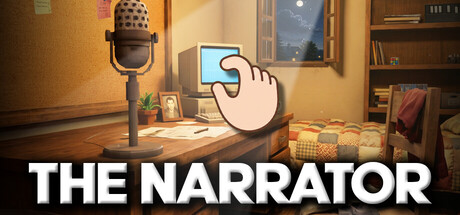
A message from The Narrator:
“The developer already had the rooms, layouts, colour schemes and designs in mind before using generative AI to help turn those ideas into visual starting points. He then edited and modified the results himself to create the final environments used in the game. The creative direction, game design, writing, narration and voice acting are his own. No AI-generated content is created during gameplay
AI tools were used during development to assist with code, artwork, music, and other production tasks. All creative direction, design decisions, implementation, integration, testing, and final selection of content were handled by the developer.
Parts of the content shipped with this game were made with generative AI tools and then reviewed and edited by us before release: illustrations and background artwork, sound effects, organ cues and the menu music track, the spoken goal and penalty announcements in all seven interface languages, and parts of the in-game text and its translations. The same applies to our store artwork and to the trailers, which use pre-generated AI music and narration. All of it is produced before release. No generative AI runs while you play: the game creates no content or code at runtime and connects to no external AI service. Newspaper reports are assembled from prepared text and the events of your own career.
Generative AI tools were used in the development of this game, including character art and sprites, backgrounds and environment art, sound effects and music, in-game text and narrative content, and store page assets such as screenshots and marketing images. All AI-assisted content was reviewed and curated by the developer before being included in the game.
The game uses generative AI in a limited capacity to create small aesthetic UI elements (such as icons and the mouse cursor), to assist with game translations, and to generate voiceovers for promotional materials, such as the game's trailer and to make minor adjustments.
We only consider AI to be a supportive tool. Every detail is meticulously crafted with human intent, as our creative process is still firmly anchored in manual craftsmanship.
Generative AI tools were used to assist in the creation of some pre-generated visual assets, character elements, voice-over, music, localization and promotional text. Some of these assets were further edited and refined by the developer before being included in the final game.
Some art and audio in Bunker And Friends was produced with generative AI tools during development. This includes store and marketing artwork — the key art, store capsules, and logo elements — and some sound effects and music. All of it was generated ahead of time and ships as fixed assets. The game does not generate any content using AI while you play, and it does not connect to any external AI service during gameplay.
Some marketing assets were created with the assistance of generative AI. All gameplay, code, game content, and in-game art are human-made; the game contains. There is no AIgenerated content at runtime.
All card art, UI, and character face customization are hand-drawn by me. Everything in this game is made by me or from purchased assets, except for one wall painting and one window decoration texture, which were AI generated and will be replaced later.
Generative AI tools were used during development to assist in the creation of some systems, 3D models, textures, and localized translations included in the game.
Generative AI was used solely to assist with translation, localization, and language editing of written text. This includes localization of Steam store-page descriptions and translation or language correction of in-game text, primarily from Portuguese into English. No AI-generated artwork, audio, gameplay content, or live-generated AI content is included in the game.
Some visual assets in the game were created with the assistance of generative AI tools. All gameplay systems, mechanics, and interactive content were developed by the team.
Generative AI tools helped create and refine some concept art, and marketing images for this game. The game does not generate new AI content while you play.
Every voice you hear in Dub Night Live is a real person. Nothing in the game is AI-generated: no AI voices, no AI art, no AI judging (scoring is player votes).
The clip editor uses two open-source machine-learning tools that run locally on your PC: one separates a clip's original voices from its music and effects, and one drafts line timings for you to review and fix. They process your own video files, never send anything to an external service, and never create content.
During development, AI was used as a coding assistant only.
This game used generative AI during development as a programming aid, assisting with the writing, debugging, and optimization of portions of the source code. All AI-assisted code was reviewed, edited, and tested by the developer before inclusion.
The voice acting of President Grump, the game's fictional parody character, is pre-generated with AI voice generation tools. The shipped game does not generate any content with AI while you play.
AI is used for programming assistance, for generating in-game sound effects and music, and for drafting store page text. All 3D art assets and level design are created by hand in Blender.
Some promotional artwork and store page text were created with the help of
generative AI and edited by hand. The game itself does not use AI at runtime
and does not connect to any AI service.
We are a two-person indie team with over a decade of real-world game development experience. Pat has been making games for 10 years, and Nate was a professional working artist long before generative AI tools existed.
We know AI in games is a dealbreaker for some folks, and we struggle with how much to use it ourselves. We want to be completely upfront about how we built this so you have the full picture:
- Visuals: We used generative AI alongside our standard software to speed up ideation and automate tedious tasks. Every final in-game element is as handmade as any other pre-LLM digital art. Most of the icons were licensed from a third-party.
- Code: We used AI assistants for pair-programming and troubleshooting complex engine logic on a project that two non-engineers couldn't otherwise build alone.
No content is generated live in-game at runtime.
We believe in total transparency with our players. We built this game to celebrate developers, and we want to be completely open about how we made it. As busy parents navigating the job hunt during development, these tools gave us the leverage to build and ship an ambitious project that we simply couldn't have created otherwise.
Some visual assets in the game and its store materials were created with the assistance of generative AI. All AI-assisted content was generated prior to release and curated for use in the final game.
Take a Joke uses generative AI in a few clearly defined places.
Created during development and shipped as fixed files:
• Artwork — the game's logo, icon, and character avatars were created using AI image-generation tools, then selected, edited, and assembled by hand.
• Narrator voice — the spoken introduction is a synthesized voice performance created with ElevenLabs, reading a script we wrote.
• Cards — the great majority of the prompt and answer deck was written by hand. A small number of cards were drafted with AI assistance. Every card in the game was read and approved by a person before it shipped.
Generated during play (optional features):
• The narrator occasionally reacts to what is happening in a round. The lines come from a fixed, human-written library; a player's name is inserted and the line is voiced with ElevenLabs.
• The optional end-of-game awards ceremony writes a short, custom awards show about the game you just played — the award titles and descriptions are AI-written from that game's results, then voiced.
When those optional features are on, the game sends player nicknames and submitted answers to the services that generate them. With them off, nothing is generated while you play.
To enhance the gaming experience, a very small portion of the video footage, visual effects, and game interface were created with the assistance of artificial intelligence. AI-generated content accounts for less than 1% of the total content. Thank you for your understanding.
Generative AI is used to draft the written text on this store page and in our announcement and update posts. A human reads, edits and approves every line before it is published. AI coding assistants are also used while building the game. The game itself does not generate any content with AI while you play, and it does not connect to any AI service.
AI-assisted development tools were used during production to help write game code, in-game text, and the English localization. All AI-assisted content was reviewed and tested by the developer.
This game uses AI-assisted tools during development to create and refine some of its visual and audio assets. AI is not used to generate content while the game is running. All assets are reviewed and polished by our team before they appear in the game, ensuring a consistent and family-friendly experience.
This game uses generative AI in the following ways.All of this content was created ahead of time — nothing is generated by AI while the game is running.- Draw-along song lyrics — generative AI produces the first drafts, and the developer reviews and hand-picks every song- The stroke order of each model drawing (its line-coordinate data) — same as above- Singing voices — synthesized with VOICEVOX (Shikoku Metan / Namine Ritsu) and Synthesizer V (Sheena 2, for the English songs), and shipped as pre-rendered audio files[What we don't do]- No image-generation AI is used. Every model drawing is rendered as lines from coordinate data- The game never connects to online AI services during play (the only network traffic is for online matches)
Tug-O-War Wrestling uses a locally-run AI model (Llama) to control enemy wrestler behaviour and decision-making during matches. This AI is not used to generate any art, audio, dialogue, or other player-facing content - all in-game content is human-created.
Generative AI is used as part of the development process for character illustrations, background images, background music (BGM), the implementation of custom gameplay systems, and user interface (UI) elements.
In this game, AI was used a little bit to help create some sprites and textures. Everything was edited by the developer before being added to the game.
A message from The Narrator:
“The developer already had the rooms, layouts, colour schemes and designs in mind before using generative AI to help turn those ideas into visual starting points. He then edited and modified the results himself to create the final environments used in the game. The creative direction, game design, writing, narration and voice acting are his own. No AI-generated content is created during gameplay
AI tools were used during development to assist with code, artwork, music, and other production tasks. All creative direction, design decisions, implementation, integration, testing, and final selection of content were handled by the developer.
Parts of the content shipped with this game were made with generative AI tools and then reviewed and edited by us before release: illustrations and background artwork, sound effects, organ cues and the menu music track, the spoken goal and penalty announcements in all seven interface languages, and parts of the in-game text and its translations. The same applies to our store artwork and to the trailers, which use pre-generated AI music and narration. All of it is produced before release. No generative AI runs while you play: the game creates no content or code at runtime and connects to no external AI service. Newspaper reports are assembled from prepared text and the events of your own career.
Generative AI tools were used in the development of this game, including character art and sprites, backgrounds and environment art, sound effects and music, in-game text and narrative content, and store page assets such as screenshots and marketing images. All AI-assisted content was reviewed and curated by the developer before being included in the game.
The game uses generative AI in a limited capacity to create small aesthetic UI elements (such as icons and the mouse cursor), to assist with game translations, and to generate voiceovers for promotional materials, such as the game's trailer and to make minor adjustments.
We only consider AI to be a supportive tool. Every detail is meticulously crafted with human intent, as our creative process is still firmly anchored in manual craftsmanship.
Generative AI tools were used to assist in the creation of some pre-generated visual assets, character elements, voice-over, music, localization and promotional text. Some of these assets were further edited and refined by the developer before being included in the final game.
Some art and audio in Bunker And Friends was produced with generative AI tools during development. This includes store and marketing artwork — the key art, store capsules, and logo elements — and some sound effects and music. All of it was generated ahead of time and ships as fixed assets. The game does not generate any content using AI while you play, and it does not connect to any external AI service during gameplay.
Some marketing assets were created with the assistance of generative AI. All gameplay, code, game content, and in-game art are human-made; the game contains. There is no AIgenerated content at runtime.
All card art, UI, and character face customization are hand-drawn by me. Everything in this game is made by me or from purchased assets, except for one wall painting and one window decoration texture, which were AI generated and will be replaced later.
Generative AI tools were used during development to assist in the creation of some systems, 3D models, textures, and localized translations included in the game.
Generative AI was used solely to assist with translation, localization, and language editing of written text. This includes localization of Steam store-page descriptions and translation or language correction of in-game text, primarily from Portuguese into English. No AI-generated artwork, audio, gameplay content, or live-generated AI content is included in the game.
Some visual assets in the game were created with the assistance of generative AI tools. All gameplay systems, mechanics, and interactive content were developed by the team.
Generative AI tools helped create and refine some concept art, and marketing images for this game. The game does not generate new AI content while you play.
Every voice you hear in Dub Night Live is a real person. Nothing in the game is AI-generated: no AI voices, no AI art, no AI judging (scoring is player votes).
The clip editor uses two open-source machine-learning tools that run locally on your PC: one separates a clip's original voices from its music and effects, and one drafts line timings for you to review and fix. They process your own video files, never send anything to an external service, and never create content.
During development, AI was used as a coding assistant only.
This game used generative AI during development as a programming aid, assisting with the writing, debugging, and optimization of portions of the source code. All AI-assisted code was reviewed, edited, and tested by the developer before inclusion.
The voice acting of President Grump, the game's fictional parody character, is pre-generated with AI voice generation tools. The shipped game does not generate any content with AI while you play.
AI is used for programming assistance, for generating in-game sound effects and music, and for drafting store page text. All 3D art assets and level design are created by hand in Blender.
Some promotional artwork and store page text were created with the help of
generative AI and edited by hand. The game itself does not use AI at runtime
and does not connect to any AI service.
We are a two-person indie team with over a decade of real-world game development experience. Pat has been making games for 10 years, and Nate was a professional working artist long before generative AI tools existed.
We know AI in games is a dealbreaker for some folks, and we struggle with how much to use it ourselves. We want to be completely upfront about how we built this so you have the full picture:
- Visuals: We used generative AI alongside our standard software to speed up ideation and automate tedious tasks. Every final in-game element is as handmade as any other pre-LLM digital art. Most of the icons were licensed from a third-party.
- Code: We used AI assistants for pair-programming and troubleshooting complex engine logic on a project that two non-engineers couldn't otherwise build alone.
No content is generated live in-game at runtime.
We believe in total transparency with our players. We built this game to celebrate developers, and we want to be completely open about how we made it. As busy parents navigating the job hunt during development, these tools gave us the leverage to build and ship an ambitious project that we simply couldn't have created otherwise.
Some visual assets in the game and its store materials were created with the assistance of generative AI. All AI-assisted content was generated prior to release and curated for use in the final game.
Take a Joke uses generative AI in a few clearly defined places.
Created during development and shipped as fixed files:
• Artwork — the game's logo, icon, and character avatars were created using AI image-generation tools, then selected, edited, and assembled by hand.
• Narrator voice — the spoken introduction is a synthesized voice performance created with ElevenLabs, reading a script we wrote.
• Cards — the great majority of the prompt and answer deck was written by hand. A small number of cards were drafted with AI assistance. Every card in the game was read and approved by a person before it shipped.
Generated during play (optional features):
• The narrator occasionally reacts to what is happening in a round. The lines come from a fixed, human-written library; a player's name is inserted and the line is voiced with ElevenLabs.
• The optional end-of-game awards ceremony writes a short, custom awards show about the game you just played — the award titles and descriptions are AI-written from that game's results, then voiced.
When those optional features are on, the game sends player nicknames and submitted answers to the services that generate them. With them off, nothing is generated while you play.
To enhance the gaming experience, a very small portion of the video footage, visual effects, and game interface were created with the assistance of artificial intelligence. AI-generated content accounts for less than 1% of the total content. Thank you for your understanding.
Generative AI is used to draft the written text on this store page and in our announcement and update posts. A human reads, edits and approves every line before it is published. AI coding assistants are also used while building the game. The game itself does not generate any content with AI while you play, and it does not connect to any AI service.
AI-assisted development tools were used during production to help write game code, in-game text, and the English localization. All AI-assisted content was reviewed and tested by the developer.