Public Steam disclosure research25,376 disclosures tracked
Where do games disclose AI use?
Search developers’ Steam disclosures, compare classified AI use across
games, and follow recorded changes.
This index adds cross-game classifications and statistics to
statements published on individual store pages.
Groups reflect automatic analysis of public disclosures; mature records are excluded. These counts do not measure AI use across all of Steam.
Missing or unclear statements cannot establish whether a game uses AI.
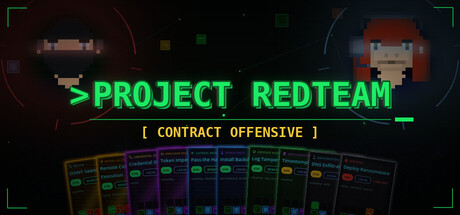
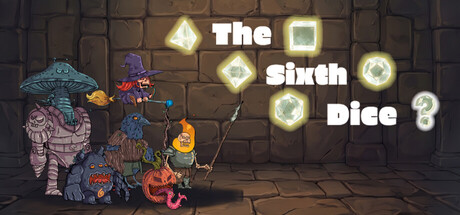
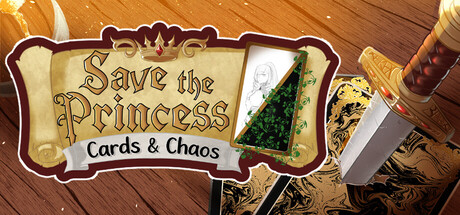
The character illustrations and their animation frames were created with the assistance of image-generation AI (Stable Diffusion), then manually layered, retouched and reviewed by the developer. All other content — game design, code, music, sound effects and text — is made by humans. No AI content is generated at runtime.
Generative AI tools were used to create and refine selected promotional artwork for the Steam store page. All resulting materials were reviewed and curated by the developer. The game does not generate AI content during gameplay or connect to external AI services.
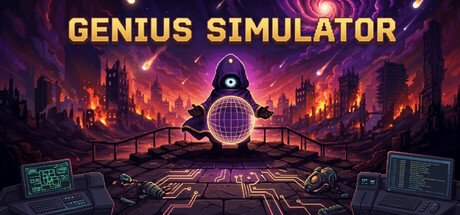
The game features AI‑versus‑AI gameplay, but you need to provide access information for the general‑purpose AI.This may consume your tokens. Alternatively, you can skip the AI connection, which will not affect your gameplay experience.
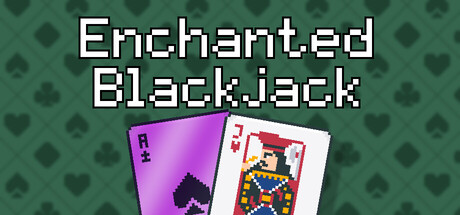
Enchanted Blackjack is a creative outlet and passion project of mine. The original build was created in 48 hours for a game jam without using AI. Since then,
I have incorporated LLMs such as Claude Code into my workflow to speed up the software development part of game making. I am very aware AI is antithetical to the artform and I take care to ensure all graphics, sound effects, and music is created by humans WITHOUT the use of AI.
Some of the artwork, audio, text, and program code in this game were created with the assistance of generative AI tools and were reviewed, edited, and integrated by the developer. The game does not use generative AI to create content in real time during gameplay.
AI helps us bring our creative ideas to life. In true indie fashion, we are two starving game developers—figuratively, and occasionally quite literally. It’s the only way for us to produce the art we need while saving our remaining coins for developing the game. If the budget grows, we’ll consider buying the better cheese from the local market.
Some of this game's assets were created with the assistance of generative AI tools and were then reviewed, edited, and integrated by the developer. This includes: base meshes of some 3D character models, some 2D artwork such as card illustrations and icons, voice lines and sound effects created with AI voice/audio generation, and parts of the localized text. All such content was pre-generated during development — the game does not generate any content with AI at runtime.
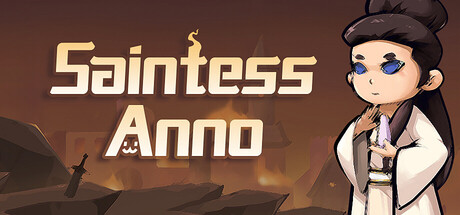
Some 2D artwork was created with the assistance of AI image-generation tools (the mascot character portrait, generated with Recraft and then hand-edited; it appears in-game and in store artwork). All gameplay, code, design, text and audio are made by hand. The game does not use live/runtime AI generation.
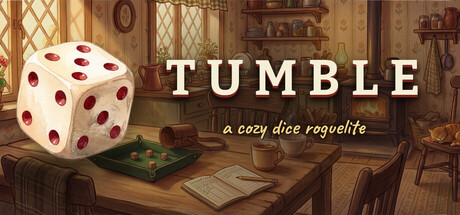
Tumble's visual art (character and charm illustrations, backdrops, item sprites, and store capsule art) was generated with Google's Gemini image models and then selected, cropped, retouched, colour-matched and in many cases regenerated by hand against a fixed reference style until it fit the game. Music and sound effects were generated with Suno under a commercial licence, then cut, mixed and placed by hand.
The game's design, rules, balance, and code are not generated content. Every mechanic, number and line of player-facing text was written, tested and revised by the developer, including through automated balance simulation and four rounds of human playtesting.
No content is generated live during play. Nothing in Tumble is produced at runtime by an AI model; the game runs entirely offline with no model calls of any kind.
Generative AI was used to create the game's English and Simplified Chinese localization. AI tools were also used to assist with code generation during development. No AI-generated content is created during gameplay.
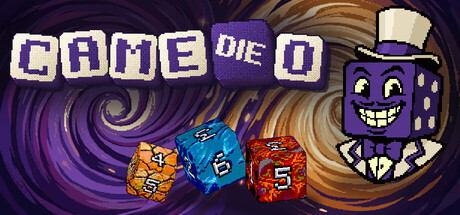
Generative AI tools were used in the creation of certain assets for Camedieo.
Each was reviewed, reworked and integrated by us so the finished product holds a single consistent direction.
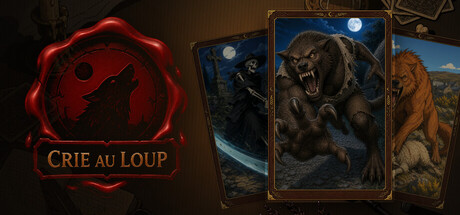
Crie au loup is made with AI, from the first prototype to the illustrations. That is not a manufacturing detail: it is as much the project as the game itself.
My role is not a craftsman's: I painted no card, and I did not write the code line by line. I designed the system, I direct it, I arbitrate and I verify. Deciding what makes it into the game, what gets redone, what gets cut: that is production work, and it is mine.
What is generated: the creature and location artwork, the interface, a large share of the code and the writing. What is measured rather than assumed: card balance, computed over thousands of simulated matches before every update. What is verified: the historical sources behind every legend, published one by one on the official site, where you can open them and prove me wrong.
What is never generated is your match. No image, no text and no game decision comes out of a model while you play: the engine is deterministic, and the solo opponent is a classic program applying the rules.
Crie au loup is one of the projects I run around generative AI, and the only one you can play. The making-of is documented without varnish in the devlog on the official site.
As part of our early access work, we have used AI-generated images as placeholders for the illustrations on our cards and leader icons. This allows us to iterate quickly and see which game mechanics players like or dislike. We will replace these with human art once we've received enough feedback to finalize what we keep or discard.
Some visual assets in this game — including character portraits, illustrations, and marketing images — were created with the assistance of generative AI tools. All AI-generated material was reviewed, edited, and finalized by the developer. No AI content is generated during gameplay.
Some visual artwork and marketing assets were created or edited with generative AI under developer direction. All gameplay systems are authored, and no content is generated during gameplay.
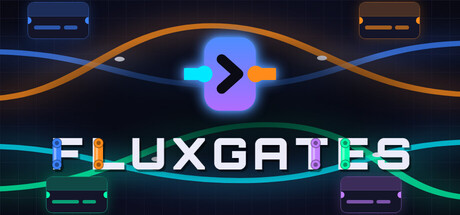
Parts of Fluxgates were built with AI assistance, and all of it is fixed content baked into the build - nothing is generated while you play.
Code: Some of the game's source was written with an AI coding assistant, reviewed, edited and tested by the developer before shipping.
Text: English and French interface strings and node descriptions were drafted with AI help and edited by hand.
No AI generated art or audio. Every visual is drawn by the interface itself, and every sound and music track is synthesised procedurally by a script in the project.
The game runs fully offline. No AI model runs at runtime, and no data leaves your machine.
Generative AI tools were used during development to create selected pre-generated content, including character and environment artwork, some user interface artwork, music, some voice-over audio, and localization. The visual assets were subsequently edited and customized by the developer. All AI-assisted content is selected, reviewed, and integrated by the developer before inclusion. The game does not generate content during gameplay or connect to external AI services.
Generative AI tools were utilized to generate initial texture concepts. All final in-game assets were extensively modified, hand-edited, and integrated manually.
During development, this game used generative AI to assist in creating certain visual assets and text content. All final content has been reviewed, edited, and approved by the developer; the game does not include any functionality that dynamically generates content with AI during gameplay.
We used AI to assist in creating portions of the game text, and leveraged AI tools to translate in-game content into English. All AI-generated content has been manually reviewed and vetted before being finalized for inclusion in the game.
Rally Point's visuals and store art are drawn by code from the game's own geometry. No image, audio, or voice generation model was used. That code was written with AI assistance, as were the non-English translations.
Yes, we used AI to translate our game into several languages other than French and English, in order to make it accessible to a wider international audience.
This game contains pre-generated 2D artwork and music created with assistance from generative AI tools and reviewed and edited by the developer. The game does not use generative AI or generate content during runtime.
Some of this game's 2D art (such as item icons and UI illustrations) was created with the help of generative AI, and AI was also used to help write and translate some in-game and store page text. All of it was reviewed and finalized by the developer, and no content is generated by AI while you play.
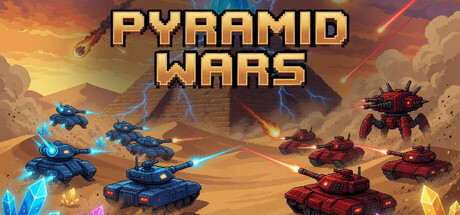
The code, menu, graphics, artwork, effects, localization, sounds and music of Pyramid Wars is vibe coded.
The cover image, shop- and library art is AI generated.
We employ generative AI technologies during the creation of some illustrations and music. All elements that make up the core and essence of the game are still done by us - the devs.
Generative AI tools assisted with selected pre-generated UI artwork and sound/music effects.
All generated assets were reviewed and edited by the development team.
The development of this game makes extensive use of generative AI. AI tools were used to help create the game's art and visual assets, sound and music, text and narrative, code, and localization. All AI-assisted content is reviewed by our team before release to ensure quality and appropriateness.
Pre-rendered Content:
Generative AI tools and agentic AI development workflows were utilized during the creation of this game to assist in:
- Code & Systems: Writing and optimizing core gameplay logic, typescript structures, and simulation algorithms.
- Visual Assets: Creating and pre-rendering all visual assets used in-game, including boot screen artworks, drive interfaces, and graphical components.
- Localization: Translating and reviewing in-game text and UI labels.
Please note that all AI-assisted assets and code were pre-rendered and compiled during the development phase. The game runs entirely locally and does not perform any real-time (live) AI generation, nor does it connect to any external AI APIs or services during gameplay.
Generative AI tools (OpenAI ChatGPT and Anthropic Claude) were used during development to help create or transform some visual assets and to assist in designing the procedural audio recipes used for the game’s background music and most sound effects. All AI-assisted materials were reviewed, selected, edited, and integrated by the developer, who made all final creative decisions. The game does not use generative AI during gameplay, and no player input or data is sent to AI services.
Generative AI tools were used during development to assist in creating some of the game's visual art assets, primarily including certain card illustrations and related image assets. AI-generated content is used only during the development process and is not generated live while the game is running. All AI-assisted assets included in the final game are manually reviewed, selected, adjusted, and approved by the developer before being added to the game.
The character illustrations and their animation frames were created with the assistance of image-generation AI (Stable Diffusion), then manually layered, retouched and reviewed by the developer. All other content — game design, code, music, sound effects and text — is made by humans. No AI content is generated at runtime.
Generative AI tools were used to create and refine selected promotional artwork for the Steam store page. All resulting materials were reviewed and curated by the developer. The game does not generate AI content during gameplay or connect to external AI services.
The game features AI‑versus‑AI gameplay, but you need to provide access information for the general‑purpose AI.This may consume your tokens. Alternatively, you can skip the AI connection, which will not affect your gameplay experience.
Enchanted Blackjack is a creative outlet and passion project of mine. The original build was created in 48 hours for a game jam without using AI. Since then,
I have incorporated LLMs such as Claude Code into my workflow to speed up the software development part of game making. I am very aware AI is antithetical to the artform and I take care to ensure all graphics, sound effects, and music is created by humans WITHOUT the use of AI.
Some of the artwork, audio, text, and program code in this game were created with the assistance of generative AI tools and were reviewed, edited, and integrated by the developer. The game does not use generative AI to create content in real time during gameplay.
AI helps us bring our creative ideas to life. In true indie fashion, we are two starving game developers—figuratively, and occasionally quite literally. It’s the only way for us to produce the art we need while saving our remaining coins for developing the game. If the budget grows, we’ll consider buying the better cheese from the local market.
Some of this game's assets were created with the assistance of generative AI tools and were then reviewed, edited, and integrated by the developer. This includes: base meshes of some 3D character models, some 2D artwork such as card illustrations and icons, voice lines and sound effects created with AI voice/audio generation, and parts of the localized text. All such content was pre-generated during development — the game does not generate any content with AI at runtime.
Some 2D artwork was created with the assistance of AI image-generation tools (the mascot character portrait, generated with Recraft and then hand-edited; it appears in-game and in store artwork). All gameplay, code, design, text and audio are made by hand. The game does not use live/runtime AI generation.
Tumble's visual art (character and charm illustrations, backdrops, item sprites, and store capsule art) was generated with Google's Gemini image models and then selected, cropped, retouched, colour-matched and in many cases regenerated by hand against a fixed reference style until it fit the game. Music and sound effects were generated with Suno under a commercial licence, then cut, mixed and placed by hand.
The game's design, rules, balance, and code are not generated content. Every mechanic, number and line of player-facing text was written, tested and revised by the developer, including through automated balance simulation and four rounds of human playtesting.
No content is generated live during play. Nothing in Tumble is produced at runtime by an AI model; the game runs entirely offline with no model calls of any kind.
Generative AI was used to create the game's English and Simplified Chinese localization. AI tools were also used to assist with code generation during development. No AI-generated content is created during gameplay.
Generative AI tools were used in the creation of certain assets for Camedieo.
Each was reviewed, reworked and integrated by us so the finished product holds a single consistent direction.
Crie au loup is made with AI, from the first prototype to the illustrations. That is not a manufacturing detail: it is as much the project as the game itself.
My role is not a craftsman's: I painted no card, and I did not write the code line by line. I designed the system, I direct it, I arbitrate and I verify. Deciding what makes it into the game, what gets redone, what gets cut: that is production work, and it is mine.
What is generated: the creature and location artwork, the interface, a large share of the code and the writing. What is measured rather than assumed: card balance, computed over thousands of simulated matches before every update. What is verified: the historical sources behind every legend, published one by one on the official site, where you can open them and prove me wrong.
What is never generated is your match. No image, no text and no game decision comes out of a model while you play: the engine is deterministic, and the solo opponent is a classic program applying the rules.
Crie au loup is one of the projects I run around generative AI, and the only one you can play. The making-of is documented without varnish in the devlog on the official site.
As part of our early access work, we have used AI-generated images as placeholders for the illustrations on our cards and leader icons. This allows us to iterate quickly and see which game mechanics players like or dislike. We will replace these with human art once we've received enough feedback to finalize what we keep or discard.
Some visual assets in this game — including character portraits, illustrations, and marketing images — were created with the assistance of generative AI tools. All AI-generated material was reviewed, edited, and finalized by the developer. No AI content is generated during gameplay.
Some visual artwork and marketing assets were created or edited with generative AI under developer direction. All gameplay systems are authored, and no content is generated during gameplay.
Parts of Fluxgates were built with AI assistance, and all of it is fixed content baked into the build - nothing is generated while you play.
Code: Some of the game's source was written with an AI coding assistant, reviewed, edited and tested by the developer before shipping.
Text: English and French interface strings and node descriptions were drafted with AI help and edited by hand.
No AI generated art or audio. Every visual is drawn by the interface itself, and every sound and music track is synthesised procedurally by a script in the project.
The game runs fully offline. No AI model runs at runtime, and no data leaves your machine.
Generative AI tools were used during development to create selected pre-generated content, including character and environment artwork, some user interface artwork, music, some voice-over audio, and localization. The visual assets were subsequently edited and customized by the developer. All AI-assisted content is selected, reviewed, and integrated by the developer before inclusion. The game does not generate content during gameplay or connect to external AI services.
Generative AI tools were utilized to generate initial texture concepts. All final in-game assets were extensively modified, hand-edited, and integrated manually.
During development, this game used generative AI to assist in creating certain visual assets and text content. All final content has been reviewed, edited, and approved by the developer; the game does not include any functionality that dynamically generates content with AI during gameplay.
We used AI to assist in creating portions of the game text, and leveraged AI tools to translate in-game content into English. All AI-generated content has been manually reviewed and vetted before being finalized for inclusion in the game.
Rally Point's visuals and store art are drawn by code from the game's own geometry. No image, audio, or voice generation model was used. That code was written with AI assistance, as were the non-English translations.
Yes, we used AI to translate our game into several languages other than French and English, in order to make it accessible to a wider international audience.
This game contains pre-generated 2D artwork and music created with assistance from generative AI tools and reviewed and edited by the developer. The game does not use generative AI or generate content during runtime.
Some of this game's 2D art (such as item icons and UI illustrations) was created with the help of generative AI, and AI was also used to help write and translate some in-game and store page text. All of it was reviewed and finalized by the developer, and no content is generated by AI while you play.
The code, menu, graphics, artwork, effects, localization, sounds and music of Pyramid Wars is vibe coded.
The cover image, shop- and library art is AI generated.
We employ generative AI technologies during the creation of some illustrations and music. All elements that make up the core and essence of the game are still done by us - the devs.
Generative AI tools assisted with selected pre-generated UI artwork and sound/music effects.
All generated assets were reviewed and edited by the development team.
The development of this game makes extensive use of generative AI. AI tools were used to help create the game's art and visual assets, sound and music, text and narrative, code, and localization. All AI-assisted content is reviewed by our team before release to ensure quality and appropriateness.
Pre-rendered Content:
Generative AI tools and agentic AI development workflows were utilized during the creation of this game to assist in:
- Code & Systems: Writing and optimizing core gameplay logic, typescript structures, and simulation algorithms.
- Visual Assets: Creating and pre-rendering all visual assets used in-game, including boot screen artworks, drive interfaces, and graphical components.
- Localization: Translating and reviewing in-game text and UI labels.
Please note that all AI-assisted assets and code were pre-rendered and compiled during the development phase. The game runs entirely locally and does not perform any real-time (live) AI generation, nor does it connect to any external AI APIs or services during gameplay.
Generative AI tools (OpenAI ChatGPT and Anthropic Claude) were used during development to help create or transform some visual assets and to assist in designing the procedural audio recipes used for the game’s background music and most sound effects. All AI-assisted materials were reviewed, selected, edited, and integrated by the developer, who made all final creative decisions. The game does not use generative AI during gameplay, and no player input or data is sent to AI services.
Generative AI tools were used during development to assist in creating some of the game's visual art assets, primarily including certain card illustrations and related image assets. AI-generated content is used only during the development process and is not generated live while the game is running. All AI-assisted assets included in the final game are manually reviewed, selected, adjusted, and approved by the developer before being added to the game.