Public Steam disclosure research25,380 disclosures tracked
Where do games disclose AI use?
Search developers’ Steam disclosures, compare classified AI use across
games, and follow recorded changes.
This index adds cross-game classifications and statistics to
statements published on individual store pages.
Groups reflect automatic analysis of public disclosures; mature records are excluded. These counts do not measure AI use across all of Steam.
Missing or unclear statements cannot establish whether a game uses AI.
Generative AI tools were used during development to assist with creating some texture images, promotional/banner images, and code development. AI was also used to help review, test, and debug code, identify potential issues, and suggest improvements. All generated or AI-assisted content was reviewed, selected, and integrated by the developer.
Some of the textures and images in this game were created with the help of generative AI tools, and AI tools also assisted with the game's localization and store page text. All of this content was reviewed and edited by the developer before release.
Generative AI was used to assist with drafting and translating written text for the Steam store page and some in-game text. All AI-assisted text is reviewed and edited by the developer before use. No generative AI is used during gameplay, and the game contains no live-generated AI content.
The game uses AI tools to assist in generating background graphics and supporting the artistic process. AI is also used to aid in translation and localization, making the game available in multiple regions and languages.
Generative AI tools assisted with some pre-generated artwork, localization, and written copy during development. All included outputs were selected, reviewed, and edited by the developer before shipping. The game does not generate AI content during gameplay and does not connect to external AI services.
Generative AI was used to assist in the creation of some pre-generated visual assets, including character models, props, environmental assets, and textures. All AI-assisted content was reviewed, edited, and integrated into the game by the developer. The game does not generate AI content during gameplay.
Some promotional artwork and store page text were created with the help of
generative AI and edited by hand. The game itself does not use AI at runtime
and does not connect to any AI service.
The developer uses generative AI tools during the development process to assist in creating pre-generated visual assets, environment textures, and background sound effects. These AI-assisted elements are finalized and integrated into the game's static files to enhance the overall horror atmosphere.
Generative AI tools were used in the development of this game to assist with creating select artwork, writing promotional/store page descriptions, and localization.
Generating general in-game scripts
Music
Level design
In general, the developer uses AI to create like a cubes; ultimately, they decide where to place each cube to build a castle—or, in this case, the video game itself.
Some store page artwork, promotional images, textures, and visual assets were created using generative AI tools and then edited and finalized by the developer. AI-generated content is used only for visual assets and does not generate content during gameplay.
This game uses generative AI to create the following content:
- Images (backgrounds, character portraits, item art, UI, and store capsule art): image generation models
- Music: Suno
- Sound effects: procedural synthesis, plus OpenMOSS MOSS-SoundEffect v2 (Apache-2.0)
- Text and code: created with the assistance of generative AI
All of the above were pre-generated during development. No AI runs at runtime.
Some of this game's dialogue was refined with the help of a generative AI tool during revision. Every line in the finished game was reviewed and edited by the developer.
No generative AI was used to create the artwork, sound, or music, and no content is generated during gameplay.
Some of the 2D art and textures in this game were created with the help of generative AI tools. Generative AI was also used to assist with writing and translating parts of the in-game text. All AI-assisted content was reviewed and edited by the developer before release. No content is generated by AI while you play.
Some of the 3D props in this game — the ritual items players carry and place, and a few pieces of set dressing — were created with an AI-assisted 3D generation tool from text prompts. Every generated model was reviewed, cleaned up and integrated by hand before it shipped. Nothing is generated by AI while you play.
Generative AI tools were used during development to assist in the creation of selected background images, illustrations, character assets, UI assets, rhythm game music, and background music. These are pre-generated assets included with the game. No generative AI is used to create content during gameplay, and the game does not connect to external AI services while being played.
We used an AI diffusion tool in Krita to help create the background for the small capsule shown in search results. Our artist then worked over it with several extra layers, a bit like matte painting. For now, it's a placeholder until our artist finishes the hand-painted version of the small capsule.
The logo and the other capsule images were already hand-painted by our artist. The in-game portraits were also drawn by another artist on our team.
We have a devlog on our website about how we made the capsule artwork and hero portraits, and we'll share the full process on the Steam Community soon too.
The playtest build also includes a few placeholder assets made with AI tools in Krita. Our new UI artist is working on a new UI, so we'll be replacing those placeholders soon. As mentioned above, the hero portraits are also hand-drawn by our artist.
AI is used only for text translation/localization (in-game and store page), with every line reviewed and edited by the developer.
No AI-generated graphics, music, audio, or live content generation are used in the game.
This game uses content created with the assistance of generative AI tools. 2D image assets (including the game logo and in-game textures), 3D models, and some sound effects and music were generated with AI and then reviewed, edited, and integrated by the developer. Localization into supported languages was also produced with AI assistance. All game design, narrative, and text content were written by the developer. No content is generated in real time during gameplay.
English — artwork (yes, pre-generated):
Visual art (scene backgrounds, character art, GUI covers, and visual FX) was drafted with generative image models, then human-reviewed, cropped, and accepted into the shipping game. Store capsules and library art produced the same way are included in this disclosure. Unreviewed generator output is not shipped.
English — writing (human, not AI narrative):
All narrative, dialogue, in-game text, and store copy are human-written. This game is not an AI-authored story. Planned English localization is human-translated, not model-generated.
English — audio / runtime (so reviewers do not assume the rest):
Audio is CC0 / public-domain / project-synthesized sound effects. There is no voice acting and no generative AI voice. The game does not call generative models at runtime.
During the development of *A Bad Dream: Trypophobia*, generative AI was used as a supporting tool to create and refine certain textures, 3D models, and visual elements, as well as to assist in programming specific systems. All content was manually reviewed, edited, configured, and integrated by Big Mount Interactive. The game does not generate content via AI during gameplay, nor does it connect to external AI services.
Generative AI tools were used during development to assist with creating promotional images for the Steam store page, early concept art, and voiceovers for character dialogues. No AI content is generated in real-time during gameplay. All in-game models, code, and environments were manually created, processed, and integrated by the developer.
Generative AI was used to create the game's English and Simplified Chinese localization. AI tools were also used to assist with code generation during development. No AI-generated content is created during gameplay.
A small number of static meshes in this demo were generated using AI tools. This AI-generated content is temporary and will be fully replaced with original, non-AI assets in future updates. By the time the full game is released, it will contain no AI-generated content.
Generative AI tools were used during development for ideation and drafting/editing some marketing or descriptive text. All final content is reviewed and edited by the development team. The game does not use live-generated AI content during gameplay.
Some of the artwork in Fallen Nights was made with generative AI. The character and object sprites began as AI-generated images and were then reduced to the game's fixed pixel palette and corrected by hand; the store and library capsule art is AI-generated painted artwork, with the game's own hand-drawn pixel wordmark composited on top.
All of it is made during development and baked into the build. The game generates nothing while you play and makes no AI calls at runtime. The levels are hand-drawn, the music is synthesized by hand-written code, and every word of text in the game is written by a person.
This game uses generative AI tools in parts of its development process.
Code: Some of the game's code was written with AI assistance. All generated code has been reviewed, tested, and integrated by the developer.
Audio: Some sound effects and voice lines may be generated or processed using AI tools.
Visual assets: The game primarily uses licensed asset packs and hand-authored materials. Where AI tools were used, it was for texture variation and iteration on existing licensed assets.
No AI-generated content is created live during gameplay. All content is fixed and reviewed before release.
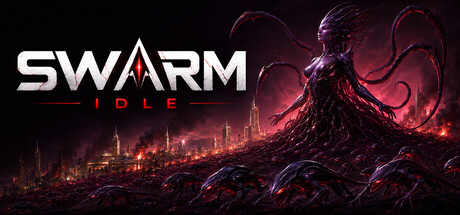
Swarm Idle uses generative AI as part of its development workflow to assist with localization and the creation of some visual assets. All AI-assisted content is reviewed and integrated by the developer. No generative AI is used during gameplay or at runtime.
Generative AI was used to create portions of the pre-rendered promotional trailer and to assist with the production of some visual assets. No content is generated during gameplay, and the game does not connect to external AI services.
Generative AI tools were used during development to assist with creating some texture images, promotional/banner images, and code development. AI was also used to help review, test, and debug code, identify potential issues, and suggest improvements. All generated or AI-assisted content was reviewed, selected, and integrated by the developer.
Some of the textures and images in this game were created with the help of generative AI tools, and AI tools also assisted with the game's localization and store page text. All of this content was reviewed and edited by the developer before release.
Generative AI was used to assist with drafting and translating written text for the Steam store page and some in-game text. All AI-assisted text is reviewed and edited by the developer before use. No generative AI is used during gameplay, and the game contains no live-generated AI content.
The game uses AI tools to assist in generating background graphics and supporting the artistic process. AI is also used to aid in translation and localization, making the game available in multiple regions and languages.
Generative AI tools assisted with some pre-generated artwork, localization, and written copy during development. All included outputs were selected, reviewed, and edited by the developer before shipping. The game does not generate AI content during gameplay and does not connect to external AI services.
Generative AI was used to assist in the creation of some pre-generated visual assets, including character models, props, environmental assets, and textures. All AI-assisted content was reviewed, edited, and integrated into the game by the developer. The game does not generate AI content during gameplay.
Some promotional artwork and store page text were created with the help of
generative AI and edited by hand. The game itself does not use AI at runtime
and does not connect to any AI service.
The developer uses generative AI tools during the development process to assist in creating pre-generated visual assets, environment textures, and background sound effects. These AI-assisted elements are finalized and integrated into the game's static files to enhance the overall horror atmosphere.
Generative AI tools were used in the development of this game to assist with creating select artwork, writing promotional/store page descriptions, and localization.
Generating general in-game scripts
Music
Level design
In general, the developer uses AI to create like a cubes; ultimately, they decide where to place each cube to build a castle—or, in this case, the video game itself.
Some store page artwork, promotional images, textures, and visual assets were created using generative AI tools and then edited and finalized by the developer. AI-generated content is used only for visual assets and does not generate content during gameplay.
This game uses generative AI to create the following content:
- Images (backgrounds, character portraits, item art, UI, and store capsule art): image generation models
- Music: Suno
- Sound effects: procedural synthesis, plus OpenMOSS MOSS-SoundEffect v2 (Apache-2.0)
- Text and code: created with the assistance of generative AI
All of the above were pre-generated during development. No AI runs at runtime.
Some of this game's dialogue was refined with the help of a generative AI tool during revision. Every line in the finished game was reviewed and edited by the developer.
No generative AI was used to create the artwork, sound, or music, and no content is generated during gameplay.
Some of the 2D art and textures in this game were created with the help of generative AI tools. Generative AI was also used to assist with writing and translating parts of the in-game text. All AI-assisted content was reviewed and edited by the developer before release. No content is generated by AI while you play.
Some of the 3D props in this game — the ritual items players carry and place, and a few pieces of set dressing — were created with an AI-assisted 3D generation tool from text prompts. Every generated model was reviewed, cleaned up and integrated by hand before it shipped. Nothing is generated by AI while you play.
Generative AI tools were used during development to assist in the creation of selected background images, illustrations, character assets, UI assets, rhythm game music, and background music. These are pre-generated assets included with the game. No generative AI is used to create content during gameplay, and the game does not connect to external AI services while being played.
We used an AI diffusion tool in Krita to help create the background for the small capsule shown in search results. Our artist then worked over it with several extra layers, a bit like matte painting. For now, it's a placeholder until our artist finishes the hand-painted version of the small capsule.
The logo and the other capsule images were already hand-painted by our artist. The in-game portraits were also drawn by another artist on our team.
We have a devlog on our website about how we made the capsule artwork and hero portraits, and we'll share the full process on the Steam Community soon too.
The playtest build also includes a few placeholder assets made with AI tools in Krita. Our new UI artist is working on a new UI, so we'll be replacing those placeholders soon. As mentioned above, the hero portraits are also hand-drawn by our artist.
AI is used only for text translation/localization (in-game and store page), with every line reviewed and edited by the developer.
No AI-generated graphics, music, audio, or live content generation are used in the game.
This game uses content created with the assistance of generative AI tools. 2D image assets (including the game logo and in-game textures), 3D models, and some sound effects and music were generated with AI and then reviewed, edited, and integrated by the developer. Localization into supported languages was also produced with AI assistance. All game design, narrative, and text content were written by the developer. No content is generated in real time during gameplay.
English — artwork (yes, pre-generated):
Visual art (scene backgrounds, character art, GUI covers, and visual FX) was drafted with generative image models, then human-reviewed, cropped, and accepted into the shipping game. Store capsules and library art produced the same way are included in this disclosure. Unreviewed generator output is not shipped.
English — writing (human, not AI narrative):
All narrative, dialogue, in-game text, and store copy are human-written. This game is not an AI-authored story. Planned English localization is human-translated, not model-generated.
English — audio / runtime (so reviewers do not assume the rest):
Audio is CC0 / public-domain / project-synthesized sound effects. There is no voice acting and no generative AI voice. The game does not call generative models at runtime.
During the development of *A Bad Dream: Trypophobia*, generative AI was used as a supporting tool to create and refine certain textures, 3D models, and visual elements, as well as to assist in programming specific systems. All content was manually reviewed, edited, configured, and integrated by Big Mount Interactive. The game does not generate content via AI during gameplay, nor does it connect to external AI services.
Generative AI tools were used during development to assist with creating promotional images for the Steam store page, early concept art, and voiceovers for character dialogues. No AI content is generated in real-time during gameplay. All in-game models, code, and environments were manually created, processed, and integrated by the developer.
Generative AI was used to create the game's English and Simplified Chinese localization. AI tools were also used to assist with code generation during development. No AI-generated content is created during gameplay.
A small number of static meshes in this demo were generated using AI tools. This AI-generated content is temporary and will be fully replaced with original, non-AI assets in future updates. By the time the full game is released, it will contain no AI-generated content.
Generative AI tools were used during development for ideation and drafting/editing some marketing or descriptive text. All final content is reviewed and edited by the development team. The game does not use live-generated AI content during gameplay.
Some of the artwork in Fallen Nights was made with generative AI. The character and object sprites began as AI-generated images and were then reduced to the game's fixed pixel palette and corrected by hand; the store and library capsule art is AI-generated painted artwork, with the game's own hand-drawn pixel wordmark composited on top.
All of it is made during development and baked into the build. The game generates nothing while you play and makes no AI calls at runtime. The levels are hand-drawn, the music is synthesized by hand-written code, and every word of text in the game is written by a person.
This game uses generative AI tools in parts of its development process.
Code: Some of the game's code was written with AI assistance. All generated code has been reviewed, tested, and integrated by the developer.
Audio: Some sound effects and voice lines may be generated or processed using AI tools.
Visual assets: The game primarily uses licensed asset packs and hand-authored materials. Where AI tools were used, it was for texture variation and iteration on existing licensed assets.
No AI-generated content is created live during gameplay. All content is fixed and reviewed before release.
Swarm Idle uses generative AI as part of its development workflow to assist with localization and the creation of some visual assets. All AI-assisted content is reviewed and integrated by the developer. No generative AI is used during gameplay or at runtime.
Generative AI was used to create portions of the pre-rendered promotional trailer and to assist with the production of some visual assets. No content is generated during gameplay, and the game does not connect to external AI services.