Public Steam disclosure research25,380 disclosures tracked
Where do games disclose AI use?
Search developers’ Steam disclosures, compare classified AI use across
games, and follow recorded changes.
This index adds cross-game classifications and statistics to
statements published on individual store pages.
Groups reflect automatic analysis of public disclosures; mature records are excluded. These counts do not measure AI use across all of Steam.
Missing or unclear statements cannot establish whether a game uses AI.
All in-game illustrations (character portraits, NPC and monster art, location and item images, key art) were pre-generated during development using generative AI tools and manually curated by the developer. The game does not create AI-generated content at runtime.
This game includes some pre-generated artwork and sound effects created with the assistance of generative AI. These assets were reviewed, selected, and integrated by the developer during development. The game does not use live generative AI during gameplay.
Some content in this game was created with the assistance of generative AI tools, then curated, edited, and integrated by hand by the solo developer. This includes: character and enemy sprite animations (AI-generated video processed by hand into sprite animations), environment and background artwork, the story tapestry illustrations, title and store artwork, music, and some sound effects. All such content is pre-rendered and ships with the game — nothing is generated live at runtime. All content was reviewed by the developer to ensure it does not include illegal or infringing material.
As a solo developer, I unfortunately cannot afford to hire artists or creators, so the media in my game is a mix of AI-generated and hand-edited/crafted. I would love to have my assets professionally made, but the cost of somewhere around two thousand icons, portraits, and other media assets would be far more than I can afford as just some guy working alone. I've done my best to create the best art and sounds with the tools I have access to, trying extremely hard to make things you will enjoy. If this game were to ever be successful enough, I'd love to hire professional artists one day to remake my assets (and for my future games). I thank you for your understanding, and I hope the game is good enough to get me there eventually!
Kaironia uses generative AI tools during the development process to create pre-rendered assets. Specifically, AI-assisted tools were used to help create background music tracks, certain 2D environmental icons and images, and to assist with multi-language text localization. None of these assets are generated dynamically or live during gameplay.
The game includes pre-generated visual and audio assets created with the assistance of generative AI tools. These include character artwork, environmental backgrounds, music, and singing vocals. All lyrics were written entirely by the developer without the use of generative AI, while the music and vocals were created through a collaborative process involving human creative direction and generative AI tools. All AI-assisted outputs were reviewed, selected, edited, and integrated by the developer. The game does not generate content during gameplay and does not send player input to any AI service.
The game's design, game systems, balance, and English narrative are human-developed. AI tools were used during development as a coding assistant, with any recommended code changes specified, reviewed, and tested by the developer. The Japanese localization was produced with AI assistance and hand-edited for nuances, idioms, and accuracy. AI tools were also used for grammar and spell checking. No content is AI-generated at runtime.
Some visual assets used in this game were created or assisted using generative AI and were further edited, refined, and integrated by the developers. No generative AI is used during gameplay.
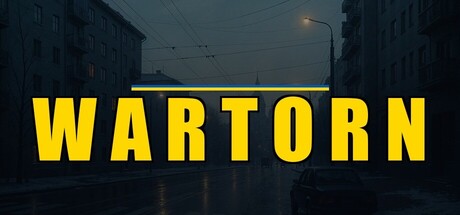
Art. All 2D art in Wartorn is produced with AI image-generation tools and then selected, edited, retouched and composited by hand by the developer. This covers the character portraits, the scene backgrounds, the ending and gallery illustrations, the achievement icons, and the store capsules, screenshots and trailer, which are derived from that same in-game art.
Text. The story, the branching structure and the choice design are the developer's own. AI writing tools were used to assist in drafting the prose and dialogue, and AI translation tools were used to produce the five localizations (English, Traditional Chinese, Simplified Chinese, Russian, Ukrainian). All text is reviewed and edited by the developer before shipping.
Audio. Music and sound effects are royalty-free stock audio licensed from Pixabay. They are not generated by the developer using AI tools.
Runtime. No content is generated while the game is running. Every asset is final and ships with the build, and the game makes no calls to any AI service.
The entirety of the game from the code to the art to the music WAS GENERATED WITH AI. This is not a disguise, I do not know how to build an entire game from scratch by myself. The story, characters, and concept art was created entirely by me and partly with my best friend Xavier, but everything in game is made using AI.
Many of the art assets used at this stage are AI-generated placeholders, including most of the card artwork. These AI assets help depict the overall creative style and vision that will be achieved in the full release. A Kickstarter campaign will be dedicated to raising the funds to replace the AI placeholder art.
All of the sound design, music, text and game code is entirely human-created.
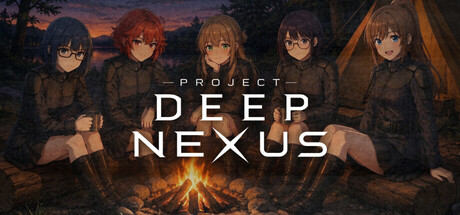
In the development of Project Deep Nexus, AI was utilized for several key components. This includes creating character and background artworks, as well as generating some music tracks. While the developer curated the plot and narrative, AI assisted in the process.
During development, generative AI tools were used to create temporary 2D images, rough visual assets, and concept art.
These assets are used as prototypes and references during the development phase. In the final version of the game, they will be replaced with original, hand-crafted assets.
Some of this game's assets were created with the assistance of generative AI tools, then curated, edited, and integrated by the developer. This includes art assets such as character portraits, location backgrounds, and promotional artwork, as well as sound. The game's code was written with AI coding tools under the developer's direction. The game's design, systems, writing, and creative direction are human-authored and directed.
This game includes pre-generated content made with the assistance of generative AI tools during development. AI tools were used to help create and iterate some static story illustrations, character and store-art references, voice and sound-effect materials, texture details, copy polishing, and localization drafts. All such content is selected, edited, assembled, and manually reviewed by the developer before shipping. The game does not connect to a live generative AI service during play and does not generate new player-facing AI content at runtime.
We used a Gen AI powered tool to localize the following:
- (in some languages) In-game text
- (in some languages) Steam store descriptions
We plan to replace these with human translation and LQA when we can afford it.
Until then, we are using Gen AI temporarily.
We used a Gen AI powered tool to localize the following:
- (in some languages) In-game text
- (in some languages) Steam store descriptions
We plan to replace these with human translation and LQA when we can afford it.
Until then, we are using Gen AI temporarily.
Most of the images used in the narrative mode scenes were initially generated using generative AI and subsequently refined through manual editing. Generative AI was also employed to assist with the translation of the narrative text.
This game uses AI-generated images, created with Stable Diffusion and similar tools, for card artwork, character portraits, backgrounds, and animated card videos. All AI-generated assets were reviewed and edited by the developer. No AI generates content during gameplay.
This game includes pre-generated content created with the assistance of generative AI during development. Generative AI was used to help create some in-game image assets and translations. All AI-assisted content, including AI-generated translations, was reviewed, edited, and approved by the development team before being included in the final game.
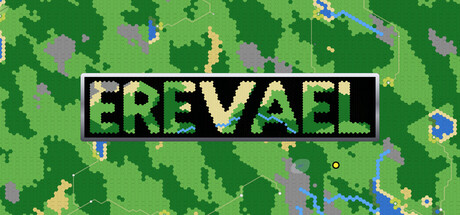
Erevael is made by a solo developer who uses generative AI as part of the development process. The following player-facing content is created with AI and reviewed by the developer before release:
- Visual art, including assets used in the procedurally generated world.
- Localization: translations are machine-generated and have not yet been professionally reviewed.
Music and sound effects are sourced from licensed, human-made libraries and are not AI-generated. AI coding assistants are also used during development.
The AI-generated art is a starting point. If the game finds an audience, the plan is to replace it with work from human artists in a free update for everyone, while keeping the original art available as an optional mod.
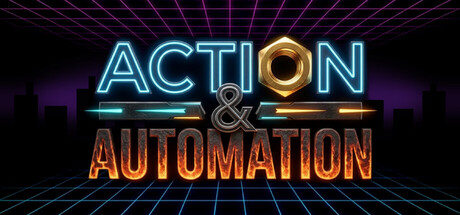
Action & Automation is not only how the game plays, it is how the game was made.
As the game’s sole human developer, game director, and system architect, I designed the core gameplay systems, software architecture, worldbuilding, narrative framework, story design, and gameplay balance. That is the Action.
For the Automation, I deliberately pushed generative AI throughout the production pipeline, with quality and player experience as the only limits. Following my direction and specifications, AI produced much of the code, artwork, animation, VFX, and UI, and was used for text polishing and localization.
No generative AI model or external AI service runs during gameplay. The game requires no AI account, API key, subscription, or token credits. Any apparent AI thinking or reasoning is scripted or driven by conventional game AI systems.
Human-designed. AI-produced. That is Action & Automation.
Netshell uses AI to power its characters. The NPCs you meet on the in-game forums and IRC read what is happening in your playthrough and respond in character, so their messages and forum posts are generated rather than pre-scripted, and each player's world unfolds differently.
All of this runs locally and offline: the AI models ship with the game and run on your machine. Netshell never connects to a third-party AI service such as ChatGPT or Claude. You can turn the AI off entirely, in which case the NPCs stop chatting and the game continues with its authored story.
Some Steam store and trailer assets were created with AI assistance and then edited/curated by the development team. During gameplay, Netshell only uses AI to generate in-character NPC text.
We use claude/codex to help us translate our story to other languages. Members of the development team speak these languages:
- English
- Romanian
Outside of these languages, all story is translated with the help of AI. The narrative itself is being written by one of the developers and without the help of AI
AI was used to troubleshoot coding issues, generate some game model assets, and some UI elements.
All code, models, and UI elements were edited and finalized by me before implementation into the game.
AI image generation tools (ChatGPT/DALL-E) were used to create unit artwork, faction sprites, and promotional images for this game. No AI was used to generate game code, narrative text, or audio content.
Everything is AI generated... I built my own Agentic AI harness, and then used it to build this game (as well as generating images, soundtrack, and 1000s of lines of text content etc)... I'm not a developer, I'm a Functional/UX/Graphic Designer that finally found a tool that could help me build my dream games... I wouldn't consider the game "vibe coded", it has been months of obsessive iterations to ensure the functionality and user experience is of the highest level, which was 100% designed and directed by me, using Agentic AI to build to order. It's far from a "one-shot" prompt hope and prayer... and I think you'll be surprised when you see it.
Generative AI was used during the development of this game to assist with:
- Generating static illustrations for in-game achievement icons.
- Generating placeholder sound effects to be swapped before exiting EA
Store page artwork (capsule images and header) was created with
the assistance of AI image generation tools (Stable Diffusion /
Flux). All in-game content, text, and gameplay logic is
human-authored. No AI is used to generate content during gameplay.
TIDEFALL uses generative AI in parts of its development:
• Some 2D artwork and the store/marketing images were created or assembled with the help of AI tools, then edited and reviewed by the developer.
• The Korean and Simplified Chinese localizations were produced with AI assistance and reviewed for quality and consistency.
All music and sound effects are human-made, openly-licensed (CC0) works and are not AI-generated. No generative AI runs while you play — the game generates no content or code at runtime and connects to no external AI service.
Some visual assets in the game (such as background elements and sprites) were created with the assistance of generative AI tools. Some localizations were produced using AI-assisted translation. AI tools may also be used for some promotional and store page materials.
As a solo developer, my focus right is on building a deep, balanced gameplay loop: an MMORPG where your equipment dictates the strength of your card deck. To allow me to focus purely on building the combat and RPG progression mechanics, all current in-game imagery (room scenes, sprites, portraits, HUD etc) uses AI-generated images (Google Gemini) that I have modified by hand to fit the game.
These are temporary placeholder assets. My goal is to eventually replace this placeholder art as the game's mechanics are finalized and the project grows.
All in-game illustrations (character portraits, NPC and monster art, location and item images, key art) were pre-generated during development using generative AI tools and manually curated by the developer. The game does not create AI-generated content at runtime.
This game includes some pre-generated artwork and sound effects created with the assistance of generative AI. These assets were reviewed, selected, and integrated by the developer during development. The game does not use live generative AI during gameplay.
Some content in this game was created with the assistance of generative AI tools, then curated, edited, and integrated by hand by the solo developer. This includes: character and enemy sprite animations (AI-generated video processed by hand into sprite animations), environment and background artwork, the story tapestry illustrations, title and store artwork, music, and some sound effects. All such content is pre-rendered and ships with the game — nothing is generated live at runtime. All content was reviewed by the developer to ensure it does not include illegal or infringing material.
As a solo developer, I unfortunately cannot afford to hire artists or creators, so the media in my game is a mix of AI-generated and hand-edited/crafted. I would love to have my assets professionally made, but the cost of somewhere around two thousand icons, portraits, and other media assets would be far more than I can afford as just some guy working alone. I've done my best to create the best art and sounds with the tools I have access to, trying extremely hard to make things you will enjoy. If this game were to ever be successful enough, I'd love to hire professional artists one day to remake my assets (and for my future games). I thank you for your understanding, and I hope the game is good enough to get me there eventually!
Kaironia uses generative AI tools during the development process to create pre-rendered assets. Specifically, AI-assisted tools were used to help create background music tracks, certain 2D environmental icons and images, and to assist with multi-language text localization. None of these assets are generated dynamically or live during gameplay.
The game includes pre-generated visual and audio assets created with the assistance of generative AI tools. These include character artwork, environmental backgrounds, music, and singing vocals. All lyrics were written entirely by the developer without the use of generative AI, while the music and vocals were created through a collaborative process involving human creative direction and generative AI tools. All AI-assisted outputs were reviewed, selected, edited, and integrated by the developer. The game does not generate content during gameplay and does not send player input to any AI service.
The game's design, game systems, balance, and English narrative are human-developed. AI tools were used during development as a coding assistant, with any recommended code changes specified, reviewed, and tested by the developer. The Japanese localization was produced with AI assistance and hand-edited for nuances, idioms, and accuracy. AI tools were also used for grammar and spell checking. No content is AI-generated at runtime.
Some visual assets used in this game were created or assisted using generative AI and were further edited, refined, and integrated by the developers. No generative AI is used during gameplay.
Art. All 2D art in Wartorn is produced with AI image-generation tools and then selected, edited, retouched and composited by hand by the developer. This covers the character portraits, the scene backgrounds, the ending and gallery illustrations, the achievement icons, and the store capsules, screenshots and trailer, which are derived from that same in-game art.
Text. The story, the branching structure and the choice design are the developer's own. AI writing tools were used to assist in drafting the prose and dialogue, and AI translation tools were used to produce the five localizations (English, Traditional Chinese, Simplified Chinese, Russian, Ukrainian). All text is reviewed and edited by the developer before shipping.
Audio. Music and sound effects are royalty-free stock audio licensed from Pixabay. They are not generated by the developer using AI tools.
Runtime. No content is generated while the game is running. Every asset is final and ships with the build, and the game makes no calls to any AI service.
The entirety of the game from the code to the art to the music WAS GENERATED WITH AI. This is not a disguise, I do not know how to build an entire game from scratch by myself. The story, characters, and concept art was created entirely by me and partly with my best friend Xavier, but everything in game is made using AI.
Many of the art assets used at this stage are AI-generated placeholders, including most of the card artwork. These AI assets help depict the overall creative style and vision that will be achieved in the full release. A Kickstarter campaign will be dedicated to raising the funds to replace the AI placeholder art.
All of the sound design, music, text and game code is entirely human-created.
In the development of Project Deep Nexus, AI was utilized for several key components. This includes creating character and background artworks, as well as generating some music tracks. While the developer curated the plot and narrative, AI assisted in the process.
During development, generative AI tools were used to create temporary 2D images, rough visual assets, and concept art.
These assets are used as prototypes and references during the development phase. In the final version of the game, they will be replaced with original, hand-crafted assets.
Some of this game's assets were created with the assistance of generative AI tools, then curated, edited, and integrated by the developer. This includes art assets such as character portraits, location backgrounds, and promotional artwork, as well as sound. The game's code was written with AI coding tools under the developer's direction. The game's design, systems, writing, and creative direction are human-authored and directed.
This game includes pre-generated content made with the assistance of generative AI tools during development. AI tools were used to help create and iterate some static story illustrations, character and store-art references, voice and sound-effect materials, texture details, copy polishing, and localization drafts. All such content is selected, edited, assembled, and manually reviewed by the developer before shipping. The game does not connect to a live generative AI service during play and does not generate new player-facing AI content at runtime.
We used a Gen AI powered tool to localize the following:
- (in some languages) In-game text
- (in some languages) Steam store descriptions
We plan to replace these with human translation and LQA when we can afford it.
Until then, we are using Gen AI temporarily.
We used a Gen AI powered tool to localize the following:
- (in some languages) In-game text
- (in some languages) Steam store descriptions
We plan to replace these with human translation and LQA when we can afford it.
Until then, we are using Gen AI temporarily.
Most of the images used in the narrative mode scenes were initially generated using generative AI and subsequently refined through manual editing. Generative AI was also employed to assist with the translation of the narrative text.
This game uses AI-generated images, created with Stable Diffusion and similar tools, for card artwork, character portraits, backgrounds, and animated card videos. All AI-generated assets were reviewed and edited by the developer. No AI generates content during gameplay.
This game includes pre-generated content created with the assistance of generative AI during development. Generative AI was used to help create some in-game image assets and translations. All AI-assisted content, including AI-generated translations, was reviewed, edited, and approved by the development team before being included in the final game.
Erevael is made by a solo developer who uses generative AI as part of the development process. The following player-facing content is created with AI and reviewed by the developer before release:
- Visual art, including assets used in the procedurally generated world.
- Localization: translations are machine-generated and have not yet been professionally reviewed.
Music and sound effects are sourced from licensed, human-made libraries and are not AI-generated. AI coding assistants are also used during development.
The AI-generated art is a starting point. If the game finds an audience, the plan is to replace it with work from human artists in a free update for everyone, while keeping the original art available as an optional mod.
Action & Automation is not only how the game plays, it is how the game was made.
As the game’s sole human developer, game director, and system architect, I designed the core gameplay systems, software architecture, worldbuilding, narrative framework, story design, and gameplay balance. That is the Action.
For the Automation, I deliberately pushed generative AI throughout the production pipeline, with quality and player experience as the only limits. Following my direction and specifications, AI produced much of the code, artwork, animation, VFX, and UI, and was used for text polishing and localization.
No generative AI model or external AI service runs during gameplay. The game requires no AI account, API key, subscription, or token credits. Any apparent AI thinking or reasoning is scripted or driven by conventional game AI systems.
Human-designed. AI-produced. That is Action & Automation.
Netshell uses AI to power its characters. The NPCs you meet on the in-game forums and IRC read what is happening in your playthrough and respond in character, so their messages and forum posts are generated rather than pre-scripted, and each player's world unfolds differently.
All of this runs locally and offline: the AI models ship with the game and run on your machine. Netshell never connects to a third-party AI service such as ChatGPT or Claude. You can turn the AI off entirely, in which case the NPCs stop chatting and the game continues with its authored story.
Some Steam store and trailer assets were created with AI assistance and then edited/curated by the development team. During gameplay, Netshell only uses AI to generate in-character NPC text.
We use claude/codex to help us translate our story to other languages. Members of the development team speak these languages:
- English
- Romanian
Outside of these languages, all story is translated with the help of AI. The narrative itself is being written by one of the developers and without the help of AI
AI was used to troubleshoot coding issues, generate some game model assets, and some UI elements.
All code, models, and UI elements were edited and finalized by me before implementation into the game.
AI image generation tools (ChatGPT/DALL-E) were used to create unit artwork, faction sprites, and promotional images for this game. No AI was used to generate game code, narrative text, or audio content.
Everything is AI generated... I built my own Agentic AI harness, and then used it to build this game (as well as generating images, soundtrack, and 1000s of lines of text content etc)... I'm not a developer, I'm a Functional/UX/Graphic Designer that finally found a tool that could help me build my dream games... I wouldn't consider the game "vibe coded", it has been months of obsessive iterations to ensure the functionality and user experience is of the highest level, which was 100% designed and directed by me, using Agentic AI to build to order. It's far from a "one-shot" prompt hope and prayer... and I think you'll be surprised when you see it.
Generative AI was used during the development of this game to assist with:
- Generating static illustrations for in-game achievement icons.
- Generating placeholder sound effects to be swapped before exiting EA
Store page artwork (capsule images and header) was created with
the assistance of AI image generation tools (Stable Diffusion /
Flux). All in-game content, text, and gameplay logic is
human-authored. No AI is used to generate content during gameplay.
TIDEFALL uses generative AI in parts of its development:
• Some 2D artwork and the store/marketing images were created or assembled with the help of AI tools, then edited and reviewed by the developer.
• The Korean and Simplified Chinese localizations were produced with AI assistance and reviewed for quality and consistency.
All music and sound effects are human-made, openly-licensed (CC0) works and are not AI-generated. No generative AI runs while you play — the game generates no content or code at runtime and connects to no external AI service.
Some visual assets in the game (such as background elements and sprites) were created with the assistance of generative AI tools. Some localizations were produced using AI-assisted translation. AI tools may also be used for some promotional and store page materials.
As a solo developer, my focus right is on building a deep, balanced gameplay loop: an MMORPG where your equipment dictates the strength of your card deck. To allow me to focus purely on building the combat and RPG progression mechanics, all current in-game imagery (room scenes, sprites, portraits, HUD etc) uses AI-generated images (Google Gemini) that I have modified by hand to fit the game.
These are temporary placeholder assets. My goal is to eventually replace this placeholder art as the game's mechanics are finalized and the project grows.