Public Steam disclosure research25,376 disclosures tracked
Where do games disclose AI use?
Search developers’ Steam disclosures, compare classified AI use across
games, and follow recorded changes.
This index adds cross-game classifications and statistics to
statements published on individual store pages.
Groups reflect automatic analysis of public disclosures; mature records are excluded. These counts do not measure AI use across all of Steam.
Missing or unclear statements cannot establish whether a game uses AI.
Some pre-generated visual assets currently used in Forms of War and its store materials were created with generative AI tools. Most in-game visuals are drawn procedurally in code using Phaser. AI-assisted coding tools were used during development. No generative AI is used while the game is running.
Suno (commercial rights) was used to generate the game's music and the hobo's spoken lines, then hand-selected and edited to match the tone of the game. The translated dialogues were produced with the assistance of a language model.
The game's design and direction are entirely my own. All visuals are generated procedurally by the game's own code.
As an individual developer, during development of this game, AI tools were heavily used. I disclose this honestly and transparently.
1. In-Game Assets
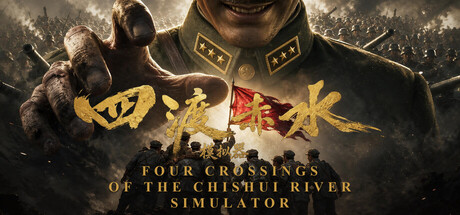
Illustrations & Art: Unit portraits and the opening cinematic illustrations were generated using AI image models, then manually curated, retouched, and unified in style. All assets were human-reviewed under strict art direction to ensure historical tone and consistency.
Opening Cinematic: Subtle motion effects on the illustrations were produced with an AI image-to-video model and assembled by using the Remotion pipeline.
Background Music: The soundtrack was generated by an AI music model in multiple takes, then human-selected, mixed, and mastered.
Telegram Voice-overs: The historical telegram voice-overs in-game were synthesized by an AI TTS system. Each character's reference voice was human-approved through listening tests before use.
2. Development Assistance
Code: Game code was written and debugged with the aid of AI coding assistants. All code was human-reviewed and validated through automated testing.
Localization: The game supports Simplified Chinese, Traditional Chinese, and English. The English text was AI-drafted and human-proofread.
3. What Is NOT AI-Generated
Historical Text: The telegrams in-game are taken from historical archives, 34 are verbatim transcriptions of the original documents, and 12 were written based on the sources. They were not AI-generated.
Terrain & Map: The battlefield map was procedurally rendered from real elevation data (SRTM), not generated by AI.
Game Balance & Statistics: Troop strength, Unit Introduction, and values were researched and set manually from historical sources, cross-checked for accuracy and play balance.
Parts of this game were made with the help of generative AI tools. AI assistance was used for the source code, the in-game and store text, the store and library artwork, and the music and sound effects. Everything generated was reviewed and edited by the developer before it shipped. Nothing is generated while you play: the game ships fixed assets and makes no calls to any AI service.
Towards the end of development, we used modern tools to find bugs faster and further improve the player experience. Some graphics are still temporary and will be replaced with original artwork before the full release. These tools will continue to support testing, bug hunting, and technical optimization.
Generative AI tools were used during development to assist with portions of the game's code and some in-game text, including interface descriptions and procedural name pools. All AI-assisted content was reviewed, edited, and tested by the developer before inclusion.
This game uses AI tools in the following ways:
Music: Composed using Suno.
Code: Written and debugged with AI assistance.
Art: Created with AI assistance.
All AI-assisted content was reviewed, edited, and finalized by the developer.
The soundtrack of PERIHELIA was created with the assistance of generative AI music tools. All tracks were curated, edited and integrated by hand, and each ships with a hand-authored beatmap. All other content — art, code, visual effects — is authored directly and drawn procedurally, with no AI involvement.
During the development process, we may use procedural- and AI-based tools to assist with content creation. In all such cases, the final product reflects the creativity and expression of our own development team.
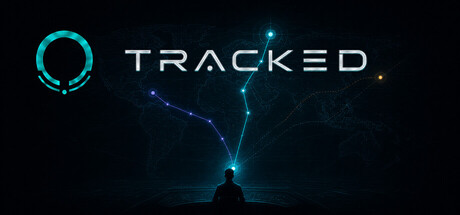
Selected pre-generated visual and audio assets used in Tracked and its store materials were created with the assistance of generative AI tools during development. Every AI-assisted asset was selected, reviewed, and edited by the development team before use. No content is generated during gameplay, and the game does not connect to external AI services.
Some 2D art assets in this game, such as menu backgrounds, UI icons and
character illustrations, were created with the assistance of generative
AI tools. All AI-assisted assets were reviewed and edited by our team
before being included in the game. No content is generated by AI while
the game is running. Game code, design and text were created by humans.
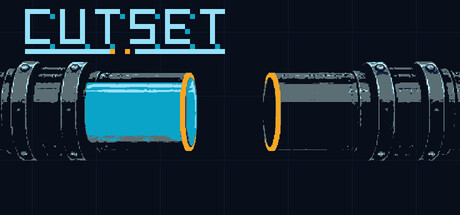
Store page and marketing capsule artwork was drafted with generative AI, then quantized to a fixed 9-colour pixel palette and hand-adjusted before use. Interface translations outside Simplified Chinese and English were produced by machine translation and have not been reviewed by native speakers.
All in-game visuals, the user interface, the wordmark and the achievement icons are drawn programmatically in code and contain no AI-generated content. The game does not invoke generative AI at runtime; nothing is generated while you play.
As part of our early access work, we have used AI-generated images as placeholders for the illustrations on our cards and leader icons. This allows us to iterate quickly and see which game mechanics players like or dislike. We will replace these with human art once we've received enough feedback to finalize what we keep or discard.
Generative AI tools were used during the development and preparation of the game and its visual materials.
The game logo used in the main menu and pause panel was created with the assistance of AI.
AI assistance was used during the coding and development process when needed.
The logo animations shown at the beginning of the games were created with AI assistance.
Visual materials prepared for the Steam store page, excluding the in-game visuals, were created with AI assistance.
AI was used specifically for the intro logo animation.
For Steam visuals, suitable designs were selected from AI-generated concepts and then enhanced and upscaled using image enhancement tools.
Background graphics have been generated with AI. This might change during Early Access, as the goal is to replace all AI artwork by artwork made by real artists.
The language localization and the code for the ink splats was fully generated using AI tools. The UI layouts and game code were built with the assistance of generative AI with a mix of fully AI generated code, developer-edited code, and developer-added code. Generative AI was also used to help assist with writing the text of the Steam store page description.
"This game's code, including the level and cosmetics editors, are all AI-generated.
The maps and music are not AI-generated.
Some cosmetics may be AI-generated, but most are not."
Generative AI tools were used during development to assist with refining some text, code, and images. Some in-game textures were also generated using AI. All AI-assisted content was reviewed, edited, and integrated by the developer. The game does not generate AI content during gameplay.
Pre-generated 2D marketing artwork and Steam store assets were created with assistance from OpenAI image-generation tools during development. All outputs were reviewed and selected by the developer. The game itself does not include AI-generated content, generate AI content at runtime, or connect to AI services.
Pre-generated key art, store and marketing artwork, and two music loops were created with generative AI tools, then selected, edited, and reviewed by the developer. Gameplay rules, code, interface text, and player actions are authored and deterministic. No content is generated during gameplay, and the game does not connect to external AI services.
The current build's interface, icons, unit and terrain graphics are AI-generated placeholder art. The map's underlying terrain layout was AI-generated; the map's painted artwork is hand-made in Inkarnate using licensed Inkarnate assets, and this map artwork also appears in the store's capsule images and screenshots. Interface text was AI-written and reviewed by the developer. The game contains no AI-generated music, audio, dialogue or narrative content, and no AI-generated content is created at runtime.
During development, generative AI tools were used to assist in creating fixed, pre-generated visual content, including brand illustrations, logo variants, Steam store graphics, UI decorative assets and icons, and seamless PBR material textures. All AI-assisted content was created before release and reviewed by the developer. The game does not generate AI content at runtime, does not accept player prompts for AI generation, and does not send player data to an AI service.
We used Kimi 3 to generate the code, vector game assets, skeletal animations and code-synthesized sound effects for this game. Music was generated via Suno, while the game design documents, gameplay mechanics and numerical balancing are strictly controlled by human designers.
Rally Point's visuals and store art are drawn by code from the game's own geometry. No image, audio, or voice generation model was used. That code was written with AI assistance, as were the non-English translations.
- Audio: background music is generated with AI music tools.
- Translation: in-game and store text is translated using AI.
- Code: the game's code, including the code that draws every visual at runtime,
was written with the help of an AI coding assistant.
Pre-generated AI was used for parts of the soundtrack and abstract store artwork. All content was selected and edited by the developer. No AI content is generated during gameplay.
An AI assistant was used while making this game: the word clues and definitions. Nothing is generated while you play - every puzzle, word and clue is fixed in the build and verified before release. The art is not AI-generated: the capsules, logo and icons are rendered by our own tool from the game's own colours and mark, the interface sounds are by Kenney (CC0) and the music is licensed from Ovani Sound.
AI-generated content in this game includes the BGM. Additionally, AI was used to assist in writing code, which was fully reviewed and verified by developer.
The key art used for this game's store capsules and Steam library images was produced with the help of a generative AI image tool, then composed and finished by hand. In the game itself, all visuals are drawn procedurally at runtime and all tap sounds are synthesised in code; no AI content is generated while you play.
Store page texts and localization drafts were prepared with the help of AI tools, and parts of the game's source code were written with AI coding assistants — all of it reviewed, edited and tested by the developer. All art, game design and audio are human-made. The in-game opponent is a custom neural network trained by the developer through self-play (a chess-engine-style game AI, not generative AI).
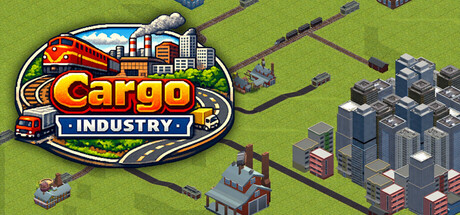
Generative AI tools were used during the development of Cargo Industry as programming assistance tools. They were used to assist with code generation, code modification, debugging, and exploring programming solutions. AI-generated code is included in the game's released codebase.
This game uses AI-assisted translation for the Steam store page and some in-game UI text. As a solo indie developer with limited resources, AI translation helps make the game accessible to more players and support a wider range of languages.
Generative AI tools were used during development to assist in creating some 2D graphics, visual effects, and sound effects. AI-generated outputs are reviewed and edited before being used in the game. The game does not use generative AI or generate AI content during gameplay.
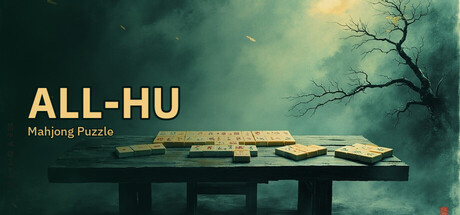
Some of this game's art and audio were created with generative AI tools, then selected, edited and assembled by the developer: the ink-wash illustrations and character portraits, part of the interface artwork, and the background music. The store page artwork and the trailer were produced the same way. Everything ships as fixed, pre-rendered assets. The game generates no content while you play and connects to no AI service. Puzzle levels are built and verified by our own deterministic mahjong solver, not by AI.
Some pre-generated visual assets currently used in Forms of War and its store materials were created with generative AI tools. Most in-game visuals are drawn procedurally in code using Phaser. AI-assisted coding tools were used during development. No generative AI is used while the game is running.
Suno (commercial rights) was used to generate the game's music and the hobo's spoken lines, then hand-selected and edited to match the tone of the game. The translated dialogues were produced with the assistance of a language model.
The game's design and direction are entirely my own. All visuals are generated procedurally by the game's own code.
As an individual developer, during development of this game, AI tools were heavily used. I disclose this honestly and transparently.
1. In-Game Assets
Illustrations & Art: Unit portraits and the opening cinematic illustrations were generated using AI image models, then manually curated, retouched, and unified in style. All assets were human-reviewed under strict art direction to ensure historical tone and consistency.
Opening Cinematic: Subtle motion effects on the illustrations were produced with an AI image-to-video model and assembled by using the Remotion pipeline.
Background Music: The soundtrack was generated by an AI music model in multiple takes, then human-selected, mixed, and mastered.
Telegram Voice-overs: The historical telegram voice-overs in-game were synthesized by an AI TTS system. Each character's reference voice was human-approved through listening tests before use.
2. Development Assistance
Code: Game code was written and debugged with the aid of AI coding assistants. All code was human-reviewed and validated through automated testing.
Localization: The game supports Simplified Chinese, Traditional Chinese, and English. The English text was AI-drafted and human-proofread.
3. What Is NOT AI-Generated
Historical Text: The telegrams in-game are taken from historical archives, 34 are verbatim transcriptions of the original documents, and 12 were written based on the sources. They were not AI-generated.
Terrain & Map: The battlefield map was procedurally rendered from real elevation data (SRTM), not generated by AI.
Game Balance & Statistics: Troop strength, Unit Introduction, and values were researched and set manually from historical sources, cross-checked for accuracy and play balance.
Parts of this game were made with the help of generative AI tools. AI assistance was used for the source code, the in-game and store text, the store and library artwork, and the music and sound effects. Everything generated was reviewed and edited by the developer before it shipped. Nothing is generated while you play: the game ships fixed assets and makes no calls to any AI service.
Towards the end of development, we used modern tools to find bugs faster and further improve the player experience. Some graphics are still temporary and will be replaced with original artwork before the full release. These tools will continue to support testing, bug hunting, and technical optimization.
Generative AI tools were used during development to assist with portions of the game's code and some in-game text, including interface descriptions and procedural name pools. All AI-assisted content was reviewed, edited, and tested by the developer before inclusion.
This game uses AI tools in the following ways:
Music: Composed using Suno.
Code: Written and debugged with AI assistance.
Art: Created with AI assistance.
All AI-assisted content was reviewed, edited, and finalized by the developer.
The soundtrack of PERIHELIA was created with the assistance of generative AI music tools. All tracks were curated, edited and integrated by hand, and each ships with a hand-authored beatmap. All other content — art, code, visual effects — is authored directly and drawn procedurally, with no AI involvement.
During the development process, we may use procedural- and AI-based tools to assist with content creation. In all such cases, the final product reflects the creativity and expression of our own development team.
Selected pre-generated visual and audio assets used in Tracked and its store materials were created with the assistance of generative AI tools during development. Every AI-assisted asset was selected, reviewed, and edited by the development team before use. No content is generated during gameplay, and the game does not connect to external AI services.
Some 2D art assets in this game, such as menu backgrounds, UI icons and
character illustrations, were created with the assistance of generative
AI tools. All AI-assisted assets were reviewed and edited by our team
before being included in the game. No content is generated by AI while
the game is running. Game code, design and text were created by humans.
Store page and marketing capsule artwork was drafted with generative AI, then quantized to a fixed 9-colour pixel palette and hand-adjusted before use. Interface translations outside Simplified Chinese and English were produced by machine translation and have not been reviewed by native speakers.
All in-game visuals, the user interface, the wordmark and the achievement icons are drawn programmatically in code and contain no AI-generated content. The game does not invoke generative AI at runtime; nothing is generated while you play.
As part of our early access work, we have used AI-generated images as placeholders for the illustrations on our cards and leader icons. This allows us to iterate quickly and see which game mechanics players like or dislike. We will replace these with human art once we've received enough feedback to finalize what we keep or discard.
Generative AI tools were used during the development and preparation of the game and its visual materials.
The game logo used in the main menu and pause panel was created with the assistance of AI.
AI assistance was used during the coding and development process when needed.
The logo animations shown at the beginning of the games were created with AI assistance.
Visual materials prepared for the Steam store page, excluding the in-game visuals, were created with AI assistance.
AI was used specifically for the intro logo animation.
For Steam visuals, suitable designs were selected from AI-generated concepts and then enhanced and upscaled using image enhancement tools.
Background graphics have been generated with AI. This might change during Early Access, as the goal is to replace all AI artwork by artwork made by real artists.
The language localization and the code for the ink splats was fully generated using AI tools. The UI layouts and game code were built with the assistance of generative AI with a mix of fully AI generated code, developer-edited code, and developer-added code. Generative AI was also used to help assist with writing the text of the Steam store page description.
"This game's code, including the level and cosmetics editors, are all AI-generated.
The maps and music are not AI-generated.
Some cosmetics may be AI-generated, but most are not."
Generative AI tools were used during development to assist with refining some text, code, and images. Some in-game textures were also generated using AI. All AI-assisted content was reviewed, edited, and integrated by the developer. The game does not generate AI content during gameplay.
Pre-generated 2D marketing artwork and Steam store assets were created with assistance from OpenAI image-generation tools during development. All outputs were reviewed and selected by the developer. The game itself does not include AI-generated content, generate AI content at runtime, or connect to AI services.
Pre-generated key art, store and marketing artwork, and two music loops were created with generative AI tools, then selected, edited, and reviewed by the developer. Gameplay rules, code, interface text, and player actions are authored and deterministic. No content is generated during gameplay, and the game does not connect to external AI services.
The current build's interface, icons, unit and terrain graphics are AI-generated placeholder art. The map's underlying terrain layout was AI-generated; the map's painted artwork is hand-made in Inkarnate using licensed Inkarnate assets, and this map artwork also appears in the store's capsule images and screenshots. Interface text was AI-written and reviewed by the developer. The game contains no AI-generated music, audio, dialogue or narrative content, and no AI-generated content is created at runtime.
During development, generative AI tools were used to assist in creating fixed, pre-generated visual content, including brand illustrations, logo variants, Steam store graphics, UI decorative assets and icons, and seamless PBR material textures. All AI-assisted content was created before release and reviewed by the developer. The game does not generate AI content at runtime, does not accept player prompts for AI generation, and does not send player data to an AI service.
We used Kimi 3 to generate the code, vector game assets, skeletal animations and code-synthesized sound effects for this game. Music was generated via Suno, while the game design documents, gameplay mechanics and numerical balancing are strictly controlled by human designers.
Rally Point's visuals and store art are drawn by code from the game's own geometry. No image, audio, or voice generation model was used. That code was written with AI assistance, as were the non-English translations.
- Audio: background music is generated with AI music tools.
- Translation: in-game and store text is translated using AI.
- Code: the game's code, including the code that draws every visual at runtime,
was written with the help of an AI coding assistant.
Pre-generated AI was used for parts of the soundtrack and abstract store artwork. All content was selected and edited by the developer. No AI content is generated during gameplay.
An AI assistant was used while making this game: the word clues and definitions. Nothing is generated while you play - every puzzle, word and clue is fixed in the build and verified before release. The art is not AI-generated: the capsules, logo and icons are rendered by our own tool from the game's own colours and mark, the interface sounds are by Kenney (CC0) and the music is licensed from Ovani Sound.
AI-generated content in this game includes the BGM. Additionally, AI was used to assist in writing code, which was fully reviewed and verified by developer.
The key art used for this game's store capsules and Steam library images was produced with the help of a generative AI image tool, then composed and finished by hand. In the game itself, all visuals are drawn procedurally at runtime and all tap sounds are synthesised in code; no AI content is generated while you play.
Store page texts and localization drafts were prepared with the help of AI tools, and parts of the game's source code were written with AI coding assistants — all of it reviewed, edited and tested by the developer. All art, game design and audio are human-made. The in-game opponent is a custom neural network trained by the developer through self-play (a chess-engine-style game AI, not generative AI).
Generative AI tools were used during the development of Cargo Industry as programming assistance tools. They were used to assist with code generation, code modification, debugging, and exploring programming solutions. AI-generated code is included in the game's released codebase.
This game uses AI-assisted translation for the Steam store page and some in-game UI text. As a solo indie developer with limited resources, AI translation helps make the game accessible to more players and support a wider range of languages.
Generative AI tools were used during development to assist in creating some 2D graphics, visual effects, and sound effects. AI-generated outputs are reviewed and edited before being used in the game. The game does not use generative AI or generate AI content during gameplay.
Some of this game's art and audio were created with generative AI tools, then selected, edited and assembled by the developer: the ink-wash illustrations and character portraits, part of the interface artwork, and the background music. The store page artwork and the trailer were produced the same way. Everything ships as fixed, pre-rendered assets. The game generates no content while you play and connects to no AI service. Puzzle levels are built and verified by our own deterministic mahjong solver, not by AI.