Public Steam disclosure research25,380 disclosures tracked
Where do games disclose AI use?
Search developers’ Steam disclosures, compare classified AI use across
games, and follow recorded changes.
This index adds cross-game classifications and statistics to
statements published on individual store pages.
Groups reflect automatic analysis of public disclosures; mature records are excluded. These counts do not measure AI use across all of Steam.
Missing or unclear statements cannot establish whether a game uses AI.
BOOKED uses generative AI-assisted artwork for some fictional in-game book covers and selected promotional/store artwork. Generative AI was also used to assist with some fictional book titles and creative concepts. All generated content was reviewed and selected by the developer before being included in the game.
This game was developed with the assistance of generative AI tools during the development process. Generative AI was used to help produce elements of the game's code, artwork, and music. All AI-assisted output was reviewed, edited, and curated by our team before being included in the final game, ensuring it met our creative and quality standards.
AI assistance (a large language model) was used to translate the store page description into English. No in-game assets — 3D models, textures, music, or sound — were created using generative AI.
Dystopia uses AI to live-generate its radio: all music, DJ voices, lyrics,
song titles, and artist names are created by AI on our own servers and
streamed to every player. Our 3D environments render as Gaussian splats and
were AI generated using World Labs' Marble.
Artificial intelligence tools were utilized solely in the creation of certain promotional materials, including the game logo and Steam library artwork.
Some of PitWal's artwork and store images were made with help from AI tools and then finished by a person. PitWal's in-app commentary lines were also written with help from AI during development and ship as a fixed set. While you play, PitWal picks from those prewritten lines and fills in your own numbers from your own driving.
PitWal does not run any AI while you play and does not send your data to any AI service. If you want, PitWal lets you connect your own AI assistant, such as Claude or a coding agent local or paid, to read your own data on your own machine. That is optional, uses your own tool, and is never required to use PitWal.
Some user interface elements (including UI frames, buttons, panels, and HUD background art) were created with the assistance of generative AI image tools during development, then manually edited, composited, and integrated by the development team. Promotional artwork on the store page (capsule, library header/hero images) also used generative AI assistance and was human-reviewed before publication. No AI is used to generate content during gameplay.
We used an AI diffusion tool in Krita to help create the background for the small capsule shown in search results. Our artist then worked over it with several extra layers, a bit like matte painting. For now, it's a placeholder until our artist finishes the hand-painted version of the small capsule.
The logo and the other capsule images were already hand-painted by our artist. The in-game portraits were also drawn by another artist on our team.
We have a devlog on our website about how we made the capsule artwork and hero portraits, and we'll share the full process on the Steam Community soon too.
The playtest build also includes a few placeholder assets made with AI tools in Krita. Our new UI artist is working on a new UI, so we'll be replacing those placeholders soon. As mentioned above, the hero portraits are also hand-drawn by our artist.
This game uses generative AI to provide personalized choices and free-form conversations based on player input and profile information. The main story and scenarios are written by human writers.
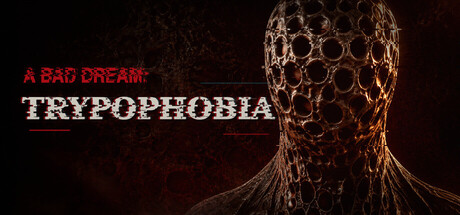
During the development of *A Bad Dream: Trypophobia*, generative AI was used as a supporting tool to create and refine certain textures, 3D models, and visual elements, as well as to assist in programming specific systems. All content was manually reviewed, edited, configured, and integrated by Big Mount Interactive. The game does not generate content via AI during gameplay, nor does it connect to external AI services.
Some images in this game are generated using artificial intelligence. AI tools were used to enhance visual effects and create unique scenes, carefully aligned with the game's art style.
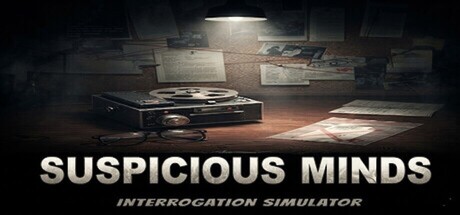
Dynamic Interrogation Dialogue: Suspicious Minds features an unscripted interrogation engine powered by local Large Language Models (LLMs). Suspect and detective responses, emotional shifts, and conversational directions are generated dynamically in real time based on user inputs, crime scene evidence, and player choices.
Voice Recognition & Speech Synthesis: The game utilizes localized speech-to-text engines to analyze spoken player input and real-time text-to-speech models to synthesize natural, expressive character voice outputs during gameplay.
Store assets, quiz content, and general layout of application generated with AI to help with design and formatting. Human review and edit before any code implemented. This game does not have any AI models running in the background or in-game. All scriptures are public domain.
AI tools were used to assist in creating character sprites during development, followed by manual retouching and adjustments. The game does not generate real-time AI content during gameplay.
Generative AI may be used during the development of AIRPORT 7 for development assistance, brainstorming, and creating or refining certain development-related content. AI-generated content is reviewed and edited by the developer before being included in the game. The game does not use generative AI to generate content for players during gameplay.
Some in-game images, depicting traditional dress, festivals, food, and cultural artifacts, were created using an AI image generation pipeline (Google Gemini through an automated workflow). Every generated image was reviewed, curated, and approved by the developer before it was added to the game. No AI content is generated live during gameplay.
Were used during development to assist with selected visual asset workflows.
All final assets were reviewed, edited, optimized, and manually integrated by the developer.
Background graphics have been generated with AI. This might change during Early Access, as the goal is to replace all AI artwork by artwork made by real artists.
AI assistance was used to edit and localize the Steam store text and to help select, crop, and composite developer-captured gameplay screenshots and recordings with the developer-provided JANJARA logo for store capsules, library artwork, client icons, and the trailer. No synthetic gameplay imagery or audio was generated, and the game does not generate AI content during play.
Generative AI tools were used to assist in the creation and refinement of some visual assets, including illustrations, user interface elements, and marketing materials.
Some pre-generated visual and audio assets in AI Startup Simulator were created with the assistance of generative AI tools during development. This includes in-game desktop wallpapers, images used in vision-related tasks, and instrumental music loops for minigames. These assets were reviewed, edited, and integrated by the development team before release. The game does not use live generative AI and does not generate content with AI during gameplay.
Generative AI has been used as a supplementary tool in the creation of some art assets and UI elements included in this game. AI has also been used to assist with some text creation and localization.
AI-generated or AI-assisted content is reviewed by the developer and edited or adjusted by hand as needed. Generative AI is used only as a tool to support the development process, while careful attention is given to the overall quality, consistency, and atmosphere of the game.
This game uses generative AI tools in parts of its development process.
Code: Some of the game's code was written with AI assistance. All generated code has been reviewed, tested, and integrated by the developer.
Audio: Some sound effects and voice lines may be generated or processed using AI tools.
Visual assets: The game primarily uses licensed asset packs and hand-authored materials. Where AI tools were used, it was for texture variation and iteration on existing licensed assets.
No AI-generated content is created live during gameplay. All content is fixed and reviewed before release.
Some pre-rendered content was created with the help of generative AI tools: the music tracks, the game logo and store/marketing artwork, and the store page texts including localization. All gameplay, graphics and race simulation are deterministic and hand-coded; no content is generated by AI at runtime.
Generative AI was used to create portions of the pre-rendered promotional trailer and to assist with the production of some visual assets. No content is generated during gameplay, and the game does not connect to external AI services.
Generative AI was used to assist in creating certain decorative user interface elements, and background graphics. All gameplay systems, mechanics, programming, game design, and core game content were created and curated by the development team.
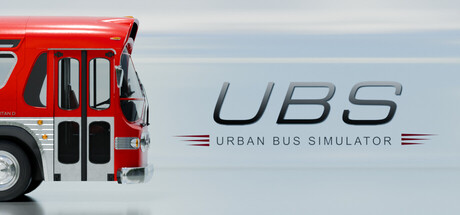
Urban Bus Simulator includes some content created with the assistance of generative AI. AI-generated content is used for certain HUD elements, menu/interface visuals, and promotional or illustrative images related to vehicle brands. These AI-generated assets are used as part of the game's visual presentation and user interface.
This game includes limited use of generative artificial intelligence in the creation of certain visual and audio assets. These AI-assisted elements were used to support the development process and are integrated alongside original, human-created content. All assets have been reviewed and curated to ensure they meet the quality and artistic standards of the game.
Generative AI tools were used during development to assist in the creation of selected visual assets and promotional materials. All AI-assisted content was reviewed, edited, and integrated by the developer. The game does not generate AI content during gameplay and does not connect to external AI services while being played.
Save Point has been in continuous development since 2021 and is, to our knowledge, the world’s first purpose-built AI-native interactive cinematic engine. The Needle uses this technology to deliver a continuously responsive cinematic experience that goes far beyond conventional branching video. AI-assisted production tools helped create portions of the game’s pre-rendered audiovisual content, with every shipped asset human-directed, reviewed, edited, and integrated. The game also offers locally processed voice controls, alongside keyboard and gamepad support. No unreviewed audiovisual content is generated and delivered to players during gameplay. The project represents tens of thousands of hours of human design, engineering, direction, editing, and testing, with AI serving as the enabling technology behind an experience an independent studio could not otherwise produce at any cost, much less a reasonable one. We didn't use AI to save money, we used it because without AI there wasn't enough money in the world to build a game like this.
Generative AI tools were used during development to assist with the creation of selected promotional artwork and Steam store graphical assets. These assets were reviewed and curated by the development team before being used. The game does not currently use live generative AI during gameplay.
Generative AI tools were used during development to assist in creating and refining certain visual assets. All AI-assisted content was reviewed and edited by the developer before inclusion in the final product.
Blind Spot's writing, art, audio, and design were created without generative AI.
AI was used in one area: localization. Every language was handled identically. All in-game dialogue was translated entirely by human translators, with no AI involvement at any stage. The interface text, some menu text, options, and other short UI strings were given an AI first pass, which the same human translators then reviewed and corrected language by language before it shipped.
No AI-generated art, audio, or gameplay content appears in the game.
Generative AI was used only to assist with text localization and marketing assets; no AI-generated artwork, audio, or runtime content is included in the game.
Pre-generated AI tools were used to assist in creating portions of the game's music, narration, character assets, and localization. All resulting content was reviewed and edited before being included as fixed game content. The game does not generate content with AI during gameplay or connect to an external AI service while running.
BOOKED uses generative AI-assisted artwork for some fictional in-game book covers and selected promotional/store artwork. Generative AI was also used to assist with some fictional book titles and creative concepts. All generated content was reviewed and selected by the developer before being included in the game.
This game was developed with the assistance of generative AI tools during the development process. Generative AI was used to help produce elements of the game's code, artwork, and music. All AI-assisted output was reviewed, edited, and curated by our team before being included in the final game, ensuring it met our creative and quality standards.
AI assistance (a large language model) was used to translate the store page description into English. No in-game assets — 3D models, textures, music, or sound — were created using generative AI.
Dystopia uses AI to live-generate its radio: all music, DJ voices, lyrics,
song titles, and artist names are created by AI on our own servers and
streamed to every player. Our 3D environments render as Gaussian splats and
were AI generated using World Labs' Marble.
Artificial intelligence tools were utilized solely in the creation of certain promotional materials, including the game logo and Steam library artwork.
Some of PitWal's artwork and store images were made with help from AI tools and then finished by a person. PitWal's in-app commentary lines were also written with help from AI during development and ship as a fixed set. While you play, PitWal picks from those prewritten lines and fills in your own numbers from your own driving.
PitWal does not run any AI while you play and does not send your data to any AI service. If you want, PitWal lets you connect your own AI assistant, such as Claude or a coding agent local or paid, to read your own data on your own machine. That is optional, uses your own tool, and is never required to use PitWal.
Some user interface elements (including UI frames, buttons, panels, and HUD background art) were created with the assistance of generative AI image tools during development, then manually edited, composited, and integrated by the development team. Promotional artwork on the store page (capsule, library header/hero images) also used generative AI assistance and was human-reviewed before publication. No AI is used to generate content during gameplay.
We used an AI diffusion tool in Krita to help create the background for the small capsule shown in search results. Our artist then worked over it with several extra layers, a bit like matte painting. For now, it's a placeholder until our artist finishes the hand-painted version of the small capsule.
The logo and the other capsule images were already hand-painted by our artist. The in-game portraits were also drawn by another artist on our team.
We have a devlog on our website about how we made the capsule artwork and hero portraits, and we'll share the full process on the Steam Community soon too.
The playtest build also includes a few placeholder assets made with AI tools in Krita. Our new UI artist is working on a new UI, so we'll be replacing those placeholders soon. As mentioned above, the hero portraits are also hand-drawn by our artist.
This game uses generative AI to provide personalized choices and free-form conversations based on player input and profile information. The main story and scenarios are written by human writers.
During the development of *A Bad Dream: Trypophobia*, generative AI was used as a supporting tool to create and refine certain textures, 3D models, and visual elements, as well as to assist in programming specific systems. All content was manually reviewed, edited, configured, and integrated by Big Mount Interactive. The game does not generate content via AI during gameplay, nor does it connect to external AI services.
Some images in this game are generated using artificial intelligence. AI tools were used to enhance visual effects and create unique scenes, carefully aligned with the game's art style.
Dynamic Interrogation Dialogue: Suspicious Minds features an unscripted interrogation engine powered by local Large Language Models (LLMs). Suspect and detective responses, emotional shifts, and conversational directions are generated dynamically in real time based on user inputs, crime scene evidence, and player choices.
Voice Recognition & Speech Synthesis: The game utilizes localized speech-to-text engines to analyze spoken player input and real-time text-to-speech models to synthesize natural, expressive character voice outputs during gameplay.
Store assets, quiz content, and general layout of application generated with AI to help with design and formatting. Human review and edit before any code implemented. This game does not have any AI models running in the background or in-game. All scriptures are public domain.
AI tools were used to assist in creating character sprites during development, followed by manual retouching and adjustments. The game does not generate real-time AI content during gameplay.
Generative AI may be used during the development of AIRPORT 7 for development assistance, brainstorming, and creating or refining certain development-related content. AI-generated content is reviewed and edited by the developer before being included in the game. The game does not use generative AI to generate content for players during gameplay.
Some in-game images, depicting traditional dress, festivals, food, and cultural artifacts, were created using an AI image generation pipeline (Google Gemini through an automated workflow). Every generated image was reviewed, curated, and approved by the developer before it was added to the game. No AI content is generated live during gameplay.
Were used during development to assist with selected visual asset workflows.
All final assets were reviewed, edited, optimized, and manually integrated by the developer.
Background graphics have been generated with AI. This might change during Early Access, as the goal is to replace all AI artwork by artwork made by real artists.
AI assistance was used to edit and localize the Steam store text and to help select, crop, and composite developer-captured gameplay screenshots and recordings with the developer-provided JANJARA logo for store capsules, library artwork, client icons, and the trailer. No synthetic gameplay imagery or audio was generated, and the game does not generate AI content during play.
Generative AI tools were used to assist in the creation and refinement of some visual assets, including illustrations, user interface elements, and marketing materials.
Some pre-generated visual and audio assets in AI Startup Simulator were created with the assistance of generative AI tools during development. This includes in-game desktop wallpapers, images used in vision-related tasks, and instrumental music loops for minigames. These assets were reviewed, edited, and integrated by the development team before release. The game does not use live generative AI and does not generate content with AI during gameplay.
Generative AI has been used as a supplementary tool in the creation of some art assets and UI elements included in this game. AI has also been used to assist with some text creation and localization.
AI-generated or AI-assisted content is reviewed by the developer and edited or adjusted by hand as needed. Generative AI is used only as a tool to support the development process, while careful attention is given to the overall quality, consistency, and atmosphere of the game.
This game uses generative AI tools in parts of its development process.
Code: Some of the game's code was written with AI assistance. All generated code has been reviewed, tested, and integrated by the developer.
Audio: Some sound effects and voice lines may be generated or processed using AI tools.
Visual assets: The game primarily uses licensed asset packs and hand-authored materials. Where AI tools were used, it was for texture variation and iteration on existing licensed assets.
No AI-generated content is created live during gameplay. All content is fixed and reviewed before release.
Some pre-rendered content was created with the help of generative AI tools: the music tracks, the game logo and store/marketing artwork, and the store page texts including localization. All gameplay, graphics and race simulation are deterministic and hand-coded; no content is generated by AI at runtime.
Generative AI was used to create portions of the pre-rendered promotional trailer and to assist with the production of some visual assets. No content is generated during gameplay, and the game does not connect to external AI services.
Generative AI was used to assist in creating certain decorative user interface elements, and background graphics. All gameplay systems, mechanics, programming, game design, and core game content were created and curated by the development team.
Urban Bus Simulator includes some content created with the assistance of generative AI. AI-generated content is used for certain HUD elements, menu/interface visuals, and promotional or illustrative images related to vehicle brands. These AI-generated assets are used as part of the game's visual presentation and user interface.
This game includes limited use of generative artificial intelligence in the creation of certain visual and audio assets. These AI-assisted elements were used to support the development process and are integrated alongside original, human-created content. All assets have been reviewed and curated to ensure they meet the quality and artistic standards of the game.
Generative AI tools were used during development to assist in the creation of selected visual assets and promotional materials. All AI-assisted content was reviewed, edited, and integrated by the developer. The game does not generate AI content during gameplay and does not connect to external AI services while being played.
Save Point has been in continuous development since 2021 and is, to our knowledge, the world’s first purpose-built AI-native interactive cinematic engine. The Needle uses this technology to deliver a continuously responsive cinematic experience that goes far beyond conventional branching video. AI-assisted production tools helped create portions of the game’s pre-rendered audiovisual content, with every shipped asset human-directed, reviewed, edited, and integrated. The game also offers locally processed voice controls, alongside keyboard and gamepad support. No unreviewed audiovisual content is generated and delivered to players during gameplay. The project represents tens of thousands of hours of human design, engineering, direction, editing, and testing, with AI serving as the enabling technology behind an experience an independent studio could not otherwise produce at any cost, much less a reasonable one. We didn't use AI to save money, we used it because without AI there wasn't enough money in the world to build a game like this.
Generative AI tools were used during development to assist with the creation of selected promotional artwork and Steam store graphical assets. These assets were reviewed and curated by the development team before being used. The game does not currently use live generative AI during gameplay.
Generative AI tools were used during development to assist in creating and refining certain visual assets. All AI-assisted content was reviewed and edited by the developer before inclusion in the final product.
Blind Spot's writing, art, audio, and design were created without generative AI.
AI was used in one area: localization. Every language was handled identically. All in-game dialogue was translated entirely by human translators, with no AI involvement at any stage. The interface text, some menu text, options, and other short UI strings were given an AI first pass, which the same human translators then reviewed and corrected language by language before it shipped.
No AI-generated art, audio, or gameplay content appears in the game.
Generative AI was used only to assist with text localization and marketing assets; no AI-generated artwork, audio, or runtime content is included in the game.
Pre-generated AI tools were used to assist in creating portions of the game's music, narration, character assets, and localization. All resulting content was reviewed and edited before being included as fixed game content. The game does not generate content with AI during gameplay or connect to an external AI service while running.