Public Steam disclosure research25,380 disclosures tracked
Where do games disclose AI use?
Search developers’ Steam disclosures, compare classified AI use across
games, and follow recorded changes.
This index adds cross-game classifications and statistics to
statements published on individual store pages.
Groups reflect automatic analysis of public disclosures; mature records are excluded. These counts do not measure AI use across all of Steam.
Missing or unclear statements cannot establish whether a game uses AI.
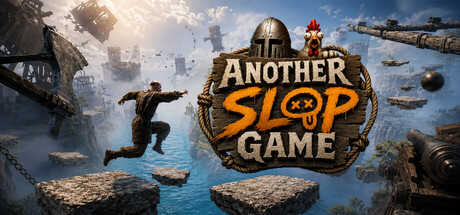
As a small, two-person independent development team, we have used generative AI to help create a limited number of pre-generated assets during development. This includes portions of the store capsule artwork, a number of UI elements and icons, and approximately three lines of dialogue for a single enemy.
The AI-generated visual content is used solely as placeholder artwork to support our Early Access proof of concept. These assets allow us to focus our limited resources on gameplay, systems, balance, and overall game quality while we continue development. Replacing these placeholder assets with original, commissioned artwork is a planned and intentional part of our Early Access development roadmap.
No generative AI was or will be used to create gameplay, game logic, programming, level design, music, sound effects, visual effects, or any live-generated in-game content.
Most of the images used in the narrative mode scenes were initially generated using generative AI and subsequently refined through manual editing. Generative AI was also employed to assist with the translation of the narrative text.
We use claude/codex to help us translate our story to other languages. Members of the development team speak these languages:
- English
- Romanian
Outside of these languages, all story is translated with the help of AI. The narrative itself is being written by one of the developers and without the help of AI
The game was designed, assembled, reworked, tested, and integrated by the developer, with a manually defined artistic direction and gameplay experience.
Generative AI tools were used as creative assistance for certain visual, audio, cinematic, code-related, and promotional content.
This content was then selected, edited, adapted, and adjusted to match the game’s artistic identity, gameplay, and final experience.
As a solo developer, my focus right is on building a deep, balanced gameplay loop: an MMORPG where your equipment dictates the strength of your card deck. To allow me to focus purely on building the combat and RPG progression mechanics, all current in-game imagery (room scenes, sprites, portraits, HUD etc) uses AI-generated images (Google Gemini) that I have modified by hand to fit the game.
These are temporary placeholder assets. My goal is to eventually replace this placeholder art as the game's mechanics are finalized and the project grows.
StarCinder includes some content created with the assistance of generative AI tools. This includes certain music tracks, ship concept art, ship models, and background/menu imagery. The developer directed the style, mood, and design goals for these assets, then reviewed, selected, and integrated the final content into the game. StarCinder does not generate AI content during gameplay and does not connect to external AI services while players are playing.
Some of Airline Legacy's artwork, music, in-game text, and translations were created with the assistance of generative AI tools during development. All AI-assisted content was reviewed and curated by the developer. No content is generated live during gameplay.
Built by a two-person studio, The Last Banner deploys AI tools as supplements only. All art and code are curated, hand crafted and built by us. We strive to create the best game possible with the best tools of the modern day.
This product uses generative AI only for a limited amount of pre-generated visual assets. These include certain user interface artwork used in the game menus, as well as some promotional/store page visual assets such as header images and the game logo.
Generative AI is not used to generate gameplay, characters, levels, story content, player-facing text, or any real-time content during gameplay. All AI-assisted assets are manually reviewed, edited where necessary, and selected by the developer before being included in the product or its store page.
AI-assisted tools were used to help create some splash screen visuals and store page promotional artwork. All assets were reviewed and finalized by the developer before being included in the game and store materials.
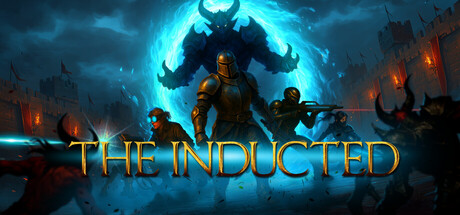
The Inducted uses generative AI tools in a limited capacity. Some user interface icons and elements in-game were created with the assistance of generative AI. Additionally, the store capsule artwork was composed by a professional artist who incorporated some AI-generated elements among hand-crafted components. All gameplay, characters, environments, and audio are created without generative AI.
Some store assets (capsules, library art, promotional images) and some in-game terrain sprites (such as mountains and forests) started from drafts produced with AI image tools, then selected, color-graded, composited, and cropped by the developer. All publicly released assets are human-reviewed. UI, fonts, icons, player avatars, faction emblems, and other non-terrain art are drawn directly by the developer or built from licensed fonts / open-source resources — no AI generation involved. Player-to-player text messages produced at runtime by the AI model each player has chosen are disclosed separately under "Live-Generated AI".
AI was used as an assistive tool for creating specific texture patterns, supporting code development, and producing videos for the game. All generated content was manually reviewed, edited, and refined by our team.
As a small independent game studio, we use AI to support our creative workflow. All final content was created and approved by our team.
My game currently uses generative AI only to assist with temporary localization and translation work, mainly as a placeholder until the translations can be reviewed and replaced by professional human translators.
Due to the very short development time frame (1 month) with a 1 man team some icons and images were AI generated and will be modified before the release.
We want to be upfront about how AI tools were used during the development of Golden Years. This is a small indie project built mostly by hand, but a few AI assisted elements were used to help speed up production.
Where AI Was Used
A handful of environmental textures, about five or six total, were created or retextured using AI tools. These are simple surface materials used to add extra detail to the environment. Every AI assisted texture was manually edited, cleaned up, and adjusted to fit the game's style.
Where AI Was Not Used
All of the core creative work in Golden Years is fully handcrafted. This includes:
Level design and layout
Atmosphere, lighting, and mood
Gameplay systems and mechanics
Environmental storytelling
Overall direction and feel of the game
No AI tools were used to design gameplay, build levels, or shape the game's atmosphere.
Store Page and Descriptions
Some of the text on the Steam store page may use AI assistance for drafting or polishing. All final wording is reviewed and edited to make sure it accurately represents the game.
Gameplay Logic
AI is not used for in game decision making, player behavior, or gameplay logic. Everything that affects how the game plays is traditionally designed and implemented.
Generative AI was used to create some initial concept imagery during development and marketing. All AI generated content is reviewed, heavily modified, edited and incorporated into final artwork by our art team before use. No AI generated content is produced during gameplay.
We use AI-assisted tools in parts of our development process to assist with content creation, improve productivity, and streamline routine tasks so our team has more time for creative work. Where we use these tools, the work is directed, reviewed, and finalized by our team.
Some in-game audio, including phone call voices and ambient sounds, were generated using AI tools. Additionally, certain stickers and visual assets found in the Cancer's living area were created with the assistance of generative AI.
TankFall Arena contains certain pre-generated assets created with the assistance of generative AI tools during development. These assets may include promotional artwork, visual elements, audio content, and music. All AI-assisted content has been reviewed, curated, modified, and integrated by the developer as part of the game's overall design and presentation.
TankFall Arena does not generate AI content during gameplay and does not connect to external AI services while the game is running.
Small quantity of images/textures are ai-generated.
Small quantity of sound waves are ai-generated.
Some parts of code are ai-genereted and ai-assissted always tested by a human.
We believe that no person should be replaced by AI. All Primals — their models, animation, rigging, textures, SFX, and VFX — have been handcrafted by skilled artists.
Our developers may choose to use generative AI as part of an iterative, exploratory development process, but how and when is left to individual team members, and the final product always reflects the creativity and expression of our own development team.
As a small team, we have licensed some icons and 2D assets from external creators, and it is possible that some of these creators have used generative AI.
This game uses generative AI in the following ways:
Art and Visual Assets (Pre-Generated):
Some in-game art assets including player portraits and UI illustrations were created with the assistance of generative AI tools during development. All generated assets were reviewed, curated, and edited by the developer before being included in the final build.
All AI-generated content has been produced using models and tools that the developer has the right to use commercially.
Some of this game's marketing artwork (Steam store capsules and banners) was generated with the help of an AI image model (FLUX via Runware) and then composited and edited by hand for the final assets.
Translations for 14 of the 16 supported languages — Danish, Finnish, French, German, Italian, Japanese, Korean, Norwegian, Polish, Portuguese, Simplified Chinese, Slovak, Spanish, and Swedish — were produced by machine translation (DeepL). Only English and Czech are reviewed and edited by a human; the other translations may contain mistakes, and corrections are welcome.
Some art assets are generative and some are not. Many assets were purchased and then updated with generative AI in order to look different from the original purchased assets. We would love to change these out for custom art if the game does well.
Generative AI was used during development for two background illustrations and to draft some in-game UI and popup text, which the developer then reviewed and shipped. The game does not use AI to generate content during gameplay.
In-game music tracks were created using generative AI-assisted tools and were subsequently edited, mixed, arranged, and mastered by the developer. All AI-generated material was reviewed and modified as part of the final audio production process.
AI tools were used during development to assist with writing and improving the game’s C# code. All AI-assisted code was reviewed, manually adjusted, and fully tested by the developer. No AI is used during gameplay, and no AI-generated assets (such as images or sounds) are included in the final game
This game contains selected content created with the assistance of generative artificial intelligence tools. This includes certain 3D models, textures, sound effects, and graphical assets that were generated or processed using AI technology, and subsequently reviewed and integrated by our development team.
Generative AI was used as a supplementary tool in the creative process - all content has been manually reviewed, adjusted, and approved by human developers before being included in the game. We do not use generative AI to produce content in real time during gameplay.
Realm of Balls was developed with the help of generative AI tools during production, but the game does not include live AI-generated content for players.
As a small, two-person independent development team, we have used generative AI to help create a limited number of pre-generated assets during development. This includes portions of the store capsule artwork, a number of UI elements and icons, and approximately three lines of dialogue for a single enemy.
The AI-generated visual content is used solely as placeholder artwork to support our Early Access proof of concept. These assets allow us to focus our limited resources on gameplay, systems, balance, and overall game quality while we continue development. Replacing these placeholder assets with original, commissioned artwork is a planned and intentional part of our Early Access development roadmap.
No generative AI was or will be used to create gameplay, game logic, programming, level design, music, sound effects, visual effects, or any live-generated in-game content.
Most of the images used in the narrative mode scenes were initially generated using generative AI and subsequently refined through manual editing. Generative AI was also employed to assist with the translation of the narrative text.
We use claude/codex to help us translate our story to other languages. Members of the development team speak these languages:
- English
- Romanian
Outside of these languages, all story is translated with the help of AI. The narrative itself is being written by one of the developers and without the help of AI
The game was designed, assembled, reworked, tested, and integrated by the developer, with a manually defined artistic direction and gameplay experience.
Generative AI tools were used as creative assistance for certain visual, audio, cinematic, code-related, and promotional content.
This content was then selected, edited, adapted, and adjusted to match the game’s artistic identity, gameplay, and final experience.
As a solo developer, my focus right is on building a deep, balanced gameplay loop: an MMORPG where your equipment dictates the strength of your card deck. To allow me to focus purely on building the combat and RPG progression mechanics, all current in-game imagery (room scenes, sprites, portraits, HUD etc) uses AI-generated images (Google Gemini) that I have modified by hand to fit the game.
These are temporary placeholder assets. My goal is to eventually replace this placeholder art as the game's mechanics are finalized and the project grows.
StarCinder includes some content created with the assistance of generative AI tools. This includes certain music tracks, ship concept art, ship models, and background/menu imagery. The developer directed the style, mood, and design goals for these assets, then reviewed, selected, and integrated the final content into the game. StarCinder does not generate AI content during gameplay and does not connect to external AI services while players are playing.
Some of Airline Legacy's artwork, music, in-game text, and translations were created with the assistance of generative AI tools during development. All AI-assisted content was reviewed and curated by the developer. No content is generated live during gameplay.
Built by a two-person studio, The Last Banner deploys AI tools as supplements only. All art and code are curated, hand crafted and built by us. We strive to create the best game possible with the best tools of the modern day.
This product uses generative AI only for a limited amount of pre-generated visual assets. These include certain user interface artwork used in the game menus, as well as some promotional/store page visual assets such as header images and the game logo.
Generative AI is not used to generate gameplay, characters, levels, story content, player-facing text, or any real-time content during gameplay. All AI-assisted assets are manually reviewed, edited where necessary, and selected by the developer before being included in the product or its store page.
AI-assisted tools were used to help create some splash screen visuals and store page promotional artwork. All assets were reviewed and finalized by the developer before being included in the game and store materials.
The Inducted uses generative AI tools in a limited capacity. Some user interface icons and elements in-game were created with the assistance of generative AI. Additionally, the store capsule artwork was composed by a professional artist who incorporated some AI-generated elements among hand-crafted components. All gameplay, characters, environments, and audio are created without generative AI.
Some store assets (capsules, library art, promotional images) and some in-game terrain sprites (such as mountains and forests) started from drafts produced with AI image tools, then selected, color-graded, composited, and cropped by the developer. All publicly released assets are human-reviewed. UI, fonts, icons, player avatars, faction emblems, and other non-terrain art are drawn directly by the developer or built from licensed fonts / open-source resources — no AI generation involved. Player-to-player text messages produced at runtime by the AI model each player has chosen are disclosed separately under "Live-Generated AI".
AI was used as an assistive tool for creating specific texture patterns, supporting code development, and producing videos for the game. All generated content was manually reviewed, edited, and refined by our team.
As a small independent game studio, we use AI to support our creative workflow. All final content was created and approved by our team.
My game currently uses generative AI only to assist with temporary localization and translation work, mainly as a placeholder until the translations can be reviewed and replaced by professional human translators.
Due to the very short development time frame (1 month) with a 1 man team some icons and images were AI generated and will be modified before the release.
We want to be upfront about how AI tools were used during the development of Golden Years. This is a small indie project built mostly by hand, but a few AI assisted elements were used to help speed up production.
Where AI Was Used
A handful of environmental textures, about five or six total, were created or retextured using AI tools. These are simple surface materials used to add extra detail to the environment. Every AI assisted texture was manually edited, cleaned up, and adjusted to fit the game's style.
Where AI Was Not Used
All of the core creative work in Golden Years is fully handcrafted. This includes:
Level design and layout
Atmosphere, lighting, and mood
Gameplay systems and mechanics
Environmental storytelling
Overall direction and feel of the game
No AI tools were used to design gameplay, build levels, or shape the game's atmosphere.
Store Page and Descriptions
Some of the text on the Steam store page may use AI assistance for drafting or polishing. All final wording is reviewed and edited to make sure it accurately represents the game.
Gameplay Logic
AI is not used for in game decision making, player behavior, or gameplay logic. Everything that affects how the game plays is traditionally designed and implemented.
Generative AI was used to create some initial concept imagery during development and marketing. All AI generated content is reviewed, heavily modified, edited and incorporated into final artwork by our art team before use. No AI generated content is produced during gameplay.
We use AI-assisted tools in parts of our development process to assist with content creation, improve productivity, and streamline routine tasks so our team has more time for creative work. Where we use these tools, the work is directed, reviewed, and finalized by our team.
Some in-game audio, including phone call voices and ambient sounds, were generated using AI tools. Additionally, certain stickers and visual assets found in the Cancer's living area were created with the assistance of generative AI.
TankFall Arena contains certain pre-generated assets created with the assistance of generative AI tools during development. These assets may include promotional artwork, visual elements, audio content, and music. All AI-assisted content has been reviewed, curated, modified, and integrated by the developer as part of the game's overall design and presentation.
TankFall Arena does not generate AI content during gameplay and does not connect to external AI services while the game is running.
Small quantity of images/textures are ai-generated.
Small quantity of sound waves are ai-generated.
Some parts of code are ai-genereted and ai-assissted always tested by a human.
We believe that no person should be replaced by AI. All Primals — their models, animation, rigging, textures, SFX, and VFX — have been handcrafted by skilled artists.
Our developers may choose to use generative AI as part of an iterative, exploratory development process, but how and when is left to individual team members, and the final product always reflects the creativity and expression of our own development team.
As a small team, we have licensed some icons and 2D assets from external creators, and it is possible that some of these creators have used generative AI.
This game uses generative AI in the following ways:
Art and Visual Assets (Pre-Generated):
Some in-game art assets including player portraits and UI illustrations were created with the assistance of generative AI tools during development. All generated assets were reviewed, curated, and edited by the developer before being included in the final build.
All AI-generated content has been produced using models and tools that the developer has the right to use commercially.
Some of this game's marketing artwork (Steam store capsules and banners) was generated with the help of an AI image model (FLUX via Runware) and then composited and edited by hand for the final assets.
Translations for 14 of the 16 supported languages — Danish, Finnish, French, German, Italian, Japanese, Korean, Norwegian, Polish, Portuguese, Simplified Chinese, Slovak, Spanish, and Swedish — were produced by machine translation (DeepL). Only English and Czech are reviewed and edited by a human; the other translations may contain mistakes, and corrections are welcome.
Some art assets are generative and some are not. Many assets were purchased and then updated with generative AI in order to look different from the original purchased assets. We would love to change these out for custom art if the game does well.
Generative AI was used during development for two background illustrations and to draft some in-game UI and popup text, which the developer then reviewed and shipped. The game does not use AI to generate content during gameplay.
In-game music tracks were created using generative AI-assisted tools and were subsequently edited, mixed, arranged, and mastered by the developer. All AI-generated material was reviewed and modified as part of the final audio production process.
AI tools were used during development to assist with writing and improving the game’s C# code. All AI-assisted code was reviewed, manually adjusted, and fully tested by the developer. No AI is used during gameplay, and no AI-generated assets (such as images or sounds) are included in the final game
This game contains selected content created with the assistance of generative artificial intelligence tools. This includes certain 3D models, textures, sound effects, and graphical assets that were generated or processed using AI technology, and subsequently reviewed and integrated by our development team.
Generative AI was used as a supplementary tool in the creative process - all content has been manually reviewed, adjusted, and approved by human developers before being included in the game. We do not use generative AI to produce content in real time during gameplay.
Realm of Balls was developed with the help of generative AI tools during production, but the game does not include live AI-generated content for players.