Public Steam disclosure research25,380 disclosures tracked
Where do games disclose AI use?
Search developers’ Steam disclosures, compare classified AI use across
games, and follow recorded changes.
This index adds cross-game classifications and statistics to
statements published on individual store pages.
Groups reflect automatic analysis of public disclosures; mature records are excluded. These counts do not measure AI use across all of Steam.
Missing or unclear statements cannot establish whether a game uses AI.
Generative AI tools were used during development to assist in creating and refining some pre-generated visual assets, including selected in-game backgrounds. All AI-assisted content was reviewed, edited, and integrated by the development team. The game does not generate content using AI during gameplay.
This game was developed through collaboration between the developer and AI tools across most content (art, writing, design); in-game translations were generated by AI.
During development, we used procedural and AI-assisted tools to analyze, merge, refine, and polish systems that were originally developed through years of our own experimentation, iteration, and hands-on exploration. These tools accelerated implementation and helped unify complex ideas beyond what would have been practical through manual development alone, while the underlying concepts, creative direction, design decisions, and final implementation remain the work of our development team.
Generative AI was used during development to create selected 2D artwork, including crew portraits, environmental elements, user interface icons, and key art. Generated assets were selected, edited, and adapted to match the game’s visual style and technical requirements. The game does not generate any AI content at runtime and does not send player data to generative AI services.
AI tools were used during development, with all output directed and reviewed by the developer: store artwork and icons, store descriptions, in-game text including the English localization, and portions of the game code. Screenshots show real, unedited gameplay. The game does not generate any content with AI at runtime.
Some game assets were created with AI assistance under paid commercial licenses: background art and the title logo (image generation), BGM (Suno), and sound effects (ElevenLabs). All AI-generated assets are recorded in an internal license ledger, were generated on paid plans permitting commercial use, and were reviewed by the developer before inclusion.
The core mechanic uses AI at runtime: the player draws a creature and enters a name for it, and both the drawing and the player-supplied name are sent to a vision AI model, which evaluates them and produces the creature's element, size, stats, move names and descriptions, catchphrase, and flavor text. The creature always carries the name the player typed: the model returns a suggested name, but the server discards it whenever the player supplied one, and falls back to the model's name only when the player leaves the field blank. Guardrails: (1) every submission passes a server-side moderation gate before any sharing — CSAM is absolutely blocked with evidence preservation and reporting, and clearly NSFW content is auto-rejected; (2) all player-visible text generated by AI is length-clamped and moderated (names, catchphrases, flavor text, move names); (3) shared content (ghost teams) is moderated again server-side, is opt-in, expires automatically (TTL), and there is no public gallery; (4) a player report channel (notice-and-takedown) is provided in-game and on the official site; (5) battle results are computed deterministically by game rules, not by AI.
This game uses generative AI as part of its development process.
AI-assisted tools were used to help create and refine some visual assets, UI elements, icons, text drafts, and localization drafts. These materials were reviewed, edited, and integrated by the developer before being included in the game.
The game does not generate new AI content in real time during gameplay. All content shown to players is pre-made, reviewed, and included as part of the game build.
Generative AI tools were used to assist in creating certain pre-rendered 2D assets, including achievement icons. These assets are static, were manually reviewed and edited before inclusion, and do not involve any live generation during gameplay. The game does not send player information to generative AI services.
The game uses a wide variety of artificial intelligence products in the art creation process. Ranging from 3d model generation to 2D art, music and sound effects.
The game's code, in-game text (Korean and English), localization, and store page text were created with the assistance of AI tools (Anthropic Claude), under human direction and review. Pixel artwork and audio are produced by procedural generation scripts that were also written with AI assistance. No content is generated by AI at runtime.
Generative AI tools were used during development to create and assist with many of the game's visual assets, including character artwork, card illustrations, backgrounds, and UI elements. These assets were generated during development and are included in the game as pre-generated, static content. The game does not use generative AI to create content during gameplay.
Generative AI tools were used during development to help create and refine pre generated visual assets, text and localization, and code. All AI-assisted material included in the game was reviewed and integrated by the developer, with further editing where needed. The game does not use live generative AI and does not generate content during gameplay.
Generative AI tools were used during development to assist with selected pre-generated visual assets, promotional and store-page materials, and localization/text. All AI-assisted content was reviewed, edited, curated, and approved by the developer before inclusion. No generative AI is used during gameplay, and the game does not connect to external AI services while running.
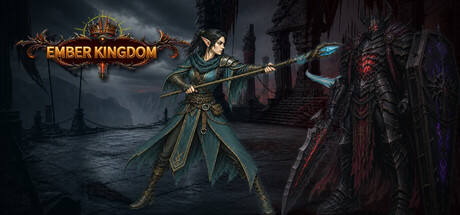
During development, Ember Kingdom used generative AI to assist in creating some pre-generated game art assets, including backgrounds, UI icons, character and monster images, visual effects, and branding artwork. All assets were manually reviewed, edited, and integrated before being added to the game, and are included with the game as fixed files.
The game does not connect to any generative AI services during gameplay, nor does it generate text, images, sound effects, characters, or other content in real time based on player input. All journeys, events, and combat outcomes in the game are determined by pre-designed data and game rules.
DUNGEON AI DRAGON uses generative AI in two ways. (1) Pre-generated content: some artwork (character portraits, item illustrations, decorative assets), quest text drafts and localizations were created with the assistance of AI tools and were reviewed and edited by our team before shipping. (2) Live-generated content: NPC dialogue, combat narration and dynamic quest flavor text are generated at runtime by large language models. Live generation is constrained by hand-authored character sheets, world lore and quest definitions. All game rules, stats, prices, rewards and progression are computed by a deterministic rule engine — AI output can never grant items, change prices or alter game state.
The 2D art in OBOLUS is made with image generation models running locally on my own machine — Stable Diffusion XL through ComfyUI, including a style model I trained myself on 1930s cartoon references. None of it is a raw output: every sprite, backdrop, card frame and icon was directed through many passes, then cut out, colour-corrected, upscaled and assembled frame by frame into animation sheets.
Everything else is not AI: the rules, every card and every number on it, the balance, the 22 heroes, the six lands, the writing and the interface. The sound effects are synthesised by code written for this game.
Nothing is generated while you play. The game makes no network calls and ships with no model — nothing runs on your machine, and none of your data goes anywhere.
Generative AI was used for:
- The game's logo and Steam store capsule artwork (image generation)
- Translation of in-game text into Turkish, German, French and Spanish
-AI-generated images were reviewed and edited before use.
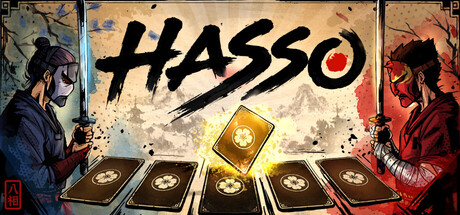
HASSO uses generative AI tools for part of its pre-produced content: the card illustrations, and the translation of the game's text into the languages it supports. All AI-generated content is reviewed and curated before it is included in the game. The user interface icons, the music and the sound effects are not AI-generated. No content is generated by AI at runtime: the player never sends prompts and never receives live AI output.
This game uses generative‑AI technology to create part of the in‑game assets, art and content. All AI‑generated content has been reviewed and adjusted by human developers.
Generative AI tools were used during development to assist in the creation of some visual assets. All AI-assisted content is pre-generated and included as part of the game. The game does not generate AI content during gameplay.
Wyrdane uses AI-generated artwork for its card illustrations. As a solo developer working without a starting budget, this is a pragmatic choice to bring the game's world to life and test its mechanics without a professional illustration budget. If the project finds its audience, the goal is to progressively replace these visuals with artwork made by human illustrators.
Game design, card balance, game mechanics, world-building, and creative direction are entirely human-made. AI is a production tool, not the creator of this game.
This game includes pre-generated content created with the assistance of generative AI tools during development. AI tools were used to assist with some artwork, UI visual assets, and visual design elements for video materials and story/dialogue panels. These materials are shipped with the game and are presented to players through the in-game UI, story/dialogue panels, and related video or narrative presentation content. Before release, the developer selected, edited, integrated, and manually reviewed these materials.
The game does not use generative AI at runtime. It does not generate new images, videos, dialogue, or other game content based on player input, and it does not send player input to an AI service.
The game's 2D artwork, including card and unit illustrations, worker portraits, and store assets, was generated with AI image tools and then reviewed, selected, and edited by the developer. Parts of the in-game text and localizations were also written with AI assistance. The game does not generate any content with AI at runtime.
The visual art, music, sound effects, pilot voice lines and written text in Starhand were created using generative AI tools — Recraft for illustration, Suno for music, and ElevenLabs for voice and sound effects — and were then selected, edited and assembled by the developer. All of it is generated ahead of time and ships as fixed assets: the game does not generate any content while you play, and it does not connect to any AI service at runtime.
Generative AI tools were used during development to create some pre-generated 2D concept art and visual assets that appear in the game and its marketing materials. These assets were selected, edited, integrated, and reviewed by the development team. The game does not generate AI content while it is running.
The visual assets in Grim Looters — character, monster, item and card artwork, plus the store and marketing images — were created with the assistance of generative AI image tools and then curated, edited, and assembled by the developer. Some background music was AI-assisted. All AI-generated content is reviewed by the developer to ensure it is appropriate and cleared for use. No AI content is generated live during gameplay.
Ash Run '84 is a human-designed game built with the assistance of AI tools in specific areas of development.
*Gameplay, mechanics, game design, level design, balance, pixel art units, buildings, tiles, UI, and production direction were created by our two-person development team.*
AI Created:
- Commander portraits are currently AI-assisted placeholder artwork. We plan to replace them with original human-created artwork as development continues.
- Music is currently AI-generated for this release. If the game receives sufficient support, we intend to commission an original soundtrack composed by a human musician.
- Programming was developed by our team with AI-assisted coding tools used to accelerate implementation, debugging, testing, and iteration. All code was reviewed, integrated, and directed by the developers.
Generative AI was used during development to assist with some
pre-generated 2D artwork, icons, card and character illustrations,
store graphical assets, localization, written content, and portions
of code implementation. All outputs were reviewed, selected, edited
where needed, and manually integrated by the developer. The game
does not generate AI content or code during gameplay.
Some of the capsule artwork on this store page was created with the help of AI tools. No AI-generated content is used in the game's in-game art, code, audio or text.
During development, OpenAI image generation tools were used to create portions of the game's 2D artwork, including characters, monsters, backgrounds, UI elements, and icons. Suno was used to create portions of the background music, and ElevenLabs was used to create portions of the sound effects. Generative AI was also used as a drafting and editing aid for some in-game writing and localization.
All generated material was selected, edited, processed, and reviewed by the developer before inclusion in the game. The game does not connect to generative AI services at runtime and does not generate content from player input.
Some content was created with the help of neural networks; all materials were reviewed and edited by hand. The game does not generate anything with AI at runtime.
Some music, sound effects, and UI icons in this game were created with the assistance of generative AI tools during development. All AI-generated content has been directly reviewed, selected, and retouched for optimal integration.
Generative artwork is used in the creation of part or full of assets that can not be generated by the game engine. AI is used in the drafting of art and writing before it is reviewed and heavily edited.
Portions of this game's written content were drafted with the assistance of Anthropic's Claude, under the direction of the developer, and were reviewed and edited by a human before inclusion. All artwork is procedurally rendered by the game's own code. No generative AI images are used. No AI content is generated during gameplay.
Generative AI was used during development to assist with some pre-generated visual artwork. The development team reviewed and curated the AI-assisted artwork before including it in the game. No generative AI content is created during gameplay, and no player data or input is sent to an AI service.
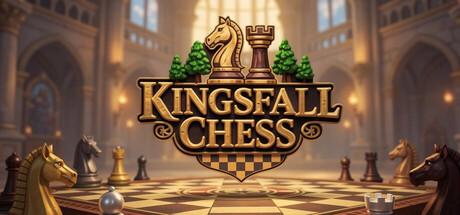
Kingsfall:Chess uses pre-generated AI-generated imagery for some visual assets within the game and promotional/store materials. Other visual assets were created by artists using traditional methods. No content is generated by AI during gameplay.
Image assets and some localized text were created with generative AI assistance, then manually processed and reviewed by the developer. No content is generated at runtime.
Generative AI tools were used during development to assist in creating and refining some pre-generated visual assets, including selected in-game backgrounds. All AI-assisted content was reviewed, edited, and integrated by the development team. The game does not generate content using AI during gameplay.
This game was developed through collaboration between the developer and AI tools across most content (art, writing, design); in-game translations were generated by AI.
During development, we used procedural and AI-assisted tools to analyze, merge, refine, and polish systems that were originally developed through years of our own experimentation, iteration, and hands-on exploration. These tools accelerated implementation and helped unify complex ideas beyond what would have been practical through manual development alone, while the underlying concepts, creative direction, design decisions, and final implementation remain the work of our development team.
Generative AI was used during development to create selected 2D artwork, including crew portraits, environmental elements, user interface icons, and key art. Generated assets were selected, edited, and adapted to match the game’s visual style and technical requirements. The game does not generate any AI content at runtime and does not send player data to generative AI services.
AI tools were used during development, with all output directed and reviewed by the developer: store artwork and icons, store descriptions, in-game text including the English localization, and portions of the game code. Screenshots show real, unedited gameplay. The game does not generate any content with AI at runtime.
Some game assets were created with AI assistance under paid commercial licenses: background art and the title logo (image generation), BGM (Suno), and sound effects (ElevenLabs). All AI-generated assets are recorded in an internal license ledger, were generated on paid plans permitting commercial use, and were reviewed by the developer before inclusion.
The core mechanic uses AI at runtime: the player draws a creature and enters a name for it, and both the drawing and the player-supplied name are sent to a vision AI model, which evaluates them and produces the creature's element, size, stats, move names and descriptions, catchphrase, and flavor text. The creature always carries the name the player typed: the model returns a suggested name, but the server discards it whenever the player supplied one, and falls back to the model's name only when the player leaves the field blank. Guardrails: (1) every submission passes a server-side moderation gate before any sharing — CSAM is absolutely blocked with evidence preservation and reporting, and clearly NSFW content is auto-rejected; (2) all player-visible text generated by AI is length-clamped and moderated (names, catchphrases, flavor text, move names); (3) shared content (ghost teams) is moderated again server-side, is opt-in, expires automatically (TTL), and there is no public gallery; (4) a player report channel (notice-and-takedown) is provided in-game and on the official site; (5) battle results are computed deterministically by game rules, not by AI.
This game uses generative AI as part of its development process.
AI-assisted tools were used to help create and refine some visual assets, UI elements, icons, text drafts, and localization drafts. These materials were reviewed, edited, and integrated by the developer before being included in the game.
The game does not generate new AI content in real time during gameplay. All content shown to players is pre-made, reviewed, and included as part of the game build.
Generative AI tools were used to assist in creating certain pre-rendered 2D assets, including achievement icons. These assets are static, were manually reviewed and edited before inclusion, and do not involve any live generation during gameplay. The game does not send player information to generative AI services.
The game uses a wide variety of artificial intelligence products in the art creation process. Ranging from 3d model generation to 2D art, music and sound effects.
The game's code, in-game text (Korean and English), localization, and store page text were created with the assistance of AI tools (Anthropic Claude), under human direction and review. Pixel artwork and audio are produced by procedural generation scripts that were also written with AI assistance. No content is generated by AI at runtime.
Generative AI tools were used during development to create and assist with many of the game's visual assets, including character artwork, card illustrations, backgrounds, and UI elements. These assets were generated during development and are included in the game as pre-generated, static content. The game does not use generative AI to create content during gameplay.
Generative AI tools were used during development to help create and refine pre generated visual assets, text and localization, and code. All AI-assisted material included in the game was reviewed and integrated by the developer, with further editing where needed. The game does not use live generative AI and does not generate content during gameplay.
Generative AI tools were used during development to assist with selected pre-generated visual assets, promotional and store-page materials, and localization/text. All AI-assisted content was reviewed, edited, curated, and approved by the developer before inclusion. No generative AI is used during gameplay, and the game does not connect to external AI services while running.
During development, Ember Kingdom used generative AI to assist in creating some pre-generated game art assets, including backgrounds, UI icons, character and monster images, visual effects, and branding artwork. All assets were manually reviewed, edited, and integrated before being added to the game, and are included with the game as fixed files.
The game does not connect to any generative AI services during gameplay, nor does it generate text, images, sound effects, characters, or other content in real time based on player input. All journeys, events, and combat outcomes in the game are determined by pre-designed data and game rules.
DUNGEON AI DRAGON uses generative AI in two ways. (1) Pre-generated content: some artwork (character portraits, item illustrations, decorative assets), quest text drafts and localizations were created with the assistance of AI tools and were reviewed and edited by our team before shipping. (2) Live-generated content: NPC dialogue, combat narration and dynamic quest flavor text are generated at runtime by large language models. Live generation is constrained by hand-authored character sheets, world lore and quest definitions. All game rules, stats, prices, rewards and progression are computed by a deterministic rule engine — AI output can never grant items, change prices or alter game state.
The 2D art in OBOLUS is made with image generation models running locally on my own machine — Stable Diffusion XL through ComfyUI, including a style model I trained myself on 1930s cartoon references. None of it is a raw output: every sprite, backdrop, card frame and icon was directed through many passes, then cut out, colour-corrected, upscaled and assembled frame by frame into animation sheets.
Everything else is not AI: the rules, every card and every number on it, the balance, the 22 heroes, the six lands, the writing and the interface. The sound effects are synthesised by code written for this game.
Nothing is generated while you play. The game makes no network calls and ships with no model — nothing runs on your machine, and none of your data goes anywhere.
Generative AI was used for:
- The game's logo and Steam store capsule artwork (image generation)
- Translation of in-game text into Turkish, German, French and Spanish
-AI-generated images were reviewed and edited before use.
HASSO uses generative AI tools for part of its pre-produced content: the card illustrations, and the translation of the game's text into the languages it supports. All AI-generated content is reviewed and curated before it is included in the game. The user interface icons, the music and the sound effects are not AI-generated. No content is generated by AI at runtime: the player never sends prompts and never receives live AI output.
This game uses generative‑AI technology to create part of the in‑game assets, art and content. All AI‑generated content has been reviewed and adjusted by human developers.
Generative AI tools were used during development to assist in the creation of some visual assets. All AI-assisted content is pre-generated and included as part of the game. The game does not generate AI content during gameplay.
Wyrdane uses AI-generated artwork for its card illustrations. As a solo developer working without a starting budget, this is a pragmatic choice to bring the game's world to life and test its mechanics without a professional illustration budget. If the project finds its audience, the goal is to progressively replace these visuals with artwork made by human illustrators.
Game design, card balance, game mechanics, world-building, and creative direction are entirely human-made. AI is a production tool, not the creator of this game.
This game includes pre-generated content created with the assistance of generative AI tools during development. AI tools were used to assist with some artwork, UI visual assets, and visual design elements for video materials and story/dialogue panels. These materials are shipped with the game and are presented to players through the in-game UI, story/dialogue panels, and related video or narrative presentation content. Before release, the developer selected, edited, integrated, and manually reviewed these materials.
The game does not use generative AI at runtime. It does not generate new images, videos, dialogue, or other game content based on player input, and it does not send player input to an AI service.
The game's 2D artwork, including card and unit illustrations, worker portraits, and store assets, was generated with AI image tools and then reviewed, selected, and edited by the developer. Parts of the in-game text and localizations were also written with AI assistance. The game does not generate any content with AI at runtime.
The visual art, music, sound effects, pilot voice lines and written text in Starhand were created using generative AI tools — Recraft for illustration, Suno for music, and ElevenLabs for voice and sound effects — and were then selected, edited and assembled by the developer. All of it is generated ahead of time and ships as fixed assets: the game does not generate any content while you play, and it does not connect to any AI service at runtime.
Generative AI tools were used during development to create some pre-generated 2D concept art and visual assets that appear in the game and its marketing materials. These assets were selected, edited, integrated, and reviewed by the development team. The game does not generate AI content while it is running.
The visual assets in Grim Looters — character, monster, item and card artwork, plus the store and marketing images — were created with the assistance of generative AI image tools and then curated, edited, and assembled by the developer. Some background music was AI-assisted. All AI-generated content is reviewed by the developer to ensure it is appropriate and cleared for use. No AI content is generated live during gameplay.
Ash Run '84 is a human-designed game built with the assistance of AI tools in specific areas of development.
*Gameplay, mechanics, game design, level design, balance, pixel art units, buildings, tiles, UI, and production direction were created by our two-person development team.*
AI Created:
- Commander portraits are currently AI-assisted placeholder artwork. We plan to replace them with original human-created artwork as development continues.
- Music is currently AI-generated for this release. If the game receives sufficient support, we intend to commission an original soundtrack composed by a human musician.
- Programming was developed by our team with AI-assisted coding tools used to accelerate implementation, debugging, testing, and iteration. All code was reviewed, integrated, and directed by the developers.
Generative AI was used during development to assist with some
pre-generated 2D artwork, icons, card and character illustrations,
store graphical assets, localization, written content, and portions
of code implementation. All outputs were reviewed, selected, edited
where needed, and manually integrated by the developer. The game
does not generate AI content or code during gameplay.
Some of the capsule artwork on this store page was created with the help of AI tools. No AI-generated content is used in the game's in-game art, code, audio or text.
During development, OpenAI image generation tools were used to create portions of the game's 2D artwork, including characters, monsters, backgrounds, UI elements, and icons. Suno was used to create portions of the background music, and ElevenLabs was used to create portions of the sound effects. Generative AI was also used as a drafting and editing aid for some in-game writing and localization.
All generated material was selected, edited, processed, and reviewed by the developer before inclusion in the game. The game does not connect to generative AI services at runtime and does not generate content from player input.
Some content was created with the help of neural networks; all materials were reviewed and edited by hand. The game does not generate anything with AI at runtime.
Some music, sound effects, and UI icons in this game were created with the assistance of generative AI tools during development. All AI-generated content has been directly reviewed, selected, and retouched for optimal integration.
Generative artwork is used in the creation of part or full of assets that can not be generated by the game engine. AI is used in the drafting of art and writing before it is reviewed and heavily edited.
Portions of this game's written content were drafted with the assistance of Anthropic's Claude, under the direction of the developer, and were reviewed and edited by a human before inclusion. All artwork is procedurally rendered by the game's own code. No generative AI images are used. No AI content is generated during gameplay.
Generative AI was used during development to assist with some pre-generated visual artwork. The development team reviewed and curated the AI-assisted artwork before including it in the game. No generative AI content is created during gameplay, and no player data or input is sent to an AI service.
Kingsfall:Chess uses pre-generated AI-generated imagery for some visual assets within the game and promotional/store materials. Other visual assets were created by artists using traditional methods. No content is generated by AI during gameplay.
Image assets and some localized text were created with generative AI assistance, then manually processed and reviewed by the developer. No content is generated at runtime.