Public Steam disclosure research25,380 disclosures tracked
Where do games disclose AI use?
Search developers’ Steam disclosures, compare classified AI use across
games, and follow recorded changes.
This index adds cross-game classifications and statistics to
statements published on individual store pages.
Groups reflect automatic analysis of public disclosures; mature records are excluded. These counts do not measure AI use across all of Steam.
Missing or unclear statements cannot establish whether a game uses AI.
This game uses generative AI tools during development to assist with certain assets such as artwork, text, and design elements. All AI-assisted content has been reviewed, edited, and curated by the developer to ensure quality and appropriateness.
The game does not use AI to generate content during gameplay, and no external AI services are accessed while playing.
Generative AI tools may be used during development to assist with translations for supported languages. These translations may appear as in-game text. The game does not use live-generated AI content during gameplay.
AI image generation tools were used to create some promotional artwork and store page images. The game does not connect to any AI services or generate AI content during play.
Visual assets (hero portraits, card art backgrounds, dice imagery, booster pack illustrations) were generated using Midjourney and refined/composed in Photopea. Suit pip icons are by Lorc and Delapouite via game-icons.net (CC BY 3.0). Sound effects and music were generated using AI tools. All AI-generated content was directed, curated, and integrated by the developer. No AI is used to generate content live at runtime — all assets are pre-rendered and embedded in the build.
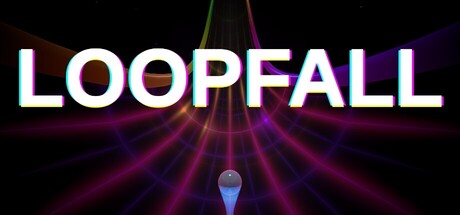
Loopfall uses generative AI for select shipped content:
• Music — created in collaboration with ElevenLabs.
• Sound effects — generated with ElevenLabs Sound Effects.
• Localization — store text and in-game UI strings are translated from English to 14 other languages via the Anthropic Claude API.
All AI-generated content is pre-rendered and baked into the build — no live AI runs at runtime. Every asset is licensed under each provider's commercial-use terms and was reviewed by the developer before release.
During the development process, we may use procedural- and AI-based tools to assist with content creation. In all such cases, the final product reflects the creativity and expression of our own development team.
- Some 2D assets were generated partly with AI (with human pre and post passes).
- Some languages were localized with AI. We intend to make a full human pass on all languages before 1.0 launch.
Generative AI is used only to create cartoon-style illustrated artwork for promotional materials and the game's store page. All other assets, including in-game art, models, design elements, and content, were created directly by the developers.
Scourge of Eldryngard was developed independently by a single person. I utilized generative AI tools under my creative direction for the creation of assets, music, voice acting, translation, and technical support, all via paid commercial licenses. All content underwent rigorous manual editing and review to ensure technical cohesion and originality. There is no real-time AI generation during gameplay.
All store page and in-game translations were created with AI assistance as a starting point. As a solo developer, I only speak English and Ukrainian natively, so I recognize that AI translations may contain errors — I hope to improve them with native speaker feedback in the future.
Store page artwork was generated with AI image tools and then manually composed and edited by the developer.
Brooks Investment Simulator uses AI-generated artwork for store page capsule images, library assets, and marketing materials including the game logo. All in-game content, gameplay systems, code, and game mechanics were created by the developer without generative AI tools.
Localization was assisted by AI for multilingual support.
A small number of UI icons (approx. 10) were created using AI tools and manually refined by the developer.
To streamline our development and bring the game to market faster, we utilize generative AI for core visualization. Our team then uses these outputs as a foundation to refine, improve, and create the final iterations you see in the game.
AI tools were used to assist in creating parts of the soundtrack, selected UI elements (primarily in the main menu), and some achievement icons. All gameplay systems, design, and core content are handcrafted.
The Steam store page banners and promotional creatives for the app were created with the assistance of generative AI tools. The in-game assets were either created manually or edited afterwards, but the visual materials used for marketing (such as header images, capsules, and promotional banners) include AI-generated elements.
AI tools were used only to assist in the creation of certain marketing artwork for the Steam store page.
All in-game content, screenshots, and trailer were created without the use of generative AI.
Some shipped artwork and written content were created or assisted with generative AI tools during development. The game does not generate AI content during gameplay and does not connect to external AI services while you play.
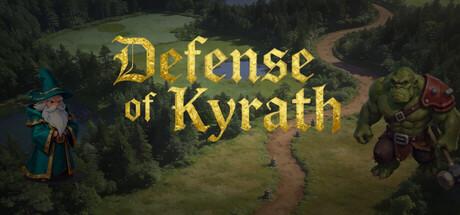
Defense of Kyrath uses AI-assisted tools in parts of its art and audio pipeline. Some character sprites, character voice lines, select background imagery, and background music are AI-generated, and refined or curated by the developer. All AI-generated content is pre-generated at authoring time. Terrain, environment art, and level layouts come from TiGen - a custom procedural generation pipeline that is purely algorithmic, not AI. All game design, writing, and gameplay systems are human-crafted.
Some visual assets (such as the app icon) and store page text were created with the assistance of AI tools. All game content — puzzles, code, and gameplay — is handcrafted by the developer.
All visual assets in this game — including character illustrations, environments, and card art — are designed and directed by a human artist, with AI tools used as an assistive means for iterative refinement and polish. The final in-game visuals are fully controlled by the designer. No AI-generated content involves copying from other games.
Generative AI is used as an assistive tool in the development of this game, including visual assets (item, ability, and boss icons), code, and music. All AI-generated content is produced under direct human creative direction, with the developer serving as director and approver at every stage. AI assists — the human decides.
This game was developed with AI assistance for visual assets, sound effects, localization, and code. All AI-generated content was pre-generated during development and reviewed by the developer. No real-time AI content generation occurs during gameplay.
Dominoir uses generative artificial intelligence as a supporting tool during development. AI was used to assist in the creation of certain audio elements and early visual concepts, including parts of the game’s music and logo.
All assets were curated, edited, and finalized by the developer to ensure consistency with the game’s handcrafted art direction and overall quality.
Generative AI is not used during gameplay, and no player data is processed by AI systems.
This game uses AI-generated content:
Pre-generated AI use:
- Marketing visuals (Steam capsules, banners, page background) were generated with AI image models, then manually edited and composited.
- Some in-game art assets (item icons, enemy portraits, environment elements) were AI-generated and edited/integrated by hand.
- All AI-generated content was reviewed, edited, and curated by the developer before shipping.
Not AI-generated:
- Game design, mechanics, balance, progression systems, lore, world-building.
- UI/UX layouts and interaction flows.
No live/runtime AI: the game does not run AI models during play. Nothing you do in-game contacts an LLM or image generator.
Generative AI was used during development to draft initial art concepts and assist with the foundation of text localization. All final in-game visual assets were manually refined, edited, and finished in Photoshop to ensure a high-quality, hand-crafted aesthetic. Localization was human-reviewed to ensure accuracy for players.
AI is used to generate in-game characters, including their visual traits, background concepts, and gameplay attributes. When players create a character, the Gen-AI system produces unique variations based on predefined rules and developer-designed parameters.
The AI functions solely as a content generation tool to enhance gameplay variety. It does not collect, store, or learn from personal player data.
ADM Team AI Statement:
In this project, AI has only been used as a supporting tool in production. We recognize AI as a powerful production support tool, but we will always honour the final human touch and the essential primacy of real-human creativity in everything that we produce:
(1) Some textures and artwork were AI assisted, but as with our studio policy, it was creatively altered by human hand throughout the production process before final in-game use.
(2) Most of the voice acting is human, but in some cases AI was used due to the specific nature of the characters acted (cyborgs etc.).
In this project, all creative ideas and I.P. are the product of real-human origin. Apart from that, some production processes may have been assisted by AI before human alteration for final use.
Generative AI tools were used during development for concept exploration, prototyping, and internal reference materials. All gameplay systems, visuals, text, and audio included in the released game are authored, curated, and reviewed by the developer.
Initial concept art was generated using AI tools, followed by manual adjustments and modifications by artists. The final artwork combines AI-generated base designs with human-made artistic revisions.
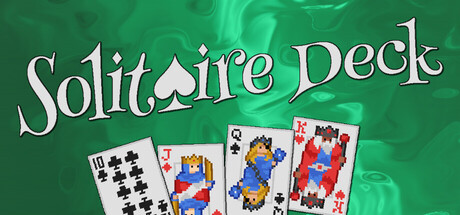
AI tools were used to localize Solitaire Deck's text into multiple languages, this is the only AI content in the game. As a solo developer, it was my only feasible way to support players who prefer games in their native language. Some translations have been reviewed by native speakers, and I'm working to get more checked over time. If you spot anything off, please let me know through the Steam discussions and I'll get it fixed.
This game uses generative AI tools during development to assist with certain assets such as artwork, text, and design elements. All AI-assisted content has been reviewed, edited, and curated by the developer to ensure quality and appropriateness.
The game does not use AI to generate content during gameplay, and no external AI services are accessed while playing.
Generative AI tools may be used during development to assist with translations for supported languages. These translations may appear as in-game text. The game does not use live-generated AI content during gameplay.
AI image generation tools were used to create some promotional artwork and store page images. The game does not connect to any AI services or generate AI content during play.
Visual assets (hero portraits, card art backgrounds, dice imagery, booster pack illustrations) were generated using Midjourney and refined/composed in Photopea. Suit pip icons are by Lorc and Delapouite via game-icons.net (CC BY 3.0). Sound effects and music were generated using AI tools. All AI-generated content was directed, curated, and integrated by the developer. No AI is used to generate content live at runtime — all assets are pre-rendered and embedded in the build.
Loopfall uses generative AI for select shipped content:
• Music — created in collaboration with ElevenLabs.
• Sound effects — generated with ElevenLabs Sound Effects.
• Localization — store text and in-game UI strings are translated from English to 14 other languages via the Anthropic Claude API.
All AI-generated content is pre-rendered and baked into the build — no live AI runs at runtime. Every asset is licensed under each provider's commercial-use terms and was reviewed by the developer before release.
During the development process, we may use procedural- and AI-based tools to assist with content creation. In all such cases, the final product reflects the creativity and expression of our own development team.
- Some 2D assets were generated partly with AI (with human pre and post passes).
- Some languages were localized with AI. We intend to make a full human pass on all languages before 1.0 launch.
Generative AI is used only to create cartoon-style illustrated artwork for promotional materials and the game's store page. All other assets, including in-game art, models, design elements, and content, were created directly by the developers.
Scourge of Eldryngard was developed independently by a single person. I utilized generative AI tools under my creative direction for the creation of assets, music, voice acting, translation, and technical support, all via paid commercial licenses. All content underwent rigorous manual editing and review to ensure technical cohesion and originality. There is no real-time AI generation during gameplay.
All store page and in-game translations were created with AI assistance as a starting point. As a solo developer, I only speak English and Ukrainian natively, so I recognize that AI translations may contain errors — I hope to improve them with native speaker feedback in the future.
Store page artwork was generated with AI image tools and then manually composed and edited by the developer.
Brooks Investment Simulator uses AI-generated artwork for store page capsule images, library assets, and marketing materials including the game logo. All in-game content, gameplay systems, code, and game mechanics were created by the developer without generative AI tools.
Localization was assisted by AI for multilingual support.
A small number of UI icons (approx. 10) were created using AI tools and manually refined by the developer.
To streamline our development and bring the game to market faster, we utilize generative AI for core visualization. Our team then uses these outputs as a foundation to refine, improve, and create the final iterations you see in the game.
AI tools were used to assist in creating parts of the soundtrack, selected UI elements (primarily in the main menu), and some achievement icons. All gameplay systems, design, and core content are handcrafted.
The Steam store page banners and promotional creatives for the app were created with the assistance of generative AI tools. The in-game assets were either created manually or edited afterwards, but the visual materials used for marketing (such as header images, capsules, and promotional banners) include AI-generated elements.
AI tools were used only to assist in the creation of certain marketing artwork for the Steam store page.
All in-game content, screenshots, and trailer were created without the use of generative AI.
Some shipped artwork and written content were created or assisted with generative AI tools during development. The game does not generate AI content during gameplay and does not connect to external AI services while you play.
Defense of Kyrath uses AI-assisted tools in parts of its art and audio pipeline. Some character sprites, character voice lines, select background imagery, and background music are AI-generated, and refined or curated by the developer. All AI-generated content is pre-generated at authoring time. Terrain, environment art, and level layouts come from TiGen - a custom procedural generation pipeline that is purely algorithmic, not AI. All game design, writing, and gameplay systems are human-crafted.
Some visual assets (such as the app icon) and store page text were created with the assistance of AI tools. All game content — puzzles, code, and gameplay — is handcrafted by the developer.
All visual assets in this game — including character illustrations, environments, and card art — are designed and directed by a human artist, with AI tools used as an assistive means for iterative refinement and polish. The final in-game visuals are fully controlled by the designer. No AI-generated content involves copying from other games.
Generative AI is used as an assistive tool in the development of this game, including visual assets (item, ability, and boss icons), code, and music. All AI-generated content is produced under direct human creative direction, with the developer serving as director and approver at every stage. AI assists — the human decides.
This game was developed with AI assistance for visual assets, sound effects, localization, and code. All AI-generated content was pre-generated during development and reviewed by the developer. No real-time AI content generation occurs during gameplay.
Dominoir uses generative artificial intelligence as a supporting tool during development. AI was used to assist in the creation of certain audio elements and early visual concepts, including parts of the game’s music and logo.
All assets were curated, edited, and finalized by the developer to ensure consistency with the game’s handcrafted art direction and overall quality.
Generative AI is not used during gameplay, and no player data is processed by AI systems.
This game uses AI-generated content:
Pre-generated AI use:
- Marketing visuals (Steam capsules, banners, page background) were generated with AI image models, then manually edited and composited.
- Some in-game art assets (item icons, enemy portraits, environment elements) were AI-generated and edited/integrated by hand.
- All AI-generated content was reviewed, edited, and curated by the developer before shipping.
Not AI-generated:
- Game design, mechanics, balance, progression systems, lore, world-building.
- UI/UX layouts and interaction flows.
No live/runtime AI: the game does not run AI models during play. Nothing you do in-game contacts an LLM or image generator.
Generative AI was used during development to draft initial art concepts and assist with the foundation of text localization. All final in-game visual assets were manually refined, edited, and finished in Photoshop to ensure a high-quality, hand-crafted aesthetic. Localization was human-reviewed to ensure accuracy for players.
AI is used to generate in-game characters, including their visual traits, background concepts, and gameplay attributes. When players create a character, the Gen-AI system produces unique variations based on predefined rules and developer-designed parameters.
The AI functions solely as a content generation tool to enhance gameplay variety. It does not collect, store, or learn from personal player data.
ADM Team AI Statement:
In this project, AI has only been used as a supporting tool in production. We recognize AI as a powerful production support tool, but we will always honour the final human touch and the essential primacy of real-human creativity in everything that we produce:
(1) Some textures and artwork were AI assisted, but as with our studio policy, it was creatively altered by human hand throughout the production process before final in-game use.
(2) Most of the voice acting is human, but in some cases AI was used due to the specific nature of the characters acted (cyborgs etc.).
In this project, all creative ideas and I.P. are the product of real-human origin. Apart from that, some production processes may have been assisted by AI before human alteration for final use.
Generative AI tools were used during development for concept exploration, prototyping, and internal reference materials. All gameplay systems, visuals, text, and audio included in the released game are authored, curated, and reviewed by the developer.
Initial concept art was generated using AI tools, followed by manual adjustments and modifications by artists. The final artwork combines AI-generated base designs with human-made artistic revisions.
AI tools were used to localize Solitaire Deck's text into multiple languages, this is the only AI content in the game. As a solo developer, it was my only feasible way to support players who prefer games in their native language. Some translations have been reviewed by native speakers, and I'm working to get more checked over time. If you spot anything off, please let me know through the Steam discussions and I'll get it fixed.