Public Steam disclosure research25,380 disclosures tracked
Where do games disclose AI use?
Search developers’ Steam disclosures, compare classified AI use across
games, and follow recorded changes.
This index adds cross-game classifications and statistics to
statements published on individual store pages.
Groups reflect automatic analysis of public disclosures; mature records are excluded. These counts do not measure AI use across all of Steam.
Missing or unclear statements cannot establish whether a game uses AI.
The Moment of Panic uses generative artificial intelligence during gameplay to power its AI advisor characters. These locally running, open-source LLM-based advisors respond to intelligence signals, argue from assigned personalities, and attempt to influence the player’s decisions. Core game logic, threat truth, scoring, win/loss conditions, and outcomes are controlled by the game itself, not by the language model. Generative AI is used for dynamic in-game text responses only, and for some images shown alongside that text. Images are not generated at runtime.
bossMAN uses generative AI as part of a user-directed software-development workflow.
Some store, brand, or visual materials may have been created or refined with AI-assisted tools and reviewed by the developer before use.
During use, bossMAN may display, organize, summarize, route, or help review AI-generated development output from a separately installed and authenticated user-configured backend, such as Codex, or a user-configured local LLM runtime if supported. This may include coding plans, project summaries, code review notes, command proposals, implementation guidance, documentation drafts, and source-code suggestions.
bossMAN does not include ChatGPT, Codex, OpenAI API access, AI usage credits, paid AI subscriptions, local LLM runtimes, model files, or model licenses. AI-generated output may be incomplete, incorrect, or unsuitable for a user's project, and users should review it for accuracy, relevance, and project fit before using or applying it.
Some marketing artwork on this store page (capsule images, library hero, page background) was generated with AI image tools and then composited with vector-rendered typography. No AI-generated content ships inside the game itself. All player names, team names, draft classes, and simulation outcomes are produced by procedural algorithms with a seeded random number generator, not by AI models.
- Code was written with Assistance of Anthropic Claude Code
- Character Portraits were created with Google Gemini
- Other Art Assets and Sound Effects were created using Python (matplotlib, wave)
Demon Rising uses generative AI for part of its content:
Live-generated narrative — The game includes a local AI language model that runs fully offline on your PC; no internet connection is required and no data is sent anywhere. During play it generates dynamic dialogue for your demon officers, war-council debates, prisoner interrogations and boss encounters, keeping conversations varied across runs. All generated text is constrained by the game's prompts to in-game characters and situations and is bounded by built-in safeguards. If the AI model is unavailable, the game automatically falls back to hand-written dialogue, so the full game is playable either way.
Pre-generated artwork — Some character portraits and illustrations were created with the help of AI image-generation tools, then selected and edited by the developer.
All AI-assisted content is curated and reviewed by the developer.
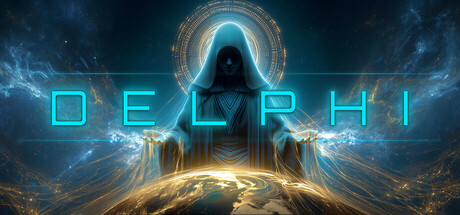
Delphi uses Midjourney for illustrated artwork (cards, events, key art, capsule art) and Kling for image-to-video trailer animation, all curated and edited by the developer. UI artwork is hand-made by a credited human artist.
No AI is used in design, writing, narrative or gameplay, and no AI runs at runtime — all in-game content is human-written static data.
This game uses generative AI to power the companion's real-time conversation, personality responses, and contextual awareness. The AI model (e.g. GPT-4, Qwen, or any user-configured LLM) generates all dialogue and responses dynamically at runtime. AI-generated speech synthesis (TTS) and speech recognition (ASR) are also used for voice interaction. No AI-generated art assets or pre-rendered content are included — all AI usage occurs live during gameplay based on the player's own API configuration.
Authorisation Engine uses generative AI tools during development to assist with selected pre-generated assets and production materials, including some store artwork and audio/localization workflow support. All such content is reviewed and curated before inclusion. The game does not live-generate gameplay content with AI at runtime.
Pixel Q is a local AI assistant that utilizes large language models (LLMs) for real-time conversational AI. All AI models run locally on the user's device. Safety guardrails are enforced through restrictive prompt engineering, output filtering, and the inherent safety features of the underlying open-source models. The AI is designed to refuse requests for illegal, harmful, hateful, or sexually explicit content. No user data is sent to external servers.
This game uses generative AI to create live in-game dialogue, AI character responses, personality details, and evaluation feedback during gameplay. The generated content is text-based and is produced dynamically through an external AI API.
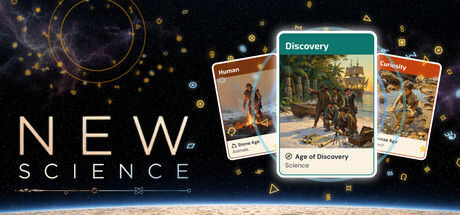
New Science uses generative AI as a core part of its discovery system. When a player attempts a combination, an AI model may be used to determine whether the two selected objects can logically produce a new result. Generative AI is also used to create an illustration for newly discovered objects. Known discoveries are stored and reused, so the same established combination does not need to be generated again for every player. This system allows New Science to support open-ended experimentation beyond a small, completely predefined recipe list. Players may therefore encounter newly generated combinations and images that have not previously been seen by the development team.
This game uses generative AI to generate NPC dialogue, thoughts, and decisions in real time. The AI model can run locally via the built-in llama.cpp engine,. In local mode, AI content is generated on your device. We have implemented content filtering and anomaly detection, but AI-generated content may occasionally produce unpredictable results.
FLATLINE utilizes advanced generative AI technologies to enhance both the visual and interactive experience:
Visual Assets (Pre-generated): To achieve the unique aesthetic of "clean decay" and the massive brutalist landscapes of London 2036, we employed AI-rendering tools (Nanobanana and Veo). All images and video sequences were pre-generated and underwent meticulous manual post-processing to align with the project’s artistic vision.
Interactivity (Live-generated): The episode’s climax features a live dialogue with the system "Anomaly." This character’s responses are generated in real-time using the GPT-4 model, allowing each player to find their own unique arguments in the final confrontation with the network.
We use AI as a force-multiplier for a solo creator, enabling the realization of a world that would otherwise be impossible to build at this scale using traditional methods
Manga Archive Translator can use local AI translation models to translate text from manga archive files provided by the user. It does not generate original artwork, audio, characters, story content, or executable code.
Coding
Supported by anthropic Opus 4.6 & Opus 4.7
Music
13 era-specific tracks generated with Google Lyria · manually curated and mastered
Voice (Klammi)
Google Gemini TTS "Puck" · German · Opus 96 kbit/s WebM
Avatars & Images
Generated with DALL-E / Google Gemini Image · manually selected and background-removed
Mascot Videos (Klammi)
Google Veo 2.0 · Luma-Key + VP9-Alpha pipeline · 480×480 px
Logo & Branding
Generated with Google Gemini · background removed with rembg
Translation
Original content written in german, translated by Claude Sonett 4.6
LessPrep uses AI to generate educational text and images locally on your device. A language model (Qwen2.5 7B) creates lesson plans, worksheets, and goal documents. An image model (SDXL) generates classroom visual aids. All AI runs offline — no data is sent to external servers. Content moderation includes prompt filtering, safety negative prompts, and a post-generation image scanner to prevent inappropriate output.
This game uses the DeepSeek AI model to generate character dialogue in real time. Based on player input, the AI responds according to preset character personalities, creating an immersive role-playing experience. All generated content is filtered through a content moderation system to prevent inappropriate or policy-violating outputs.
API and Billing Notice:
To use this feature, you need to register a DeepSeek account and add API credits at: https://platform.deepseek.com/usage
The AI service costs are charged directly by DeepSeek. The game developer does not collect any API fees.
Project AIRI uses live-generated AI for player-initiated companion conversations and synthesized voice responses. In the Steam edition, these features are provided through an AIRI account and AIRI-managed services. Players cannot enter third-party API keys or configure custom AI providers. Cloud AI features require an internet connection and a free AIRI account.
This is a novel creation assistant tool based on artificial intelligence technology, capable of automatically generating novel outlines, chapter structures, and complete content according to user input.
This game is a detective adventure in which the player investigates a murder in a small town.
An AI language model generates real-time dialogue when interacting with townspeople or interrogating suspects.
The AI creates dynamic and context-appropriate conversations based on each character’s personality and the situation.
All generated content is restricted to the game’s internal narrative and is filtered to prevent the inclusion of copyrighted material or inappropriate content.
AI-assisted tools were used during development to support some early exploration and temporary development content. Any AI-assisted assets were either replaced or refined by humans in order to maintain the creative and artistic vision of the development team.
There's a local Large Language Model that integrates with the game's systems and is used primarily for but not limited to dialogue generation.
Several other uses are planned, including localization.
AI has been used for coding and in a limited capacity for creating placeholder assets that will be replaced at a later date.
Cyber Spartan uses AI-generated content for select visual assets, including character expression artwork and some promotional materials. Core gameplay code, game design, and level design are human-directed. AI tools were used as a creative partner
throughout development.
Visual assets in the game, including static and animated artwork, were created using generative AI tools. Generative AI was also used during the creation of the game's music.
Some visual assets and promotional/store artwork were created or assisted with generative AI tools during development and then manually edited, selected, and assembled by the developer. The game does not use live generative AI during gameplay. Gameplay code, online services, scoring, achievements, purchases, and multiplayer rules are developer-authored.
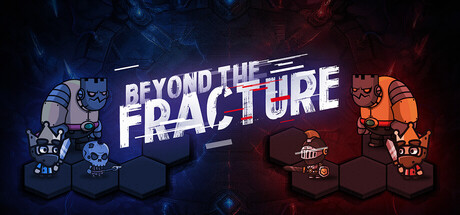
Beyond the Fracture contains both pre-generated and live-generated AI content.
Pre-generated AI content:
Some visual, audio, and voice assets were generated with AI tools during development and reviewed, edited, and curated by the developers before being included in the game. This includes selected construct opponent portraits, spoken name clips, character histories, and HERALD-7 commentary voice clips in German and English.
Live-generated AI content:
During first-time onboarding, the game uses external AI services to generate three candidate player identities live. Each identity includes a generated profile portrait and a generated spoken name introduction. The profile portraits are additionally guided by internal short character descriptions generated from predefined archetypes and prompt templates.
This live generation is constrained by predefined prompts, fixed character archetypes, a controlled name system, and no free-form text input from players. The player selects one of the three generated identities. The chosen identity cannot be changed during the current Playtest, and repeated regeneration is not available during normal gameplay.
No live AI generation occurs during normal matches after onboarding.
Temporary pre-rendered visual assets were created with the assistance of generative AI tools. The game does not use generative AI during gameplay and does not connect to external AI services while running.
This game uses generative artificial intelligence to assist with development.
AI tools were used to create concept art, textures, sound effects, music elements, dialogue, and portions of the game’s code.
All AI‑generated content was reviewed, edited, and integrated by the developer to ensure quality, consistency, and originality.
AI was used during development to assist with code generation, some graphical assets, and selected music or audio elements. All content was reviewed and edited by the developer before being included in the game.
Raw Video uses local generative AI for image creation, image editing, image-to-video generation, sound-effect generation, and AI-assisted creative features. Marketing materials may also include AI-generated or AI-assisted visuals. Users are responsible for reviewing and appropriately using all generated content. Raw Video does not include public user-generated content sharing or community generation features.
Chrongrid is a narrative experience product powered by large language models (LLMs). In-game dialogue, scene descriptions, and character responses are generated in real time by an AI model — you can choose a third-party API service (such as DeepSeek, OpenAI, or Anthropic), or run a model locally on your machine via Ollama. You provide your own API credentials and bear the associated costs; we do not operate any server to relay your requests. The AI generates dialogue and descriptive text at runtime, always within the constraints of pre-authored narrative blueprints, characters, and world settings.
The Moment of Panic uses generative artificial intelligence during gameplay to power its AI advisor characters. These locally running, open-source LLM-based advisors respond to intelligence signals, argue from assigned personalities, and attempt to influence the player’s decisions. Core game logic, threat truth, scoring, win/loss conditions, and outcomes are controlled by the game itself, not by the language model. Generative AI is used for dynamic in-game text responses only, and for some images shown alongside that text. Images are not generated at runtime.
bossMAN uses generative AI as part of a user-directed software-development workflow.
Some store, brand, or visual materials may have been created or refined with AI-assisted tools and reviewed by the developer before use.
During use, bossMAN may display, organize, summarize, route, or help review AI-generated development output from a separately installed and authenticated user-configured backend, such as Codex, or a user-configured local LLM runtime if supported. This may include coding plans, project summaries, code review notes, command proposals, implementation guidance, documentation drafts, and source-code suggestions.
bossMAN does not include ChatGPT, Codex, OpenAI API access, AI usage credits, paid AI subscriptions, local LLM runtimes, model files, or model licenses. AI-generated output may be incomplete, incorrect, or unsuitable for a user's project, and users should review it for accuracy, relevance, and project fit before using or applying it.
Some marketing artwork on this store page (capsule images, library hero, page background) was generated with AI image tools and then composited with vector-rendered typography. No AI-generated content ships inside the game itself. All player names, team names, draft classes, and simulation outcomes are produced by procedural algorithms with a seeded random number generator, not by AI models.
- Code was written with Assistance of Anthropic Claude Code
- Character Portraits were created with Google Gemini
- Other Art Assets and Sound Effects were created using Python (matplotlib, wave)
Demon Rising uses generative AI for part of its content:
Live-generated narrative — The game includes a local AI language model that runs fully offline on your PC; no internet connection is required and no data is sent anywhere. During play it generates dynamic dialogue for your demon officers, war-council debates, prisoner interrogations and boss encounters, keeping conversations varied across runs. All generated text is constrained by the game's prompts to in-game characters and situations and is bounded by built-in safeguards. If the AI model is unavailable, the game automatically falls back to hand-written dialogue, so the full game is playable either way.
Pre-generated artwork — Some character portraits and illustrations were created with the help of AI image-generation tools, then selected and edited by the developer.
All AI-assisted content is curated and reviewed by the developer.
Delphi uses Midjourney for illustrated artwork (cards, events, key art, capsule art) and Kling for image-to-video trailer animation, all curated and edited by the developer. UI artwork is hand-made by a credited human artist.
No AI is used in design, writing, narrative or gameplay, and no AI runs at runtime — all in-game content is human-written static data.
This game uses generative AI to power the companion's real-time conversation, personality responses, and contextual awareness. The AI model (e.g. GPT-4, Qwen, or any user-configured LLM) generates all dialogue and responses dynamically at runtime. AI-generated speech synthesis (TTS) and speech recognition (ASR) are also used for voice interaction. No AI-generated art assets or pre-rendered content are included — all AI usage occurs live during gameplay based on the player's own API configuration.
Authorisation Engine uses generative AI tools during development to assist with selected pre-generated assets and production materials, including some store artwork and audio/localization workflow support. All such content is reviewed and curated before inclusion. The game does not live-generate gameplay content with AI at runtime.
Pixel Q is a local AI assistant that utilizes large language models (LLMs) for real-time conversational AI. All AI models run locally on the user's device. Safety guardrails are enforced through restrictive prompt engineering, output filtering, and the inherent safety features of the underlying open-source models. The AI is designed to refuse requests for illegal, harmful, hateful, or sexually explicit content. No user data is sent to external servers.
This game uses generative AI to create live in-game dialogue, AI character responses, personality details, and evaluation feedback during gameplay. The generated content is text-based and is produced dynamically through an external AI API.
New Science uses generative AI as a core part of its discovery system. When a player attempts a combination, an AI model may be used to determine whether the two selected objects can logically produce a new result. Generative AI is also used to create an illustration for newly discovered objects. Known discoveries are stored and reused, so the same established combination does not need to be generated again for every player. This system allows New Science to support open-ended experimentation beyond a small, completely predefined recipe list. Players may therefore encounter newly generated combinations and images that have not previously been seen by the development team.
This game uses generative AI to generate NPC dialogue, thoughts, and decisions in real time. The AI model can run locally via the built-in llama.cpp engine,. In local mode, AI content is generated on your device. We have implemented content filtering and anomaly detection, but AI-generated content may occasionally produce unpredictable results.
FLATLINE utilizes advanced generative AI technologies to enhance both the visual and interactive experience:
Visual Assets (Pre-generated): To achieve the unique aesthetic of "clean decay" and the massive brutalist landscapes of London 2036, we employed AI-rendering tools (Nanobanana and Veo). All images and video sequences were pre-generated and underwent meticulous manual post-processing to align with the project’s artistic vision.
Interactivity (Live-generated): The episode’s climax features a live dialogue with the system "Anomaly." This character’s responses are generated in real-time using the GPT-4 model, allowing each player to find their own unique arguments in the final confrontation with the network.
We use AI as a force-multiplier for a solo creator, enabling the realization of a world that would otherwise be impossible to build at this scale using traditional methods
Manga Archive Translator can use local AI translation models to translate text from manga archive files provided by the user. It does not generate original artwork, audio, characters, story content, or executable code.
Coding
Supported by anthropic Opus 4.6 & Opus 4.7
Music
13 era-specific tracks generated with Google Lyria · manually curated and mastered
Voice (Klammi)
Google Gemini TTS "Puck" · German · Opus 96 kbit/s WebM
Avatars & Images
Generated with DALL-E / Google Gemini Image · manually selected and background-removed
Mascot Videos (Klammi)
Google Veo 2.0 · Luma-Key + VP9-Alpha pipeline · 480×480 px
Logo & Branding
Generated with Google Gemini · background removed with rembg
Translation
Original content written in german, translated by Claude Sonett 4.6
LessPrep uses AI to generate educational text and images locally on your device. A language model (Qwen2.5 7B) creates lesson plans, worksheets, and goal documents. An image model (SDXL) generates classroom visual aids. All AI runs offline — no data is sent to external servers. Content moderation includes prompt filtering, safety negative prompts, and a post-generation image scanner to prevent inappropriate output.
This game uses the DeepSeek AI model to generate character dialogue in real time. Based on player input, the AI responds according to preset character personalities, creating an immersive role-playing experience. All generated content is filtered through a content moderation system to prevent inappropriate or policy-violating outputs.
API and Billing Notice:
To use this feature, you need to register a DeepSeek account and add API credits at: https://platform.deepseek.com/usage
The AI service costs are charged directly by DeepSeek. The game developer does not collect any API fees.
Project AIRI uses live-generated AI for player-initiated companion conversations and synthesized voice responses. In the Steam edition, these features are provided through an AIRI account and AIRI-managed services. Players cannot enter third-party API keys or configure custom AI providers. Cloud AI features require an internet connection and a free AIRI account.
This is a novel creation assistant tool based on artificial intelligence technology, capable of automatically generating novel outlines, chapter structures, and complete content according to user input.
This game is a detective adventure in which the player investigates a murder in a small town.
An AI language model generates real-time dialogue when interacting with townspeople or interrogating suspects.
The AI creates dynamic and context-appropriate conversations based on each character’s personality and the situation.
All generated content is restricted to the game’s internal narrative and is filtered to prevent the inclusion of copyrighted material or inappropriate content.
AI-assisted tools were used during development to support some early exploration and temporary development content. Any AI-assisted assets were either replaced or refined by humans in order to maintain the creative and artistic vision of the development team.
There's a local Large Language Model that integrates with the game's systems and is used primarily for but not limited to dialogue generation.
Several other uses are planned, including localization.
AI has been used for coding and in a limited capacity for creating placeholder assets that will be replaced at a later date.
Cyber Spartan uses AI-generated content for select visual assets, including character expression artwork and some promotional materials. Core gameplay code, game design, and level design are human-directed. AI tools were used as a creative partner
throughout development.
Visual assets in the game, including static and animated artwork, were created using generative AI tools. Generative AI was also used during the creation of the game's music.
Some visual assets and promotional/store artwork were created or assisted with generative AI tools during development and then manually edited, selected, and assembled by the developer. The game does not use live generative AI during gameplay. Gameplay code, online services, scoring, achievements, purchases, and multiplayer rules are developer-authored.
Beyond the Fracture contains both pre-generated and live-generated AI content.
Pre-generated AI content:
Some visual, audio, and voice assets were generated with AI tools during development and reviewed, edited, and curated by the developers before being included in the game. This includes selected construct opponent portraits, spoken name clips, character histories, and HERALD-7 commentary voice clips in German and English.
Live-generated AI content:
During first-time onboarding, the game uses external AI services to generate three candidate player identities live. Each identity includes a generated profile portrait and a generated spoken name introduction. The profile portraits are additionally guided by internal short character descriptions generated from predefined archetypes and prompt templates.
This live generation is constrained by predefined prompts, fixed character archetypes, a controlled name system, and no free-form text input from players. The player selects one of the three generated identities. The chosen identity cannot be changed during the current Playtest, and repeated regeneration is not available during normal gameplay.
No live AI generation occurs during normal matches after onboarding.
Temporary pre-rendered visual assets were created with the assistance of generative AI tools. The game does not use generative AI during gameplay and does not connect to external AI services while running.
This game uses generative artificial intelligence to assist with development.
AI tools were used to create concept art, textures, sound effects, music elements, dialogue, and portions of the game’s code.
All AI‑generated content was reviewed, edited, and integrated by the developer to ensure quality, consistency, and originality.
AI was used during development to assist with code generation, some graphical assets, and selected music or audio elements. All content was reviewed and edited by the developer before being included in the game.
Raw Video uses local generative AI for image creation, image editing, image-to-video generation, sound-effect generation, and AI-assisted creative features. Marketing materials may also include AI-generated or AI-assisted visuals. Users are responsible for reviewing and appropriately using all generated content. Raw Video does not include public user-generated content sharing or community generation features.
Chrongrid is a narrative experience product powered by large language models (LLMs). In-game dialogue, scene descriptions, and character responses are generated in real time by an AI model — you can choose a third-party API service (such as DeepSeek, OpenAI, or Anthropic), or run a model locally on your machine via Ollama. You provide your own API credentials and bear the associated costs; we do not operate any server to relay your requests. The AI generates dialogue and descriptive text at runtime, always within the constraints of pre-authored narrative blueprints, characters, and world settings.