Public Steam disclosure research25,380 disclosures tracked
Where do games disclose AI use?
Search developers’ Steam disclosures, compare classified AI use across
games, and follow recorded changes.
This index adds cross-game classifications and statistics to
statements published on individual store pages.
Groups reflect automatic analysis of public disclosures; mature records are excluded. These counts do not measure AI use across all of Steam.
Missing or unclear statements cannot establish whether a game uses AI.
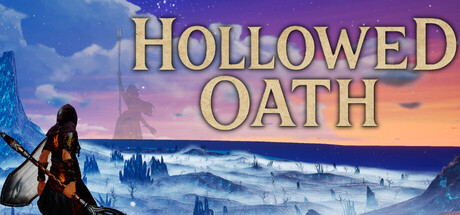
We believe in being transparent about how we build Hollowed Oath including where we use AI, and why. For a thoughtful look at how AI is used in Hollowed Oath, please visit: https://hollowedoath.com/ai-use
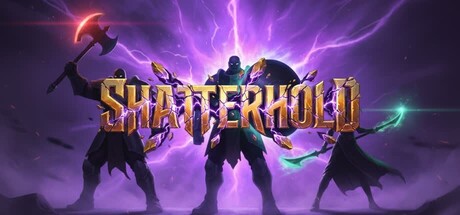
Shatterhold uses AI-generated art for environmental paintings, creature portraits, and music tracks. All gameplay mechanics, code, and game design are human-directed.
This game uses generative AI to assist in creating some art, text, and sound assets during development. All AI outputs are heavily modified by humans and undergo copyright compliance checks to ensure originality and IP safety.
AI tools (Claude Code) were used to assist with code development and store page localization. All game design, visual style, and creative decisions were made by the developer. All visuals are procedurally generated by the game's own code at runtime.
During development, AI-assisted tools were used as part of the creative workflow for concept exploration and reference generation. Extensive photobashing, manual editing, and traditional artistic techniques were used throughout development, and every final image, texture, and 3D model was individually refined, finished, or recreated by an artist. AI serves as a supporting tool in the production process rather than replacing artistic craftsmanship.
The developer uses AI tools (such as ChatGPT, Claude, and Cursor) to assist with writing code, drafting in-game text like card effect descriptions, and brainstorming narrative elements. Additionally, AI is utilized to provide draft localizations for various languages.
However, all graphical assets (including character illustrations and monster designs) and audio are entirely human-made. No AI-generated images, pre-rendered graphics, or sound files are used in this game.
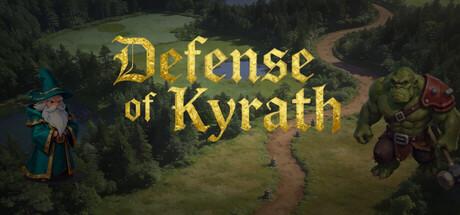
Defense of Kyrath uses AI-assisted tools in parts of its art and audio pipeline. Some character sprites, character voice lines, select background imagery, and background music are AI-generated, and refined or curated by the developer. All AI-generated content is pre-generated at authoring time. Terrain, environment art, and level layouts come from TiGen - a custom procedural generation pipeline that is purely algorithmic, not AI. All game design, writing, and gameplay systems are human-crafted.
No real-time generative AI in the client. Static in-game and store art/audio may include material initially produced with generative AI, revised and approved by the developer before release.
This game uses generative AI during development for certain 2D icons, concept art, placeholder graphics, and text. All AI-generated content has been manually reviewed, edited, and adapted by the developer before being included in the final game.
This game uses generative AI to power NPC letter responses during gameplay. When players write to in-game characters, an AI system generates personalized replies based on each character's predefined personality, knowledge boundaries, and narrative role. The AI does not create story content freely. It operates within a structured information system where specific clues and facts are released only when triggered by the player's questions. All narrative content, character writing, and story outcomes are authored by the development team. The AI serves as a delivery mechanism for this authored content, not as a content creator.No art or music assets are generated by AI. All visual and audio assets in the game are created by human artists. Credits can be found on our website.Why AI is used: The core gameplay revolves around investigating through freely written letters. Every player asks different questions, follows a different investigative path, and sometimes needs to persuade, pressure, or confront characters to pry loose specific information — meaning NPC responses cannot be pre-written. They must be generated in real time based on each player's specific inquiries. AI is the necessary means to enable this gameplay, not a replacement for human creators or a cost-saving measure. Without AI, this game's core mechanic simply could not exist.Our team is made up of game enthusiasts and young professionals with an average age of 24. We are not an AI technology company. Our Demo is 100% free to play, and we do not use player data for any AI model training. We understand that AI technology remains ethically complex, and we take the concerns of players and fellow creators seriously. We believe, and are committed to proving, that human creativity can command AI, not the other way around. Listening to your feedback is our responsibility. We welcome any questions, suggestions, or concerns about our use of AI — please reach out to our email or our [Discord/QQ]. Your feedback will help us improve and do better.
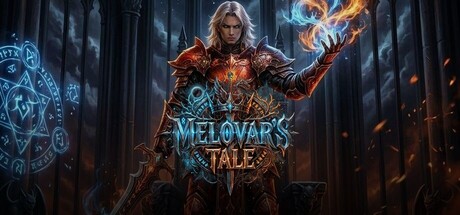
A lot of the artwork in Melovar's Tale, including the card, relic and character illustrations were created with the assistance of AI tools. All AI Generated items were reviewed, curated, and refined to ensure they meet the game visual and thematic standards. There isn't any AI content generated live during the game.
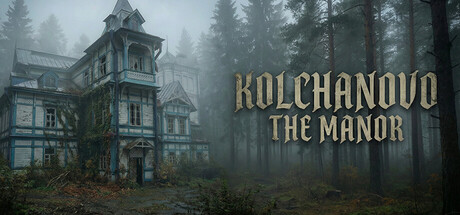
3D Models: Generative artificial intelligence is used to restore and recreate interior objects of the real building that were lost in the fire.
Images: The paintings inside the manor are real photographs of artworks that once hung inside, but they have been enhanced and restored.
Music & Sounds: Specially created to build a unique and immersive atmosphere.
In development and early prototyping, Rankbreaker used some generative art assets. These are being actively replaced with original work created by professional artists, and this transition is already underway.
Current contributions include:
Leonardo Veronesi: Disruptors “Void,” “Raven,” “Recoil,” and character card “Axl Rydell”
Samuele Colombini: Character cards “Bloodthirst,” “Ironjaw,” “Riff the Cat,” and “Stonewhal”
Richard Kessler: Location art “Deadspace,” “Sepulcher,” and “The Arc”
All generative assets are being phased out in favor of fully original artwork as development continues.
Some artwork used in store page capsule images and card illustrations was created with the assistance of AI image generation tools. All AI-generated assets were reviewed, curated, and edited by the developer. No AI is used during gameplay.
All Store images built with a baseline of Genertive AI and heavly modified before upload
Some Code mainly underlying Features are Made With Generative AI
AI was used to expand store assets to the correct dimensions. All game content including environments, textures, narrative, and audio was created WITHOUT generative AI.
Some CG artwork, visual assets, and audio assets in this game were created with the assistance of AI generation tools and then manually refined and integrated by the developer.
Yes. The game uses AI for localization translation (8 languages) and AI-assisted pixel art generation. All AI-generated assets have been heavily edited and refined by the developer to fit the game's dark pixel art style and narrative context.
Generative AI was not used to create any in-game content resources. AI was utilized solely for the translation of certain in-game dialogue and external content, such as our Steam page and community posts.
This product uses AI tools to assist in generating code, art assets, and other content. All AI-generated materials have been significantly edited, modified, and polished by human developers to ensure originality, quality, and compliance with copyright regulations.
To further enrich the unique world and atmosphere of this game, we utilized AI technology to assist in creating the background artwork and soundtrack.
AI was primarily used as a sketching tool to draft initial ideas. All final assets implemented in the game underwent detailed retouching and careful direction by the developer, meticulously polished to seamlessly blend into the game's distinct vibe.
A few images have been generated, where it make sense that the AI in the game would use generic stock photos, but the overwhelming majority of art is handmade.
Generative AI tools were used exclusively during the development process for brainstorming ideas and coding assistance. All in-game assets—including art, animation, audio, and narrative—were entirely created by our human team.
Some of the promotional and storefront images were created with AI tools and then refined by hand. All of the in-game assets were designed by a 3D artist.
This game was developed with the assistance of generative AI tools.
Character and background artwork was created using Scenario.com.
Sound effects were generated using ElevenLabs, and background music
was composed using Lyria 2. These tools were used to support the
creative vision of a solo indie developer.
Some visual and audio assets were partially generated with the help of AI tools. These elements represent a small portion of the overall content and were further edited and integrated by the developer. AI was also used to assist with minor code optimization and to translate all in-game dialogue.
Generative AI is used to create base materials for certain image assets, including character portraits, enemies, and UI. These generated images are not used as-is; they undergo manual processing such as retouching or animation before being implemented into the game.
This game uses AI to assist in generating [art assets/localized text/voice dubbing]. All AI-generated content has been manually reviewed and modified to ensure compliance with regulations and the game's world setting.
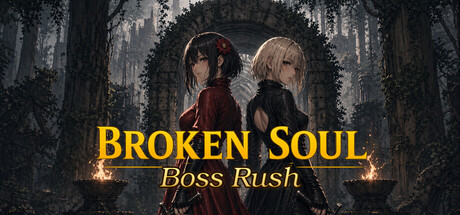
BROKEN SOUL : Boss Rush is a solo-developed game, and generative AI tools were used during development to assist with the creation of some visual assets and promotional materials. However, the game’s ideas, combat design, and system logic were all personally conceived and implemented, and every piece of content that appears in the final game was also directly selected, edited, and reviewed before completion. This is not a game that was made easily, but rather one that was brought to completion by making full use of every available tool and resource. If the game receives greater support in the future, there are plans to further expand and improve various elements, including the art assets, to an even higher level of quality. The game does not include any functionality that generates content with generative AI in real time during gameplay.
The game features a multilingual system, with some languages processed using AI.
Some UI elements and game scene components were designed with AI assistance.
Game plugin code was processed using AI.
Some game music, sound effects, and trailer music were also processed using AI.
In The Hollow, artificial intelligence is used to enhance images, create the basis for certain textures, and ensure more accurate translations. Some of the characters’ faces could not have been created without processing their images using artificial intelligence. Furthermore, some of the generated results served as the basis for further manual refinement of the game assets.
We believe in being transparent about how we build Hollowed Oath including where we use AI, and why. For a thoughtful look at how AI is used in Hollowed Oath, please visit: https://hollowedoath.com/ai-use
Shatterhold uses AI-generated art for environmental paintings, creature portraits, and music tracks. All gameplay mechanics, code, and game design are human-directed.
This game uses generative AI to assist in creating some art, text, and sound assets during development. All AI outputs are heavily modified by humans and undergo copyright compliance checks to ensure originality and IP safety.
AI tools (Claude Code) were used to assist with code development and store page localization. All game design, visual style, and creative decisions were made by the developer. All visuals are procedurally generated by the game's own code at runtime.
During development, AI-assisted tools were used as part of the creative workflow for concept exploration and reference generation. Extensive photobashing, manual editing, and traditional artistic techniques were used throughout development, and every final image, texture, and 3D model was individually refined, finished, or recreated by an artist. AI serves as a supporting tool in the production process rather than replacing artistic craftsmanship.
The developer uses AI tools (such as ChatGPT, Claude, and Cursor) to assist with writing code, drafting in-game text like card effect descriptions, and brainstorming narrative elements. Additionally, AI is utilized to provide draft localizations for various languages.
However, all graphical assets (including character illustrations and monster designs) and audio are entirely human-made. No AI-generated images, pre-rendered graphics, or sound files are used in this game.
Defense of Kyrath uses AI-assisted tools in parts of its art and audio pipeline. Some character sprites, character voice lines, select background imagery, and background music are AI-generated, and refined or curated by the developer. All AI-generated content is pre-generated at authoring time. Terrain, environment art, and level layouts come from TiGen - a custom procedural generation pipeline that is purely algorithmic, not AI. All game design, writing, and gameplay systems are human-crafted.
No real-time generative AI in the client. Static in-game and store art/audio may include material initially produced with generative AI, revised and approved by the developer before release.
This game uses generative AI during development for certain 2D icons, concept art, placeholder graphics, and text. All AI-generated content has been manually reviewed, edited, and adapted by the developer before being included in the final game.
This game uses generative AI to power NPC letter responses during gameplay. When players write to in-game characters, an AI system generates personalized replies based on each character's predefined personality, knowledge boundaries, and narrative role. The AI does not create story content freely. It operates within a structured information system where specific clues and facts are released only when triggered by the player's questions. All narrative content, character writing, and story outcomes are authored by the development team. The AI serves as a delivery mechanism for this authored content, not as a content creator.No art or music assets are generated by AI. All visual and audio assets in the game are created by human artists. Credits can be found on our website.Why AI is used: The core gameplay revolves around investigating through freely written letters. Every player asks different questions, follows a different investigative path, and sometimes needs to persuade, pressure, or confront characters to pry loose specific information — meaning NPC responses cannot be pre-written. They must be generated in real time based on each player's specific inquiries. AI is the necessary means to enable this gameplay, not a replacement for human creators or a cost-saving measure. Without AI, this game's core mechanic simply could not exist.Our team is made up of game enthusiasts and young professionals with an average age of 24. We are not an AI technology company. Our Demo is 100% free to play, and we do not use player data for any AI model training. We understand that AI technology remains ethically complex, and we take the concerns of players and fellow creators seriously. We believe, and are committed to proving, that human creativity can command AI, not the other way around. Listening to your feedback is our responsibility. We welcome any questions, suggestions, or concerns about our use of AI — please reach out to our email or our [Discord/QQ]. Your feedback will help us improve and do better.
A lot of the artwork in Melovar's Tale, including the card, relic and character illustrations were created with the assistance of AI tools. All AI Generated items were reviewed, curated, and refined to ensure they meet the game visual and thematic standards. There isn't any AI content generated live during the game.
3D Models: Generative artificial intelligence is used to restore and recreate interior objects of the real building that were lost in the fire.
Images: The paintings inside the manor are real photographs of artworks that once hung inside, but they have been enhanced and restored.
Music & Sounds: Specially created to build a unique and immersive atmosphere.
In development and early prototyping, Rankbreaker used some generative art assets. These are being actively replaced with original work created by professional artists, and this transition is already underway.
Current contributions include:
Leonardo Veronesi: Disruptors “Void,” “Raven,” “Recoil,” and character card “Axl Rydell”
Samuele Colombini: Character cards “Bloodthirst,” “Ironjaw,” “Riff the Cat,” and “Stonewhal”
Richard Kessler: Location art “Deadspace,” “Sepulcher,” and “The Arc”
All generative assets are being phased out in favor of fully original artwork as development continues.
Some artwork used in store page capsule images and card illustrations was created with the assistance of AI image generation tools. All AI-generated assets were reviewed, curated, and edited by the developer. No AI is used during gameplay.
All Store images built with a baseline of Genertive AI and heavly modified before upload
Some Code mainly underlying Features are Made With Generative AI
AI was used to expand store assets to the correct dimensions. All game content including environments, textures, narrative, and audio was created WITHOUT generative AI.
Some CG artwork, visual assets, and audio assets in this game were created with the assistance of AI generation tools and then manually refined and integrated by the developer.
Yes. The game uses AI for localization translation (8 languages) and AI-assisted pixel art generation. All AI-generated assets have been heavily edited and refined by the developer to fit the game's dark pixel art style and narrative context.
Generative AI was not used to create any in-game content resources. AI was utilized solely for the translation of certain in-game dialogue and external content, such as our Steam page and community posts.
This product uses AI tools to assist in generating code, art assets, and other content. All AI-generated materials have been significantly edited, modified, and polished by human developers to ensure originality, quality, and compliance with copyright regulations.
To further enrich the unique world and atmosphere of this game, we utilized AI technology to assist in creating the background artwork and soundtrack.
AI was primarily used as a sketching tool to draft initial ideas. All final assets implemented in the game underwent detailed retouching and careful direction by the developer, meticulously polished to seamlessly blend into the game's distinct vibe.
A few images have been generated, where it make sense that the AI in the game would use generic stock photos, but the overwhelming majority of art is handmade.
Generative AI tools were used exclusively during the development process for brainstorming ideas and coding assistance. All in-game assets—including art, animation, audio, and narrative—were entirely created by our human team.
Some of the promotional and storefront images were created with AI tools and then refined by hand. All of the in-game assets were designed by a 3D artist.
This game was developed with the assistance of generative AI tools.
Character and background artwork was created using Scenario.com.
Sound effects were generated using ElevenLabs, and background music
was composed using Lyria 2. These tools were used to support the
creative vision of a solo indie developer.
Some visual and audio assets were partially generated with the help of AI tools. These elements represent a small portion of the overall content and were further edited and integrated by the developer. AI was also used to assist with minor code optimization and to translate all in-game dialogue.
Generative AI is used to create base materials for certain image assets, including character portraits, enemies, and UI. These generated images are not used as-is; they undergo manual processing such as retouching or animation before being implemented into the game.
This game uses AI to assist in generating [art assets/localized text/voice dubbing]. All AI-generated content has been manually reviewed and modified to ensure compliance with regulations and the game's world setting.
BROKEN SOUL : Boss Rush is a solo-developed game, and generative AI tools were used during development to assist with the creation of some visual assets and promotional materials. However, the game’s ideas, combat design, and system logic were all personally conceived and implemented, and every piece of content that appears in the final game was also directly selected, edited, and reviewed before completion. This is not a game that was made easily, but rather one that was brought to completion by making full use of every available tool and resource. If the game receives greater support in the future, there are plans to further expand and improve various elements, including the art assets, to an even higher level of quality. The game does not include any functionality that generates content with generative AI in real time during gameplay.
The game features a multilingual system, with some languages processed using AI.
Some UI elements and game scene components were designed with AI assistance.
Game plugin code was processed using AI.
Some game music, sound effects, and trailer music were also processed using AI.
In The Hollow, artificial intelligence is used to enhance images, create the basis for certain textures, and ensure more accurate translations. Some of the characters’ faces could not have been created without processing their images using artificial intelligence. Furthermore, some of the generated results served as the basis for further manual refinement of the game assets.