Public Steam disclosure research25,380 disclosures tracked
Where do games disclose AI use?
Search developers’ Steam disclosures, compare classified AI use across
games, and follow recorded changes.
This index adds cross-game classifications and statistics to
statements published on individual store pages.
Groups reflect automatic analysis of public disclosures; mature records are excluded. These counts do not measure AI use across all of Steam.
Missing or unclear statements cannot establish whether a game uses AI.
During the development of "Farm Harbeest", we used generative AI to help improve production efficiency, including assistance with some art references, music and sound effect inspiration, and code logic references. All related content was manually reviewed, selected, reworked, edited, tested, and integrated. The final game content is reviewed and controlled by the developers. We confirm that the AI-assisted content does not include any unauthorized copyrighted material.
Aetheris Core is a hand-crafted indie game, built and tuned over thousands of hours of development and playtesting by Kavik Studios.
Generative AI tools were used to assist with parts of the process, including some visual and audio assets and technical code such as shaders. No content is generated live during gameplay; everything ships as fixed, pre-made assets. Every AI-assisted element was reviewed, edited, reworked, and integrated by hand to meet the game's quality and consistency standards. The design, balance, feel, and final form of the game are Kavik Studios' own work.
We've disclosed our use of AI tools openly since day one, and we're committed to keeping that transparency as the game grows.
AI tools (Claude Code) were used to assist with code development and store page localization. All game design, visual style, and creative decisions were made by the developer. All visuals are procedurally generated by the game's own code at runtime.
We use generative AI tools to assist in the creation of 2D pixel art assets and marketing materials. All AI-generated content is refined and integrated by the developer to ensure a high-quality, cohesive aesthetic that fits the game's unique medieval-tech world.
AI tools were used to assist in creating parts of the soundtrack, selected UI elements (primarily in the main menu), and some achievement icons. All gameplay systems, design, and core content are handcrafted.
AI was used only to help review, correct, and improve portions of existing code during development. All visual assets, music, and other creative content in the game were made by real artists, whose work I fully support.
AI was used to help fine-tuning some graphics and animations, also to create some background graphics.
AI was used to create voices and to fine tune music.
The visual assets in this game, including character sprites, UI elements, and environmental items, were created with the assistance of Generative AI tools. All AI-generated content has been manually curated, edited, and modified by the developer—including manual rigging and frame-by-frame animation—to ensure a cohesive art style and high-quality gameplay experience.
As an indie non-english speaker, AI was used for polishing game store page and texts inside game. Images in game and gameplay in game are not affected by AI.
Generative AI was used as an assistive tool during development for parts of some 3D models, sound assets, and portions of the code. All such content was reviewed, modified where needed, and curated by the developer before release.
In game music has been generated. To help offset this, a portion of the sales proceeds will be donated to the non-profit MusiCares.
All art and game assets have been created by paid artists, with the exception of the trees.
During the development of this game, generative AI tools were used to assist in creating early drafts of some background images, UI icons, and text. All AI-generated assets have been strictly reviewed and manually modified by the developer to ensure they fit the game's aesthetic and do not contain any copyrighted or inappropriate content.
AI was used as limited support in creating certain elements.
All generated content was reviewed and manually adjusted by the developer.
There is no AI-generated content during gameplay.
All assets used have valid commercial licenses.
This game's art assets, including sprites, UI elements, and visual designs, were created with the assistance of generative AI tools. Audio and gameplay programming were developed without AI-generated content. All AI-generated assets have been reviewed and curated by the developer.
During the development of Furious Kitchen, we utilized generative Artificial Intelligence (AI) tools to assist in content creation and optimization. The specific implementations are as follows:
Programming & Scripts: We used AI programming assistants (Large Language Models) to help write and refactor underlying game logic code, as well as to assist with the implementation of the multi-language localization system and text translation.
Art Assets : Certain visual elements within the game (such as UI icons, background assets, or promotional base art) were created with the assistance of AI image generation tools. All generated images were subsequently redrawn, modified, and stylized manually by the developer to fit the game's aesthetic.
Music & Audio : Some background music or sound effect assets in the game were composed and arranged using AI audio generation tools.
This game does not feature any live-generated AI content (i.e., AI content generated in real-time while playing). All AI-assisted assets were pre-generated during the development phase and carefully reviewed to ensure they do not infringe upon any third-party copyrights.
Some store and library marketing images were created with AI-assisted image generation. The game’s code, gameplay systems, balancing, ship behavior, upgrade systems, and implementation were developed by the developer.
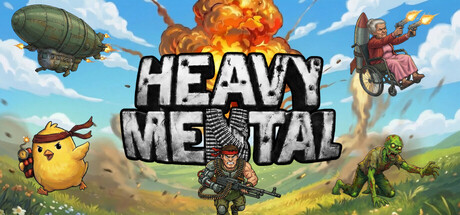
During the development of Heavy Mental, we utilized Meshy AI to assist in creating base 3D models and textures for several character assets and environmental props. Every asset generated through AI has been manually refined, rigged, and animated by our development team to ensure it fits the game's unique stylized art direction and meets our quality standards. Our use of AI is limited to the pre-production phase to streamline our artistic workflow.
This game utilizes generative AI tools during development to enhance certain aspects of production. Specifically, AI was used to assist with programming tasks and sound creation. All AI-assisted content was carefully reviewed, refined, and integrated by the developer to ensure consistency and quality within the game.
Description of AI Use:
In this project, Generative AI was used to create promotional artwork, various in-game art assets, and music tracks. Additionally, AI was employed as a coding assistant to help develop and optimize the game's source code. All final outputs have been curated and modified by our development team to meet our creative standards.
Description of AI usage in development:
We utilized AI tools to enhance development efficiency and creative output:
Claude: Heavily used for complex 3D procedural mesh modeling and core game logic scripting to optimize the procedural world-building.
ChatGPT & Gemini: Assisted in creating specific game assets and technical documentation.
Adobe Firefly: Used to generate high-quality visual elements and creative assets specifically for the game’s promotional trailers.
All AI-assisted outputs were refined, integrated, and finalized by the developer to ensure technical stability and creative originality.
Yes, I use AI tools to help build this game, and I'm not going to pretend I don't.
I'm one person. Every system, mechanic, and design decision is made, tested, and tuned by me personally. I use the best tools available, AI among them, to let a one-person studio punch way above its weight. That's the entire point of being indie: no rules except the ones that make a better game.
Assets are a fluid mix of commercially licensed, hand-crafted, AI-generated, AI-generated then hand-adjusted, and hand-crafted then AI-polished. I'll use whatever it takes to make this the best game it can be.
Some code sections were generated using AI.
We've used AI-generated images for our store page graphic assets.
※The in-game images were not created using AI.
AI Disclosure:
Generative AI tools were used during development to assist in creating some visual assets and refining animations. Additionally, AI-assisted tools were utilized for technical optimization to ensure a stable gameplay experience. All results were manually reviewed and finalized by the developer. This game does not use any live-generated AI content.
Generative AI tools were used solely to assist in creating the logo and promotional art featured on this Steam store page. No generative AI was used in the creation of the game itself—all in-game assets, code, writing, and gameplay mechanics are 100% handcrafted by the development team.
AI tools were used to generate secondary visual assets, such as some skill icons, and background textures. All AI-generated assets have been heavily hand-edited and refined by the developer to ensure a consistent visual style that aligns with the game's aesthetic. All musical compositions were created entirely from scratch without the use of AI.
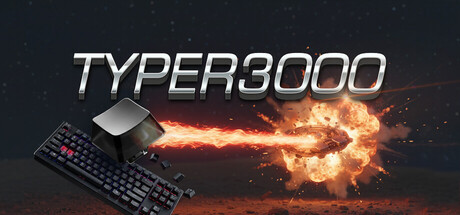
We have used AI primarily for image generation and for optimizing the network system in Typer3000. AI-driven image generation allowed us to rapidly create and iterate visual assets such as backgrounds, interface elements, and stylistic variations, ensuring a consistent and scalable visual design.
In addition, we have used AI to support the setup and optimization of the multiplayer network architecture. It helped us refine data transmission strategies, reduce latency, and improve synchronization of player inputs, resulting in a smooth and responsive real-time gameplay experience.
During the development of "Farm Harbeest", we used generative AI to help improve production efficiency, including assistance with some art references, music and sound effect inspiration, and code logic references. All related content was manually reviewed, selected, reworked, edited, tested, and integrated. The final game content is reviewed and controlled by the developers. We confirm that the AI-assisted content does not include any unauthorized copyrighted material.
Aetheris Core is a hand-crafted indie game, built and tuned over thousands of hours of development and playtesting by Kavik Studios.
Generative AI tools were used to assist with parts of the process, including some visual and audio assets and technical code such as shaders. No content is generated live during gameplay; everything ships as fixed, pre-made assets. Every AI-assisted element was reviewed, edited, reworked, and integrated by hand to meet the game's quality and consistency standards. The design, balance, feel, and final form of the game are Kavik Studios' own work.
We've disclosed our use of AI tools openly since day one, and we're committed to keeping that transparency as the game grows.
AI tools (Claude Code) were used to assist with code development and store page localization. All game design, visual style, and creative decisions were made by the developer. All visuals are procedurally generated by the game's own code at runtime.
We use generative AI tools to assist in the creation of 2D pixel art assets and marketing materials. All AI-generated content is refined and integrated by the developer to ensure a high-quality, cohesive aesthetic that fits the game's unique medieval-tech world.
AI tools were used to assist in creating parts of the soundtrack, selected UI elements (primarily in the main menu), and some achievement icons. All gameplay systems, design, and core content are handcrafted.
AI was used only to help review, correct, and improve portions of existing code during development. All visual assets, music, and other creative content in the game were made by real artists, whose work I fully support.
AI was used to help fine-tuning some graphics and animations, also to create some background graphics.
AI was used to create voices and to fine tune music.
The visual assets in this game, including character sprites, UI elements, and environmental items, were created with the assistance of Generative AI tools. All AI-generated content has been manually curated, edited, and modified by the developer—including manual rigging and frame-by-frame animation—to ensure a cohesive art style and high-quality gameplay experience.
As an indie non-english speaker, AI was used for polishing game store page and texts inside game. Images in game and gameplay in game are not affected by AI.
Generative AI was used as an assistive tool during development for parts of some 3D models, sound assets, and portions of the code. All such content was reviewed, modified where needed, and curated by the developer before release.
In game music has been generated. To help offset this, a portion of the sales proceeds will be donated to the non-profit MusiCares.
All art and game assets have been created by paid artists, with the exception of the trees.
During the development of this game, generative AI tools were used to assist in creating early drafts of some background images, UI icons, and text. All AI-generated assets have been strictly reviewed and manually modified by the developer to ensure they fit the game's aesthetic and do not contain any copyrighted or inappropriate content.
AI was used as limited support in creating certain elements.
All generated content was reviewed and manually adjusted by the developer.
There is no AI-generated content during gameplay.
All assets used have valid commercial licenses.
This game's art assets, including sprites, UI elements, and visual designs, were created with the assistance of generative AI tools. Audio and gameplay programming were developed without AI-generated content. All AI-generated assets have been reviewed and curated by the developer.
During the development of Furious Kitchen, we utilized generative Artificial Intelligence (AI) tools to assist in content creation and optimization. The specific implementations are as follows:
Programming & Scripts: We used AI programming assistants (Large Language Models) to help write and refactor underlying game logic code, as well as to assist with the implementation of the multi-language localization system and text translation.
Art Assets : Certain visual elements within the game (such as UI icons, background assets, or promotional base art) were created with the assistance of AI image generation tools. All generated images were subsequently redrawn, modified, and stylized manually by the developer to fit the game's aesthetic.
Music & Audio : Some background music or sound effect assets in the game were composed and arranged using AI audio generation tools.
This game does not feature any live-generated AI content (i.e., AI content generated in real-time while playing). All AI-assisted assets were pre-generated during the development phase and carefully reviewed to ensure they do not infringe upon any third-party copyrights.
Some store and library marketing images were created with AI-assisted image generation. The game’s code, gameplay systems, balancing, ship behavior, upgrade systems, and implementation were developed by the developer.
During the development of Heavy Mental, we utilized Meshy AI to assist in creating base 3D models and textures for several character assets and environmental props. Every asset generated through AI has been manually refined, rigged, and animated by our development team to ensure it fits the game's unique stylized art direction and meets our quality standards. Our use of AI is limited to the pre-production phase to streamline our artistic workflow.
This game utilizes generative AI tools during development to enhance certain aspects of production. Specifically, AI was used to assist with programming tasks and sound creation. All AI-assisted content was carefully reviewed, refined, and integrated by the developer to ensure consistency and quality within the game.
Description of AI Use:
In this project, Generative AI was used to create promotional artwork, various in-game art assets, and music tracks. Additionally, AI was employed as a coding assistant to help develop and optimize the game's source code. All final outputs have been curated and modified by our development team to meet our creative standards.
Description of AI usage in development:
We utilized AI tools to enhance development efficiency and creative output:
Claude: Heavily used for complex 3D procedural mesh modeling and core game logic scripting to optimize the procedural world-building.
ChatGPT & Gemini: Assisted in creating specific game assets and technical documentation.
Adobe Firefly: Used to generate high-quality visual elements and creative assets specifically for the game’s promotional trailers.
All AI-assisted outputs were refined, integrated, and finalized by the developer to ensure technical stability and creative originality.
Yes, I use AI tools to help build this game, and I'm not going to pretend I don't.
I'm one person. Every system, mechanic, and design decision is made, tested, and tuned by me personally. I use the best tools available, AI among them, to let a one-person studio punch way above its weight. That's the entire point of being indie: no rules except the ones that make a better game.
Assets are a fluid mix of commercially licensed, hand-crafted, AI-generated, AI-generated then hand-adjusted, and hand-crafted then AI-polished. I'll use whatever it takes to make this the best game it can be.
Some code sections were generated using AI.
We've used AI-generated images for our store page graphic assets.
※The in-game images were not created using AI.
AI Disclosure:
Generative AI tools were used during development to assist in creating some visual assets and refining animations. Additionally, AI-assisted tools were utilized for technical optimization to ensure a stable gameplay experience. All results were manually reviewed and finalized by the developer. This game does not use any live-generated AI content.
Generative AI tools were used solely to assist in creating the logo and promotional art featured on this Steam store page. No generative AI was used in the creation of the game itself—all in-game assets, code, writing, and gameplay mechanics are 100% handcrafted by the development team.
AI tools were used to generate secondary visual assets, such as some skill icons, and background textures. All AI-generated assets have been heavily hand-edited and refined by the developer to ensure a consistent visual style that aligns with the game's aesthetic. All musical compositions were created entirely from scratch without the use of AI.
We have used AI primarily for image generation and for optimizing the network system in Typer3000. AI-driven image generation allowed us to rapidly create and iterate visual assets such as backgrounds, interface elements, and stylistic variations, ensuring a consistent and scalable visual design.
In addition, we have used AI to support the setup and optimization of the multiplayer network architecture. It helped us refine data transmission strategies, reduce latency, and improve synchronization of player inputs, resulting in a smooth and responsive real-time gameplay experience.