Public Steam disclosure research27,953 disclosures tracked
Where do games disclose AI use?
Search developers’ Steam disclosures, compare classified AI use across
games, and follow recorded changes.
This index adds cross-game classifications and statistics to
statements published on individual store pages.
Groups reflect automatic analysis of public disclosures; mature records are excluded. These counts do not measure AI use across all of Steam.
Missing or unclear statements cannot establish whether a game uses AI.
As a small independent studio, we used generative AI tools offline to assist with a limited set of assets, including select 2D and promotional artwork, voice lines, and a handful of 3D environmental landmarks. Everything was directed, edited, and integrated by hand. No generative AI runs during gameplay, and all core ships, characters, and game systems are built from custom code and licensed art assets.
Three card illustrations were modified by applying AI-based oil-painting filters to existing photographs taken by human photographers to achieve a painterly appearance more consistent with the other card illustrations in the game. These changes preserved the principal subjects and compositions while modifying artistic textures, lighting, and certain background details.
AI tools were used during development. Code, tools and procedural art pipelines were written with an AI coding assistant (Claude), and the art they generate is reviewed and directed by the developers. Some in-game text was drafted with Claude and then edited: crew thoughts and barks, townsfolk talk, tavern and vendor lines, and first-pass translations. Nothing is generated while you play. All content ships pre-made in the game files.
Generative AI was used to create some monster models, effects, and store promotional artwork, and to translate the game and store page (English, Japanese, Simplified and Traditional Chinese, Brazilian Portuguese). No AI content is generated during gameplay.
Some 3D models, 2D artwork, music, sound effects, and prerecorded officer voice lines in Void Privateers were created with the help of generative AI tools during development. These assets are reviewed and integrated by the developer. The game does not use generative AI to create content during gameplay.
DEADEYE is made by two friends using AI-assisted tools to help with code, procedural art and audio, writing and translations. No image, voice or music generators were used, and everything in the game is reviewed, edited and reworked by hand.
AI tools were used during development. Pre-generated content was created with AI assistance: in-game texts (manual, events, leader quotes), the English translation, store page texts and the achievement icons; the 3D models and graphics are produced by program code written with AI assistance. All content was reviewed by the developer. No content is generated by AI during gameplay.
Generative AI was used as a starting point for some of Fondaco's content and as support in writing the code. All AI-generated material was reviewed and reworked by the developer. The art direction is entirely human.
The game's translations from English into other languages were created with the help of AI tools, and AI assisted in drafting the store page text. The game does not generate any content with AI during play.
All 3D art and crew voices were made by hand. A few background music tracks and the logo were generated with AI tools, and AI helped draft the translations.
The game is still in early development, and some visual assets currently use placeholders generated with AI tools. These are temporary solutions reflecting our team’s current resources. We intend to replace all AI-generated placeholders with original artwork created by skilled and talented artists before the game’s full release.
AI-assisted tools were used during development to create visual artwork, 3D assets, music, sound effects, voice narration, video and some in-game text. The resulting content is included as fixed game assets and in the store page's trailers. Petalwar does not generate AI content during gameplay or connect to external AI services.
Sea of Pirates uses generative AI tools in parts of its development. Some in-game assets, such as ship artwork and item icons, were created with AI image-generation tools under human direction and then reviewed and edited by the team. The game's translations into its supported languages were produced with AI assistance.
Silk & Cannons is designed, directed and playtested by the studio. No generative AI is used while you play, and the game contains no AI-generated images or voices: its graphics and music are produced by the game's own code. However, some content was created with the help of AI tools during development. Parts of the in-game text and the musical melodies were co-written by the studio and an AI assistant, then reviewed and edited by the studio. The translations into 11 languages were produced with AI assistance and have not yet been reviewed by native speakers. The game's logo is hand-drawn by the studio, based on an AI-generated sketch. The text of this store page was written by the studio with the help of an AI assistant.
Some of the game’s text (interface labels, descriptions and their translations) and the text of this store page were written with the help of an AI language model and reviewed by the developer. The rulers’ portraits and the start menu’s background are placeholder images made with an AI image model: they keep those spots from standing empty and are meant to be replaced by original artwork. Everything else on screen is rendered in real time by the game’s own engine, and its music and sounds are human-made recordings or synthesized by the game. No AI content is generated while you play.
The game content was extensively created with generative AI. This includes 3D models, textures, artwork and marketing materials, audio, text and localization. The content was created in advance during development.
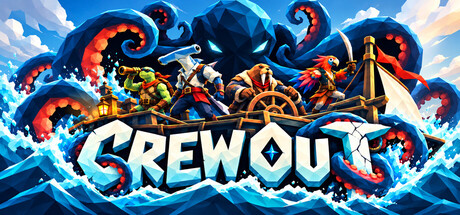
Generative AI tools were used to assist in creating some 3D models during the development of Crew Out. These assets were refined and adapted by our development team to match the game's visual style.
Generative AI tools were also used to assist in creating some promotional artwork featured on the Steam store page.
The core gameplay mechanics, systems, and game design are developed by our team.
Some of the current artwork (including ship and monster background illustrations) was generated with AI image tools and edited by the developer. These are placeholders that will be replaced with hand-made art before release. No AI content is generated while the game is running.
Generative AI has been used during development to create selected 3D assets and visual textures, music and sung vocals, and prerecorded character dialogue, and to assist with narrative drafting. The store artwork and some promotional narration are also AI-assisted. These assets are prepared before play; the game does not generate AI content during gameplay.
Generative AI was used for:
• Character artwork refined from original hand-drawn sketches
• Some ship decoration images and textures
• Some UI images and textures
• Some sound effects and music
• Dialogue and localization
• Some store and trailer promotional images
Generative AI assisted in creating selected illustrations, visual assets, narrative text, and translations during development, including store materials. No content is generated by AI during gameplay.
The game's sound effects were created with AI audio-generation tools during development, then selected and level-matched by the developer. Nothing is generated by AI while you play.
Generative AI tools were used during development to assist with some visual and audio assets in Fishing Trawler. All AI-assisted content is reviewed, edited, and integrated by the developer.
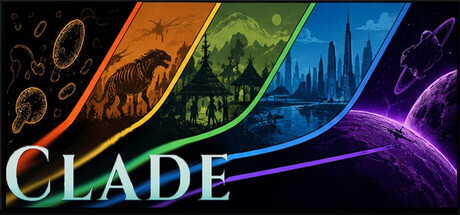
Clade is made by a small independent developer. During development, AI tools were used to help write some of the game's code, and to create some placeholder 3D models and text. All placeholder art is being replaced with handmade work, and this note will be updated as that happens. The game does not generate any content with AI while you play. The computer controlled empires are traditional game AI written for Clade, not generative AI.
Generative AI tools may be used during development to assist in creating certain pre-generated visual, written, audio, or marketing content. All such content is reviewed and curated by the development team before inclusion. The game does not use generative AI to generate content during gameplay.
Generative AI was used during development to create images and assist with coding. The images were generated in advance and incorporated into the game. The game does not generate AI content or code during gameplay and does not connect to third-party AI services.
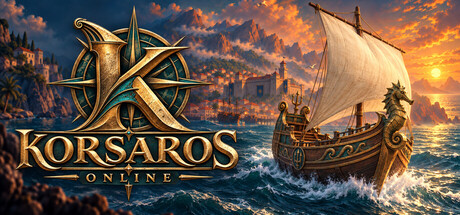
Korsaros Online uses a hybrid creative workflow combining generative AI tools with manual editing and integration for some artwork, 3D models, and music, including Steam marketing assets. These assets are reviewed before inclusion.
This game uses generative AI for some of its assets. Character portraits and promotional illustrations were created with AI image tools (ChatGPT), 3D landmark models with Tripo3D, sound effects with ElevenLabs, and the background music and theme song with Suno. The English and Simplified Chinese localization was drafted with AI assistance. All AI-generated content was reviewed, edited and selected by the developer before shipping. Nothing is generated live during gameplay.
Phantom Fleet uses generative AI during development to assist in creating card illustrations, skill icons, UI decorations, backgrounds, ship textures, and some visual effect assets. AI assistance was also used in writing in-game descriptions and store page text.
Background music and sound effects were created using audio synthesis code written with the assistance of AI and are included in the game.
All of this content is pre-generated during development. The game does not use generative AI to create new images, music, dialogue, or other content in real time during gameplay.
Generative AI was used during development to help create a limited number of assets, such as some 2D art, textures. All AI-assisted content was reviewed and edited by our team.
Regarding programming, this game was partially coded and translated using AI; however, AI is used only for marketing art. The game's international artwork is hand-drawn and vectorized based on unofficial rock band logos.
This game uses generative AI to assist in creating some of its visual assets, including card illustrations, backgrounds, and interface artwork. These assets are reviewed, edited, and integrated by the developer. All AI-assisted content is created during development; the game does not generate AI content while you play.
Generative AI tools assisted in producing some background artwork, music and sound effects, models, and narrative content. The developer reviewed and edited these materials before integrating them into the game. No AI content is generated during gameplay.
Generative AI tools were used during development to create some of the content that ships with the game; our team directed, selected and edited it:
- Music: the 10 soundtrack tracks were generated with Suno.
- Voices: announcer, unit and cinematic voice lines in seven languages are AI text-to-speech made from our own scripts.
- Visuals: general portraits, ability illustrations, menu backgrounds, unit and building portraits, some textures, the campaign and menu video sequences, and the store key art and capsules.
- 3D: many unit models were built from AI-generated concept images with AI image-to-3D tools, then cleaned up, rigged and animated by us.
- Localization: the German, Spanish, Russian, Chinese, Japanese and Korean texts in the game and on the store page were translated with AI assistance.
All of this is fixed content. The game does not generate AI content during play and does not connect to any generative AI service.
Generative AI was used as a development assistant on Island Escape: primarily to help write and review the game's source code, and to help draft and localize in-game text (Simplified Chinese, English, Japanese, Russian, Spanish, Brazilian Portuguese, German). All of that output was reviewed and edited by the developer.
Everything you see and hear is generated procedurally by the game's own code, shaders and audio tools at runtime — the project uses no AI-generated images, 3D models, textures or voice acting.
The game does not use generative AI while you play. No player data is sent anywhere.
This game’s player-facing art, writing, and audio were created with generative AI and then selected, edited, and directed by the developer. Store images and trailers use the same pre-generated assets. No content is generated live during gameplay.
Generative AI tools were used to create some of the pre-rendered content that ships with this game and appears on this store page, specifically artwork and character voice audio. Nothing is generated by AI while the game is running.
Generative AI tools were used during development to enhance and refine certain images which included improving resolution, clarity, colour. No AI-generated content is created during gameplay.
No AI-generated images, models, or audio appear in the game or on this Steam page. Music is composed and arranged by me in BandLab. UI and VFX are handmade or generated procedurally with code, including the breaking waves shaped by hand.
Otherwise, I code Shorebreaker with AI assistance: the design decisions are mine, and AI helps me work through, implement, and debug them. For self-marketing, some of my social media videos use AI voiceover from CapCut because I can't wake the baby.
Generative AI tools were used during development to assist with portions of the game’s interface and narrative text, programming, procedurally constructed 2D visual elements, and marketing materials. All included content was reviewed, edited, and integrated by the developer. Tide & Crown does not generate AI content during gameplay and does not connect to external AI services.