Public Steam disclosure research27,951 disclosures tracked
Where do games disclose AI use?
Search developers’ Steam disclosures, compare classified AI use across
games, and follow recorded changes.
This index adds cross-game classifications and statistics to
statements published on individual store pages.
Groups reflect automatic analysis of public disclosures; mature records are excluded. These counts do not measure AI use across all of Steam.
Missing or unclear statements cannot establish whether a game uses AI.
Generative AI tools were used during the development of Keystrike Reflex to assist with programming, troubleshooting, documentation, and the creation or refinement of some visual and written content. All AI-assisted content was reviewed, edited, and integrated by the developer.
Some of this game's audio and text were produced with generative AI. Ambient sound effects and some character voice lines were generated with AI audio tools, and the English localization was produced with AI translation; all of it was reviewed and edited by the developer before release. Backgrounds, character art and the original script were created by human artists and
writers. No content is generated while you play.
Name of AI model included with the game: ByteDance Seed-Audio, GPT-6 Astra
The game's art assets (character designs, backgrounds, etc.) were generated with Stable Diffusion and Google Gemini's Nano Banana, and some music (including the opening theme and some BGM tracks) was generated with Suno. The story was conceived by the author, who discussed and refined the text with Gemini-series models, evaluated the AI's suggestions, then finalized the text and tested it in-game. All of the above are pre-generated content shipped with the game; no AI content is generated at runtime.
Tapal uses generative AI to create the character’s text, image, and voice replies in real time. These replies draw on what you say, the character’s settings, the current conversation, and saved memories of past interactions. Some dialogue is written in advance by the developers; the rest changes as you interact with the character.
Name of AI model included with the game: Tapal Cloud
Some of the visual assets, animations, sound effects and music in Tome of Ruin were created with the help of generative AI tools. Every asset was reviewed and edited by hand to meet the game’s quality standards, and many were remade by hand from scratch. Some store page translations were also produced with AI assistance. The game does not generate any content with AI during gameplay.
Generative AI was used only to assist with localization. All AI-assisted translations were reviewed and edited by the developer before release. The game does not use live-generated AI.
Generative AI tools were used during the development of this game to assist with certain aspects of programming, debugging, development documentation, and the creation of some visual or audio assets. All AI-assisted content was reviewed, modified, and tested by the developer before being integrated into the game.
Generative AI tools were used during development to assist with portions of the pre-generated pixel-art visuals, early text drafts, and Steam promotional artwork. All generated material was reviewed, edited, arranged, and integrated by the developer before release. The game does not use generative AI at runtime, generate content in real time, or send player input to external AI services.
Ember uses generative AI in two ways. Its art combines AI-generated images with pieces we drew by hand. And its replies are written in real time by a language model (Google's Gemma 4) that runs 100% on your PC, offline: it chats with you, summarizes and translates text, and answers questions about the documents in your library. It can make mistakes; when it quotes your library, it shows you the source so you can check.
Pre-Generated AI Content: Yes.
Development assistance — parts of the game's source code (GDScript) were written with AI coding assistance and were reviewed, edited, and tested by the developer. The game contains no AI-generated art, music, or text: all interface icons come from the CC0 Skymon Icon Pack, and the music and sound effects are produced by deterministic script-based procedural synthesis rather than machine-learning models. All game data (cards, events, identities, schools, endings) is edited by a human and stored locally in the game.
Store media — the store trailer contains one AI-generated animated segment of about eight seconds (a watercolour stack of books and blank cards), generated and reviewed by the developer. No other AI-generated material appears on the store page.
Live-Generated AI Content: No.
The game does not use AI or machine-learning models to generate content during play. It makes no network requests to AI services, and all data is stored locally.
AI tools were used to assist with English and Japanese localization.
AI tools were used to assist with parts of the programming during development.
The artwork, script, and original text were created by the developer without AI generation.
The music consists of free assets sourced from the internet.
All AI-generated content in Hanzen is pre-generated before release; nothing is generated at runtime. Word pronunciations are synthesized with a neural text-to-speech model, and each clip was individually listened to, with unsatisfactory ones regenerated. Pinyin and English translations were AI-generated, then checked entry by entry with AI assistance; flagged items were reviewed and corrected by the developer. Background music and landscape artwork were generated with AI tools, then selected and integrated by the developer.
In making this game, AI contributed in these areas: visual image generation; script and dialogue rewriting; implementation of game features; testing; and additional guidance on design and technical topics. Human creators were involved throughout and reviewed all such work—none of it was left solely to AI.
Background music (BGM) is generated using AI. Some background images are based on AI-generated photographs of real-world scenery, which are then manually redrawn, edited, and refined by the developer to maintain a consistent art style.
Dialogues are generated in real time by a Large Language Model (LLM) during gameplay, instead of using pre-written fixed texts. Players need to input their own AI service API Key (DeepSeek is recommended) within the game. Dialogue content is generated and returned instantly by the selected service.
The backbone of the story — chapter structure, key plot beats, multi-ending branches and ending judgment logic — is manually designed and built into the game by developers. The AI only handles real-time character wording, emotional responses, and the interpretation of player input. It does NOT determine the direction of the plot.
The game has built-in content filtering and response quality validation. It will block non-compliant content and request re-generation. Players may switch AI models, adjust generation parameters, or turn off dialogue suggestions in settings. Speech synthesis and voice input are optional features; disabling them will not affect core gameplay.
In addition, the primary art and audio assets (character portraits and animations, scene illustrations, background music) were created with generative AI tools during development, followed by manual screening, revision and post-processing. The game icon was also AI-generated and then manually refined.
Generative AI tools were used to assist in creating selected illustrations, graphical assets, and promotional materials for Słownikowa Wyspa.
The game's concept, gameplay mechanics, level design, and integration of individual elements were developed by the creators. Artificial intelligence was used as a tool to support the creative process.
Generative AI tools were used to create source artwork for scene backgrounds, character portraits and ending illustrations; the artwork was processed into the two-color pixel style before inclusion in the game. The background music for each act was also generated with an AI music tool. All of this content was made before release. The in-game model conversations are pre-written text; no content is generated during gameplay and the game does not connect to an external AI service.
During development, generative AI was used as a supporting tool to assist our team with content creation and development tasks. In particular, generative AI was utilized in the creation of in-game environment and map content, as well as in certain development processes. The generated content was then edited, refined, tested, and integrated into the game by our team. Character models were sourced from third-party assets.
The game texts are polished with AI assistance. Artwork and background music are generated by AI. The core story framework, character relationships and plot design are originally created by the developer. No runtime AI content will be produced during gameplay.
We used AI tools while making this game. The music was composed with an AI model (the AI wrote the note data, and the game plays it on a real-time synthesizer). Some in-game text, including character dialogue and the lines in the story cutscenes, the names and descriptions of districts, cases, loot and achievements, and the short loot tags you type during cases, as well as the store page text and the trailer captions, were drafted with AI assistance. The 3D models, story cutscenes and animation, visual and sound effects, and interface were built procedurally in code with help from an AI coding assistant; no image-generation models were used. The typing passages are public-domain literature by human authors. The game does not generate any content with AI while you play.
This game uses generative AI tools to assist in creating some of its 2D artwork, character animations, and music assets, including MINIMAX and SUNO.
DNAXCAT is our company's original brand. The game's characters and world are based on our original designs and settings.
AI-generated assets are created during development, manually selected, edited, and reviewed for quality, then included as fixed game resources. The development team checks the applicable usage rights and commercial license terms for the assets used and excludes any identified infringing or inappropriate content.
The game does not use generative AI to generate images, music, text, or code during gameplay and does not connect to external AI services. Fortune draws randomly select entries from a fixed, prewritten and reviewed database of fortune messages.
The interviewer's lines (questions, comments, scoring reasons) and voice are generated during gameplay by generative AI bundled with the game, running locally on the player's PC.
Voice answers given by microphone are converted to text by a speech recognition AI. No player input is sent to any external service.
Some of the BGM and some 3D models were pre-generated with AI.
AI-assisted tools use during this project was limited to the two following areas: Coding Assistance and Localisation Support (translating UI elements and word packs into the game's supported languages).
The game does not use generative AI at runtime and contains no live-generated AI content.
Xiuzhen Chronicles uses generative AI during development to assist with selected artwork, promotional materials, and pre-generated text content. The game also offers optional third-party AI features that can generate NPC dialogue and narrative text. AI is used for presentation and expression only; game rules, numerical outcomes, character deaths, item acquisition, cultivation progression, and world state are determined by the local game systems. Real-time AI features are optional and are not required to play the game.
Generative AI was used to create pre-generated character artwork, store artwork, and translations of interface, card, and store page text. No content is generated by AI during gameplay and the game does not connect to external AI services.
Clawuuudy uses generative AI for optional chat and task assistance. Players connect a compatible AI model service. Online services may require an API key and receive the conversation or task data needed to produce a response. The basic desktop pet can be used without an AI connection.
Some sound effects were generated with an AI tool (ElevenLabs) and then edited by hand. Parts of the code, text and artwork were created with AI assistance and reviewed and revised. Live-generated: the optional AI spymaster comes up with its clues during play using a language model. It only outputs a single word and a number. The server checks every word against the game rules and discards anything else. Players cannot send it any text of their own.
AI was used in assisiting to create the VFX, trailer music, localisation and concept art.
All generated material was reviewed, refined and integrated by the developers before use.
Some artwork, promotional images and translations were created with generative AI. Computer players generate short photo captions through an external AI service. Players can report inappropriate captions.
Generative AI was used during development to create character and environment artwork, comic illustrations, achievement-card artwork, store artwork, music, and English pronunciation audio, and to assist with learning dialogue and localization. This content is prepared in advance and included with the game. The game does not generate AI content or connect to third-party AI services during gameplay. Custom chapters use the device’s available text-to-speech voices.
Art assets (card, mode and boss illustrations, backgrounds and store art) were created with generative AI tools and edited by the developer. No AI-generated content is created live during play.
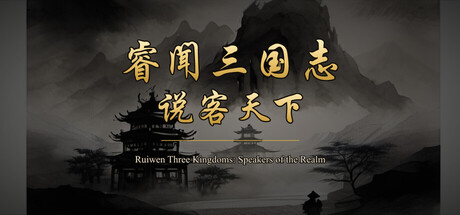
NPC dialogue in Ruiwen’s Romance of the Three Kingdoms: The Life of a Persuader is generated in real‑time by a locally‑running AI model. All content is computed offline on your own device, with no data uploaded to external servers.
The game’s story framework, directed plotlines, numerical judgement rules and ending conditions are all hand‑crafted. The AI is only responsible for generating character conversations.
Multiple safety guardrails are built‑in: automatic profanity detection, historical timeline checks to avoid anachronisms, character‑stance locking and fallback responses. These ensure every line of dialogue fits the character’s identity and historical context.