
Disclosure
Generative AI was used to assist in the creation of some scripts and visual assets. All generated content was reviewed and integrated by the developer.
- Creator
- KRUSTY GAMES
- Reviews
- -
- Added
- Sep 3, 2026
Public Steam disclosure research 25,383 disclosures tracked
Search developers’ Steam disclosures, compare classified AI use across games, and follow recorded changes. This index adds cross-game classifications and statistics to statements published on individual store pages.
Code help, debugging and other development work.
Capsule art, trailers and promotional material.
Pre-made art, audio, writing and other game assets.
Interactive or runtime AI features disclosed by the developer.
Groups reflect automatic analysis of public disclosures; mature records are excluded. These counts do not measure AI use across all of Steam. Missing or unclear statements cannot establish whether a game uses AI.
Generative AI was used to assist in the creation of some scripts and visual assets. All generated content was reviewed and integrated by the developer.
This game was developed with the assistance of AI for textures, translations, and scripting.
Crie au loup is made with AI, from the first prototype to the illustrations. That is not a manufacturing detail: it is as much the project as the game itself. My role is not a craftsman's: I painted no card, and I did not write the code line by line. I designed the system, I direct it, I arbitrate and I verify. Deciding what makes it into the game, what gets redone, what gets cut: that is production work, and it is mine. What is generated: the creature and location artwork, the interface, a large share of the code and the writing. What is measured rather than assumed: card balance, computed over thousands of simulated matches before every update. What is verified: the historical sources behind every legend, published one by one on the official site, where you can open them and prove me wrong. What is never generated is your match. No image, no text and no game decision comes out of a model while you play: the engine is deterministic, and the solo opponent is a classic program applying the rules. Crie au loup is one of the projects I run around generative AI, and the only one you can play. The making-of is documented without varnish in the devlog on the official site.
The game's art assets were created with the assistance of AI tools, including ChatGPT and Tencent Hunyuan. The game's music and sound effects were generated using Suno. Localized text for languages other than Chinese was translated with the assistance of ChatGPT. AI-assisted programming tools, including ChatGPT, were also used during the game's development.
I used AI for localization and during performance testing for handheld support, coding agents were used to help identify ways to optimize the game
AI tools have been used in game programming and localization. All audiovisual assets by human artists.
We use about 15 seconds of AI footage in our trailer. All assets in the game are human authored. We also use a local, small and offline LLM (meaning: no data ever leaves your computer, and it does not cause significant performance drops) as a Director that controls: enemy spawn and frequency of challenges, essentially choosing when to press with difficulty and when to hold the challenge based on parameters such as player frustration, boredom and an emergence metric. This mechanic does not generate any text, narrative or story: it is just a mechanic that controls game balance to ensure the best challenge. And you can turn it off on the settings menu, if you want.
The language localization and the code for the ink splats was fully generated using AI tools. The UI layouts and game code were built with the assistance of generative AI with a mix of fully AI generated code, developer-edited code, and developer-added code. Generative AI was also used to help assist with writing the text of the Steam store page description.
"This game's code, including the level and cosmetics editors, are all AI-generated. The maps and music are not AI-generated. Some cosmetics may be AI-generated, but most are not."
本アプリのソースコードの大部分は、人間の指示とレビューのもとでAIコーディング支援ツール(LLM)を用いて作成されています。ストアページの文章作成にもAI支援を利用しています。 / Most of this application's source code was written using AI coding tools (LLMs) under human direction and review. AI assistance was also used in preparing store page text. ロゴおよびストア用画像の一部は画像生成AIで作成しています。 / Some artwork, including the logo and store images, was created with generative AI.
Generative AI tools were used during development to assist with prototyping and writing portions of the game's code and Blueprint logic. AI-generated images were also used as source material for some Niagara visual effects. All AI-assisted content was reviewed, modified, and integrated by the development team.
Generative AI tools were used during development to assist with programming and to create some pre-generated visual assets, including icons, illustrations, and sprite artwork. All AI-assisted content was reviewed, edited, selected, and integrated by the developer. The game does not generate AI content during gameplay.
AI has been used for coding assistance as well as some of the steam store assets. No assets in-game used AI to be produced
Vibe-coding
AI was used to help program the game. All art, assets, and game design decisions did not use any AI.
Generative AI tools were used during development to assist with creating some music and UI graphic assets, as well as to provide coding suggestions and troubleshooting support. All AI-assisted content was reviewed, edited where necessary, and integrated by the developer. The game does not generate AI content during gameplay.
Generative AI tools were used during development to assist with creating select pre-generated 3D base models, 2D promotional/marketing art, and drafting portions of the source code All animations (sourced and configured via Mixamo), level design, environmental layouts, physics tuning, core game logic, and overall gameplay systems were manually designed, built, and integrated by the development team The game does not generate any live AI content at runtime All AI-assisted assets and code have been manually reviewed, curated, and tested to ensure stability, quality, and full compliance with copyright and intellectual property standards
Generative AI tools were used during development to assist with refining some text, code, and images. Some in-game textures were also generated using AI. All AI-assisted content was reviewed, edited, and integrated by the developer. The game does not generate AI content during gameplay.
Generative AI tools were used during development to create and refine the game’s visual artwork, music, and programming code. All generated material was reviewed, curated, edited, and integrated by the developer. The game does not generate AI content during gameplay, and no player input or data is sent to generative AI services.
I’m an indie game developer and have tried making games for years. Generative AI has been used as part of my development process, including helping with code, visual and sound assets. It is not a simple one-shot process, but effort has been put in over multiple generations to control and curate the art style.
AI tools are used to assist in development, including code, writing, art, and sound effects
Generative artificial intelligence (AI) was used to create some audio and visual assets, portions of the game code, Steam store page copy, and localized content. No AI-generated content is created in real time during gameplay.
AI used for coding assistance
The background artwork in Hand Stretched — the shopfront, the kitchen and bar scenery, and the shop sign — was generated using Adobe Firefly, then edited and assembled by hand. Everything you actually interact with is drawn by the game itself: the pizzas, the dough, the drinks and the icons are rendered in code as you play, not painted images. The music is not AI-generated. It is four tracks licensed from human artists on Pixabay, credited by name in the game's settings. The game's code was written with AI assistance. Nothing is generated while you play, and the game connects to no AI service.
The game's art, code and marketing assets (store images and in-game graphics) were created during development with the assistance of generative AI tools. All AI-assisted content is pre-rendered and was reviewed by the developer before shipping. The game does not generate any content with AI at runtime.
Used AI for code generation. Audio was source by humans, developer used their own voice for the radio, and art sourced by humans.
Pocket Adventurer is a solo-developed game that uses AI tools as part of its production pipeline. Character and monster artwork is originally hand-drawn, then processed with AI animation tools and converted into animated sprite sheets for use in the game. Code was written with AI coding assistance under direct human design, testing, and review. All content is pre-rendered; the game contains no live AI generation. Some AI generation for promotional imagery
This game uses generative AI tools in parts of its development process. Code: Some of the game's code was written with AI assistance. All generated code has been reviewed, tested, and integrated by the developer. Audio: Some sound effects and voice lines may be generated or processed using AI tools. Visual assets: The game primarily uses licensed asset packs and hand-authored materials. Where AI tools were used, it was for texture variation and iteration on existing licensed assets. No AI-generated content is created live during gameplay. All content is fixed and reviewed before release.
This app uses AI tools during the development process, for example to configure some behavior algorithms. All dog sprite art consists of hand-drawn works by human artists, purchased under a commercial license. No generative AI is used during gameplay.
As a solo-developed game, Generative AI is utilized to generate: Artwork Voiceovers And may be utilized in: De-bugging
AI used for programmation
Parts of Fluxgates were built with AI assistance, and all of it is fixed content baked into the build - nothing is generated while you play. Code: Some of the game's source was written with an AI coding assistant, reviewed, edited and tested by the developer before shipping. Text: English and French interface strings and node descriptions were drafted with AI help and edited by hand. No AI generated art or audio. Every visual is drawn by the interface itself, and every sound and music track is synthesised procedurally by a script in the project. The game runs fully offline. No AI model runs at runtime, and no data leaves your machine.
AI generation was temporarily used for placeholder assets, sound effects, and code during early development. all of these will be replaced with custom work before the official launch. AI is not used at runtime.
Note: Developed entirely solo, this project utilizes modern auxiliary tools for code optimization and localization. If you encounter any bugs, please feel free to reach out to help improve the game experience!
Generative AI tools were used during the development of Morgenrot to assist with programming, brainstorming, text creation, translation, and the creation of some visual assets. The game does not use generative AI to dynamically generate content during gameplay.
Some visual assets and portions of the game’s code were created with the assistance of generative AI. All AI-assisted content was reviewed and edited by the developer before being included in the game. The game does not generate AI content during gameplay.
Parts of this game were made with AI assistance. AI-assisted coding was used during development, and some artwork was AI-generated and then edited by hand. The design, the systems and the writing are my own.
Generative AI was used to assist in creating some UI graphics, equipment graphic assets, and music, as well as to assist with programming. All generated content was reviewed and edited as needed by the developer. No live-generated AI content is used while the game is running.
AI tools were used during development to assist with coding, 3D modeling, and sound effect creation. All AI-generated content was reviewed and edited by the developer.
Coppersmog is a game created independently by me, a father, a husband and a video game hobbyist. I'm proud to say that I designed the game, directed it, and decided what made it fun to play. I also built it with the help of generative AI. I wanted to tell you this fact plainly so that my honesty could help bridge your concerns and inform your choice to play this game. Here is what the AI contribution actually means in this game and with me specifically. Every decision in this game is mine. The world, the rules, how a room feels, what a blorb is, and what's allowed to happen to one, I set it all. To be honest, I throw away most of what AI generates because it just doesn't "get it" most of the time. AI has no taste. It cannot tell when something is right, funny, or profound. It can make an enormous number of things, but it cannot decide which of them belongs in Coppersmog. That judgement is the heart of the job. That judgement is my most important aspect of what I do. AI gives me is attempts, drafts and options. It writes code segments, runs thousands of fight simulations, and fixes my grammar and then I cut, change, reject, and try again. AI is wrong constantly. Sometimes it builds a second version of something the game already has. Sometimes it forgets a decision we made weeks ago. Sometimes it writes code that looks perfect and never runs. There's a lot of invisible work to keep those pieces pointed in the same direction. Orchestrating it all falls to me. I know that AI integration is not acceptable to everyone and so I wanted to be honest about how I'm using it to give you a chance to make an informed decision. If you read all of this and decide that Coppersmog is not for you, that's a completely fair choice. I want you to make choices that are best for you, using the facts in front of you. One thing that brings me comfort as I wrestle with where I want AI to be in my life is that this is a hobby project that made me smile quite a bit. I'm proud of my little world. Thank you.
Daily code audits using AI, mainly focussed on optimization. Some hud art is generated as concept art, then altered or remade to specifically fit the game theme. We plan to replace all before release. Actual building blocks and pixelart is partly bought from isometric art sellers and most of them recrafted by hand. No AI content is generated during gameplay.
We used AI-assisted tools during development to help create and iterate on internal game code, UI sprites, and some 3D model assets. All AI-assisted outputs were reviewed, edited, and approved by the development team before being included in the game. The game does not allow players to generate AI content during gameplay.
We use AI tools during development to help write and debug code, and to help produce some art assets. Everything AI-assisted is made during development and reviewed by us before it ships. We also use third-party assets bought from the Unity Asset Store. These are sold to us as human-made, and we have no reason to doubt that, but we cannot independently verify how each one was produced. Character animation uses Mixamo.
AI was used for some store Art, random game Events, as well as assistance when coding. All artwork in game was created by artist, and all AI artwork in the store we plan to replace. Some to Half of the AI Random events will stay. We will continue to use AI to speed up development, but are also striving for the best quality on release.
No Generative AI art was used in-game or in any of the promotional material. However, ai-assisted tools were used in development for coding assistance and image editing tasks such as upscaling and cleanup of screenshots to be used in capsule arts.
Generative AI tools were used during development to assist with writing portions of the game's code and to generate some of the visual assets used in the game.
We used AI to generate some game scene images, icons, and code.
CrashFest is a one-person game, built in Unity between coffee and complaints from playtesters. It started as a physics experiment about shoving a low-poly car off a ledge and got out of hand once six controllers were plugged in. I’m a software engineer, not an artist. So a good chunk of CrashFest was made together with Claude AI — art direction, shaders, menus, the visual bits I’d never have drawn on my own — and the soundtrack comes out of Suno. The code, the physics and every questionable design decision are mine.
Generative AI tools were used during development of this game. 2D art, including character illustrations and in-game documents and photographs, was created with image generation tools, then edited and composed by hand. Some 3D props and environment models were created with a model generation service, then adjusted for the game. Background music was created with a music generation service. Sound effects are not generated; they are openly licensed recordings that we processed ourselves. AI coding tools assisted with writing and reviewing code. All final decisions and edits are made by the developer. Every generated asset was selected and reworked by a person before it went into the game.
Generative AI was used during development to assist with the creation of some visual assets and programming code.
| Title⇅ | Disclosure | Creator⇅ | Src | Reviews⇅ | Added↓ |
|---|---|---|---|---|---|
 Blocky Miner In-game content artcode | Generative AI was used to assist in the creation of some scripts and visual assets. All generated content was reviewed and integrated by the developer. | KRUSTY GAMES | - | Sep 3, 2026 | |
 Unfold Flower In-game content arttextcode | This game was developed with the assistance of AI for textures, translations, and scripting. | flycat.games | - | Sep 3, 2026 | |
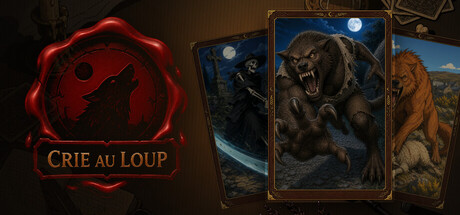 Crie au loup In-game content arttextcode | Crie au loup is made with AI, from the first prototype to the illustrations. That is not a manufacturing detail: it is as much the project as the game itself.
My role is not a craftsman's: I painted no card, and I did not write the code line by line. I designed the system, I direct it, I arbitrate and I verify. Deciding what makes it into the game, what gets redone, what gets cut: that is production work, and it is mine.
What is generated: the creature and location artwork, the interface, a large share of the code and the writing. What is measured rather than assumed: card balance, computed over thousands of simulated matches before every update. What is verified: the historical sources behind every legend, published one by one on the official site, where you can open them and prove me wrong.
What is never generated is your match. No image, no text and no game decision comes out of a model while you play: the engine is deterministic, and the solo opponent is a classic program applying the rules.
Crie au loup is one of the projects I run around generative AI, and the only one you can play. The making-of is documented without varnish in the devlog on the official site. | NXUS | - | Sep 3, 2026 | |
 CCR - Cosmic Card Realm In-game content artaudiotextcode | The game's art assets were created with the assistance of AI tools, including ChatGPT and Tencent Hunyuan. The game's music and sound effects were generated using Suno. Localized text for languages other than Chinese was translated with the assistance of ChatGPT. AI-assisted programming tools, including ChatGPT, were also used during the game's development. | Nan | - | Sep 3, 2026 | |
 Blotch In-game content textcode | I used AI for localization and during performance testing for handheld support, coding agents were used to help identify ways to optimize the game | Nathan Glover | - | Sep 3, 2026 | |
 Type the World In-game content codetext | AI tools have been used in game programming and localization. All audiovisual assets by human artists. | Groundpoint Games | - | Sep 3, 2026 | |
 Seven Blasphemies code | We use about 15 seconds of AI footage in our trailer. All assets in the game are human authored.
We also use a local, small and offline LLM (meaning: no data ever leaves your computer, and it does not cause significant performance drops) as a Director that controls: enemy spawn and frequency of challenges, essentially choosing when to press with difficulty and when to hold the challenge based on parameters such as player frustration, boredom and an emergence metric.
This mechanic does not generate any text, narrative or story: it is just a mechanic that controls game balance to ensure the best challenge. And you can turn it off on the settings menu, if you want. | Crit42 Studio | - | Sep 3, 2026 | |
 Ink or Not In-game content textcode | The language localization and the code for the ink splats was fully generated using AI tools. The UI layouts and game code were built with the assistance of generative AI with a mix of fully AI generated code, developer-edited code, and developer-added code. Generative AI was also used to help assist with writing the text of the Steam store page description. | Screaming Melon | - | Sep 3, 2026 | |
 Fister In-game content codeart | "This game's code, including the level and cosmetics editors, are all AI-generated.
The maps and music are not AI-generated.
Some cosmetics may be AI-generated, but most are not." | Bootloop Studio | - | Sep 2, 2026 | |
 DesktopForge Store/marketing codetextart | 本アプリのソースコードの大部分は、人間の指示とレビューのもとでAIコーディング支援ツール(LLM)を用いて作成されています。ストアページの文章作成にもAI支援を利用しています。 / Most of this application's source code was written using AI coding tools (LLMs) under human direction and review. AI assistance was also used in preparing store page text. ロゴおよびストア用画像の一部は画像生成AIで作成しています。 / Some artwork, including the logo and store images, was created with generative AI. | ふぁみたん | - | Sep 2, 2026 | |
 Project N In-game content artcode | Generative AI tools were used during development to assist with prototyping and writing portions of the game's code and Blueprint logic. AI-generated images were also used as source material for some Niagara visual effects. All AI-assisted content was reviewed, modified, and integrated by the development team. | Meeiron Studio | - | Sep 2, 2026 | |
 Horta Maluca In-game content artcode | Generative AI tools were used during development to assist with programming and to create some pre-generated visual assets, including icons, illustrations, and sprite artwork. All AI-assisted content was reviewed, edited, selected, and integrated by the developer. The game does not generate AI content during gameplay. | BKP STUDIO | - | Sep 1, 2026 | |
 Flurst Store/marketing artcode | AI has been used for coding assistance as well as some of the steam store assets.
No assets in-game used AI to be produced | Zynq | - | Sep 1, 2026 | |
 SplitOut Unclear code | Vibe-coding | 1337Interactive | - | Sep 1, 2026 | |
 John Whisk Dev only code | AI was used to help program the game. All art, assets, and game design decisions did not use any AI. | Magirush | - | Sep 1, 2026 | |
 That Cloud Looks Like In-game content audioartcode | Generative AI tools were used during development to assist with creating some music and UI graphic assets, as well as to provide coding suggestions and troubleshooting support. All AI-assisted content was reviewed, edited where necessary, and integrated by the developer. The game does not generate AI content during gameplay. | GamJangJangi | - | Sep 1, 2026 | |
 Debuilders Store/marketing artcode | Generative AI tools were used during development to assist with creating select pre-generated 3D base models, 2D promotional/marketing art, and drafting portions of the source code
All animations (sourced and configured via Mixamo), level design, environmental layouts, physics tuning, core game logic, and overall gameplay systems were manually designed, built, and integrated by the development team
The game does not generate any live AI content at runtime
All AI-assisted assets and code have been manually reviewed, curated, and tested to ensure stability, quality, and full compliance with copyright and intellectual property standards | Foyzoed Studio | - | Sep 1, 2026 | |
 Roverbound In-game content textartcode | Generative AI tools were used during development to assist with refining some text, code, and images. Some in-game textures were also generated using AI. All AI-assisted content was reviewed, edited, and integrated by the developer. The game does not generate AI content during gameplay. | Rogueatic Games | - | Sep 1, 2026 | |
 Artia and the Tower of Trolls In-game content artaudiocode | Generative AI tools were used during development to create and refine the game’s visual artwork, music, and programming code. All generated material was reviewed, curated, edited, and integrated by the developer. The game does not generate AI content during gameplay, and no player input or data is sent to generative AI services. | Alon Boroda | - | Sep 1, 2026 | |
 The Frog Prince: Unfrogged Dev only artaudiocode | I’m an indie game developer and have tried making games for years. Generative AI has been used as part of my development process, including helping with code, visual and sound assets. It is not a simple one-shot process, but effort has been put in over multiple generations to control and curate the art style. | Spacial Vision Pte. Ltd. | - | Sep 1, 2026 | |
 Sidebar Sea: Idle Fishing for Your Taskbar In-game content artaudiotextcode | AI tools are used to assist in development, including code, writing, art, and sound effects | Idleforge Games | - | Sep 1, 2026 | |
 Boss Toss In-game content artaudiotextcode | Generative artificial intelligence (AI) was used to create some audio and visual assets, portions of the game code, Steam store page copy, and localized content. No AI-generated content is created in real time during gameplay. | Storm of madness | - | Sep 1, 2026 | |
 Adventurers-wanted Dev only code | AI used for coding assistance | Happy Distractions Studio | - | Sep 1, 2026 | |
 Hand Stretched In-game content artcode | The background artwork in Hand Stretched — the shopfront, the kitchen and bar scenery, and the shop sign — was generated using Adobe Firefly, then edited and assembled by hand.
Everything you actually interact with is drawn by the game itself: the pizzas, the dough, the drinks and the icons are rendered in code as you play, not painted images.
The music is not AI-generated. It is four tracks licensed from human artists on Pixabay, credited by name in the game's settings.
The game's code was written with AI assistance. Nothing is generated while you play, and the game connects to no AI service. | Scarratt Family Games | - | Sep 1, 2026 | |
 ESCAPE SHOW In-game content artcode | The game's art, code and marketing assets (store images and in-game graphics) were created during development with the assistance of generative AI tools. All AI-assisted content is pre-rendered and was reviewed by the developer before shipping. The game does not generate any content with AI at runtime. | Sheep Arcade | - | Sep 1, 2026 | |
 Bumper to Billions Dev only code | Used AI for code generation. Audio was source by humans, developer used their own voice for the radio, and art sourced by humans. | Happy Distractions Studio | - | Sep 1, 2026 | |
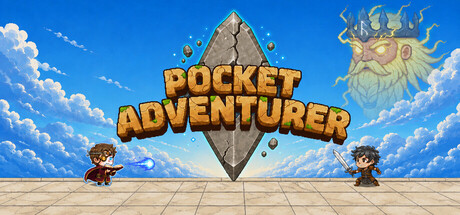 Pocket Adventurer In-game content artcode | Pocket Adventurer is a solo-developed game that uses AI tools as part of its production pipeline. Character and monster artwork is originally hand-drawn, then processed with AI animation tools and converted into animated sprite sheets for use in the game. Code was written with AI coding assistance under direct human design, testing, and review. All content is pre-rendered; the game contains no live AI generation.
Some AI generation for promotional imagery | lowpolysaint | - | Sep 1, 2026 | |
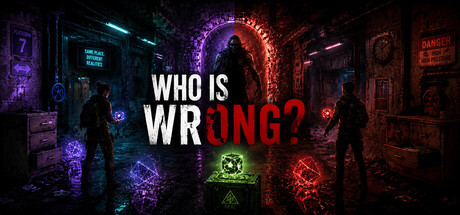 Who Is Wrong In-game content artaudiocode | This game uses generative AI tools in parts of its development process.
Code: Some of the game's code was written with AI assistance. All generated code has been reviewed, tested, and integrated by the developer.
Audio: Some sound effects and voice lines may be generated or processed using AI tools.
Visual assets: The game primarily uses licensed asset packs and hand-authored materials. Where AI tools were used, it was for texture variation and iteration on existing licensed assets.
No AI-generated content is created live during gameplay. All content is fixed and reviewed before release. | Enginar Games | - | Sep 1, 2026 | |
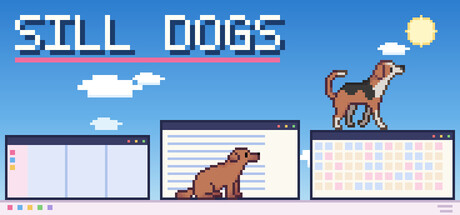 Sill Dogs Dev only code | This app uses AI tools during the development process, for example to configure some behavior algorithms. All dog sprite art consists of hand-drawn works by human artists, purchased under a commercial license. No generative AI is used during gameplay. | SQOOL | - | Sep 1, 2026 | |
 Rise To Valor audiocode | As a solo-developed game, Generative AI is utilized to generate:
Artwork
Voiceovers
And may be utilized in:
De-bugging | ZuperMoron | - | Sep 1, 2026 | |
 Out of Range Dev only code | AI used for programmation | Yoho Games | - | Sep 1, 2026 | |
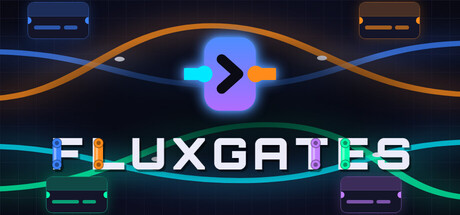 Fluxgates In-game content textcode | Parts of Fluxgates were built with AI assistance, and all of it is fixed content baked into the build - nothing is generated while you play.
Code: Some of the game's source was written with an AI coding assistant, reviewed, edited and tested by the developer before shipping.
Text: English and French interface strings and node descriptions were drafted with AI help and edited by hand.
No AI generated art or audio. Every visual is drawn by the interface itself, and every sound and music track is synthesised procedurally by a script in the project.
The game runs fully offline. No AI model runs at runtime, and no data leaves your machine. | Mouniou | - | Sep 1, 2026 | |
 UNSEAM In-game content artaudiocode | AI generation was temporarily used for placeholder assets, sound effects, and code during early development. all of these will be replaced with custom work before the official launch. AI is not used at runtime. | Salt&Vinegar | - | Sep 1, 2026 | |
 Heroes of Aetheria : Crystal Siege Dev only codetext | Note: Developed entirely solo, this project utilizes modern auxiliary tools for code optimization and localization. If you encounter any bugs, please feel free to reach out to help improve the game experience! | Aethel Studio | - | Sep 1, 2026 | |
 Morgenrot In-game content artcodetext | Generative AI tools were used during the development of Morgenrot to assist with programming, brainstorming, text creation, translation, and the creation of some visual assets. The game does not use generative AI to dynamically generate content during gameplay. | abeler.tech | - | Sep 1, 2026 | |
 PEEMAN In-game content artcode | Some visual assets and portions of the game’s code were created with the assistance of generative AI. All AI-assisted content was reviewed and edited by the developer before being included in the game. The game does not generate AI content during gameplay. | TheFoolHead | - | Sep 1, 2026 | |
 Whistle Stop In-game content artcode | Parts of this game were made with AI assistance. AI-assisted coding was used during development, and some artwork was AI-generated and then edited by hand. The design, the systems and the writing are my own. | Maarten De Block | - | Sep 1, 2026 | |
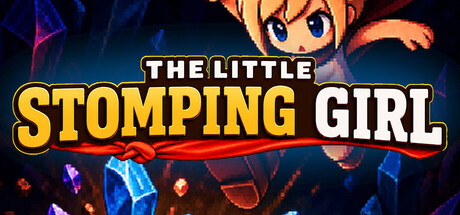 The Little Stomping Girl In-game content artaudiocode | Generative AI was used to assist in creating some UI graphics, equipment graphic assets, and music, as well as to assist with programming. All generated content was reviewed and edited as needed by the developer. No live-generated AI content is used while the game is running. | DreamaGames | - | Sep 1, 2026 | |
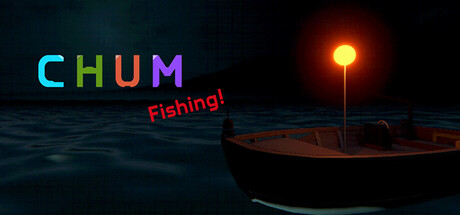 CHUM Fishing In-game content artaudiocode | AI tools were used during development to assist with coding, 3D modeling, and sound effect creation. All AI-generated content was reviewed and edited by the developer. | Village Games | - | Sep 1, 2026 | |
 Coppersmog Dev only codetext | Coppersmog is a game created independently by me, a father, a husband and a video game hobbyist.
I'm proud to say that I designed the game, directed it, and decided what made it fun to play.
I also built it with the help of generative AI.
I wanted to tell you this fact plainly so that my honesty could help bridge your concerns and inform your choice to play this game.
Here is what the AI contribution actually means in this game and with me specifically.
Every decision in this game is mine. The world, the rules, how a room feels, what a blorb is, and what's allowed to happen to one, I set it all.
To be honest, I throw away most of what AI generates because it just doesn't "get it" most of the time.
AI has no taste. It cannot tell when something is right, funny, or profound. It can make an enormous number of things, but it cannot decide which of them belongs in Coppersmog. That judgement is the heart of the job. That judgement is my most important aspect of what I do.
AI gives me is attempts, drafts and options.
It writes code segments, runs thousands of fight simulations, and fixes my grammar and then I cut, change, reject, and try again.
AI is wrong constantly.
Sometimes it builds a second version of something the game already has. Sometimes it forgets a decision we made weeks ago. Sometimes it writes code that looks perfect and never runs. There's a lot of invisible work to keep those pieces pointed in the same direction. Orchestrating it all falls to me.
I know that AI integration is not acceptable to everyone and so I wanted to be honest about how I'm using it to give you a chance to make an informed decision.
If you read all of this and decide that Coppersmog is not for you, that's a completely fair choice. I want you to make choices that are best for you, using the facts in front of you.
One thing that brings me comfort as I wrestle with where I want AI to be in my life is that this is a hobby project that made me smile quite a bit. I'm proud of my little world. Thank you. | Jamie McBurney | - | Sep 1, 2026 | |
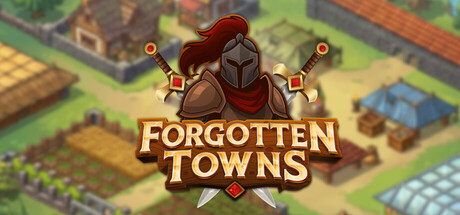 Forgotten Towns Dev only artcode | Daily code audits using AI, mainly focussed on optimization.
Some hud art is generated as concept art, then altered or remade to specifically fit the game theme. We plan to replace all before release.
Actual building blocks and pixelart is partly bought from isometric art sellers and most of them recrafted by hand.
No AI content is generated during gameplay. | Taffee Software | - | Sep 1, 2026 | |
 Project Car In-game content artcode | We used AI-assisted tools during development to help create and iterate on internal game code, UI sprites, and some 3D model assets. All AI-assisted outputs were reviewed, edited, and approved by the development team before being included in the game. The game does not allow players to generate AI content during gameplay. | Quadpixel Games | - | Sep 1, 2026 | |
 Hacker Inc. In-game content artcode | We use AI tools during development to help write and debug code, and to help produce some art assets. Everything AI-assisted is made during development and reviewed by us before it ships.
We also use third-party assets bought from the Unity Asset Store. These are sold to us as human-made, and we have no reason to doubt that, but we cannot independently verify how each one was produced. Character animation uses Mixamo. | Causality Gaming | - | Sep 1, 2026 | |
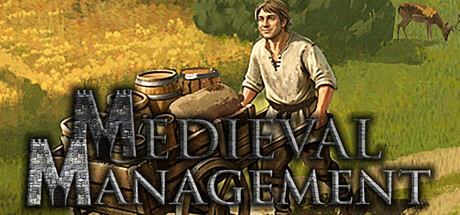 Medieval Management In-game content arttextcode | AI was used for some store Art, random game Events, as well as assistance when coding. All artwork in game was created by artist, and all AI artwork in the store we plan to replace. Some to Half of the AI Random events will stay. We will continue to use AI to speed up development, but are also striving for the best quality on release. | BeachHouse Dynamics | - | Sep 1, 2026 | |
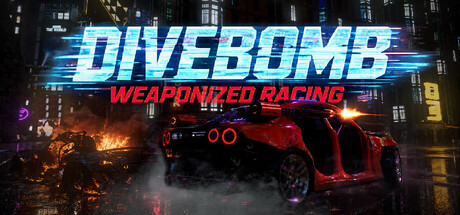 Divebomb: Weaponized Racing Dev only artcode | No Generative AI art was used in-game or in any of the promotional material. However, ai-assisted tools were used in development for coding assistance and image editing tasks such as upscaling and cleanup of screenshots to be used in capsule arts. | RPM Digital | - | Sep 1, 2026 | |
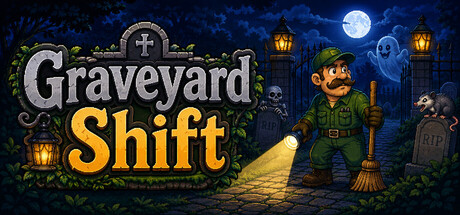 Graveyard Shift In-game content artcode | Generative AI tools were used during development to assist with writing portions of the game's code and to generate some of the visual assets used in the game. | Goat Chef Studios | - | Aug 31, 2026 | |
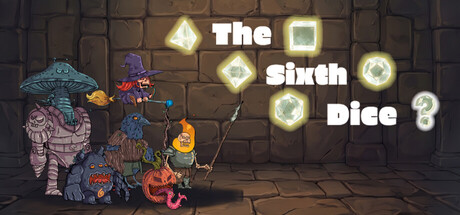 第六枚骰子 In-game content artcode | We used AI to generate some game scene images, icons, and code. | crouchingcatstudio | - | Aug 31, 2026 | |
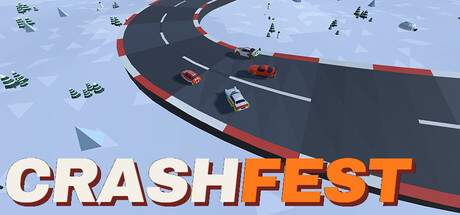 CrashFest In-game content artaudiocode | CrashFest is a one-person game, built in Unity between coffee and complaints from playtesters. It started as a physics experiment about shoving a low-poly car off a ledge and got out of hand once six controllers were plugged in.
I’m a software engineer, not an artist. So a good chunk of CrashFest was made together with Claude AI — art direction, shaders, menus, the visual bits I’d never have drawn on my own — and the soundtrack comes out of Suno. The code, the physics and every questionable design decision are mine. | Menno van Hout | - | Aug 31, 2026 | |
 Civil Twilight In-game content artaudiocode | Generative AI tools were used during development of this game.
2D art, including character illustrations and in-game documents and photographs, was created with image generation tools, then edited and composed by hand.
Some 3D props and environment models were created with a model generation service, then adjusted for the game.
Background music was created with a music generation service. Sound effects are not generated; they are openly licensed recordings that we processed ourselves.
AI coding tools assisted with writing and reviewing code. All final decisions and edits are made by the developer.
Every generated asset was selected and reworked by a person before it went into the game. | faanaworks | - | Aug 31, 2026 | |
 GAMBLE LIFE Dev only artcode | Generative AI was used during development to assist with the creation of some visual assets and programming code. | Wingless | - | Aug 31, 2026 |


