
Disclosure
The Settings and Guide Texts are partially generated by generative AI.
- Creator
- Daishi11
- Reviews
- -
- Added
- Sep 9, 2026
Public Steam disclosure research 25,508 disclosures tracked
Search developers’ Steam disclosures, compare classified AI use across games, and follow recorded changes. This index adds cross-game classifications and statistics to statements published on individual store pages.
Code help, debugging and other development work.
Capsule art, trailers and promotional material.
Pre-made art, audio, writing and other game assets.
Interactive or runtime AI features disclosed by the developer.
Groups reflect automatic analysis of public disclosures; mature records are excluded. These counts do not measure AI use across all of Steam. Missing or unclear statements cannot establish whether a game uses AI.
The Settings and Guide Texts are partially generated by generative AI.
Generative AI tools were used to assist in creating some promotional artwork for the Steam store and library, and in drafting and translating portions of the store description. All outputs were reviewed and edited by the developer. The application does not generate AI content at runtime.
Some graphics, illustrations, and text used in the game were pre-generated with the help of generative AI during development and were subsequently reviewed, selected, and edited by the developer. No content is generated by AI during gameplay.
Generative AI tools were used to assist in the creation of some pre-generated visual assets, character elements, voice-over, music, localization and promotional text. Some of these assets were further edited and refined by the developer before being included in the final game.
Generative AI tools were used during development: to assist with writing the game code, to draft in-game and store text, and to produce store graphics (capsules, icons). The simulation itself runs on deterministic algorithms; no content is generated by AI at runtime.
Generative AI-assisted tools were used during production to create and refine pre-generated visual artwork, synthesized voice-over, and elements of the narrative and English localization. All materials were reviewed and edited by the development team before inclusion. The game does not generate content during gameplay and does not connect to third-party AI services.
Some pre-rendered art assets (enemy and background artwork) and localization were created with generative AI tools under human direction, then manually cleaned up and integrated by the developers. Development used AI-assisted coding tools. No content is AI-generated at runtime.
Generative AI tools were used during development to assist in the creation of some systems, 3D models, textures, and localized translations included in the game.
Used AI to over optimize the performance of the game as it is very painful to have thousands of enemies on your screen at the same time and 100 projectiles per seconds without turning your pc into an oven. Also used AI for localization. (Added different languages besides English)
We are a small studio with only six people actively involved in development. For teams like ours, generative AI is a supportive tool that helps us realize a creative vision that would otherwise be completely out of reach within our budget. It allows us to focus on what we love doing most: creating games. We view AI strictly as a practical toolset. Here is how we utilized generative AI in our game: • Visual Assets: We use generative AI for both concept art and in-game graphics. The vast majority of these AI-generated images are manually modified, iterated upon, and finalized by our artist. We have not replaced any jobs; our games simply feature richer visual assets. • Audio & Voice-over: Voice-over (VO) lines and several music tracks were generated using AI. • Proofreading: We utilize AI to proofread our texts and scripts.
AI assistance was used in the development of this game. Players are strongly advised to play using mainstream free "flash" AI APIs such as Agnes API or Qwen API — simply fill in your API information in the game settings. For the sake of speed, enabling thinking mode is not recommended. This game contains optional generative AI features. In “AI-Enhanced Narrative Mode”, the game calls the third-party LLM API you provide yourself, generating more immersive event text in real time as you play. This mode is entirely optional: even without connecting any API, you can still fully experience all of the built-in, human-written historical content and the core gameplay. The game will not use your gameplay data to train any models. All AI-generated content is controlled by your own API key and quota, and you are responsible for your own usage.
Artificial intelligence tools are used only for concept art/design references and text translations. No AI-generated content is used directly in the final in-game assets.
This game uses generative AI tools only to assist with text translations.
Parts of this product were produced with the help of generative AI. The HTML, CSS, JavaScript and shader code of the bundled wallpapers, the store page text and its translations were drafted with AI assistance and reviewed by a person before release. The application itself does not use generative AI at runtime. It generates no content while you use it, and nothing you do in Wallpaper — hardware readings, settings, your own photos and videos — is sent to any AI model or to any server. Everything stays on your PC.
This game uses generative artificial intelligence to assist with story planning, writing, and editing, as well as to create character artwork, backgrounds, event illustrations, music, and selected sound effects. All generated content was reviewed, selected, revised, and edited by the developer before being incorporated into the game. All AI-generated content was created in advance during development. The game does not generate new content while you play, and no player input or personal information is sent to any generative AI service.
AI tools were used to assist with localizing the interface text into the game's 11 supported languages. All artwork, music, sound and game design are human-made.
Generative AI tools were used for pre-rendered character portraits, title/key artwork and other game illustrations, portions of promotional video and audio, marketing artwork, and assistance with localized text. These assets and text were reviewed and edited for the game. Orderfall does not generate AI content during gameplay or connect to an external AI service. The live-action-style Captain Cook teaser is dramatized promotional footage; the game itself uses pixel-art graphics.
Stillayer uses AI-assisted tools during development for some pre-generated content: the ambient sound bed (the background audio pad) was created with AI audio generation and then hand-edited by the developer; the interface text and store descriptions were written and localized into multiple languages with AI assistance and reviewed by the developer. All visuals — the desktop scenes, light pools and animations — are hand-coded procedural graphics with no AI-generated artwork. Stillayer does not generate any content at runtime, contains no live AI features, and works fully offline.
The soundtrack is AI generated with human modifications. Art, text, localizations, and store assets were made with AI assistance and human modifications. Nothing is generated at runtime, and the game never connects to an AI service.
AI-Assisted Language Translation
Generative AI tools were used during development to assist with brainstorming and editing some mission and other written content. All generated suggestions were reviewed and edited by me before inclusion in the game.
Some visual, localization, store page, and marketing materials may be created with the assistance of generative AI tools. All AI-assisted content is reviewed, edited, and polished by our team before use. No AI content is generated during gameplay.
Generative AI tools were used during development to assist with portions of the game’s interface and narrative text, programming, procedurally constructed 2D visual elements, and marketing materials. All included content was reviewed, edited, and integrated by the developer. Tide & Crown does not generate AI content during gameplay and does not connect to external AI services.
Generative AI was used solely to assist with translation, localization, and language editing of written text. This includes localization of Steam store-page descriptions and translation or language correction of in-game text, primarily from Portuguese into English. No AI-generated artwork, audio, gameplay content, or live-generated AI content is included in the game.
Pre-generated: Some 2D illustrations and the pre-recorded narration were produced with AI tools and reviewed by the developers before inclusion. Live-generated: An on-device language model (no internet connection) writes in-game text such as narration, dialogue, and the names and lore of items, relics and skills, and selects among game-defined options for certain run content. Damage, stats, difficulty and progression are governed by the game's own rules. Generated text is checked before it is shown, and no art or audio is generated at runtime.
The bartender's side of every conversation is generated live, while you play, by a language model that ships inside the game and runs on your own computer. Nothing you type or say is sent anywhere. There is no account, no server, and no internet connection required — the game works with the network unplugged. When the character speaks her lines aloud, that audio is synthesised locally by the same install. Everything else in the game is authored by hand: the world and its writing, the cast of regulars, the drink recipes, the art, and the rules the bartender plays by. Because her dialogue is generated rather than scripted, it cannot be listed in advance. The controls on it are: a fixed authored prompt that defines the character, the setting, and what she will and will not do; a filtered generation pipeline; and a specific model chosen and regression-tested against an automated suite of behavioural checks before it ships. Anything the character has remembered about you can be viewed and permanently deleted from inside the game at any time.
We use AI to aid the team with coding and refactoring more quickly, texturing assets and background faster, and creating highly detailed cinematics. We have both original and AI generated music & sound effects. We DO NOT use AI for our story, narratives, dialog, 3D models, or character animations.
Generative AI is utilized as support in the game's development, employed for concept creation, texture upscaling, and the design of icons and visual elements.
The code, the in-game text and its translations into six languages were written with the help of an AI assistant, then reviewed and edited by the developer. No images or audio were AI-generated: all artwork is built from licensed photography, a licensed typeface and licensed icons, and all sound comes from a licensed royalty-free library. Full credits are in the game. Nothing is generated while you play — the game makes no network requests at all.
Some of the art, music, voice-over and cinematic clips in Synapse Grid were produced with generative AI tools during development, then edited, curated and directed for release. Nothing is generated while you play. The tools used, and what each produced: Google Gemini - concept art and texture reference ACE-Step - original music tracks MiniMax-Music3 - original music tiles IndexTTS - cast voice-over MiniMax H3 (via ComfyUI) - tutorial and transmission video clips All of this content was generated for this project. No third party's personal media, voice or likeness is used. The same list is shown in the game's own credits screen. Separately, the opponent riders use a neural network trained by self-play. That system decides how a bike steers; it does not generate any art, audio or text that you see or hear.
Quiet Sky uses generative AI during gameplay to simulate evolving societies and create narrative observation reports, summaries, Companion responses, and optional report illustrations based on the current simulation and the player’s decisions. The Steam desktop edition runs the included generative models locally on the player’s computer. Generated results vary between campaigns.
Generative AI tools were used during development to assist with drafts and revisions of some pre-generated in-game text, interface copy, localization, and store and library artwork. All resulting content is selected, edited, and reviewed by the developer before shipping. The game does not generate content with AI at runtime.
This game was developed with AI coding agents (Anthropic Claude / OpenAI Codex). All in-game pixel art (ingredients, relics, character faces, UI) is rendered by drawing code and pixel-placement scripts written by these agents; no diffusion/image-generation model output is included. Music and SFX are procedurally generated at runtime from AI-assisted code. In-game text, store page copy, and translations into 10 languages were produced with AI assistance and reviewed by the developer. Trailer scripts and captions were also AI-assisted. All content has been reviewed by the developer.
Generative AI tools assisted with portions of the game’s code and written material, and with the creation of pre-generated promotional key art and derivative marketing graphics. All final content was selected, edited, tested, and reviewed by the developer. Gameplay screenshots and trailers show the actual game.
Generative AI was used only as a supporting tool for the design of some fictional can bottle brands
This game uses generative AI in a limited capacity on the game server in real time. The AI is used solely to generate narrative text: mission names and descriptions, in-world news broadcasts, and some NPC dialogue. All game logic — including mission mechanics, rewards, and balance — is governed by deterministic code and is never decided by AI. If the AI service is unavailable, the game automatically falls back to pre-written text templates. Portions of imagery were produced with the assistance of generative AI.
Metlivi Adventure uses generative AI to create certain in-game content, including narrative text, visual elements, and, where applicable, music. AI-generated content is used to support dynamic, player-driven adventures.
Some of the textures and images in this game were created with the help of generative AI tools, and AI tools also assisted with the game's localization and store page text. All of this content was reviewed and edited by the developer before release.
This game uses generative AI tools to assist in creating early drafts of some artwork and text during development. All AI-generated content is pre-rendered and has been reviewed, edited, and polished by hand before being included in the game. No content is generated live at runtime.
Lumi uses generative AI to create dynamic conversations and spoken responses in real time. AI inference, speech recognition and speech synthesis run locally on the player's PC. AI model files are downloaded during setup, but player conversations and generated responses are not sent to an external AI service. Available capabilities may vary depending on the locally selected model.
This game uses generative AI tools in parts of its artwork and dialogue/narrative writing, as well as for in-game text localization (translation).
This game includes AI-assisted, human-curated and edited artwork (tile art, actor sprites, and other visual assets). All AI-generated art was reviewed, edited, and approved by the developer before being included. An LLM was used to co-author most code changes. An LLM was used to proof and ideate some of the dialog in the game. All dialog was curated and approved by a human.
This game was created by a real human, using the Codex development environment. Contains lots of generated artwork and descriptive text, as well as gameplay refinements gained through AI powered balance testing.
Localization and some art work assisted by AI tools
This game uses generative AI tools to create some of its content, including logo and icon images, 3D models, and in-game text such as UI captions and descriptions. All AI-generated content is reviewed and adjusted by the developer.
Generative AI tools were used to assist with the creation of music, sound effects, and localized text.
As a small indie team, some of our initial localizations will use AI-assisted translation, and we hope to have them professionally reviewed and polished as our budget grows.
The game's localizations were made using AI.
Generative AI was used to assist with drafting and translating written text for the Steam store page and some in-game text. All AI-assisted text is reviewed and edited by the developer before use. No generative AI is used during gameplay, and the game contains no live-generated AI content.
The game uses AI tools to assist in generating background graphics and supporting the artistic process. AI is also used to aid in translation and localization, making the game available in multiple regions and languages.
| Title⇅ | Disclosure | Creator⇅ | Src | Reviews⇅ | Added↓ |
|---|---|---|---|---|---|
 Cyan Moon - The Simulation Program In-game content text | The Settings and Guide Texts are partially generated by generative AI. | Daishi11 | - | Sep 9, 2026 | |
 VOrbit ASMR Store/marketing arttext | Generative AI tools were used to assist in creating some promotional artwork for the Steam store and library, and in drafting and translating portions of the store description. All outputs were reviewed and edited by the developer. The application does not generate AI content at runtime. | feath | - | Sep 9, 2026 | |
 Realm & Renown In-game content arttext | Some graphics, illustrations, and text used in the game were pre-generated with the help of generative AI during development and were subsequently reviewed, selected, and edited by the developer. No content is generated by AI during gameplay. | Apokus | - | Sep 9, 2026 | |
 One Bard Move In-game content artaudiotext | Generative AI tools were used to assist in the creation of some pre-generated visual assets, character elements, voice-over, music, localization and promotional text. Some of these assets were further edited and refined by the developer before being included in the final game. | Syserino | - | Sep 9, 2026 | |
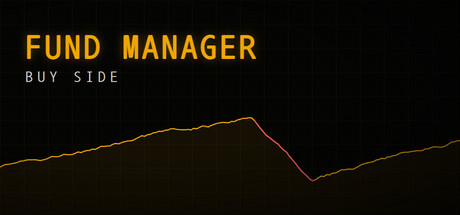 Fund Manager: Buy Side In-game content arttextcode | Generative AI tools were used during development: to assist with writing the game code, to draft in-game and store text, and to produce store graphics (capsules, icons). The simulation itself runs on deterministic algorithms; no content is generated by AI at runtime. | Dal Studio | - | Sep 9, 2026 | |
 Графиня из Москвы In-game content artaudiotext | Generative AI-assisted tools were used during production to create and refine pre-generated visual artwork, synthesized voice-over, and elements of the narrative and English localization. All materials were reviewed and edited by the development team before inclusion. The game does not generate content during gameplay and does not connect to third-party AI services. | RODRIK LTD | - | Sep 9, 2026 | |
 Last Haul In-game content arttext | Some pre-rendered art assets (enemy and background artwork) and localization were created with generative AI tools under human direction, then manually cleaned up and integrated by the developers. Development used AI-assisted coding tools. No content is AI-generated at runtime. | Eryk Włoszczyński | - | Sep 9, 2026 | |
 Death Momotaro In-game content arttext | Generative AI tools were used during development to assist in the creation of some systems, 3D models, textures, and localized translations included in the game. | Hirasaka | - | Sep 9, 2026 | |
 Nicotine & Knives In-game content text | Used AI to over optimize the performance of the game as it is very painful to have thousands of enemies on your screen at the same time and 100 projectiles per seconds without turning your pc into an oven.
Also used AI for localization. (Added different languages besides English) | Nicotine & Knives | - | Sep 9, 2026 | |
 Lane Rider: Highway Runner In-game content artaudiotext | We are a small studio with only six people actively involved in development. For teams like ours, generative AI is a supportive tool that helps us realize a creative vision that would otherwise be completely out of reach within our budget. It allows us to focus on what we love doing most: creating games. We view AI strictly as a practical toolset.
Here is how we utilized generative AI in our game:
• Visual Assets: We use generative AI for both concept art and in-game graphics. The vast majority of these AI-generated images are manually modified, iterated upon, and finalized by our artist. We have not replaced any jobs; our games simply feature richer visual assets.
• Audio & Voice-over: Voice-over (VO) lines and several music tracks were generated using AI.
• Proofreading: We utilize AI to proofread our texts and scripts. | Home Net Games | - | Sep 9, 2026 | |
 Choice of History Live AI text | AI assistance was used in the development of this game. Players are strongly advised to play using mainstream free "flash" AI APIs such as Agnes API or Qwen API — simply fill in your API information in the game settings. For the sake of speed, enabling thinking mode is not recommended. This game contains optional generative AI features. In “AI-Enhanced Narrative Mode”, the game calls the third-party LLM API you provide yourself, generating more immersive event text in real time as you play. This mode is entirely optional: even without connecting any API, you can still fully experience all of the built-in, human-written historical content and the core gameplay. The game will not use your gameplay data to train any models. All AI-generated content is controlled by your own API key and quota, and you are responsible for your own usage. | 凭雨听风 | - | Sep 9, 2026 | |
 Monster Florist In-game content arttext | Artificial intelligence tools are used only for concept art/design references and text translations. No AI-generated content is used directly in the final in-game assets. | HOGO Games | - | Sep 9, 2026 | |
 Memo In-game content text | This game uses generative AI tools only to assist with text translations. | Divine Magic Games | - | Sep 9, 2026 | |
 Wallpaper Store/marketing codetext | Parts of this product were produced with the help of generative AI. The HTML, CSS, JavaScript and shader code of the bundled wallpapers, the store page text and its translations were drafted with AI assistance and reviewed by a person before release.
The application itself does not use generative AI at runtime. It generates no content while you use it, and nothing you do in Wallpaper — hardware readings, settings, your own photos and videos — is sent to any AI model or to any server. Everything stays on your PC. | Simay Yaşın | - | Sep 9, 2026 | |
 水迎え星 Where Stella Meets Water In-game content artaudiotext | This game uses generative artificial intelligence to assist with story planning, writing, and editing, as well as to create character artwork, backgrounds, event illustrations, music, and selected sound effects. All generated content was reviewed, selected, revised, and edited by the developer before being incorporated into the game.
All AI-generated content was created in advance during development. The game does not generate new content while you play, and no player input or personal information is sent to any generative AI service. | Yomoyama Factory | - | Sep 9, 2026 | |
 Catson Files: Wizard Town In-game content text | AI tools were used to assist with localizing the interface text into the game's 11 supported languages. All artwork, music, sound and game design are human-made. | Gazcurit | - | Sep 9, 2026 | |
 Orderfall In-game content arttextaudio | Generative AI tools were used for pre-rendered character portraits, title/key artwork and other game illustrations, portions of promotional video and audio, marketing artwork, and assistance with localized text. These assets and text were reviewed and edited for the game. Orderfall does not generate AI content during gameplay or connect to an external AI service. The live-action-style Captain Cook teaser is dramatized promotional footage; the game itself uses pixel-art graphics. | IHABAPLAN | - | Sep 9, 2026 | |
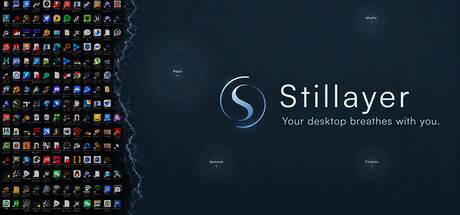 Stillayer In-game content audiotext | Stillayer uses AI-assisted tools during development for some pre-generated content: the ambient sound bed (the background audio pad) was created with AI audio generation and then hand-edited by the developer; the interface text and store descriptions were written and localized into multiple languages with AI assistance and reviewed by the developer. All visuals — the desktop scenes, light pools and animations — are hand-coded procedural graphics with no AI-generated artwork. Stillayer does not generate any content at runtime, contains no live AI features, and works fully offline. | LumiMatrix Tech | - | Sep 9, 2026 | |
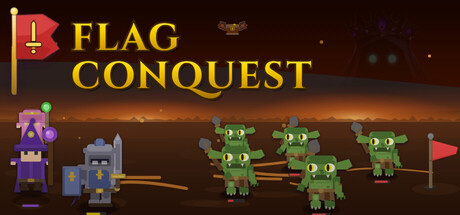 Flag Conquest In-game content audioarttext | The soundtrack is AI generated with human modifications. Art, text, localizations, and store assets were made with AI assistance and human modifications. Nothing is generated at runtime, and the game never connects to an AI service. | Karamilabs | - | Sep 9, 2026 | |
 Your Momo In-game content text | AI-Assisted Language Translation | Dopamine Maker | - | Sep 9, 2026 | |
 Blackdoor In-game content text | Generative AI tools were used during development to assist with brainstorming and editing some mission and other written content. All generated suggestions were reviewed and edited by me before inclusion in the game. | Static Signal | 16 | Sep 8, 2026 | |
 Piece of Cake: Cozy Bakery In-game content arttext | Some visual, localization, store page, and marketing materials may be created with the assistance of generative AI tools. All AI-assisted content is reviewed, edited, and polished by our team before use. No AI content is generated during gameplay. | HG POINT | - | Sep 8, 2026 | |
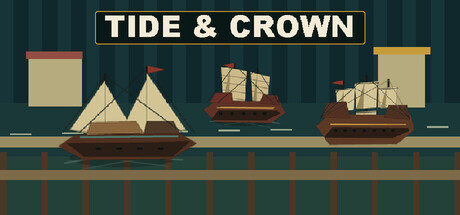 Tide and Crown In-game content arttextcode | Generative AI tools were used during development to assist with portions of the game’s interface and narrative text, programming, procedurally constructed 2D visual elements, and marketing materials. All included content was reviewed, edited, and integrated by the developer. Tide & Crown does not generate AI content during gameplay and does not connect to external AI services. | EnoBlk | - | Sep 7, 2026 | |
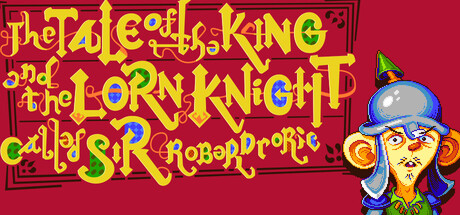 The Tale of the King and The Lorn Knight Called Sir Roberdroric In-game content text | Generative AI was used solely to assist with translation, localization, and language editing of written text. This includes localization of Steam store-page descriptions and translation or language correction of in-game text, primarily from Portuguese into English. No AI-generated artwork, audio, gameplay content, or live-generated AI content is included in the game. | Dan Mafra Pixel Arts Company | - | Sep 7, 2026 | |
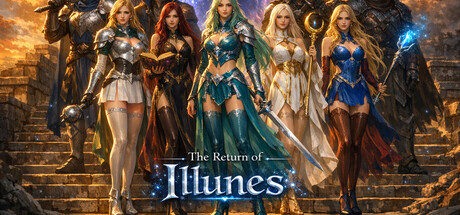 The Return of Illunes Live AI text | Pre-generated: Some 2D illustrations and the pre-recorded narration were produced with AI tools and reviewed by the developers before inclusion.
Live-generated: An on-device language model (no internet connection) writes in-game text such as narration, dialogue, and the names and lore of items, relics and skills, and selects among game-defined options for certain run content. Damage, stats, difficulty and progression are governed by the game's own rules. Generated text is checked before it is shown, and no art or audio is generated at runtime. | 14Dimension Enterprise | - | Sep 7, 2026 | |
 Your Usual Live AI text | The bartender's side of every conversation is generated live, while you play, by a language model that ships inside the game and runs on your own computer. Nothing you type or say is sent anywhere. There is no account, no server, and no internet connection required — the game works with the network unplugged. When the character speaks her lines aloud, that audio is synthesised locally by the same install.
Everything else in the game is authored by hand: the world and its writing, the cast of regulars, the drink recipes, the art, and the rules the bartender plays by.
Because her dialogue is generated rather than scripted, it cannot be listed in advance. The controls on it are: a fixed authored prompt that defines the character, the setting, and what she will and will not do; a filtered generation pipeline; and a specific model chosen and regression-tested against an automated suite of behavioural checks before it ships. Anything the character has remembered about you can be viewed and permanently deleted from inside the game at any time. | tuffsoft | - | Sep 7, 2026 | |
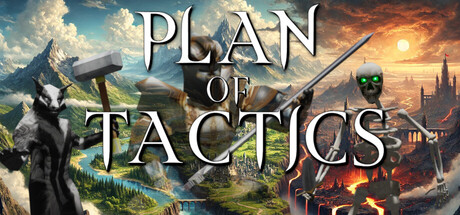 PLAN OF TACTICS In-game content artaudiotextcode | We use AI to aid the team with coding and refactoring more quickly, texturing assets and background faster, and creating highly detailed cinematics. We have both original and AI generated music & sound effects.
We DO NOT use AI for our story, narratives, dialog, 3D models, or character animations. | Animation Elevated | - | Sep 7, 2026 | |
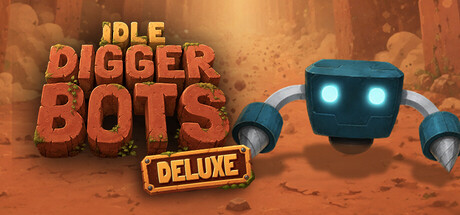 Idle Digger Bots Deluxe In-game content arttext | Generative AI is utilized as support in the game's development, employed for concept creation, texture upscaling, and the design of icons and visual elements. | Raido Studios | - | Sep 7, 2026 | |
 NO CARRIER In-game content text | The code, the in-game text and its translations into six languages were written with the help of an AI assistant, then reviewed and edited by the developer.
No images or audio were AI-generated: all artwork is built from licensed photography, a licensed typeface and licensed icons, and all sound comes from a licensed royalty-free library. Full credits are in the game.
Nothing is generated while you play — the game makes no network requests at all. | Alexframe | - | Sep 7, 2026 | |
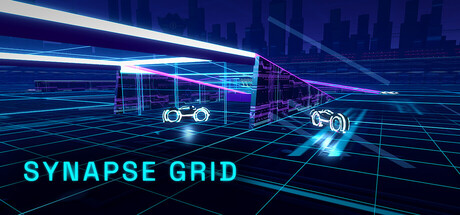 Synapse Grid In-game content artaudiotext | Some of the art, music, voice-over and cinematic clips in Synapse Grid were produced with generative AI tools during development, then edited, curated and directed for release. Nothing is generated while you play.
The tools used, and what each produced:
Google Gemini - concept art and texture reference
ACE-Step - original music tracks
MiniMax-Music3 - original music tiles
IndexTTS - cast voice-over
MiniMax H3 (via ComfyUI) - tutorial and transmission video clips
All of this content was generated for this project. No third party's personal media, voice or likeness is used. The same list is shown in the game's own credits screen.
Separately, the opponent riders use a neural network trained by self-play. That system decides how a bike steers; it does not generate any art, audio or text that you see or hear. | AlluringCoffee | - | Sep 7, 2026 | |
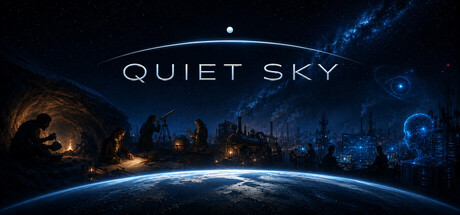 Quiet Sky Live AI text | Quiet Sky uses generative AI during gameplay to simulate evolving societies and create narrative observation reports, summaries, Companion responses, and optional report illustrations based on the current simulation and the player’s decisions. The Steam desktop edition runs the included generative models locally on the player’s computer. Generated results vary between campaigns. | Divyanth Jayaraj | - | Sep 7, 2026 | |
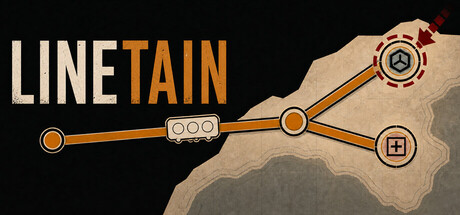 LINETAIN In-game content textart | Generative AI tools were used during development to assist with drafts and revisions of some pre-generated in-game text, interface copy, localization, and store and library artwork. All resulting content is selected, edited, and reviewed by the developer before shipping. The game does not generate content with AI at runtime. | AtsuK Works | - | Sep 7, 2026 | |
 いただきバーガー In-game content artaudiotextcode | This game was developed with AI coding agents (Anthropic Claude / OpenAI Codex). All in-game pixel art (ingredients, relics, character faces, UI) is rendered by drawing code and pixel-placement scripts written by these agents; no diffusion/image-generation model output is included. Music and SFX are procedurally generated at runtime from AI-assisted code. In-game text, store page copy, and translations into 10 languages were produced with AI assistance and reviewed by the developer. Trailer scripts and captions were also AI-assisted. All content has been reviewed by the developer. | NoZworks | - | Sep 7, 2026 | |
 Packet Plague Store/marketing codetextart | Generative AI tools assisted with portions of the game’s code and written material, and with the creation of pre-generated promotional key art and derivative marketing graphics. All final content was selected, edited, tested, and reviewed by the developer. Gameplay screenshots and trailers show the actual game. | FR Studio | - | Sep 7, 2026 | |
 You Can Sort It! In-game content arttext | Generative AI was used only as a supporting tool for the design of some fictional can bottle brands | Indovers Studio | - | Sep 7, 2026 | |
 Astravek Live AI textart | This game uses generative AI in a limited capacity on the game server in real time. The AI is used solely to generate narrative text: mission names and descriptions, in-world news broadcasts, and some NPC dialogue. All game logic — including mission mechanics, rewards, and balance — is governed by deterministic code and is never decided by AI. If the AI service is unavailable, the game automatically falls back to pre-written text templates.
Portions of imagery were produced with the assistance of generative AI. | Moonpixelgames | - | Sep 7, 2026 | |
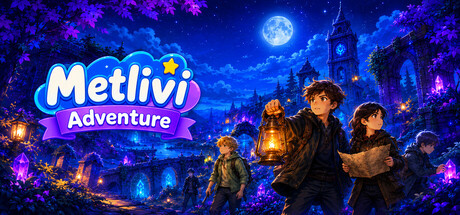 Metlivi Adventure In-game content arttextaudio | Metlivi Adventure uses generative AI to create certain in-game content, including narrative text, visual elements, and, where applicable, music. AI-generated content is used to support dynamic, player-driven adventures. | Metlivi | - | Sep 7, 2026 | |
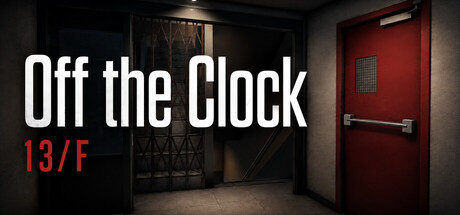 Off the Clock: 13/F In-game content arttext | Some of the textures and images in this game were created with the help of generative AI tools, and AI tools also assisted with the game's localization and store page text. All of this content was reviewed and edited by the developer before release. | Latent Nine | - | Sep 7, 2026 | |
 小吃派对 Snack Party In-game content arttext | This game uses generative AI tools to assist in creating early drafts of some artwork and text during development. All AI-generated content is pre-rendered and has been reviewed, edited, and polished by hand before being included in the game. No content is generated live at runtime. | Pad Token Games | - | Sep 7, 2026 | |
 Your Desktop Companion - Lumi Live AI textaudio | Lumi uses generative AI to create dynamic conversations and spoken responses in real time. AI inference, speech recognition and speech synthesis run locally on the player's PC. AI model files are downloaded during setup, but player conversations and generated responses are not sent to an external AI service. Available capabilities may vary depending on the locally selected model. | AuraCore Studio | - | Sep 7, 2026 | |
 Mellow Flavor Alley In-game content arttext | This game uses generative AI tools in parts of its artwork and dialogue/narrative writing, as well as for in-game text localization (translation). | Pallang Studio | - | Sep 7, 2026 | |
 Labyrinth: The Descent In-game content arttextcode | This game includes AI-assisted, human-curated and edited artwork (tile art, actor sprites, and other visual assets). All AI-generated art was reviewed, edited, and approved by the developer before being included. An LLM was used to co-author most code changes. An LLM was used to proof and ideate some of the dialog in the game. All dialog was curated and approved by a human. | David Bethancourt | - | Sep 7, 2026 | |
 10000 Rats: The Simulation In-game content arttext | This game was created by a real human, using the Codex development environment. Contains lots of generated artwork and descriptive text, as well as gameplay refinements gained through AI powered balance testing. | CleoTronix Software | - | Sep 7, 2026 | |
 Abarya In-game content arttext | Localization and some art work assisted by AI tools | Chase Walters | - | Sep 7, 2026 | |
 CityGenesis In-game content arttext | This game uses generative AI tools to create some of its content, including logo and icon images, 3D models, and in-game text such as UI captions and descriptions. All AI-generated content is reviewed and adjusted by the developer. | Sato Kenta | - | Sep 7, 2026 | |
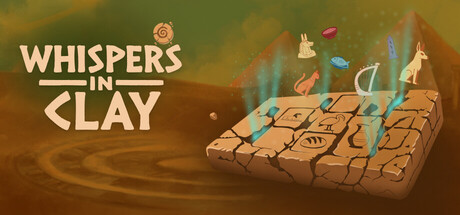 Whispers in Clay In-game content audiotext | Generative AI tools were used to assist with the creation of music, sound effects, and localized text. | lughandpiv | - | Sep 7, 2026 | |
 Bottled Fantasy In-game content text | As a small indie team, some of our initial localizations will use AI-assisted translation, and we hope to have them professionally reviewed and polished as our budget grows. | MBTactIcs Lab | - | Sep 7, 2026 | |
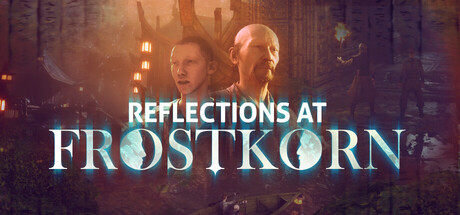 Reflections at Frostkorn In-game content text | The game's localizations were made using AI. | Tonguç Bodur | - | Sep 7, 2026 | |
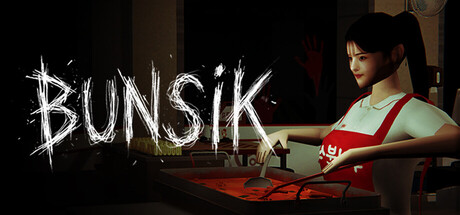 BUNSIK In-game content text | Generative AI was used to assist with drafting and translating written text for the Steam store page and some in-game text. All AI-assisted text is reviewed and edited by the developer before use. No generative AI is used during gameplay, and the game contains no live-generated AI content. | Playnova Studio | - | Sep 7, 2026 | |
 Last Good Festival In-game content arttext | The game uses AI tools to assist in generating background graphics and supporting the artistic process. AI is also used to aid in translation and localization, making the game available in multiple regions and languages. | WelesGames | - | Sep 7, 2026 |


