Public Steam disclosure research25,512 disclosures tracked
Where do games disclose AI use?
Search developers’ Steam disclosures, compare classified AI use across
games, and follow recorded changes.
This index adds cross-game classifications and statistics to
statements published on individual store pages.
Groups reflect automatic analysis of public disclosures; mature records are excluded. These counts do not measure AI use across all of Steam.
Missing or unclear statements cannot establish whether a game uses AI.
In The Hollow, artificial intelligence is used to enhance images, create the basis for certain textures, and ensure more accurate translations. Some of the characters’ faces could not have been created without processing their images using artificial intelligence. Furthermore, some of the generated results served as the basis for further manual refinement of the game assets.
Graphics (Title Screen):
AI was used to generate the base image for the title screen. This output was then manually edited, adjusted for layout, and refined to create the final visual.
Localization (Translation):
AI was used as an assistant in the translation process. Following the initial AI-generated draft, all text has been manually reviewed and edited to ensure contextual accuracy and quality.
We use AI tools to assist in generating some icons and basic text. All AI-generated content is strictly reviewed and extensively modified manually by our team to ensure final quality.
This game includes content generated by generative AI.
Content created using generative AI:
BGM (in-game)
Advertisement images (in-game)
Translations (in-game)
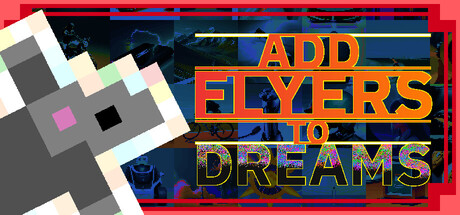
Promotional video BGM (store page)
Advertisement images behind the logo (store page)
Translations of the game description (store page)
No AI was used to write the storyline or visual assets in the game. All of it is my own creative work. However, AI was used to assist in the creation of game artwork used for the store page and for helping craft and improve store descriptions.
MetaDoc uses generative AI to assist users in writing, editing, and structuring documents. AI features include text generation, rewriting, summarization, and outline creation.
AI services are provided and managed by MetaDoc through its own backend infrastructure. Users can access AI features using in-app credits or subscriptions purchased via Steam.
A limited free quota may be available for initial experience and testing purposes.
All AI-generated content is initiated, controlled, and reviewed by the user. Users are responsible for the content they generate and choose to use.
This game utilizes generative AI for part of its localized text and certain background environment assets. These tools were used to enhance development efficiency, and all final outputs have been curated and edited by our team.
Remember to Die was built solo with no official budget using AI as a creative instrument — not to replace the human decisions, but to handle the ones that would have made this game impossible otherwise. No jobs were lost, but a game was made possible.
Some of the images and audio assets used in this game are created with the assistance of generative artificial intelligence, based on the creator’s original concepts and design.
All narrative content presented in the game is conceived and written by the creator, with generative artificial intelligence used to assist in text refinement and multilingual translation.
This game uses generative AI in a limited capacity. Some in-game images and text were created or assisted by AI during development, but they are not entirely AI-generated. All such content has been manually edited, reviewed, and integrated by the developer to ensure consistency with the overall design and experience.
In the development of this game, generative AI was used in the following ways:
Visual Assets: Background illustrations for narrative events, UI elements, and icons were created with the assistance of generative AI. All assets were manually edited and refined by the developer to ensure stylistic consistency.
Narrative Content: Initial drafts for some random event descriptions and unit barks were generated with AI assistance and subsequently revised and rewritten by the developer to maintain the game's unique tone and military setting.
Audio: Some voiceover elements and unit barks may be produced using AI-assisted synthesis. All audio is pre-recorded and processed before being included in the game files.
Code Assistance: AI-based tools were used during the programming process for logic optimization and debugging.
Important: All AI-generated content is pre-generated and included in the static game files. No content is generated in real-time during gameplay.
All in-game content, including gameplay assets, audio, writing, and text, was created by humans, as credited in the game.
Some Steam store and promotional materials may have been created or refined with the assistance of generative AI / LLM tools, for example for drafting or polishing marketing assets.
This game includes pre-generated AI-assisted elements created during development, including gameplay code, some in-game and UI text, music, and AI-assisted edits to certain visual assets used in the game and store materials. No live-generated AI content is produced during gameplay, and the game does not connect to external AI services while running.
We use AI tools during development to speed up routine work, but all final decisions are made by the team.
Text translation
AI helps with draft translations of UI and in‑game texts, which are then reviewed and edited by human translators to keep the tone and meaning consistent.
Code generation
AI is used to generate boilerplate code and suggest improvements, while core systems, gameplay logic, optimization and security are always designed, reviewed and tested by developers.
Generative AI was not used for in-game art, gameplay assets, systems, or core game content.
AI translation tools were used only for some additional text added later during development. Most localization was handled by a professional translation vendor.
The only AI-generated visual assets currently used are the Steam header capsule and library logo illustrations, which were manually retouched. They are not used inside the actual game, and I plan to replace them after release if the game earns enough revenue.
God is not scripted. Every conversation is generated in real time by Claude, Anthropic's large language model — the same technology behind some of the most advanced AI assistants in the world. No two playthroughs are ever the same. All AI interactions are governed by Anthropic's strict safety guidelines and an additional in-game moderation layer. Visual elements crafted with generative tools.
This product uses pre-generated AI-assisted content during development. AI tools were used to help create some promotional artwork, selected visual assets, and some development-support content such as text or localization assistance. The game does not use live-generated AI during gameplay.
Generative AI is used only to assist with localization/translation. All localized text is reviewed and edited by the developer.
No AI-generated art, audio, or in-game live generation is used.
During the development of this game, generative AI was used to create some user interface (UI) assets and for text translation.
Please note that the main character illustrations were created by human artists.
I am a single developer. AI is used to speed up some processes, some marketing and concept materials are made with AI as a base to improve on and deliver better game.
There are optional AI soundtracks in the game.
LingoHUD's output is strictly limited to language translation and speech-to-text
transcription of content already present on the user's screen or audio. It does not
generate creative, original, or open-ended content.
Content moderation: The translation and recognition models process only user-initiated
input that the user explicitly captures via a hotkey. The software does not produce
novel content; it converts existing content from one language to another, or from
speech and images to text. All processing is deterministic and bounded to the captured
input.
What parts AI applied to are: pictures like icon, button, background; language translation. And no more other visual elements like, objects rendering, model, post process effect have used AI.
I was working on this game for more than 2 years without ai.
I started to use ai 1-2 months ago for:
Due to a lack of capital for professional sounds i bought sound packages and for
some few sounds i used AI software. Depending on the game's success, I will invest in replacing sounds and self-created elements with professional assistance.
AI was used mainly for bug fixing in the code and for translating the game text into different languages.
In The Hollow, artificial intelligence is used to enhance images, create the basis for certain textures, and ensure more accurate translations. Some of the characters’ faces could not have been created without processing their images using artificial intelligence. Furthermore, some of the generated results served as the basis for further manual refinement of the game assets.
Graphics (Title Screen):
AI was used to generate the base image for the title screen. This output was then manually edited, adjusted for layout, and refined to create the final visual.
Localization (Translation):
AI was used as an assistant in the translation process. Following the initial AI-generated draft, all text has been manually reviewed and edited to ensure contextual accuracy and quality.
We use AI tools to assist in generating some icons and basic text. All AI-generated content is strictly reviewed and extensively modified manually by our team to ensure final quality.
This game includes content generated by generative AI.
Content created using generative AI:
BGM (in-game)
Advertisement images (in-game)
Translations (in-game)
Promotional video BGM (store page)
Advertisement images behind the logo (store page)
Translations of the game description (store page)
No AI was used to write the storyline or visual assets in the game. All of it is my own creative work. However, AI was used to assist in the creation of game artwork used for the store page and for helping craft and improve store descriptions.
MetaDoc uses generative AI to assist users in writing, editing, and structuring documents. AI features include text generation, rewriting, summarization, and outline creation.
AI services are provided and managed by MetaDoc through its own backend infrastructure. Users can access AI features using in-app credits or subscriptions purchased via Steam.
A limited free quota may be available for initial experience and testing purposes.
All AI-generated content is initiated, controlled, and reviewed by the user. Users are responsible for the content they generate and choose to use.
This game utilizes generative AI for part of its localized text and certain background environment assets. These tools were used to enhance development efficiency, and all final outputs have been curated and edited by our team.
Remember to Die was built solo with no official budget using AI as a creative instrument — not to replace the human decisions, but to handle the ones that would have made this game impossible otherwise. No jobs were lost, but a game was made possible.
Some of the images and audio assets used in this game are created with the assistance of generative artificial intelligence, based on the creator’s original concepts and design.
All narrative content presented in the game is conceived and written by the creator, with generative artificial intelligence used to assist in text refinement and multilingual translation.
This game uses generative AI in a limited capacity. Some in-game images and text were created or assisted by AI during development, but they are not entirely AI-generated. All such content has been manually edited, reviewed, and integrated by the developer to ensure consistency with the overall design and experience.
In the development of this game, generative AI was used in the following ways:
Visual Assets: Background illustrations for narrative events, UI elements, and icons were created with the assistance of generative AI. All assets were manually edited and refined by the developer to ensure stylistic consistency.
Narrative Content: Initial drafts for some random event descriptions and unit barks were generated with AI assistance and subsequently revised and rewritten by the developer to maintain the game's unique tone and military setting.
Audio: Some voiceover elements and unit barks may be produced using AI-assisted synthesis. All audio is pre-recorded and processed before being included in the game files.
Code Assistance: AI-based tools were used during the programming process for logic optimization and debugging.
Important: All AI-generated content is pre-generated and included in the static game files. No content is generated in real-time during gameplay.
All in-game content, including gameplay assets, audio, writing, and text, was created by humans, as credited in the game.
Some Steam store and promotional materials may have been created or refined with the assistance of generative AI / LLM tools, for example for drafting or polishing marketing assets.
This game includes pre-generated AI-assisted elements created during development, including gameplay code, some in-game and UI text, music, and AI-assisted edits to certain visual assets used in the game and store materials. No live-generated AI content is produced during gameplay, and the game does not connect to external AI services while running.
We use AI tools during development to speed up routine work, but all final decisions are made by the team.
Text translation
AI helps with draft translations of UI and in‑game texts, which are then reviewed and edited by human translators to keep the tone and meaning consistent.
Code generation
AI is used to generate boilerplate code and suggest improvements, while core systems, gameplay logic, optimization and security are always designed, reviewed and tested by developers.
Generative AI was not used for in-game art, gameplay assets, systems, or core game content.
AI translation tools were used only for some additional text added later during development. Most localization was handled by a professional translation vendor.
The only AI-generated visual assets currently used are the Steam header capsule and library logo illustrations, which were manually retouched. They are not used inside the actual game, and I plan to replace them after release if the game earns enough revenue.
God is not scripted. Every conversation is generated in real time by Claude, Anthropic's large language model — the same technology behind some of the most advanced AI assistants in the world. No two playthroughs are ever the same. All AI interactions are governed by Anthropic's strict safety guidelines and an additional in-game moderation layer. Visual elements crafted with generative tools.
This product uses pre-generated AI-assisted content during development. AI tools were used to help create some promotional artwork, selected visual assets, and some development-support content such as text or localization assistance. The game does not use live-generated AI during gameplay.
Generative AI is used only to assist with localization/translation. All localized text is reviewed and edited by the developer.
No AI-generated art, audio, or in-game live generation is used.
During the development of this game, generative AI was used to create some user interface (UI) assets and for text translation.
Please note that the main character illustrations were created by human artists.
I am a single developer. AI is used to speed up some processes, some marketing and concept materials are made with AI as a base to improve on and deliver better game.
There are optional AI soundtracks in the game.
LingoHUD's output is strictly limited to language translation and speech-to-text
transcription of content already present on the user's screen or audio. It does not
generate creative, original, or open-ended content.
Content moderation: The translation and recognition models process only user-initiated
input that the user explicitly captures via a hotkey. The software does not produce
novel content; it converts existing content from one language to another, or from
speech and images to text. All processing is deterministic and bounded to the captured
input.
What parts AI applied to are: pictures like icon, button, background; language translation. And no more other visual elements like, objects rendering, model, post process effect have used AI.
I was working on this game for more than 2 years without ai.
I started to use ai 1-2 months ago for:
Due to a lack of capital for professional sounds i bought sound packages and for
some few sounds i used AI software. Depending on the game's success, I will invest in replacing sounds and self-created elements with professional assistance.
AI was used mainly for bug fixing in the code and for translating the game text into different languages.