Public Steam disclosure research25,380 disclosures tracked
Where do games disclose AI use?
Search developers’ Steam disclosures, compare classified AI use across
games, and follow recorded changes.
This index adds cross-game classifications and statistics to
statements published on individual store pages.
Groups reflect automatic analysis of public disclosures; mature records are excluded. These counts do not measure AI use across all of Steam.
Missing or unclear statements cannot establish whether a game uses AI.
Soulforge uses generative AI for part of its asset production. All AI-assisted content is pre-generated, fixed in the shipped build, and reviewed by the developer before release — the game generates no content at runtime.
• 2D art: UI frames and chrome, spell and passive ability icons, class portraits, key art and store capsule art were produced using AI image generation from written style briefs, then selected, corrected, cropped, rescaled, composited and colour-graded by the developer before being imported into the game.
• 3D models and textures: a portion of environment and prop assets were produced with AI generation tools, then edited, retopologised and hand-adjusted before being used in the game.
• Localization: the game's 20 interface languages were produced with AI translation, each language then passed through a separate independent AI review pass and a mechanical validator. Native-speaker review is ongoing and corrections ship as they arrive.
Audio is procedurally synthesised with hand-written DSP code, not generated by an AI model.
We have reviewed the shipped assets and believe they contain no illegal or infringing content.
This game uses generative AI tools for parts of its 3D model creation and music/sound effect production.
Core elements of the game experience — including the scenario, game design, AI logic design and implementation, and part balance adjustments — are created and decided primarily by the developer himself.
In keeping with the game's own concept of "designing AI logic to fight," the development process itself also actively incorporates collaboration with AI. This game was completed by using dialogue with AI to work around the limitations of a one-person team.
Some pre-generated 2D illustrations (menu backgrounds, mode card images, app icon, and store capsule artwork) were created with AI image generation tools and reviewed by a human. The game itself contains no live-generated AI content — all gameplay, 3D models, audio, and code are human-made.
Some game assets were created with AI assistance under paid commercial licenses: background art and the title logo (image generation), BGM (Suno), and sound effects (ElevenLabs). All AI-generated assets are recorded in an internal license ledger, were generated on paid plans permitting commercial use, and were reviewed by the developer before inclusion.
The core mechanic uses AI at runtime: the player draws a creature and enters a name for it, and both the drawing and the player-supplied name are sent to a vision AI model, which evaluates them and produces the creature's element, size, stats, move names and descriptions, catchphrase, and flavor text. The creature always carries the name the player typed: the model returns a suggested name, but the server discards it whenever the player supplied one, and falls back to the model's name only when the player leaves the field blank. Guardrails: (1) every submission passes a server-side moderation gate before any sharing — CSAM is absolutely blocked with evidence preservation and reporting, and clearly NSFW content is auto-rejected; (2) all player-visible text generated by AI is length-clamped and moderated (names, catchphrases, flavor text, move names); (3) shared content (ghost teams) is moderated again server-side, is opt-in, expires automatically (TTL), and there is no public gallery; (4) a player report channel (notice-and-takedown) is provided in-game and on the official site; (5) battle results are computed deterministically by game rules, not by AI.
We use generative AI tools in the following ways:
- In-game art: Loading screen images and some in-game UI artwork were
produced with the assistance of generative AI image tools, then reviewed
and edited by our art team before shipping.
- Localization: In-game text for supported languages other than English is
translated using machine translation (AI) tools.
- Store assets: Some store page images and marketing artwork are created
using generative AI image tools.
No AI content is generated live during gameplay. All AI-assisted content is
pre-generated and reviewed before release.
a note on AI: this game is one bloke working very closely with AI tools. the store art and achievement icons are AI-generated images. the code, the procedural music, and the scripts that build the 3D models were written in hands-on AI-assisted sessions. everything is hand-curated - every asset, mechanic and line got reviewed, redone or binned by the developer, usually several times. the robot is never left to its own devices. nothing is generated by AI while you play.
This game uses generative AI to create part of its visual content. Specifically, AI tools were used as part of the graphics workflow to generate concept and source material for sprites and artwork, which were then manually reworked, adjusted, and integrated into the final game using Affinity Designer.
Leveraged AIGC tools to assist with the creation of the Steam store page, marketing assets, promotional videos, in-game UI/GUI elements, visual assets, and parts of the frontend implementation.
Generative AI tools were used during development to assist with programming and implementation. The developer created the original game and codebase, with AI assistance used to modify and expand portions of the code, including implementation of the graphics and other visual/gameplay elements.
This game uses generative AI tools in parts of its production.
- Some 3D models: generated with AI tools as a base. Shape edits, UV unwrapping, texturing, rigging, animation and facial setup are done by the developer.
- Some image assets such as textures: generated with AI tools, then applied and adjusted by the developer.
- English text: machine-translated from the Japanese original and reviewed by the developer.
Game design, systems, and gameplay tuning are all done by the developer.
Generative AI was used to assist in creating some UI elements and sound effects. All AI-generated assets were reviewed and edited by the developer before being included in the game.
Art: AI image tools assisted with some 2D assets; all final art was produced by our artists based on original designs.
Localization: Core languages were translated by our team; additional languages use AI-assisted translation.
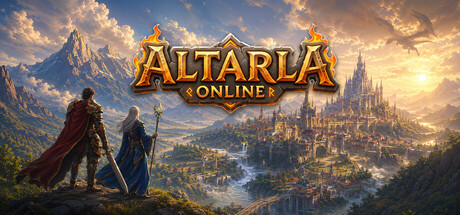
Generative AI tools were used during development to assist in creating selected pre-generated 2D visual assets, promotional artwork, and localized text. All AI-assisted content was reviewed, edited, and curated by the developer before being included in the game or its store materials. Altaria Online does not use generative AI to create content during gameplay, and no player input is sent to external AI services.
Generative AI was used throughout development to create the game's visual assets and other production content. All game design, extensive balancing, and fine-tuning were done manually by the development team.
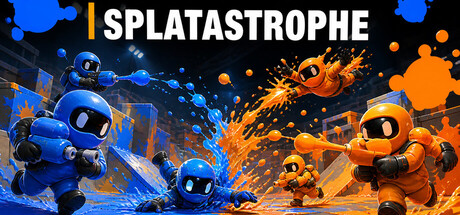
Generative AI tools were used during development to assist with portions of the game’s code, environmental design, visual assets, and promotional artwork. All AI-assisted content was reviewed, edited, and integrated by the developer. Splatastrophe does not generate AI content during gameplay and does not send player data to generative AI services.
Generative AI has been used to assist in the creation of certain promotional artwork and visual assets. AI tools have also been used during development to assist with programming, documentation, and iteration. All generated content has been reviewed, integrated, and validated by the developer before being included in the final product.
Some assets in Dreamfend were created using generative AI tools. This applies to the music and to some of the visual assets. All such content is reviewed and refined by hand to match the game's style and the author's intent. No content is generated during gameplay.
Generative AI tools were used during development to assist with portions of the game's code, visual asset creation, localization, and marketing artwork. All included content was selected, edited, integrated, and reviewed by the developer. The game does not generate AI content during gameplay.
The visual art in Gearbound is made with PixelLab, an AI pixel-art tool. Every sprite, animation, tileset, background, prop, interface element and piece of marketing art was generated with PixelLab and then directed, edited and assembled by us.
The music and sound effects are rendered by synthesis scripts that were written with AI assistance. No generative audio model was used, and nothing was sourced from a music-generation service.
Nothing is generated by AI while you play. Every asset is finished and baked into the build before it ships, and the game makes no AI calls at runtime.
This game uses generative‑AI technology to create part of the in‑game assets, art and content. All AI‑generated content has been reviewed and adjusted by human developers.
Some promotional materials for this game — including portions of the trailer and key art — were created with the assistance of generative AI tools. All such content is pre-generated, reviewed, and edited by the developer before publication. The game itself does not generate any content with AI at runtime.
Generative AI tools were used during development to assist in the creation of some visual assets. All AI-assisted content is pre-generated and included as part of the game. The game does not generate AI content during gameplay.
DriveGear includes some pre-generated visual and audio assets created with AI tools. These assets were selected and edited by the developer and ship as fixed content. No content is generated by AI during gameplay.
Penguin Fury uses generative AI tools for part of its content.
Localization: The game is available in 39 languages. The original text was
written by the developer. The translations were produced with AI translation
tools and reviewed before release.
Art: Some achievement icons and character/UI artwork were created with the help
of AI image tools and then edited by the developer.
Store page: Some of the text and images on this store page were created with AI
assistance and edited by the developer.
No AI content is generated while you play. Everything in the game is created in
advance and shipped with the build.
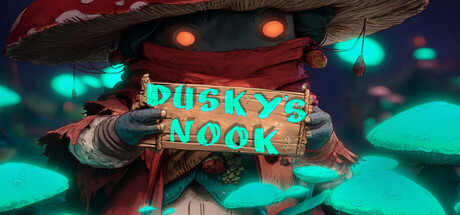
Generative AI tools were used during development to create base 3D assets and some store images. The menu artwork, along with all design, direction, scene construction, lighting, and writing, is my own. Dusky's Nook does not generate any content while you play and never connects to external AI services.
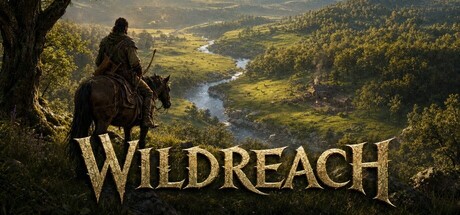
Wildreach is made by a solo developer working alongside AI tools. AI assisted in authoring game logic (Blueprint scripting) and some store/marketing text during development. All 3D art, animation, and audio are licensed asset-pack content made by human artists. No AI content is generated at runtime.
Soulforge uses generative AI for part of its asset production. All AI-assisted content is pre-generated, fixed in the shipped build, and reviewed by the developer before release — the game generates no content at runtime.
• 2D art: UI frames and chrome, spell and passive ability icons, class portraits, key art and store capsule art were produced using AI image generation from written style briefs, then selected, corrected, cropped, rescaled, composited and colour-graded by the developer before being imported into the game.
• 3D models and textures: a portion of environment and prop assets were produced with AI generation tools, then edited, retopologised and hand-adjusted before being used in the game.
• Localization: the game's 20 interface languages were produced with AI translation, each language then passed through a separate independent AI review pass and a mechanical validator. Native-speaker review is ongoing and corrections ship as they arrive.
Audio is procedurally synthesised with hand-written DSP code, not generated by an AI model.
We have reviewed the shipped assets and believe they contain no illegal or infringing content.
This game uses generative AI tools for parts of its 3D model creation and music/sound effect production.
Core elements of the game experience — including the scenario, game design, AI logic design and implementation, and part balance adjustments — are created and decided primarily by the developer himself.
In keeping with the game's own concept of "designing AI logic to fight," the development process itself also actively incorporates collaboration with AI. This game was completed by using dialogue with AI to work around the limitations of a one-person team.
Some pre-generated 2D illustrations (menu backgrounds, mode card images, app icon, and store capsule artwork) were created with AI image generation tools and reviewed by a human. The game itself contains no live-generated AI content — all gameplay, 3D models, audio, and code are human-made.
Some game assets were created with AI assistance under paid commercial licenses: background art and the title logo (image generation), BGM (Suno), and sound effects (ElevenLabs). All AI-generated assets are recorded in an internal license ledger, were generated on paid plans permitting commercial use, and were reviewed by the developer before inclusion.
The core mechanic uses AI at runtime: the player draws a creature and enters a name for it, and both the drawing and the player-supplied name are sent to a vision AI model, which evaluates them and produces the creature's element, size, stats, move names and descriptions, catchphrase, and flavor text. The creature always carries the name the player typed: the model returns a suggested name, but the server discards it whenever the player supplied one, and falls back to the model's name only when the player leaves the field blank. Guardrails: (1) every submission passes a server-side moderation gate before any sharing — CSAM is absolutely blocked with evidence preservation and reporting, and clearly NSFW content is auto-rejected; (2) all player-visible text generated by AI is length-clamped and moderated (names, catchphrases, flavor text, move names); (3) shared content (ghost teams) is moderated again server-side, is opt-in, expires automatically (TTL), and there is no public gallery; (4) a player report channel (notice-and-takedown) is provided in-game and on the official site; (5) battle results are computed deterministically by game rules, not by AI.
We use generative AI tools in the following ways:
- In-game art: Loading screen images and some in-game UI artwork were
produced with the assistance of generative AI image tools, then reviewed
and edited by our art team before shipping.
- Localization: In-game text for supported languages other than English is
translated using machine translation (AI) tools.
- Store assets: Some store page images and marketing artwork are created
using generative AI image tools.
No AI content is generated live during gameplay. All AI-assisted content is
pre-generated and reviewed before release.
a note on AI: this game is one bloke working very closely with AI tools. the store art and achievement icons are AI-generated images. the code, the procedural music, and the scripts that build the 3D models were written in hands-on AI-assisted sessions. everything is hand-curated - every asset, mechanic and line got reviewed, redone or binned by the developer, usually several times. the robot is never left to its own devices. nothing is generated by AI while you play.
This game uses generative AI to create part of its visual content. Specifically, AI tools were used as part of the graphics workflow to generate concept and source material for sprites and artwork, which were then manually reworked, adjusted, and integrated into the final game using Affinity Designer.
Leveraged AIGC tools to assist with the creation of the Steam store page, marketing assets, promotional videos, in-game UI/GUI elements, visual assets, and parts of the frontend implementation.
Generative AI tools were used during development to assist with programming and implementation. The developer created the original game and codebase, with AI assistance used to modify and expand portions of the code, including implementation of the graphics and other visual/gameplay elements.
This game uses generative AI tools in parts of its production.
- Some 3D models: generated with AI tools as a base. Shape edits, UV unwrapping, texturing, rigging, animation and facial setup are done by the developer.
- Some image assets such as textures: generated with AI tools, then applied and adjusted by the developer.
- English text: machine-translated from the Japanese original and reviewed by the developer.
Game design, systems, and gameplay tuning are all done by the developer.
Generative AI was used to assist in creating some UI elements and sound effects. All AI-generated assets were reviewed and edited by the developer before being included in the game.
Art: AI image tools assisted with some 2D assets; all final art was produced by our artists based on original designs.
Localization: Core languages were translated by our team; additional languages use AI-assisted translation.
Generative AI tools were used during development to assist in creating selected pre-generated 2D visual assets, promotional artwork, and localized text. All AI-assisted content was reviewed, edited, and curated by the developer before being included in the game or its store materials. Altaria Online does not use generative AI to create content during gameplay, and no player input is sent to external AI services.
Generative AI was used throughout development to create the game's visual assets and other production content. All game design, extensive balancing, and fine-tuning were done manually by the development team.
Generative AI tools were used during development to assist with portions of the game’s code, environmental design, visual assets, and promotional artwork. All AI-assisted content was reviewed, edited, and integrated by the developer. Splatastrophe does not generate AI content during gameplay and does not send player data to generative AI services.
Generative AI has been used to assist in the creation of certain promotional artwork and visual assets. AI tools have also been used during development to assist with programming, documentation, and iteration. All generated content has been reviewed, integrated, and validated by the developer before being included in the final product.
Some assets in Dreamfend were created using generative AI tools. This applies to the music and to some of the visual assets. All such content is reviewed and refined by hand to match the game's style and the author's intent. No content is generated during gameplay.
Generative AI tools were used during development to assist with portions of the game's code, visual asset creation, localization, and marketing artwork. All included content was selected, edited, integrated, and reviewed by the developer. The game does not generate AI content during gameplay.
The visual art in Gearbound is made with PixelLab, an AI pixel-art tool. Every sprite, animation, tileset, background, prop, interface element and piece of marketing art was generated with PixelLab and then directed, edited and assembled by us.
The music and sound effects are rendered by synthesis scripts that were written with AI assistance. No generative audio model was used, and nothing was sourced from a music-generation service.
Nothing is generated by AI while you play. Every asset is finished and baked into the build before it ships, and the game makes no AI calls at runtime.
This game uses generative‑AI technology to create part of the in‑game assets, art and content. All AI‑generated content has been reviewed and adjusted by human developers.
Some promotional materials for this game — including portions of the trailer and key art — were created with the assistance of generative AI tools. All such content is pre-generated, reviewed, and edited by the developer before publication. The game itself does not generate any content with AI at runtime.
Generative AI tools were used during development to assist in the creation of some visual assets. All AI-assisted content is pre-generated and included as part of the game. The game does not generate AI content during gameplay.
DriveGear includes some pre-generated visual and audio assets created with AI tools. These assets were selected and edited by the developer and ship as fixed content. No content is generated by AI during gameplay.
Penguin Fury uses generative AI tools for part of its content.
Localization: The game is available in 39 languages. The original text was
written by the developer. The translations were produced with AI translation
tools and reviewed before release.
Art: Some achievement icons and character/UI artwork were created with the help
of AI image tools and then edited by the developer.
Store page: Some of the text and images on this store page were created with AI
assistance and edited by the developer.
No AI content is generated while you play. Everything in the game is created in
advance and shipped with the build.
Generative AI tools were used during development to create base 3D assets and some store images. The menu artwork, along with all design, direction, scene construction, lighting, and writing, is my own. Dusky's Nook does not generate any content while you play and never connects to external AI services.
Wildreach is made by a solo developer working alongside AI tools. AI assisted in authoring game logic (Blueprint scripting) and some store/marketing text during development. All 3D art, animation, and audio are licensed asset-pack content made by human artists. No AI content is generated at runtime.